


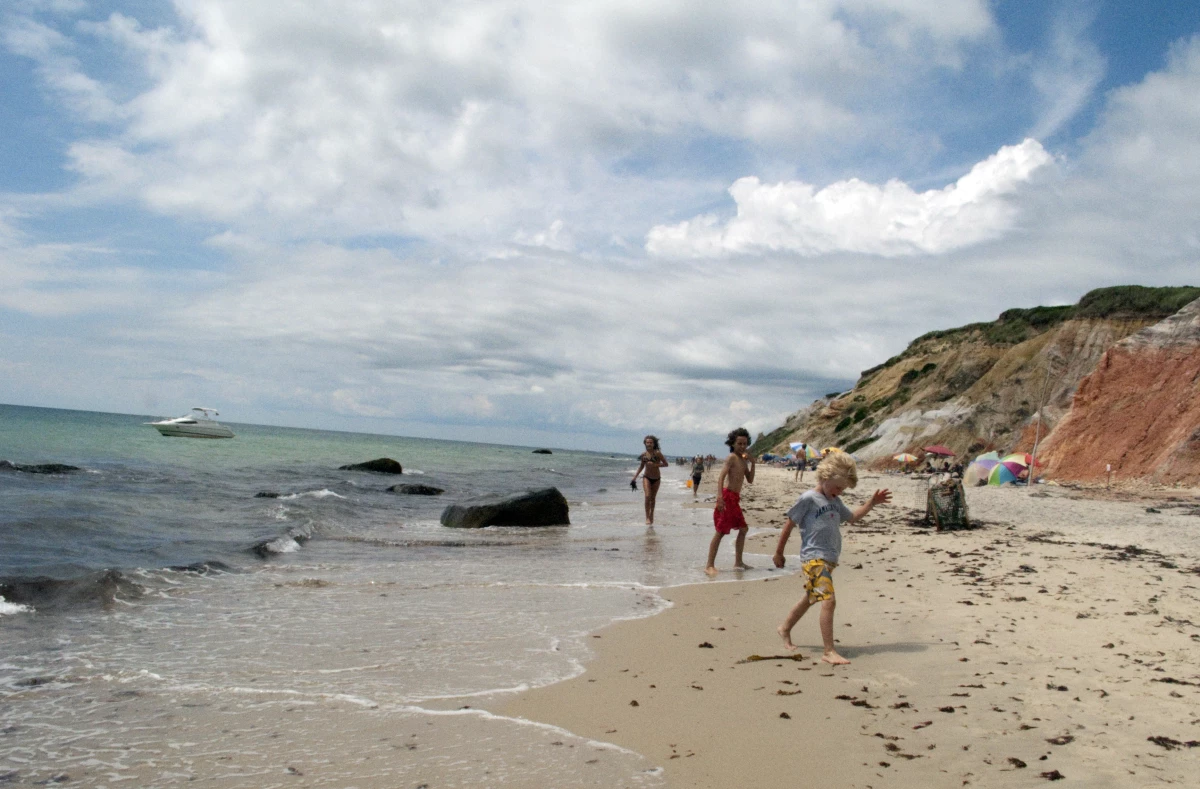
Martha’s Vineyard, just seven miles off the coast of Massachusetts, is an island known for its windswept beaches, clay cliffs, and cedar-shingled cottages. It’s a place synonymous with presidential vacations, affluent visitors, and shops selling pearls and polo shirts.
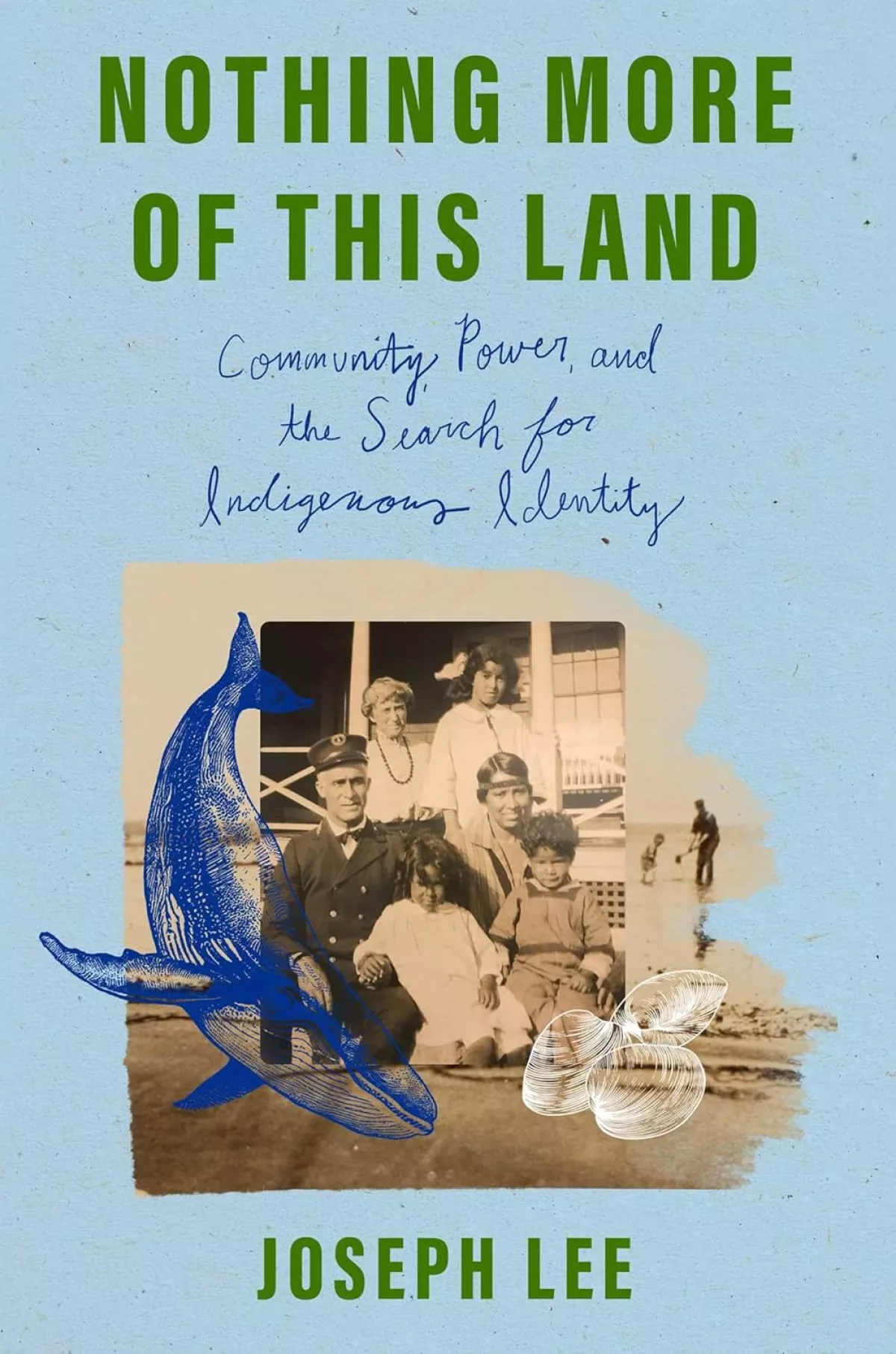
But beneath that postcard-perfect image lies a much older story, one that debut author Joseph Lee uncovers in his new book, Nothing More of This Land: Community, Power, and the Search for Indigenous Identity. As a member of the Aquinnah Wampanoag, Lee takes readers beyond the celebrity summer scene and into the heart of Noepe, the name his people have called the island for centuries.
Lee begins the book with the legend of Moshup, a giant whose toe is said to have carved the island from the sea and whose whale hunts left the cliff in Aquinnah stained deep red. Beyond the myth, Lee takes readers on a deeply personal exploration of indigenous life around the world and what it means to belong to a land that is both a sacred home and a luxury playground, a place where tourism sustains families, even as it threatens to displace them.
“At one time, there was nobody else on the island; it was just Wampanoag folks …” Lee says. “Unfortunately, now we have a much smaller community. … We have over 1,000 members in the [Aquinnah Wampanoag] tribe, but only a few hundred of those live on Martha’s Vineyard and then an even smaller percentage of those actually live in Aquinnah, in our hometown.”
Lee grew up in a suburb of Boston and spent his summers on the family’s land, working at his parents’ store on Martha’s Vineyard.
Interview highlights
On the way some tourists react to meeting a Native person on Martha’s Vineyard
I think anybody who has ever worked in retail or any similar setting will know that people just come in and it’s totally unfiltered and they’ll say anything and they will ask you anything. For some reason, being behind a counter just exposes you to anything anybody wants to say. … People would ask all kinds of questions: “I didn’t think there were Indians anymore. What are you doing here? What do you wear? What kind of houses do you live in?” Somebody once asked me if we use iPhones …
So there’s a lot of weirdness, and you kind of have to fight through it. And it’s something I wanted to talk about in the book, because it’s an important part of my experience … but I also didn’t want it to become this like punching down thing where I was sort of focusing on these bizarre and sometimes offensive comments I was getting, but sort of what’s behind them.
On questioning his own indigenous identity

I think in the absence of maybe more nuanced positive models of what it means to be indigenous, I felt like the only thing I had to fall back on was kind of these stereotypes or simplifications or assumptions. And so I always felt a little bit like, well, am I maybe less Native because I don’t look the way people expect me to look or because I have these other parts of my background? [Lee is also of Chinese and Japanese descent.] …
I saw other young Native people who I felt were maybe embracing their culture a little more. They were speaking the language or they were competing at powwows. …
I would go [to Martha’s Vineyard] in the summer and I looked forward to the beaches and getting ice cream and going to the agricultural fair at the end of the summer and going on rides and playing games. And all of that was fun and I loved it, but it to me didn’t feel like this sort of ideal of being Wampanoag or being indigenous that I had built up in my head. And so I kind of wondered like, well, am I just another summer visitor? What actually distinguishes me from these people?
On why he wanted to talk to people from other tribes
I wanted to feel that sense of kinship, because I always felt a little bit insecure in my indigenous identity. … I didn’t live on the land, I didn’t speak the language, all these things. But also just because of the nature of our tribe, that our tribe felt so small and being on Martha’s Vineyard felt so removed from [the] stereotypes about what a tribe is, like these big kind of Western expanses, these huge communities, which, that’s one aspect of Native life, but that’s not the only one. I think I felt in some ways that those larger tribes were maybe a little bit more legitimate than I was.
On his relationship to the Wampanoag language
I grew up learning the Wampanoag language in our tribal summer camp. … Our language was lost and we had no fluent speakers for a long time. … People were working really hard to bring it back. And so in camp, we would practice words and phrases and learn how to introduce ourselves. … There are a lot of people at home who are dedicating themselves to becoming fluent in the language and more importantly becoming teachers in the language and learning how to pass it along to others.
On the Aquinnah Wampanoag receiving federal recognition
When I grew up in the tribe in the ’90s, it was just a few years after my tribe, the Aquinnah Wampanoag, had received federal recognition, which in the U.S is kind of like the U.S. recognizing your sovereignty as a sovereign nation. And so I grew up in this space where the tribe was really proud of this achievement and excited by it and excited for all the opportunities and for what we could do with it. And also just, I think, happy that we were finally being acknowledged as a people, as a nation, which had been denied for so long.
I think because of that, I felt like maybe the work was done. I knew that my parents and my grandparents’ generation had achieved federal recognition. In some ways, like that was the finish line — like, we did it and now we have it. But what surprised me and what I’ve learned is that it’s not something you can just sit on. … There are all these other ways that you need to practice it and employ it and defend it and build it and that was one of the really exciting things for me in the reporting I did, is traveling around the country and seeing tribes really using and flexing their sovereignty and using it to push back against some of these U.S. structures.
On his tribe’s application for recognition initially being denied
I read back through those documents, and it’s kind of strange. In the initial rejection, there’s a little bit of what I would read as kind of criticism of our community: … The community is very dispersed, not everybody lives in Martha’s Vineyard. And they’re kind of saying like, well, that’s a bad mark in our little score book here, and that might mean they’re not really legitimate. And it’s strange because they do acknowledge the historical reasons why that’s happened, and they acknowledge historical reasons why, for example, we were not speaking our language at that time. And so it was this really strange thing where they’re like, these people are victims of colonialism because they were Native, but because all that stuff happened, maybe they’re really not Native.
On the high property taxes his family in Aquinnah pays
A lot of the land in my family in particular is privately owned. We’re paying the regular property taxes in the town. I think that’s a stereotype about Native people that we get all these free benefits — we don’t pay taxes, we get free checks from the government — and that could not be further from the truth. We’re now paying these really, really high taxes on land that’s been in the family and been in the community for generations and generations. And so it’s not enough to just have the land. You need to also be making enough money in your life to be able to keep the land and pay property taxes. And so that’s also something that I think a lot about. You can’t just be passive with the land and like, well, we have it. This is great. And we’re going to hold onto it forever. You really have to work to hold on to it.
On land acknowledgements
I think one way of looking at it is that land acknowledgments are correcting the record and acknowledging something that has been unacknowledged by a lot of people for so long. You see this especially in university and other institutional spaces where they’re saying, we’re recognizing whose land this is, we recognizing the history here. I think the problem with land acknowledgments is, well, what are you doing about it? What happens after the land acknowledgement? … You can acknowledge it, but at some point if you’re acknowledging that there was a harm, I think you have to take a little more action. Sometimes land acknowledgments can be one of those things that makes the people doing them feel better, but ultimately isn’t really making any change.
On what he thinks the future looks like
I think land will always be important to indigenous people and indigenous community is based around land and solidarity. But what that looks like will continue to change just as it’s changed in my parents’ and grandparents’ lives and it’s changed in my own life. So I think we need to hold sort of these core values but be really, really flexible and adaptive to changing situations.
Roberta Shorrock, Susan Nyakundi and Sam Briger produced and edited this interview for broadcast. Molly Seavy-Nesper and Beth Novey adapted it for the web.
Transcript:
TONYA MOSLEY, HOST:
This is FRESH AIR. I’m Tonya Mosley. Martha’s Vineyard, just 7 miles off the coast of Massachusetts, is an island known for its windswept beaches, clay cliffs and cedar-shingled cottages. It’s a place synonymous with presidential vacations, affluent visitors and shops selling pearls and polo shirts. But beneath that postcard-perfect image lies a much older story, one that debut author Joseph Lee uncovers in his new book, “Nothing More Of This Land: Community, Power, And The Search For Indigenous Identity.” As a member of the Aquinnah Wampanoag, Lee takes readers beyond the celebrity summer scene and into the heart of Noepe, the name his people have called the island for centuries.
Lee begins the book with the legend of Moshup, a giant whose toe is said to have carved the island from the sea and whose whale hunts left the cliff to Aquinnah stained deep red. Beyond the myth, Lee takes readers on a deeply personal exploration of Indigenous life around the world and what it means to belong to a land that is both a sacred home and a luxury playground, a place where tourism sustains families, even as it threatens to displace them. Joseph Lee grew up in a suburb of Boston and spent his summers on the family’s land, working at his parents’ store on Martha’s Vineyard. He teaches creative writing at Mercy University and has written for several publications, including The Guardian, BuzzFeed News, Vox and High Country News. Joseph Lee, welcome to FRESH AIR. And congratulations on this book. What a sweeping journey.
JOSEPH LEE: Thank you. And thank you so much for having me.
MOSLEY: There are many versions of Martha’s Vineyard, the description I just gave as this vacation spot for the wealthy. But would you mind reading a section from your book where you describe the other parts, the people and the land and the feeling of this island?
LEE: The thing about Martha’s Vineyard is that it’s more complicated than people think. There’s a Martha’s Vineyard where politicians and wealthy democratic donors have private parties with catering and security guards. There’s a Martha’s Vineyard that is filled with vineyard vines, polos, private beaches and sailboats. There’s another for families who come over for the day to buy ice cream and keychains. There are those who own a summer house, those who rent one and those who might stay at a hotel or the youth hostel. It’s been home to fishermen, hippies, tribal members, Brazilian immigrants, working families and so much more. It may also be that people simply don’t realize how big Martha’s Vineyard is.
Unlike Nantucket, which is smaller and only has one town, Martha’s Vineyard has six distinct towns, each with its own characteristics and town governments. The island is divided into up island and down island, each with three towns. The terminology comes from longitude, with the up-island towns – Aquinnah, Chilmark and West Tisbury – on the western side of the island with its higher longitudinal coordinates. The three down-island towns are Oak Bluffs, Tisbury and Edgartown. Up island is much more rural. And while the up-island towns do have smatterings of stores and businesses, we go down island to get groceries, pick visitors up from the airport or ferry and go shopping.
And finally, at the western tip of the island, Aquinnah is the smallest and most remote town. Sometimes, when tourists make it to Aquinnah, they say they can’t believe how long it took to get there. If they biked, usually they’re exhausted and desperate for another option to go back down island. Unlike other towns, we don’t really have a town center. Our only stores are the ones at the cliffs, which are only open seasonally. We’re also the only town without our own school. Many people who visit the island spend their entire time in a single town. While it’s true that each town has its own unique characteristics, I also think it’s a little game people play, as if to distinguish themselves from the other rich white people.
MOSLEY: Thank you for reading that. I thought it was really interesting to really see this from your vantage point because your family owns a gift shop. And right now, if I understand correctly, this is really a busy time of year for the island, right?
LEE: Yeah, this is the big season.
MOSLEY: Take us there. What is it like? What do they sell in the store and the tourists who come into the store?
LEE: Yeah, they sell a lot of stuff. I mean, like a lot of seasonal businesses, I think you’re trying to maximize the season. So you’re trying to maximize the summer stuff, and we have a pretty small store, and so there’s a lot of stuff really jammed in there. And it’s a range of T-shirts, sweatshirts, hats, you know, with Martha’s Vineyard logos, lighthouses, different designs, things like that.
But then we have some local jewelry. My mother makes jewelry. We have jewelry made by some cousins. And so it’s a pretty big range of things. And so the summer is structured around tourism. You know, my parents work seven days a week. They work long days. You know, when they come home at night, they have to do the inventory, they have to restock, they have to order. So it’s a pretty short, intense season as these different groups of tourists are coming and going.
MOSLEY: There was this moment right after you graduated from undergrad when something shifted in the way that you saw the island. So you spent that summer before grad school working at your parents’ store. But this time, that ritual felt different. You began to see the seasonal rhythm through new eyes, that deeper political and social force, the forces that shape this place. How did you begin to see it differently?
LEE: Yeah, I think after I graduated college and right before I started grad school, which was going to be in New York City, two things were happening. One was, personally, you know, you’re leaving college. You’re kind of embarking on what you’ve been told is your adult life. And you’re thinking about a career and what you’re going to do and where you’re going to live. And I was excited about that, but I also felt a small sense of loss that maybe as I was moving towards these things, grad school, career that I was really excited about and excited to work towards, that I was sort of wondering if it was bringing me further away from the island and my tribal community.
And so this summer that I spent in between college and grad school almost felt kind of like this last hurrah moment. And then the other thing that happened during that summer is my tribe was going through this big internal debate over whether or not we should try to build a casino on our tribal land in Aquinnah. And that was the thing that really helped open my eyes to sort of these more political aspects of tribal community and being Wampanoag beyond kind of the cultural and community events that I’d been a part of growing up.
MOSLEY: Give us a sense of the presence of the tribe on the island. How big is the tribe currently, and maybe even based on the history that you’ve learned through the research on this book and really what you learned growing up, at its height, the presence there on the island?
LEE: Yeah, I mean, at one time, you know, there was nobody else on the island. It was just Wampanoag folks. And there are all sorts of different tribes and villages. And unfortunately, now we have a much smaller community. And speaking for just the Aquinnah Wampanoag on the western end of the island, we’re pretty small. We have over 1,000 members in the tribe, but only a few hundred of those live on Martha’s Vineyard. And then an even smaller percentage of those actually live in Aquinnah, in our hometown. And so the question of, you know, what is the presence on the island, I think it depends.
I think for a lot of people, you know, for me, when I go home and I spend time there, it’s a huge presence because I’m spending time at the cliffs, seeing cousins, going to tribal events whether it’s a cultural gathering or a political meeting. It’s a huge part of my life. But I think what I’ve seen and one of the things I write about in the book is so many people come to the island or talk about the island or are interested in the island. And it really doesn’t register for them. You know, they might not even make it up to Aquinnah, and if they do, they might meet us and kind of be surprised. Or it might just never come up. So I think it’s a really big range of how people experience the tribe.
MOSLEY: So much of the tribe’s effort to sustain, that debate over the casino was a big part of that. You know, so many people move away because – like you. You moved away for opportunity. And so there was that real sense of tension around, what can we have on the island that also helps sustain us and keep people here?
LEE: Yeah, I think that’s a really central tension for a lot of communities that live in some sort of area that has tourism is a draw for tourists. And, yeah, for us, it’s a really big question that, you know, you could ask the same question about the casino that you ask for the stores at the cliffs. What are the choices that we have? What are the options we have to make a living here? What is that going to look like? And how will that impact the community long term? And the other question, too, is, I think, who has the ability to decide that for the rest of the community?
And so I think it really bubbled up to the surface with the casino debate in a different way because, you know, one person starting a small business, whether it’s a shop or, you know, a fishing business or something like that, it’s part of this bigger picture, but it doesn’t necessarily impact the whole community in a way that some people felt that this larger casino project might, not just now, but for many years in the future. And so I think that’s really why those questions that had always been there suddenly felt much more urgent.
MOSLEY: It was really fascinating to read from your perspective, your view of the visitors who come to the island and how they view you and your family, your people. Visitors often ask you the oddest things. Like, what kinds of questions and comments do they make?
LEE: Yeah. I mean, it’s such a huge range. I think, for some reason, being behind a counter just, like, exposes you to anything anybody wants to say. And then I think being in this unique place of Martha’s Vineyard and then being a tribal member, being Aquinnah Wampanoag, brings sort of an extra layer to that. And, yeah, people would ask all kinds of questions. You know, I didn’t think there were Indians anymore. What are you doing here? What do you wear? What kind of houses do you live in? Somebody once asked me if we use iPhones, which, you know, was very specific, but also…
MOSLEY: (Laughter) Yeah. Right.
LEE: …You know – what? – are you talking about, like, the newest iPhone or, you know, just smartphones? And so there’s a lot of weirdness, and you kind of have to fight through it. And it’s something I wanted to talk about in the book because it’s an important part of, I think, my experience, but our experience as a community, more broadly. But I also didn’t want it to become this, like, punching down thing where I was sort of focusing on these, like, bizarre and sometimes offensive comments I was getting, but sort of what’s behind them.
MOSLEY: Yeah. I mean, I bet you learn so much about people’s ignorance or naivete around Native people and their understanding by how they relate to you because your dad is Chinese American and your mom is half Japanese. And so you don’t look like what maybe most people assume Native people look like. What have those interactions revealed to you?
LEE: Yeah. I think it basically confirms a lot of what I grew up with and what a lot of people will identify as kind of these American stereotypes about what a Native person is, what they look like. And I think there’s just so much going on for people in their minds when, you know, they come to Martha’s Vineyard expecting one thing, and then they come to Aquinnah, and it’s a little bit different. And then they meet us at the store, and we’re a little bit different, and we have this different history that we’re talking about. And they’re like, trying to, like, find some stable footing. And I think they’re just, like, grasping on often to like, well, but wait, like, you’re supposed to look like this if you’re Native American. And you don’t really look like that.
And another kind of strange thing that happens in this space is sometimes people say, oh, you know, I’m so excited. I’ve never met a Native person before. Can I take a photo with you? Sometimes it’s just, can I take a photo of you? And so sometimes I laugh a little bit wondering, like, well, when they take these photos and go back and show it to people, are…
MOSLEY: Where do they go (laughter)?
LEE: Yeah. What do they do with it? Are they confused? Like, well, who’s that Asian-looking guy? And, yeah.
MOSLEY: You dealt kind of with those interactions, not just on the island, but in life in general, when you talk about your identity, I can imagine it’s also shaped your own feelings about being Native. How did it, in the ways that others relate to you, affect the way you saw yourself, your own understanding of your tribe and your identity?
LEE: Yeah. I think for a long time, I kind of internalized a lot of what I was feeling externally about what it meant to be Native. And I think in the absence of maybe more nuanced, positive models of what it means to be Indigenous, I felt like the only thing I had to fall back on was kind of these stereotypes or simplifications or assumptions. And so I always felt a little bit like, well, am I maybe less Native because I don’t look the way people expect me to look or because I have these other parts of my background?
And that was something I think I wrestled with for a long time, and it came with all these other factors that, you know, I didn’t live full time on Martha’s Vineyard. I saw other young Native people who I felt were maybe embracing their culture a little bit more. They were speaking the language, or they were competing at powwows or doing these things that, I think, to me, and to maybe many other people, seemed so externally obviously Native. And I – because I wasn’t doing as many of those things or didn’t have as many of these biographical facts that I felt like added up to, like, that’s a Native person, I always felt a little bit insecure in that identity.
MOSLEY: In some ways, you began to see yourself kind of no different than the tourists.
LEE: Yeah, because my experience on Martha’s Vineyard, as much as I, you know, might try to deny it, in many ways mirrored theirs. You know, I would go there in the summer, and I look forward to the beaches and getting ice cream and going to the agricultural fair at the end of the summer and going on rides and playing games. And all of that was fun, and I loved it. But it, to me, didn’t feel like this sort of ideal of being Wampanoag or being Indigenous that I had built up in my head. And so I kind of wondered, like, well, am I just another summer visitor? You know, what actually distinguishes me from these people that I’m sort of feeling this growing tension with over the years as they’re asking me all these weird questions?
MOSLEY: If you’re just joining us, my guest is Joseph Lee. His new book, “Nothing More Of This Land,” is a blend of memoir, history and investigative reporting. In it, Lee traces his family’s deep roots on Martha’s vineyard, as well as the struggles and resilience of the Aquinnah Wampanoag people. The book also examines how Indigenous communities across the country and the globe grapple with questions of land, belonging and sovereignty. We’ll continue our conversation after a short break. This is FRESH AIR.
(SOUNDBITE OF MUSIC)
MOSLEY: This is FRESH AIR, and today we’re talking to Joseph Lee. In his new book, “Nothing More Of This Land: Community Power, And The Search For Identity,” Lee weaves in his own story as part of the Aquinnah Wampanoag people of Martha’s Vineyard and the challenges facing Indigenous people worldwide.
Land ownership is such an important component when it comes to identity for most Native populations. Can you quantify how much land your tribe currently owns on Martha’s Vineyard?
LEE: We have a few hundred acres of land, which is not a lot. It’s certainly more than it has been recently. The tribe has been sort of steadily gaining back land, sometimes in, like, a little piece, sometimes a bigger chunk. But, yeah, it’s a pretty small piece of land. I should also say that that’s the land that the tribe as a government entity has. There are also pieces of land owned by individual tribal members, like my family. So our house on the island is private land. It’s not, you know, associated with the tribe at all. We’re just regular old land owners, like, you know, somebody down the street. We pay taxes like everybody else. And so there are a lot of families on the island, especially in Aquinnah, who are in that situation. So the question of, like, how much Wampanoag-owned land is there, is – there kind of those two pieces of it, the privately-owned land and then the tribally-owned land.
MOSLEY: Your mother has said that her goal is to leave the family land to you and your brother, which made you think – you thought of this very interesting quandary. If each of you has a couple of kids, the land will eventually have to be divided even further and some of them could decide to sell the land. And that’s something that you can’t control. And I think this is such an important point to pause on because so much of what it means to be Native, as I was saying earlier, is so deeply tied to land, to owning it, to protecting it, to keeping it in your family. And so this journey that you’ve been on is also asking yourself, what does it mean to be Wampanoag beyond Aquinnah, beyond the land itself?
LEE: Yeah. I mean, I think that land is such an important part of it, and there’s no way to escape that. And there’s no way to say, like, well, if we lose the land, we’ll be fine. But I also think that, yeah, we need to find other ways, while we’re also fighting to keep and – keep the land and get more of it back, to acknowledge the other ways that Wampanoag community can and, I think, must exist. And so for the example of my family, you know, my brother and I both don’t live on Martha’s Vineyard. And my parents, they have one house on the island, and we’re fortunate enough to own some land. And, you know, my mother, as you said, has always had this dream of leaving each of us a home on the island. And, you know, I feel extremely lucky and fortunate to be in that situation because so many people, especially in the tribe, just don’t have that luxury.
But even with what I consider a very uniquely fortunate land situation, I can see, yeah, just one generation in the future, if, you know, people decide to sell it or there’s a financial disaster or, you know, something bad happens. There are so many things that can go wrong that even now, feeling like, you know, we’re doing pretty well – we have this land, we have choices – how quickly that can unravel. So I think it’s sort of two questions. One is thinking about, what are the creative ways that we can think about using and keeping the land? But then also, how can we build and strengthen our community to ensure that even as land potentially continues to get lost, we don’t lose our community.
MOSLEY: Right. There’s also – I mean, medium home prices in Aquinnah are around $3.5 million. I think you wrote that some over $8 million. So even if you all decided to move back, then you’d also have to factor in things like property taxes.
LEE: Yeah. And this is a huge concern, which is why I think it’s important to highlight that a lot of the land in my family in particular is privately-owned. So yeah, we’re paying the regular property taxes in the town. And, you know, I think that’s a stereotype about Native people that we get all these free benefits, we don’t pay taxes, we get, you know, free checks from the government – and that could not be further from the truth. And yeah, we’re now paying these really, really high taxes on land that’s been in the family and been in the community for generations and generations. And so it’s not enough to just have the land. You need to also be making enough money in your life to be able to keep the land and pay property taxes. And so that’s also something that I think a lot about. You know, you can’t just be passive with the land and like, well, we have it. This is great, and we’re going to hold on to it forever. You really have to work to hold onto it.
MOSLEY: Our guest today is writer Joseph Lee. We’re talking about his new book, “Nothing More Of This Land: Community, Power, And The Search For Indigenous Identity.” We’ll be right back after a short break. I’m Tonya Mosley, and this is FRESH AIR.
(SOUNDBITE OF OMER AVITAL SONG “JUST LIKE A RIVER FLOWS”)
MOSLEY: This is FRESH AIR. I’m Tonya Mosley, and today I’m talking with writer Joseph Lee. He’s a member of the Aquinnah Wampanoag tribe, and his latest book, “Nothing More Of This Land,” is a blend of memoir, history and investigative reporting. And in it, Lee traces his family’s deep roots on Martha’s Vineyard, the struggles and resilience of his tribe and examines how Indigenous communities across the country grapple with questions of land, belonging and sovereignty. He holds an MFA from Columbia University and teaches creative writing at Mercy University. His writing has appeared in The Guardian, Buzzfeed News, Vox, Electric Literature and High Country News.
Let’s talk a little bit about sovereignty because as I mentioned earlier, you write quite a bit about it. So Native American sovereignty refers to this inherent right of Indigenous tribes to govern themselves – to make their own laws, to manage their internal affairs – independent of the federal government. And you spent a good portion of this book exploring it – what it means for your tribe, what it means for other tribes throughout the nation and the world. What common thread surprised you?
LEE: I think one thing that surprised me is all of the different ways that people think about and use sovereignty. When I grew up in the tribe in the ’90s, it was just a few years after my tribe, the Aquinnah Wampanoag, had received federal recognition, which in the U.S., is kind of like the U.S. recognizing your sovereignty as a sovereign nation. And so I grew up in this space where the tribe was really proud of this achievement and excited by it and, you know, excited for all the opportunities and for what we could do with it and also, just, I think, happy that we were finally being acknowledged as a people, as a nation, which had been denied for so long. And I think because of that, I felt like maybe the work was done.
You know, I knew that my parents’ and my grandparents’ generation had achieved federal recognition, and it felt in some ways like that was the finish line. Like we did it, and now we have it. But what surprised me and what I’ve learned is that, you know, it’s not something you can just sit on, we achieved it, especially when we’re talking about just the U.S. federal government version of it. There are all these other ways that you need to practice it and employ it and defend it and build it.
And that was one of the really exciting things for me in the reporting I did, is traveling around the country and seeing tribes really using and flexing their sovereignty and using it to push back against some of these U.S. structures. And then, along with that, too, I think, I also heard people talking about sovereignty as something that could exist outside of that U.S. federal recognition structure entirely. And to me, that was really interesting and exciting because I always thought of sovereignty as, like, just that. Basically, sovereignty equals federal recognition. But I came to learn it’s a lot more complicated.
MOSLEY: Give us an example of being outside of that structure of federal recognition that you learned.
LEE: Yeah. I mean, there are tribes, for example, that are not federally recognized at all. And one of the tribes that I met on a reporting trip was the Shasta Indian Nation in northern California. They’re not federally recognized. And we were talking to them in the Klamath River Basin as the Klamath River dams – four of them, which have now come down – but I was there right before they came down. And they were there trying to get their land back. So when the dam would be removed, the reservoir that the dam had formed would drain away, and that was the land they were trying to reclaim.
And I was asking them, you know, you guys aren’t federally recognized. Is that something you’re trying to get? And what they told me was, well, of course, it is. You know, we deserve that recognition. We feel we deserve that recognition, and we want it, and we’ll try to get it. But right now, our priority is getting the land back. And that was really interesting to me because I think growing up, I always saw achieving federal recognition is like, that’s the thing you should try to do.
MOSLEY: It’s paramount. Yeah.
LEE: Yeah. Like, you do that, and then maybe you see what else you can do.
MOSLEY: Can you talk a little bit about some of the qualifications of being federally recognized? Because your tribe actually gained sovereignty, if I’m reading this correctly, kind of by the skin of its teeth?
LEE: Yeah. The federal government has basically a list – I believe it’s seven criteria – that you have to apply for and meet. And there’s an Office of Federal Acknowledgment in the Department of Interior that makes these determinations. And my tribe applied, and then we’re denied. And then we had an opportunity to resubmit some documents, some additional information. And eventually, we were accepted. But I read back through those documents, and it’s kind of strange. In the initial rejection, there’s a little bit of what I would read as kind of criticism of our community, and, you know, the community is very dispersed. Not everybody lives on Martha’s Vineyard. And they’re kind of saying, like, well, that’s – you know, that’s kind of a bad mark in our little score book here, and that might mean they’re not really legitimate.
And it’s strange because they do acknowledge the historical reasons why that’s happened, and they acknowledge historical reasons why, for example, we were not speaking our language at that time. And so it’s this really strange thing where they’re like, yeah, these people were victims of colonialism because they were Native, but because all that stuff happened, maybe they’re not really Native.
And then, yeah, you mentioned getting by the skin of our teeth, and the eventual decision where we did receive federal recognition, there was almost this, like, chiding tone a little bit in one of the paragraphs, where it sort of says, like, this was a really close decision, and it could have gone either way, but, you know, we’ll give it to them. And that was just so bizarre to me because first of all, I feel that it should be unquestioned that we are the Aquinnah Wampanoag, and we’re a sovereign nation. But also, the fact that somebody felt the need to write that in this report to say, like, you guys were really close. So it almost feels like a kind of like, we’re-watching-you, you-better be-careful thing, which just to me is bizarre. You know, once you have federal recognition, you have it.
MOSLEY: As part of your research, you met with several tribes. You met with the Shasta, as you mentioned. You also met with members of the Cherokee Freedmen. They’re descendants of African Americans who were enslaved by members of the Cherokee Nation, then emancipated and incorporated into the tribe after the Civil War. And that inclusion lasted until the nation began tightening their enrollment requirements, basing them on blood quantum, those who are Cherokee by blood. What did you learn from those conversations that maybe gave you a broader perspective or a different perspective or a layered perspective on sovereignty?
LEE: Yeah. Talking to the Freedmen was one of the earliest experiences I had that really, really challenged my own understanding of what it means not just sort of culturally and personally to be Indigenous, but politically what it means to be Native in this country, because amidst all of my insecurity about being Native enough – was I living up to these ideals? I knew that I could always cling onto this, like, well, I’m a tribal member. You know, I have my tribal ID card. I’m enrolled, I can go to tribal camp, I can participate in these ways. So I felt like, OK, well, I have that, so it’s legit.
But meeting the Freedmen was kind of really eye-opening because they’re these people who’ve been a part of the community. They’ve fought and died with the community. You know, they’re integral. And then they’re being told suddenly, you know, you’re not one of us anymore. And that really made me wonder sort of, OK, if I’m placing all of this on just, you know, having a tribal ID card, being a member of the tribe, what am I missing? Or who am I potentially leaving out of this conversation?
MOSLEY: Let’s take a short break. If you’re just joining us, my guest is Joseph Lee. His new book, “Nothing More Of This Land,” is a blend of memoir, history and investigative reporting in which Lee traces his family’s deep roots on Martha’s Vineyard, as well as the struggles and resilience of the Aquinnah Wampanoag people. The book also examines how Indigenous communities across the country grapple with questions of land and belonging and sovereignty. We’ll continue our conversation after a short break. This is FRESH AIR.
(SOUNDBITE OF AMANDA GARDIER’S “FJORD”)
MOSLEY: This is FRESH AIR. Today we’re talking to Joseph Lee. He has a new book called “Nothing More Of This Land: Community, Power, And The Search For Identity.” And in it, he weaves his own story as part of the Aquinnah Wampanoag people on Martha’s Vineyard and the challenges facing Indigenous people worldwide.
One of the more powerful sections of the book for me is when you explored the identity of Indigenous peoples from a global perspective. So you met native people from all over the world through this United Nations Permanent Forum on Indigenous Issues. It’s a two-week gathering held at U.N. headquarters in New York. And language was something you talked quite a bit about with folks from other parts of the world. For some people, it’s very important for them in the defining of what it means to be Indigenous. What is your relationship with the Wampanoag language?
LEE: Yeah, I grew up learning the Wampanoag language in our tribal summer camp. At the time, a sort of many-years-long, very ambitious effort to bring back our language was in a relatively early phase. Our language was lost, and we had no fluent speakers for a long time. And around the time that I was growing up in camp and the language was coming back, people were working really hard to bring it back. And so in camp, we would practice words and phrases and learn how to introduce ourselves in our language.
And, yeah, as I grew older, I would attend classes here and there. But it was never really a consistent part of my life. I never was able to prioritize it. But I know that there are a lot of people at home who are dedicating themselves to becoming fluent in the language and, more importantly, becoming teachers in the language and learning how to pass along to others and help grow the language, because we’re still very much in the space where we’re trying to bring back the language and help it grow and kind of nourish it.
MOSLEY: When you were at the U.N. conference, you met and talked with people about language and also just the other ways of identification and building identity. And there was a quote that came to mind for you from Native writer Tommy Orange, who wrote his novel “There There” a few years ago, that really speaks to this. Can I have you read it?
LEE: (Reading) We are Indians and Native Americans. American Indians and Native American Indians. North American Indians, Natives, NDNs and Ind’ins. Status Indians and non-status Indians. First Nation Indians and Indians so Indian, we either think about it, the fact of it every single day, or we never think about it at all. I always thought I had to be a certain kind of Indian and wondered if that meant the kind that thinks about it all the time or never.
MOSLEY: I wanted you to read that because that realization that you had makes me wonder how much of identity comes down to choice. And you write about this in the book, how much identity comes down to choice, the choice to be involved and engaged with your culture. And what have you come to?
LEE: Yeah, I think what I realized is that it really is a choice. I think when I was growing up, you know, as a kid, you have a lot less choice in your life. You have a lot less control. You know, my parents kind of decided how much time we spent on Martha’s Vineyard. We would go to tribal summer camp. And as you grow older, I kind of realized that those were choices that they made for me and for my brother. And now I’m in a position where I need to make them for myself, where I need to think about what those choices are.
And, yeah, that line from Tommy Orange, I really thought about that. You know, should I be thinking about it all the time every day? Or should it be so internalized that it’s like I don’t even think about it at all? It’s just, you know, who I am, and I never have to think about it. But I do think about it all the time now. And, you know, I realize that that’s because I’m doing this work. I’m making it sort of a personal mission to go out and gather and tell these stories and learn about it. And I realize that that’s a choice I’ve made. And by making that choice, that’s an aspect – or that’s a way of me embracing that side of my Indigenous identity.
You know, I’m choosing to spend this time doing this when I could be doing something else. I could be choosing to ask different questions or be a different kind of writer, have a different job entirely. And I think that that was really powerful for me to think about because for so long, I had thought of identity as something that’s imposed on you from the outside. And it felt like I had a limited amount of choice in it. But realizing, like, well, I can control this relationship – I can control how much I engage with the Aquinnah Wampanoag community. I can control what I’m writing about. I can make these choices. And in doing so, it’s a means of connecting with that community and a means of connecting with that part of who I am. And that was really important for me.
MOSLEY: Has it ever been a challenge for you to make your work both accessible while staying true to maybe Indigenous readers who already know a lot of this history? I just know that, you know, writers from marginalized communities often feel pressured to explain their stories as if the audience is white and unfamiliar.
LEE: Thank you for asking this question. It’s something I’ve thought a lot about. And one of the best compliments I’ve gotten from some Indigenous readers and Indigenous editors is that they really feel like some of the writing I’ve done is for them rather than, as you say, for a white audience. But yeah, I do think it is important to be as accessible as possible. One of the ways that I thought about that question is to not assume that just because somebody is an Indigenous reader they already know everything because, as I saw with myself, I was an Indigenous writer, and I didn’t know that much. And so my goal was really to kind of bring readers along with me. And as I learn things, hopefully they’re learning, they’re asking questions. And one of the things I wanted to do was help myself and hopefully help others ask better questions that lead to these interesting conversations rather than trying to sort of like, well, here are the answers. Here’s what I discovered, and, you know, if you have this, it’s this. And so I didn’t want to be prescriptive in that way.
MOSLEY: Joseph, how do you feel about land acknowledgments at schools and events? This is now a common customary thing to do at the beginning of gatherings by recognizing Indigenous history of the land that we’re on. What meaning do these acknowledgments hold for you?
LEE: One way of looking at it is that land acknowledgments are correcting the record and acknowledging something that has been unacknowledged by a lot of people for so long. I think you see this especially in, like, university and other institutional spaces where they’re saying, we’re recognizing whose land this is. We’re recognizing the history here. I think the problem with land acknowledgments is, well, what are you doing about it? What happens after the land acknowledgment? And I think sometimes land acknowledgments can be one of those things that makes the people doing them feel better but ultimately isn’t really making any change.
MOSLEY: This is such a sweeping book, and you really set out to answer some big questions for yourself – what it means to be indigenous. What does home mean? What does identity overall mean if it’s not tied to land? What have you come to?
LEE: I think the answer is we just have to keep asking these questions and keep having these conversations. ‘Cause I think one of the mistakes that I made is thinking that you arrive at an answer and then it’s over. It’s done, and that’s the answer forever. But I think the real answer is that these things are always evolving and always changing. And so I think land will always be important to Indigenous people, and Indigenous community is based around land and solidarity. But what that looks like will continue to change, just as it’s changed in my parents’ and grandparents’ life and lives, and it’s changed in my own life. So I think we need to hold sort of these core values but be really, really flexible and adaptive to changing situations.
MOSLEY: Joseph Lee, thank you so much for this book, and thank you for this conversation.
LEE: Thank you.
MOSLEY: Joseph Lee is the author of “No More Of This Land: Community, Power, And The Search For Identity” (ph). Coming up, our rock critic Ken Tucker reviews new music from HAIM and Addison Rae. This is FRESH AIR.
(SOUNDBITE OF MUSIC)
