


GAZIANTEP, Turkey — After more than a decade in exile, Syrians around the world are asking themselves a once unthinkable question: Is it finally time to go home?
When the civil war broke out in 2011, millions fled Syria. No country took in more refugees than neighboring Turkey, which opened its doors to nearly 3 million Syrians, according to the U.N. refugee agency.
But that welcome has in some cases worn thin. In recent years, many Syrians say they’ve felt increasingly cast out of Turkish society — blamed for the country’s economic troubles and treated as scapegoats in political discourse.
Still, many stayed. Some wanted to remain close to home. Others believed their exile would be short.
A few weeks of waiting became months. Then years. At a certain point, the idea of returning began to feel impossible.
That changed in December 2024, when President Bashar al-Assad fell from power: After 24 years, his regime collapsed in a matter of days. The door to a new era creaked open.
Now, with a transitional government in place, hope is stirring — but so is fear. More than half a million Syrians have returned, according to the U.N. refugee agency. But going back requires a leap of faith.
Sectarian violence has flared in recent months. Sanctions are starting to lift, reconnecting Syria with the international economy, but roads, railways and homes remain in ruins. Years of conflict have decimated basic services. Electricity and water are still unreliable in many areas. And doubts persist about Syria’s interim leader, Ahmed al-Sharaa, who was once linked to al-Qaida.
So how are Syrians weighing the risks of return? Can home ever truly be home again after such devastation — after friends and family have been tortured or killed, after childhood homes were looted or destroyed?
NPR spoke with four Syrians and their families in southern Turkey, each standing at a crossroads.
After leaving one life behind, are they prepared to do it all over again?

Adham Aljamous, 32. “Your dreams are just dreams.”
An economics student, 32-year-old Adham Aljamous speaks more like a poet.
“Even the things you hate,” he says, “once you’re forced to leave your home — you start to love and miss.”
From the rooftop he shares with his parents in Gaziantep, a city in southeastern Turkey near the Syrian border, Aljamous leafs through a plastic bag of old family photos — one of the few things his family carried when they fled Syria in 2014.
The images capture golden afternoons and family gatherings overflowing with food — the kind of memories, he says, that only grew sweeter in exile.
The family came to Turkey after his older brother Tamam, who ran a humanitarian group in Syria’s capital of Damascus, was targeted by the Assad regime. The family thought they’d be gone for a few weeks. That was 11 years ago.
Aljamous still has another year of school before finishing his master’s at a university in Gaziantep.
But he says the question he once asked — will I ever return? — has shifted. Now it’s how, and at what cost?
“When the circumstances are suitable,” he says, “there will be a return to homeland. Inshallah,” God willing.
But suitable is a high bar. Cities are shattered. Infrastructure is unreliable. And while the United States and Europe are lifting most sanctions on Syria, the economy is a disaster.
It’s still unclear what kind of leader Sharaa will shape up to be in the coming months, and years.
None of that deters Aljamous.
“When the regime was in control,” he says of the former authoritarian Assad government, “I would have followed the devil if it meant overthrowing them. They were worse than the devil.”
He’s ready to give Sharaa a chance.
But when asked about specifics, he admits he doesn’t have any set plans yet for his return.
He looks down at his feet, and quietly reveals his biggest fear — going back to a country he barely recognizes.
“Sometimes, I just sit and try to think who’s left [in Syria] — literally no one from my friends. I don’t know anyone there. So if I go back, I think it’s going to be a big problem for me,” he says.
“Your dreams are just dreams.”

Bushra and Hasan. Surviving the revolution, but living with ghosts
In a different corner of Gaziantep, a couple is navigating similar questions, with memories shaped by war, and a relationship forged in the fight against it.
Bushra Ajaj and Hasan Ajam, both 35, met in the early days of the uprising.
She was a university student organizing protests. He was part of the same underground network. They shared a mission and, eventually, a life.
“We met through the revolution,” Ajaj says, smiling. “We survived it together.”
Today, they live in Gaziantep with their two young children. The new Syrian flag hangs in their living room — a symbol of both pride and pain.
Both were arrested for their activism. Both lost friends and family. They fled Syria more than a decade ago, and have each returned briefly since Assad’s fall.
Neither one recognized the country they left.
“I visited Syria twice,” Ajam says. “But I haven’t stepped inside my old house.”
Today, Ajam works with the Caesar Families Association, a group seeking justice for those who disappeared in regime prisons in Syria. The group is named after a forensic photographer, known by the pseudonym Caesar, who smuggled out more than 55,000 photos documenting torture and death before fleeing to the U.S. in 2013.
Five years ago, Ajam identified his brother’s body in one of those photos — confirmation of what his family had long feared. Now, he’s determined to return to Syria to find the place where his brother was buried.
For Bushra Ajaj, returning in April meant facing ghosts of her own. Her family home was in ruins. But what shattered her most was seeing her university again — the site of so many protests, and of her best friend’s death
“I cried so much,” she says. “The memories just came back.”
Their children, born in Turkey, speak Turkish more fluently than Arabic.
“Sometimes I think it’s good,” Ajaj says. “They feel at home here.” But the thought of moving to Syria raises new fears. “What if they feel like strangers there?”
If they ever go back for good, Ajaj hopes it won’t be to her tiny, damaged village. Maybe it would be the city of Aleppo, in northwestern Syria. Maybe somewhere new. Somewhere they can build fresh memories.
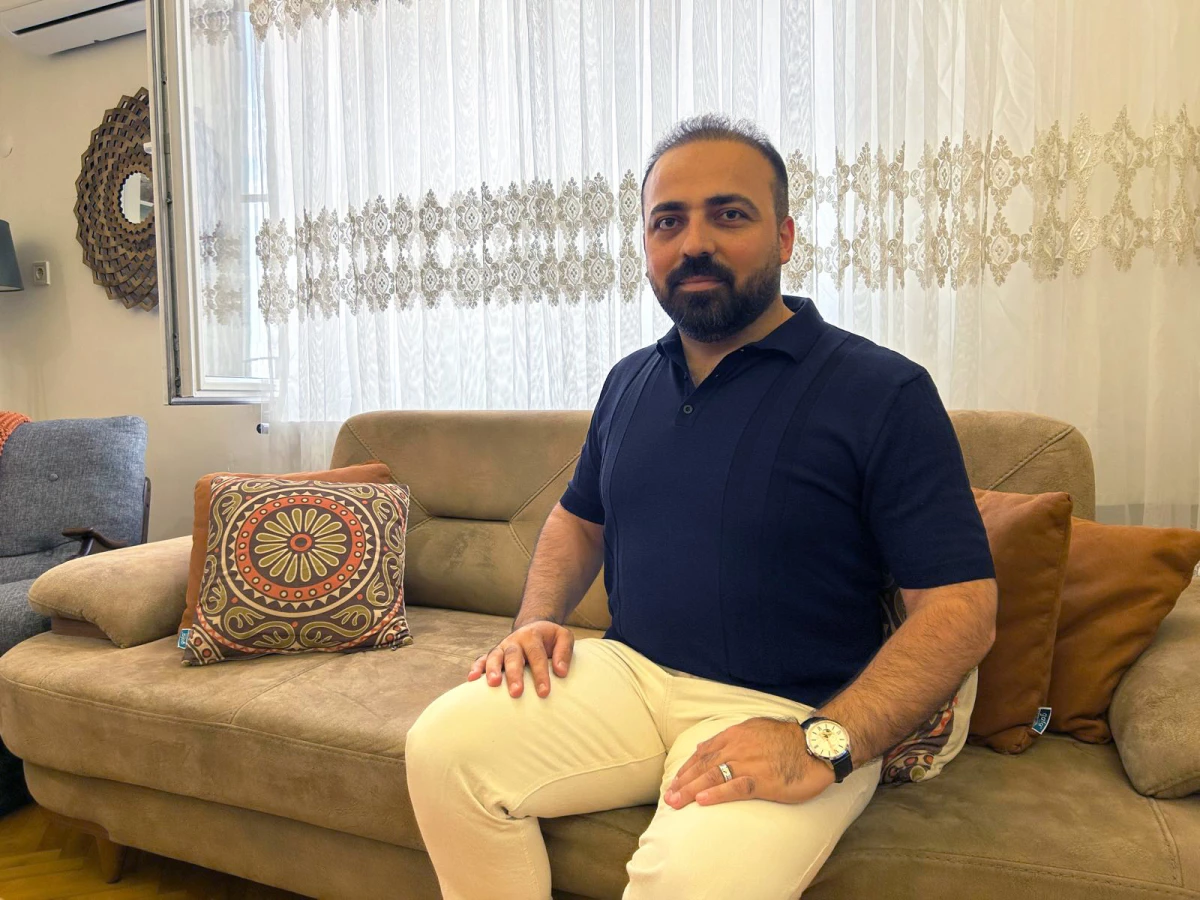
Ahmad al-Taleb: Betting everything on Aleppo
One man who’s already made his decision is Ahmad al-Taleb.
A 33-year-old civil engineer — and part-time party clown — from Aleppo, Taleb fled Syria in 2014 after ISIS took over his city.
At the time, he was documenting human rights violations, work that put him and his family at risk. His brother was arrested. Taleb fled to Turkey.
Since then, he’s built a life in Gaziantep — studied, married, launched a company, and became a father.
But in October, when his lease is up, he and his wife Sahar, along with their 3-year-old son Kamal, will pack their things and return to Aleppo for good.
“I feel much safer now,” Taleb says, sipping juice made from oranges his mother picked in Latakia, along Syria’s Mediterranean coast. “I’m afraid, of course. But I’m also optimistic. It’s time to rebuild.”
Taleb is under no illusions. Aleppo is still in ruins. Rents are soaring. Services are patchy.
Sahar, who never finished university, hopes to resume her studies, but there’s no guarantee she’ll be able to.
“Still,” Taleb says, “we belong to Syria. Turkey is our second home, but it’s not where we belong.”
He remembers the euphoria of Assad’s fall last year, which he and Sahar watched unfold from their couch into the early hours of the night. Feeling restless watching the celebrations unfold in Damascus on their TV screen, Taleb got in his car and drove straight to the capital city.
When he got there, he was overcome with a mix of jubilation and agony.
Memories came flooding back of the massacres he documented. Friends lost. Airstrikes he saw kill innocent women and children.
“It was a mix of feelings. Victory and grief.”
Armed with a big smile, Taleb says he’s keeping a positive mind about the future. He believes in the promise of the transitional government, and in his role as a civil engineer in rebuilding Syria.
“I just hope my son never asks me, ‘Why did you take us back?'” he says. “But if he grows up where he belongs, maybe one day he’ll understand.”
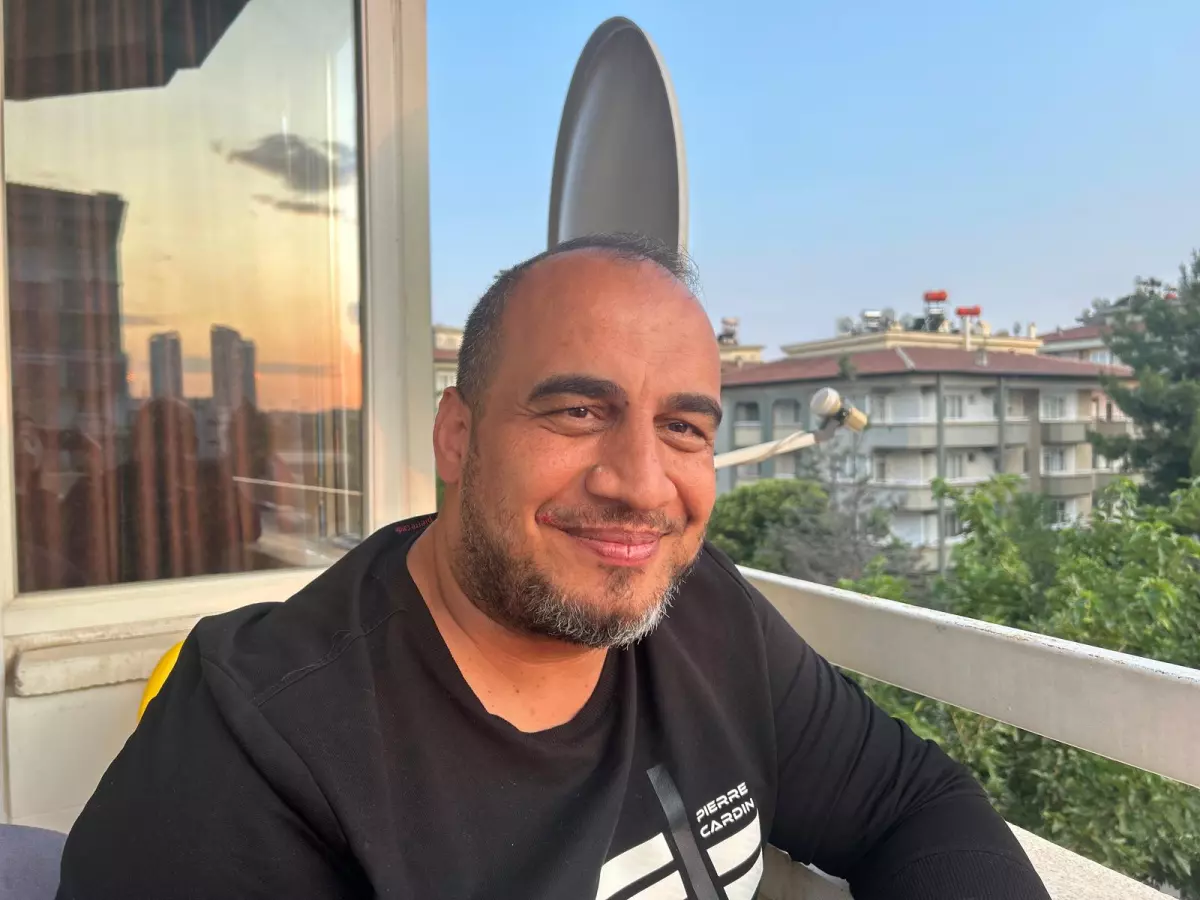
Mohammed Jamil Alshammary. Home is calling — but is his family ready?
On the eve of a trip to Damascus, Mohammed Jamil Alshammary is practically giddy — reciting couplets aloud.
“Like up high in the glorious skies, my angel’s heart shyly lies. To her so sweet, celestial sound brought me down to the ground.”
At 44, Alshammary is a seasoned interpreter and literature buff who’s worked in boardrooms from Geneva to Paris, translating for presidents and humanitarian leaders alike.
He quotes the linguist Noam Chomsky, references the movie The Hours, and casually drops George Michael lyrics into the conversation.
Despite job offers in Canada and Europe, he chose to stay in Turkey for the past 15 years for his family.
“My wife didn’t want our daughters raised in a foreign culture,” he says. “Turkey felt closer to home.”
Now, Alshammary says he’s ready to help rebuild Syria, albeit cautiously.
“Security first. Then economy,” he says. “Even if I were paid $1,000 a day in Damascus — if it’s not safe, I won’t bring my family there.”
Alshammary knows the challenges that await him. Rents in Damascus have skyrocketed because of housing shortages. His children, fluent in Turkish, risk cultural displacement if they return.
“I’m middle class,” he says. “What about the rest? Most Syrians can’t afford rent or tuition.”
Still, he says he’s ready to bring one foot back into Syria, where he hopes to open a translation agency in Damascus.
“We must not clone the past,” he says. “No more corruption. No more exclusion.”
This story was supported by a grant from the Pulitzer Center.
Mahmoud Al Basha contributed reporting from Gaziantep, Turkey.
Transcript:
JUANA SUMMERS, HOST:
After more than a decade living in exile, many Syrians are finally considering what many once thought impossible – going home. The fall of dictator Bashar al-Assad last December opened a door or at least cracked it. Now, for the millions who fled to neighboring countries like Turkey, the question is rising again – is it time to return? But as reporter Rebecca Rosman recently found out, behind that question are a thousand others. From just over the border in southern Turkey, she brings us the story of two families standing at the crossroads.
ADHAM ALJAMOUS: So this is our land and the village.
REBECCA ROSMAN, BYLINE: Adham Aljamous keeps a plastic bag full of old photos – the only thing his family managed to carry out of Syria. They reveal a world that feels like a lifetime ago – golden afternoons, family meals, a home untouched by war.
ALJAMOUS: Let’s see – me.
ROSMAN: Even the bad memories are good memories, he says.
ALJAMOUS: Especially after you leave forcefully, even the things you hate, you would start to love and miss.
ROSMAN: Aljamous is 32 years old. He grew up in Daraa in southwest Syria, the cradle of the 2011 uprising. When he and his family fled Syria, they thought they just had to lay low for a few weeks. That was 11 years ago. For years, Syrians like Aljamous have lived with the same question – will I ever be able to go home again? But since the fall of Bashar al-Assad seven months ago, that question has started to change. Now it’s not if, but when, how and at what cost?
ALJAMOUS: When the circumstances are suitable, there will be a return to homeland, inshallah, for sure.
ROSMAN: But a lot needs to happen before those circumstances can be called suitable. Sanctions are being lifted to reconnect Syria with the international economy, but roads, railways and homes still need rebuilding. Years of conflict have devastated basic services. Electricity and water remain unreliable in many areas, making daily life a struggle, and there’s uncertainty over Syria’s interim leader, Ahmed al-Sharaa, who was once linked to al-Qaida. None of this worries Aljamous.
ALJAMOUS: When the regime was in control, I said I would follow the devil if he overthrow this regime because, for me, this is worse than the devil.
ROSMAN: The real problem isn’t just the logistics of returning. It’s that the Syria waiting for Aljamous isn’t the Syria he left behind. The war didn’t just destroy cities. It shattered what home could ever mean.
ALJAMOUS: Sometimes, I just sit and try to think who’s left there – literally no one from my friends. I don’t know anyone there. So if I go back, I think it’s going to be a big problem for me. Like, your hopes or your dreams are just dreams.
ROSMAN: And he’s not alone. In another corner of Gaziantep, Turkey, I meet with Bushra Ajaj and Hasan Ajam, a married couple who met through the revolution and survived it together.
HASAN AJAM: Some Syrian sweets, please.
ROSMAN: Oh, my…
Over generous cups of cardamom coffee and pistachio-filled sweets, they tell me what returning feels like now.
(SOUNDBITE OF COFFEE POURING)
ROSMAN: The new Syrian flag hangs in their living room. It’s a symbol of pride and grief. Both were arrested for their activism. Both lost friends and family. Hasan Ajam has returned to Syria twice since Assad’s fall in December, but even now he says…
AJAM: Everybody have memories and have friends and everything in last life, there in Syria. But till now, I visit Syria twice time, but I didn’t go inside my home.
ROSMAN: Bushra Ajaj went back once in April for the first time in 10 years.
BUSHRA AJAJ: In some moments, I felt myself like stranger. It’s very different from the Syria that we left.
ROSMAN: Her family home was damaged – no windows, no doors. But it wasn’t the house that broke her. It was seeing her old university.
AJAJ: So I remembered my friend that passed away because of Assad regime there in university. I remembered a lot of stories we lived there in the university. So I cried a lot when I saw it after 10 years.
ROSMAN: The memories came back?
AJAJ: Yes.
ROSMAN: It’s not just that Syria has changed. It’s that going back means facing everything and everyone that’s missing. For this married couple, even imagining a return comes with questions. They have two young kids to think about, both born in Turkey.
AJAJ: They speak Turkish better than Arabic. Sometimes, I feel it’s good, because they live here, not to feel themselves strange or – but now we are thinking about going back to Syria. We are not sure. We don’t have any clear picture about our situation. I fear that they feel theirselves (ph) a stranger in Syria.
ROSMAN: If they do ever go back permanently, Bushra Ajaj wants it to be somewhere new, not her tiny village, maybe somewhere in nearby Aleppo – somewhere she can create new memories, even if it never quite feels like the home she left. Rebecca Rosman, NPR News, Gaziantep, Turkey.
