


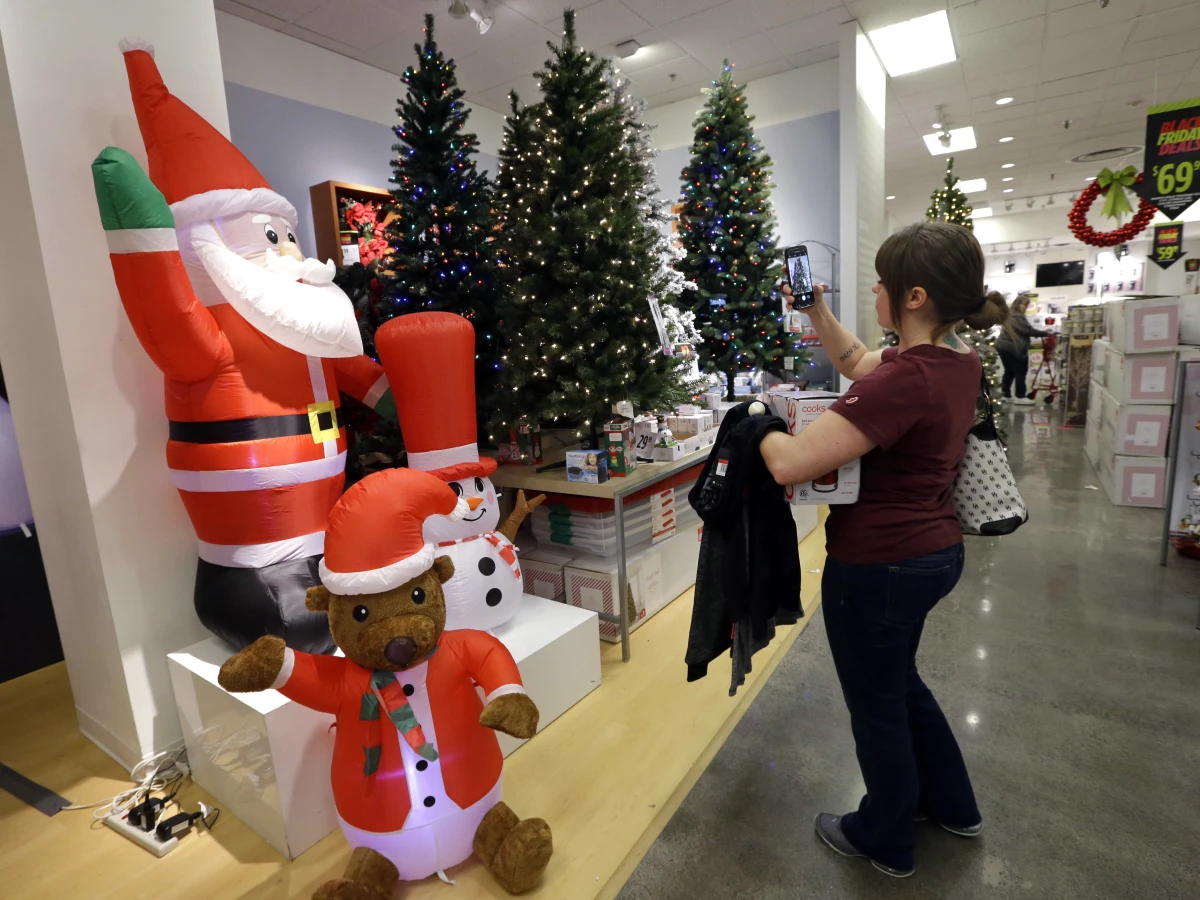
According to the American Christmas Tree Association, 83% of households who plan on displaying a Christmas tree in 2025 will choose an artificial one. But this year, not even holiday cheer is safe from economic tensions, as tariffs and supply chain pressures are pushing prices up.
Mac Harman, founder and CEO of Balsam Hill, an artificial Christmas tree company, explains the increase will be noticeable. “Whatever price point you might have been looking at last year, expect that to be about 10% to 15% more this year,” he says.
Nearly all artificial Christmas trees are imported from China. While Harman says that manufacturing costs remain steady, the price vendors pay to U.S. customs has increased, as a result of President Trump’s ongoing tariffs on China.
Trump often says his tariffs are intended to incentivize manufacturing on American soil. However, manufacturing domestically wouldn’t be a simple switch for Harman and his team. “The interesting thing about pre-lit artificial Christmas trees is they’ve never been made in the U.S.,” Harman explains.
Harman says it’s a tedious process to attach the lights by hand like his company does – involving zip ties and painstaking attention to detail to ensure each bulb is perfectly placed – a task American workers rejected 30 years ago when prelit trees first hit the market. “It’s very unlikely that something almost like basket weaving is a trade that’s going to move from a lower wage, lower cost of living country to the United States for the first time,” Harman says.
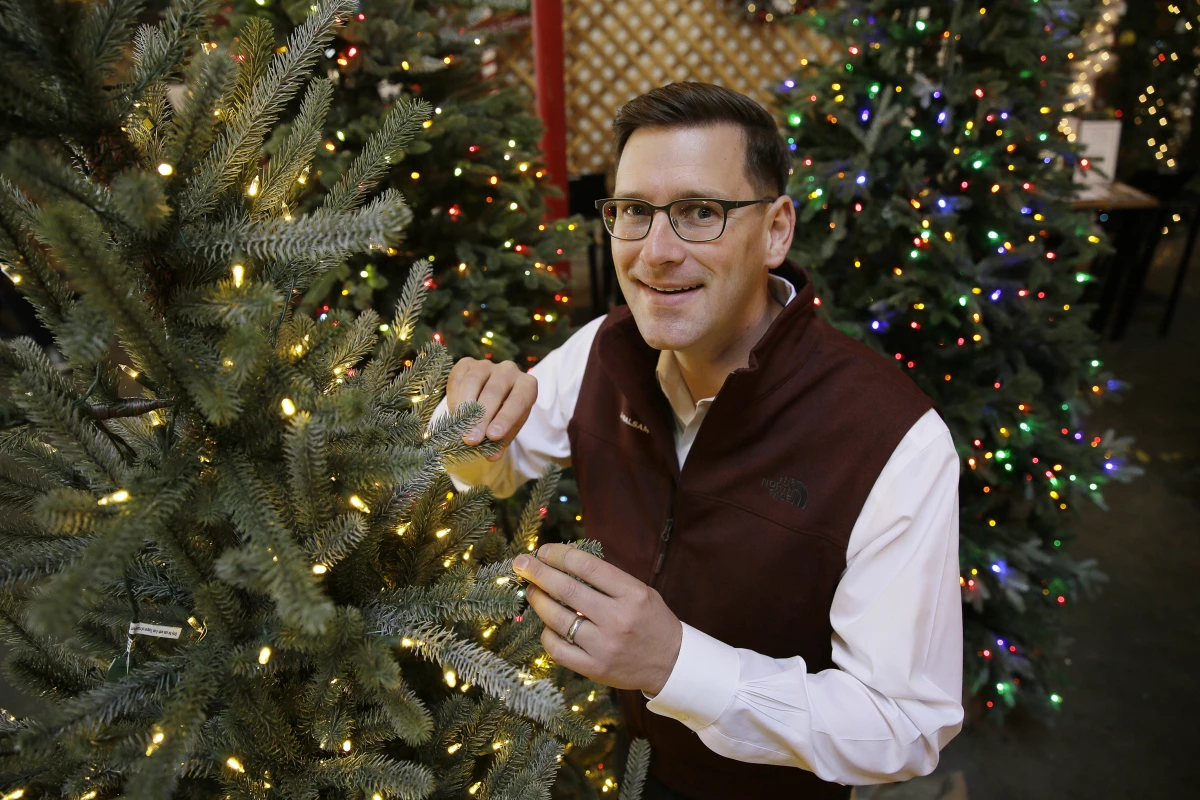
Other companies in the Christmas industry are facing the effects of tariffs too. Harman says many of his company’s U.S. based suppliers, who purchase their component parts overseas, are also seeing higher costs too. “The prices have gone up no matter if we make something here or if we make it in other places,” he says.
Harman has tried multiple strategies to keep Balsam Hill’s prices competitive. Internally, he’s made reductions to his workforce, paused hiring, and frozen raises. He’s also diversified his supply chain, manufacturing trees in Mexico, Indonesia and other parts of Southeast Asia.
Last year, when President Trump won the election, Harman pre-ordered his supply for Christmas 2025, almost a year in advance. “We shipped as many products as we could between November and January 20th, Inauguration Day, because there was a lot of discussion that there was going to be a day one tariff,” Harman says. Each time the administration lowered tariff rates this year, Harman restocked his supply – an option he fears may not be available to him next holiday season.
For shoppers, his advice is simple: don’t procrastinate. Because of the price increases, some retailers ordered less stock, raising the risk of mid-December shortages. “Look for a tree that you love, and if it’s on some kind of sale, buy it,” Harman says.
In past festive seasons, shoppers might have delayed in the hope of getting a bargain, but that might not be such a good idea this time around. “Seeing if you might get 10% off if you wait two weeks, I don’t think that’s going to work as well this year as it might in a normal year,” Harman says.
Transcript:
AYESHA RASCOE, HOST:
Now, it may be a little early to talk about Christmas, but I like to be organized, and that means thinking about my tree. According to a survey by the American Christmas Tree Association, more than 80% of households planning to put up a tree this year opt for an artificial one. But those trees, once seen as the cheaper, more convenient option, are getting more expensive as tariffs and higher production costs drive up prices. Mac Harman is the founder and CEO of Balsam Hill, which manufactures artificial Christmas trees, and he joins us now. Welcome to the program.
MAC HARMAN: It’s great to be here.
RASCOE: Let’s just start by comparing prices. And this is important to me ’cause I’m going to be buying a new artificial Christmas tree this year. How much did an artificial Christmas tree cost this time last year versus now? And I’m talking about for the average tree, not some huge, massive thing.
HARMAN: What we’ve seen this year in the market is that prices have gone up about 10 to 15%, looking across the different retailers.
RASCOE: And so help us understand, like, what part of production is most affected by tariffs?
HARMAN: In the Christmas industry, 90% of Christmas decorations have been made in China historically. Because the products are made in Asia, there’s really not been any increase in the manufacturing costs. It’s just in the tariffs that we pay to the U.S. government to bring those goods into the United States.
RASCOE: Could you move your production here so you wouldn’t have that?
HARMAN: We do source some products, not Christmas trees, but other Christmas products in the U.S., and that has been affected as well because our suppliers in the U.S. purchase component parts overseas, and those have been tariffed. So the prices have gone up, no matter if we make something here or we make it other places. That said, specific to China, we have been working over the last five or six years to diversify our supply chain and get outside of China. We’ve manufactured Christmas trees in Mexico. We’ve manufactured them in Indonesia and other places in Southeast Asia. But all of those places have been tariffed.
RASCOE: OK. I know you said that even manufacturing here, you still have to deal with the component costs. Is there something specific about Christmas trees – why you wouldn’t look to manufacture them in the U.S.?
HARMAN: Yeah. The interesting thing about pre-lit artificial Christmas trees is they’ve actually never been made in the U.S., and the reason for that is because it’s a really painstaking process, and we do it by using zip ties and clips and making sure the bulbs stick upright so they look great. And so back over 30 years ago, when unlit trees were made in the United States, someone had this great idea to pre-light the trees. The American workers, even 30 years ago, were like, no way. I am not doing this. I just think it’s very unlikely that something that’s almost like basket weaving is a trade that’s going to move from a lower wage, lower cost-of-living country to the United States for the first time.
RASCOE: Some companies have tried to eat the tariff cost, while others feel they have no choice but to raise prices. Has Balsam Hill done anything to try to combat raising its prices?
HARMAN: We have done so many things to try and keep the prices as low as possible. And so unfortunately, we did do a reduction in force. We stopped a bunch of growth projects and reduced our hiring. We froze raises. So there’s all sorts of things we did to reduce our expenses. We also negotiated with our suppliers and asked them to shoulder some of the cost of the tariffs. And then the biggest thing we were able to do was we brought in a lot of our product for Christmas ’25 before the tariffs took effect or before higher tariffs took effect. That’s not going to be a tool that’s available to us for Christmas 2026. But for this year, as soon as President Trump won the election, we shipped as many products as we could between November and January 20 – Inauguration Day – because there was a lot of discussion that there was going to be a Day 1 tariff.
RASCOE: What’s your advice for families who want to get the most value out of their artificial Christmas tree this year?
HARMAN: I think the best idea is to look for a tree that you love. And if you find it and it’s on some kind of sale, I would buy it. I would not wait because I think we are going to see a shortage. Most retailers cut back the number of trees across the industry. The American Christmas Tree Association believes that 15% fewer trees were purchased this year by retailers than last year, and demand is generally pretty steady. With 15% fewer trees, I do think we’re going to have reduced choice later in the season. I think kind of waiting and seeing if you might get 10% off if you wait two weeks, I don’t think that’s going to work as well this year as it might in a normal year.
RASCOE: That’s Mac Harman, CEO of Balsam Hill. Thank you so much for being with us.
HARMAN: It’s a pleasure.
