WASHINGTON — Back in its heyday, Boeing seemed to defy gravity. The company built part of the Saturn V, the most powerful rocket ever flown, to launch the crew of Apollo 11 on its way to the first lunar landing.
But now Boeing’s future in space is very much in doubt.
“If Boeing is going to save itself, everything at Boeing has to change,” said Gautam Mukunda, a lecturer at the Yale School of Management.
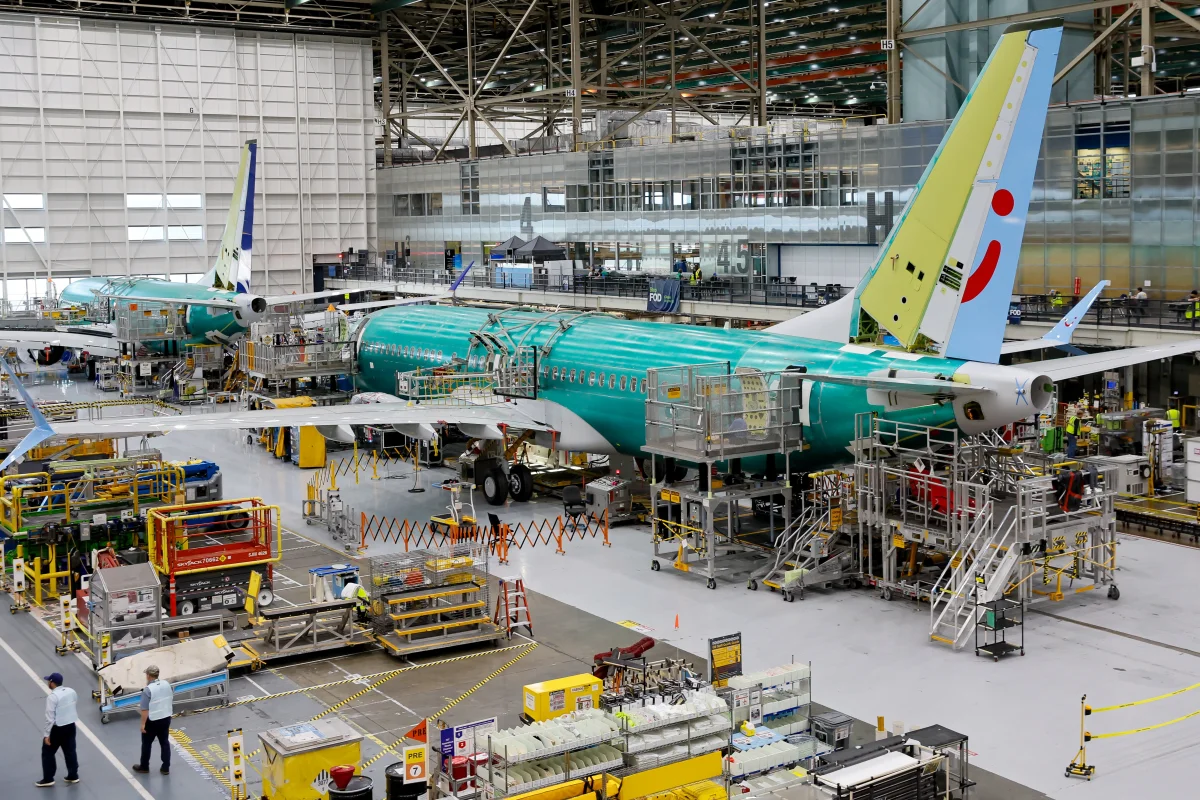
The company lost a stunning $6 billion in the most recent quarter. That was partly because of a strike by its machinists union, which crippled production at its airplane factories in the Pacific Northwest. The union voted Monday to approve a new contract, ending a strike that dragged on for more than seven weeks.
But Boeing still has big long-term problems to solve if it’s going to recapture its leading position in the aerospace industry. Even before the strike, Boeing was grappling with production problems across the company, from commercial airplanes to its defense and space business.
The company’s new CEO Kelly Ortberg warns there are no quick fixes.
“We’re better off doing less and doing it better, than doing more and not doing it well,” Ortberg said on a call with analysts last month. “We need to reset priorities and create a leaner, more focused organization.”
Ortberg has already announced that the company will lay off roughly 10% of its workforce. But beyond that, he hasn’t offered many details of what to expect.
“Clearly, our core of commercial airplanes and defense systems are going to stay with the Boeing Company for the long run,” Ortberg said. “But there’s probably some things on the fringe there that we can be more efficient with, or that just distract us from our main goal here.”
Ortberg did not say exactly what those distractions might be, leaving analysts on the call to their own conclusions.
“If you look out five, seven years from now, the company will be more focused on their core business, which is making things that fly,” said Ron Epstein, a financial analyst at Bank of America.
That includes airplanes, helicopters and military jets, Epstein said. But Boeing might try to sell off some of its other assets, he said, including its global services business, and Jeppesen, a company that makes navigational charts.
There’s a lot of speculation that Boeing will try to get out of space after well-documented problems with its Starliner program. That spacecraft returned to Earth in September without two NASA astronauts who were supposed to stay at the International Space Station for eight days. Instead they’ll catch a ride with Boeing’s competitor, SpaceX, after eight months there.
The Wall Street Journal reported last month that Boeing has explored selling its NASA projects. Boeing declined to comment.
Despite Boeing’s recent stumbles, there are also reasons to be optimistic about the company’s future.
“For all of these catastrophes, as soon as Boeing gets its manufacturing in order, it will be a profitable company again,” said Mukunda.
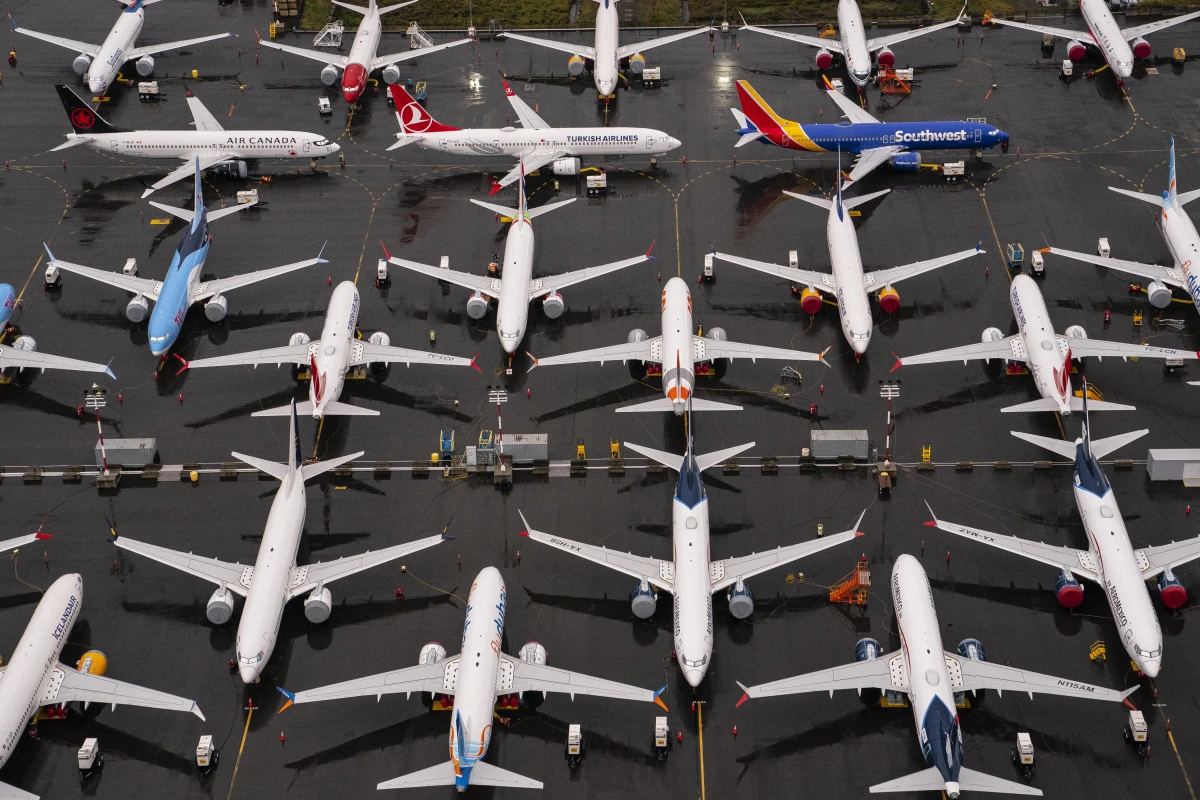
Demand for Boeing’s planes is still strong. So once the company starts building planes faster, especially its best-selling 737 MAX, its cash flow problems should get better. But in the long run, Mukunda argues, Boeing needs to do more than that.

“They are going to have to launch a blank sheet airplane, a new airplane,” he said. “It must happen.”
Analysts say Boeing needs a new plane partly to compete with its rival Airbus, which has been soaring ahead in terms of market share.
Mukunda says there’s a second important reason: to help Boeing attract talented engineers, who want to work on ambitious projects.
“That magnet of talent, of doing great things, used to be one of Boeing’s greatest assets. And now it just doesn’t exist,” Mukunda said.
This is something Boeing’s CEO is thinking about, too.
“Boeing’s an airplane company. And at the right time. In the future, we need to develop a new airplane,” Ortberg said during last month’s call with analysts. “But we have a lot of work to do before then.”
Boeing needs to stabilize the business first, Ortberg said. But financial analyst Ron Epstein says the company shouldn’t wait too long, or it risks losing its “engineering muscle.”
“If you don’t use it, you lose it,” Epstein said. “If you don’t have interesting things for your engineering staff to work on, you’ll lose them.”
Before he worked as a financial analyst, Epstein was an aerospace engineer himself — first at McDonnell Douglas, and then at Boeing, after the two companies merged in the 1990s. Epstein recalls talking to Ed Tinoco, a respected senior engineer at Boeing, on one of his first trips to Seattle.
“We’re talking, and Ed says to me, ‘what does it take to succeed at the Boeing Company? We’ve looked at this and we’ve tried to study it. And what do you think it is?” Epstein recalls.
Epstein offered a few suggestions: work hard, be diligent, put in the time and attention to detail. But those weren’t the answers the older engineer was looking for. Epstein was stumped.
“And Ed said, ‘You’ve got to love airplanes,’” Epstein said. “‘It’s that extra thing that you need to really succeed here.’”
Boeing leaders need to rekindle that love of airplanes, Epstein says. In recent years, they’ve been more focused on cutting costs and boosting profits, instead of building better planes.
Now the company is paying for those years of underinvestment. There’s even talk of bankruptcy — although Epstein thinks that’s unlikely, because Boeing is too important to the economy and national defense.
“My worry is not that they fail. They’re too big to fail. But they’re not too big to be mediocre,” he said. “I think the real trap is they just end up kind of muddling along as some sort of mediocre company.”
Boeing’s new CEO is saying the right things about recapturing what made the company iconic in the first place, Epstein said. But there’s no guarantee that he can pull it off.
Transcript:
ARI SHAPIRO, HOST:
Boeing’s machinists are returning to work. The union voted Monday to approve a new contract, ending a strike that dragged on for more than seven weeks. In the short run, that’s good news for Boeing. In the long run, the aerospace company still has big problems, and it could look very different in a few years, as NPR’s Joel Rose reports.
JOEL ROSE, BYLINE: Back in its heyday, Boeing seemed to defy gravity.
(SOUNDBITE OF ARCHIVED RECORDING)
JACK KING: Ignition sequence starts – 6, 5, 4, 3…
ROSE: The company built part of the most powerful rocket ever flown – the Saturn V – to launch the crew of Apollo 11 on their way to the first lunar landing.
(SOUNDBITE OF ARCHIVED RECORDING)
KING: Lift-off. We have a lift-off. Thirty-two minutes past the hour, lift-off on Apollo 11.
ROSE: But now, Boeing’s future in space is very much in doubt. The company lost $6 billion in the most recent quarter, partly because of the machinists’ strike that ended this week and also because of production problems across the company, from commercial airplanes to its defense and space business. Boeing’s new CEO, Kelly Ortberg, has warned that there are no quick fixes.
(SOUNDBITE OF ARCHIVED RECORDING)
KELLY ORTBERG: We’re better off doing less and doing it better than doing more and not doing it well.
ROSE: On a call with analysts last month, Ortberg said Boeing has to be leaner, more focused. Ortberg has announced that the company is laying off roughly 10% of its workforce. But beyond that, he hasn’t offered many details of what to expect.
(SOUNDBITE OF ARCHIVED RECORDING)
ORTBERG: Clearly, our core of commercial airplanes and defense systems are going to stay with the Boeing Company for the long run, but there’s probably some things on the fringe there that just distract us from our main goal here.
ROSE: Ortberg did not say exactly what those distractions might be, leaving financial analysts like Ron Epstein at Bank of America to draw their own conclusions.
RON EPSTEIN: If you look out by seven years from now, the company will be more focused on their core business, which is making things that fly.
ROSE: That includes airplanes, helicopters and military jets. But Epstein says Boeing may try to sell off some other assets. There’s a lot of speculation that Boeing will try to get out of space after well-documented problems with its Starliner program.
(SOUNDBITE OF ARCHIVED RECORDING)
UNIDENTIFIED PERSON: Separation confirmed. Starliner is now backing away from Station and starting its return to Earth.
ROSE: Without two NASA astronauts who were supposed to be at the International Space Station for eight days. Instead, they’ll catch a ride back to Earth with Boeing’s competitor, SpaceX, after eight months. The Wall Street Journal reported that Boeing has explored selling its NASA projects. Still, despite Boeing’s recent stumbles, there are some reasons to be optimistic about the company’s future.
GAUTAM MUKUNDA: For all of these catastrophes, as soon as Boeing gets its manufacturing in order, it will be a profitable company again.
ROSE: Gautam Mukunda is a lecturer at the Yale School of Management. He says demand for Boeing’s planes is still strong. So once the company starts building planes faster – especially its bestselling 737 MAX – its cashflow problems should get better. But in the long run, Mukunda says, Boeing needs to do more than that.
MUKUNDA: They are going to have to launch a blank-sheet airplane – a new airplane. It must happen.
ROSE: Analysts say Boeing needs a new plane partly to compete with its rival Airbus, which has been soaring ahead of Boeing in terms of market share. But Mukunda says there’s another important reason – to help Boeing attract talented engineers who want to work on ambitious projects.
MUKUNDA: That magnet of talent, of doing great things, used to be one of Boeing’s greatest assets, and now it just doesn’t exist.
ROSE: This is something Boeing CEO Kelly Ortberg is thinking about, too.
(SOUNDBITE OF ARCHIVED RECORDING)
ORTBERG: Boeing’s an airplane company. And at the right time in the future, we need to develop a new airplane. But we have a lot of work to do before then.
ROSE: Ortberg says Boeing needs to stabilize the business first. Financial analyst Ron Epstein says the company shouldn’t wait too long.
EPSTEIN: To keep their engineering muscle intact – I mean, if you don’t use it, you lose it.
ROSE: Epstein says Boeing’s leaders have been more focused on cutting costs and boosting profits instead of building better planes. Now, the company is paying for years of underinvestment. There’s even talk of bankruptcy, although Epstein thinks that’s unlikely because Boeing is too important – to the economy and national defense.
EPSTEIN: My worry is not that they fail. They’re too big to fail, but they’re not too big to be mediocre. I think the real trap is they just end up kind of muddling along as some sort of mediocre company.
ROSE: Boeing’s new CEO is saying the right things about recapturing what made the company iconic in the first place, Epstein says, but there’s no guarantee he can pull it off.
Joel Rose, NPR News, Washington.