


The hills above Los Angeles are covered with dense, dark green brush, a unique plant community known as chaparral. In the wake of the extreme wildfires that destroyed more than 12,000 homes and buildings, some are blaming the destruction squarely on that.
“You have thirty years of leaves and those leaves are dry as a bone and they burn,” President Donald Trump said as he visited Los Angeles during the fires. In a congressional hearing this month, witnesses blamed “overgrown brush” and environmental regulations they say prevent it from being cleared.
But wildfire experts say cutting down Southern California’s chaparral won’t make the region safer from wildfires. In fact, because of the local ecology, they say clearing vast swaths of native brush could actually make the landscape even more flammable.
That’s the opposite of what California’s forests need. In forests, too much dense undergrowth has built up, creating the fuel for extreme wildfires. Clearing forest undergrowth and using controlled burns, a practice used for thousands of years by Native Americans, has become a priority to protect communities.
In Los Angeles, some experts say there may be cases where clearing patches of chaparral around neighborhoods of houses is warranted. But the biggest improvement will come from clearing any vegetation within five feet of a structure to create a buffer zone in case of fire, as well as making homes themselves safer by using fire-resistant building materials.
“If there’s a simple message, it is that one size does not fit all, not only within California, but within ecosystems across the world,” Alexandra Syphard, senior research scientist at the Conservation Biology Institute, a non-profit research group. “One-size-fits-all has a very high potential of leading to unintended consequences.”
Too much wildfire
It’s not easy to walk through a patch of chaparral.
“If you’re going through chaparral, you’re probably army crawling because it’s very dense,” says Joseph Algiers, restoration ecologist at the Santa Monica Mountains National Recreation Area, a park of more than 150,000 acres managed by the National Park Service.

In the mountains north of Los Angeles, Algiers pushes his way through the brush, which tops 10 feet tall, and points out the fragrant leaves of a bay laurel. Most chaparral plants have small leaves that conserve water, one way they survive hot summers with virtually no rain.
“We’re standing in a biodiversity hotspot right now, and chaparral is unique to California,” Algiers says. “It’s a very rare part of the world.”
Chaparral plants are also adapted to wildfires, which are a regular part of the Southern California landscape. While the dry shrubs burn at high intensity, they can bounce back after burning to the ground. Some resprout from the roots. Other plants rely on seeds that have been dropped in the soil over decades, which germinate after a fire.
“If you give them enough time, 30 years or so, that’s enough time for them to replenish the seed bank and get ready for that next fire,” Algiers says.
But over the last century, the mountains of Los Angeles have been burning more frequently than they used to, mostly caused by human activity. Lightning-caused fires used to happen every 30 to 100 years in the area. Now, ignitions are started by power lines, fireworks, cars and heavy equipment.
“We have areas that have burned 12 times in the last hundred years,” Algiers says. “That’s not enough time for the vegetation to recover.”
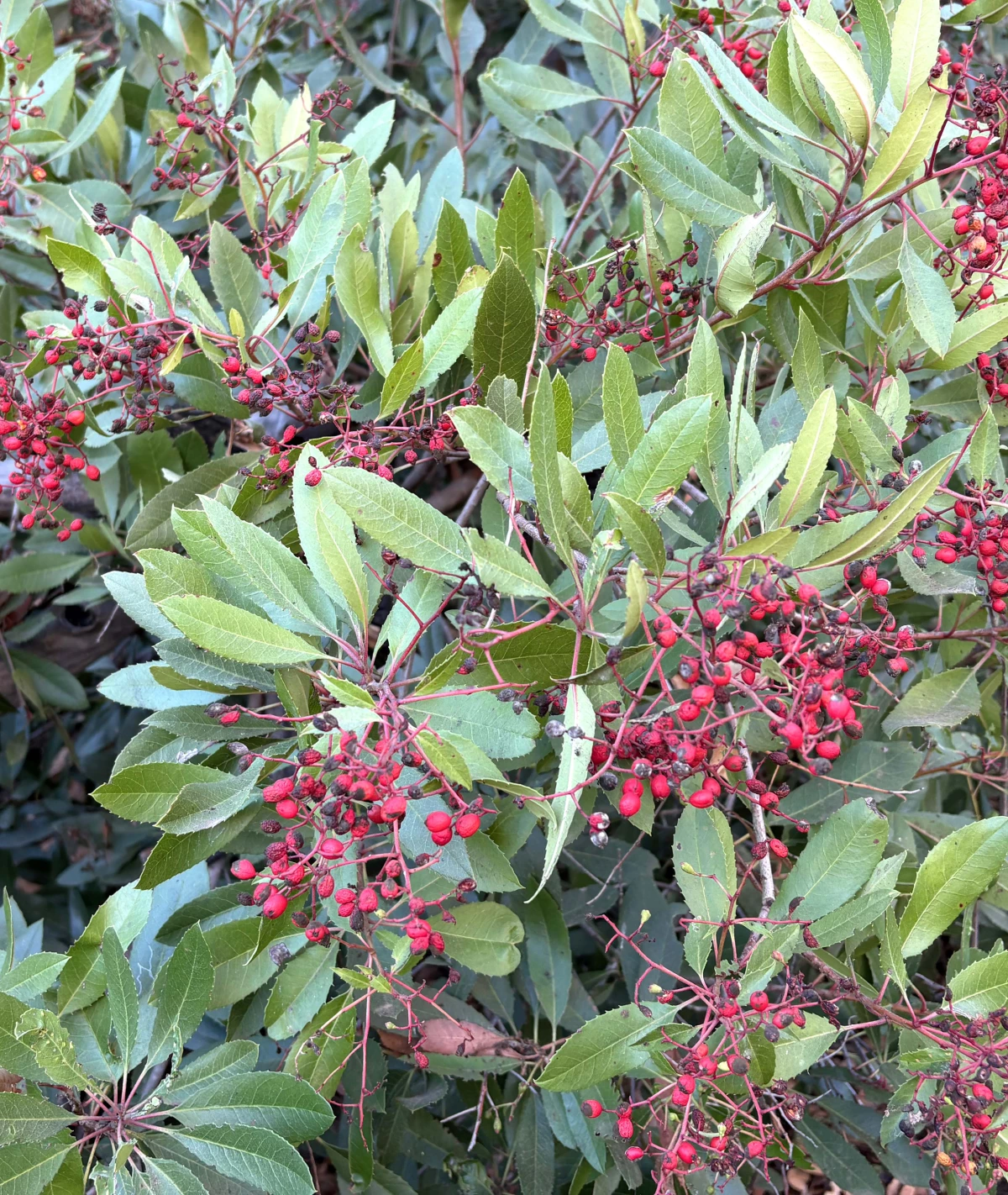
Frequent burns also leave the landscape vulnerable to invasive grasses, which move in quickly and displace native plants. After the 2018 Woolsey Fire, the National Park Service found that areas that burned had an 8 percent increase in invasive species. Over multiple fires, native chaparral shrubs get sparser.
The invasive grasses that take over are even more flammable than chaparral, leading to an even greater risk of extreme wildfires. Algiers says it’s why the National Park Service doesn’t clear large areas of chaparral or do prescribed burns.
“The problem we have is not a lack of fire – it’s too much fire,” Algiers says. “And it’s always traced to ignitions that are caused by human activity.”
Chaparral vs forests
Managing chaparral ecosystems is starkly different from managing California’s forests. Heavily wooded areas are accustomed to more frequent fires, which mostly burned at low intensity, clearing the debris and vegetation on the forest floor without killing the larger trees.
Over the last century, humans have dramatically changed that cycle. The U.S. Forest Service and other government agencies started fighting wildfires, adopting a rule to extinguish all fires on public lands by 10 a.m. the next day. Without regular fires, brush and small trees built up on the forest floor, providing the fuel for catastrophic fires.
In recent years, California has sought to restore the role of “good fire” in forests, a practice that Native American communities used until it was halted by Western settlers. Both tribes and fire agencies are now increasingly using controlled burns to help make forests healthier and less prone to extreme wildfires.
“In those areas, it’s beneficial, it’s useful,” Algiers says. “But in our mountains, that’s not the case. There’s not this problem with the accumulation of fuels that we see in forest systems.”
Fire experts say it shows there are no simple solutions when it comes to wildfires.
“They are very different ecosystems,” Syphard says. “The narrative of ‘fire is bad’ is bad. But the flipside that ‘all fire is good’ is an overcorrection.”
What can make communities safer
While cutting down chaparral overall may not help communities be safer, fire experts say there could be limited cases where trimming it directly next to a neighborhood could make sense. It’s known as a fuel break, a buffer of cleared vegetation that’s several hundred feet wide.
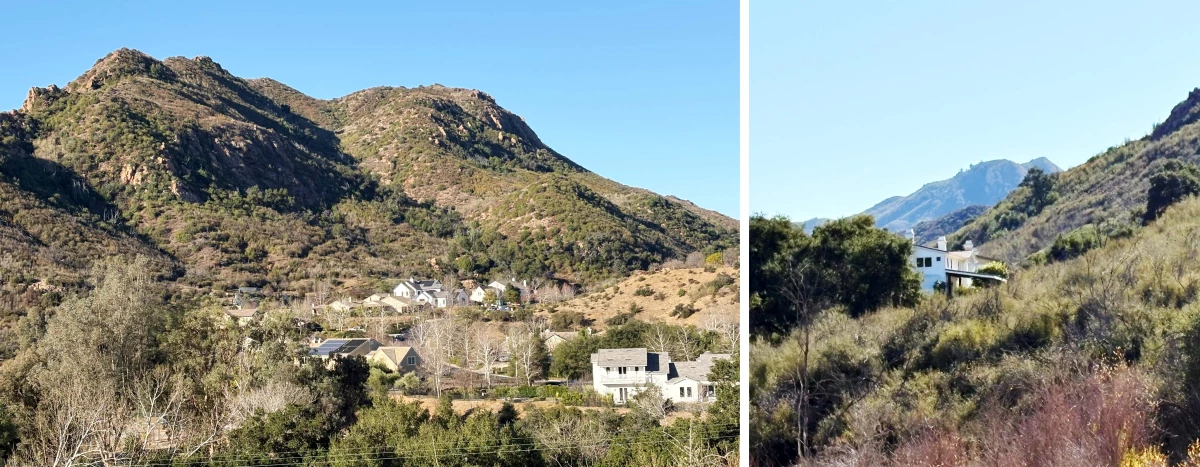
These fuel breaks don’t stop a wildfire by themselves. In high winds, burning embers can travel for up to a mile, easily jumping over a fuel break and igniting homes and trees. But with less vegetation to burn, the areas can provide an access point for firefighters.
“They can slow the fire momentarily to just buy a little bit of time for firefighters to do something,” Syphard says. “Fuel breaks are ecologically costly, so they should be done strategically where they’re actually going to be putting firefighters on them to defend houses.”
The most effective way to make communities safer is to focus on homes and their immediate surroundings, fire experts say. Embers are the primary way that wildfires spread, so houses need to be prepared for that onslaught. Clearing the brush and vegetation directly next to a house reduces the chances that they’ll spread fire to a structure.
California already has rules that require homeowners in risky areas manage their vegetation to create this “defensible space.” The state is planning even tougher rules that severely restrict vegetation within five feet of a house. Governor Gavin Newsom recently signed an executive order urging state officials to speed up implementation.
Homes that are built from fire-resistant materials also fare better in wildfires, as was seen in the Los Angeles fires. Replacing wood roofs and using non-combustible siding is key, as well as covering the openings to attics and crawl spaces with a fine mesh so embers can’t fly inside. California has building codes that require that for new homes being built in wildfire-prone areas, but even some retrofits of existing homes can be affordable.
“You get a lot more bang for your buck and it’s much more effective when you have groups of homes who are all working together to make a more fire-resilient community,” Syphard says.
Transcript:
A MARTÍNEZ, HOST:
During the recent Los Angeles fires, President Trump threatened to withhold federal aid over California’s wildfire policy. He said the state should be clearing more vegetation.
(SOUNDBITE OF ARCHIVED RECORDING)
PRESIDENT DONALD TRUMP: You have 30 years of leaves. And those leaves are dry as a bone, and they burn.
MARTÍNEZ: But the brush around Los Angeles, known as chaparral, is unique. And clearing it could actually increase the fire danger, as NPR’s Lauren Sommer reports.
(SOUNDBITE OF CHAPARRAL RUSTLING)
LAUREN SOMMER, BYLINE: It is not easy to get through a patch of chaparral.
JOSEPH ALGIERS: You know, if you’re walking through chaparral, you’re probably army crawling because it’s very dense.
SOMMER: Joseph Algiers is a restoration ecologist with the Santa Monica Mountains National Recreation Area. We’re in the mountains above Los Angeles, where the brush is about 10 feet tall. There are many different shrubs here, all part of the chaparral landscape.
ALGIERS: That’s a bay laurel there, awesome-smelling leaves.
SOMMER: These plants are tough. They survive the summer heat with virtually no water and are the foundation of this ecosystem.
ALGIERS: We’re standing in a biodiversity hot spot right now. And chaparral is unique to California.
SOMMER: And being in California, these plants are also adapted to wildfire and can bounce back after a burn. Some resprout from the roots. Others leave seeds sitting in the soil that grow after a fire.
ALGIERS: If you give them enough time – you know, 30 years or so – that’s enough time for them to replenish the seed bank and get ready for that next fire. But the problem that we’re having in our mountains is that we have fires that are burning far too frequently. We have areas that have burned 12 times in the last hundred years.
SOMMER: Fires are happening more often now around Los Angeles because people cause them with power lines or fireworks. That doesn’t give the native chaparral plants enough time to recover. Then invasive grasses move in, which are even more flammable.
ALGIERS: And so the chances of ignitions are higher, and then that leads to more fire on the landscape.
SOMMER: Algiers says this is why the National Park Service doesn’t cut down chaparral plants here or try to clear them by intentionally setting fires, known as prescribed burns. Getting rid of them doesn’t reduce the fire risk. That’s very different from California’s forests, where the vegetation is overgrown and needs clearing out with regular fires.
ALGIERS: My colleagues are using prescribed burns in those areas, and it’s beneficial. It’s useful. But in our mountains, that’s not the case.
SOMMER: What works in forests does not work in chaparral.
ALEXANDRA SYPHARD: You know, if there’s a simple message, it is one size does not fit all.
SOMMER: Alexandra Syphard is a research scientist at the Conservation Biology Institute. She says, in some cases, it could make sense to cut the chaparral right around a community of houses to create a buffer. It’s known as a fuel break. That wouldn’t stop a wildfire because in high winds, embers can be blown for a mile.
SYPHARD: But sometimes they can slow the fire momentarily to just buy a little bit of time for firefighters to do something.
SOMMER: Those firefighters could get better access to defend homes. But Syphard says the best defense a community can have is to focus on the houses themselves – retrofit them with fire-resistant materials, get rid of old wood roofs and clear the vegetation within five feet of the walls.
SYPHARD: You get a lot more bang for your buck, or it’s much more effective, when you have groups of homes together who are all making a more fire-resilient community.
SOMMER: As Los Angeles looks at how to make communities safer from wildfires, the best place to start is at home.
Lauren Sommer, NPR News.
