Around 3.7 million wheelchair users live in the United States, each pushing themselves an average of 2,000 to 3,000 times a day. Some of that is straightforward, but wheelchair navigation sometimes includes negotiating unexpected curbs, stairs, steep hills and other obstacles— and most wheelchair users don’t have access to formal training to learn how to smoothly navigate on their own.
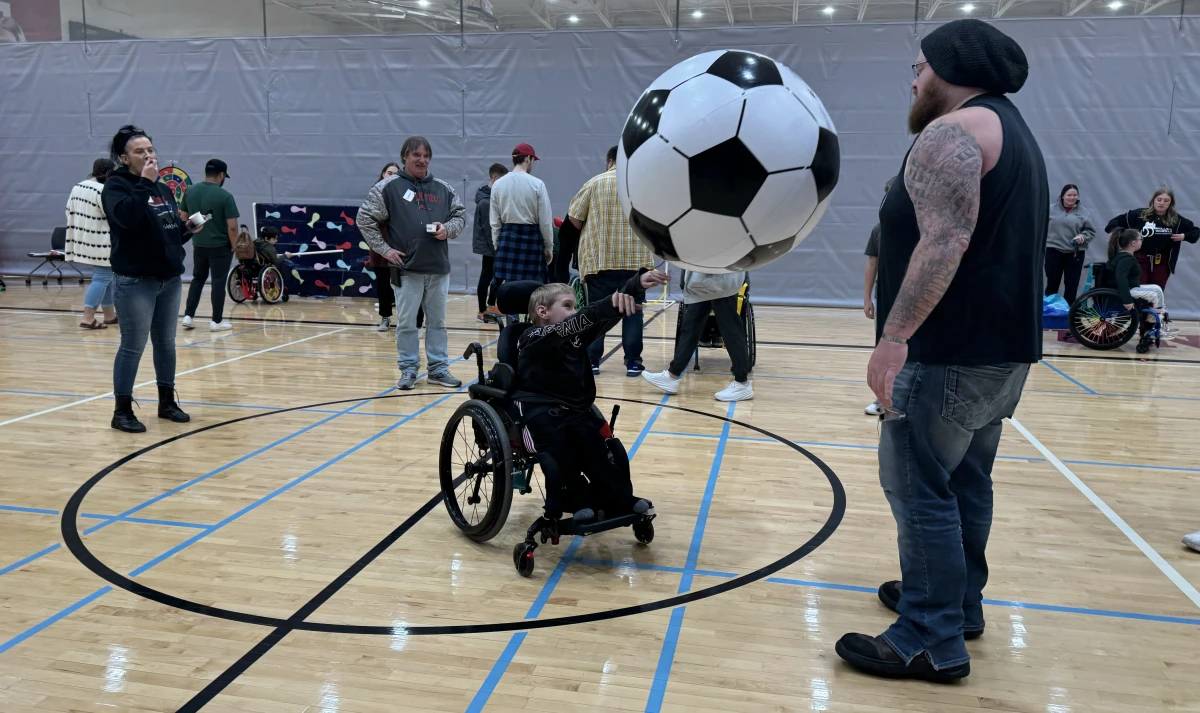
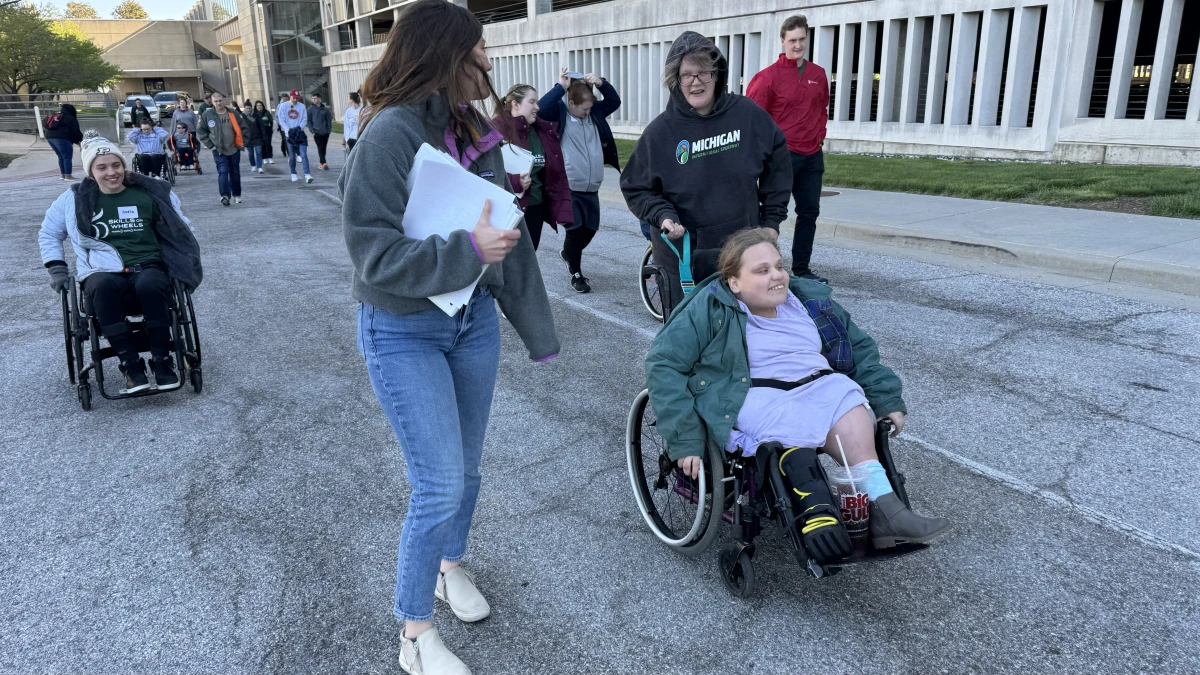
A unique, free program called Skills on Wheels run by Indiana University Indianapolis aims to address the gap for young people. Around 20 kids ranging from age 8 to 17, spend multiple days on campus learning how to navigate props like ramps and speed bumps. Then they take those new skills for a test run outside.
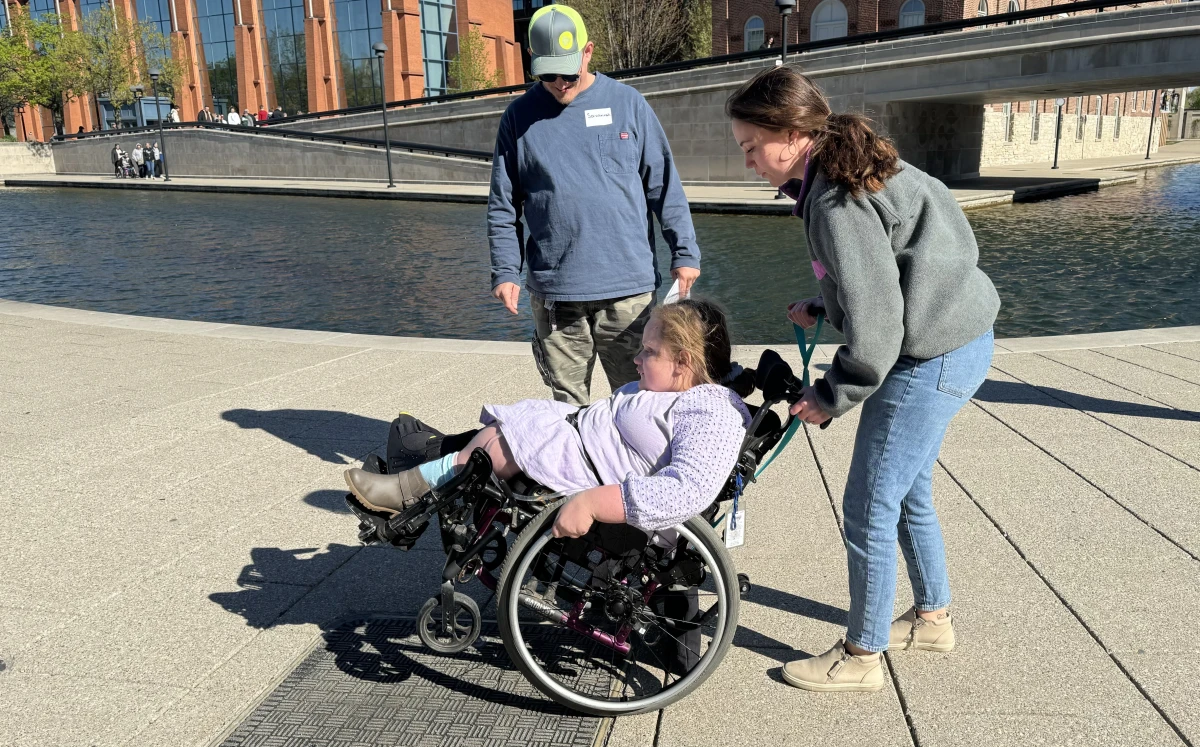
Savannah Healton, 12, has spina bifida, a neural tube defect in the spine. She needs a wheelchair, and lately, she’s been practicing how to do wheelies.
“It’s basically where you push two times, and then you pop into your wheelie,” Healton said. “So if you’re going up a curb, you can get into your wheelie so you can go up the hill or the curb or wherever you’re going.”
There’s little research about the use of wheelchairs by children, but one study shows that 75% of adults who use a wheelchair have a fear of falling. Nearly 65% reported falling out of their chair, and more than half had incidents resulting in an injury. Even without accidents, improper technique can injure muscles and nerves.
A child’s confidence can take a big hit if they don’t know how to maneuver their wheelchair or fear falling out of it, says program director and Indiana University occupational therapy researcher Tony Chase. Kids may decide to skip certain activities at school or with friends if they know there will be obstacles like narrow doors or stairs.
“We would love to change the world, and just make it all of a sudden accessible, but that’s a little bit too lofty of a goal,” Chase said. “So instead, let’s try to make kids more confident in navigating this inaccessible world.”
Researchers have developed a list of 33 core skills that are essential for navigating a wheelchair in a variety of environments, but kids might not learn these skills in school or in physical and occupational therapy.
Maria Fuchs, an occupational therapist volunteering with the program, said she didn’t learn much about hands-on wheelchair training during grad school.
“A lot of times wheelchair training isn’t a main focus…other things like feeding or dressing or play skills, things like that, are kind of the priority,” Fuchs said.
Kids often learn only the basics of wheelchair operation, she said, like using the wheel locks and taking the device apart, and even then only if insurance covers it.
Kerri Morgan, an occupational therapy and neurology researcher at Washington University in St. Louis, said some people’s insurance won’t reimburse them for rehab to learn how to use a wheelchair.
“There’s this gap in education, [and] there’s the gap in actually having the environment in the medical model where clinicians know how to justify it in their notes, so that health insurance pays for it,” Morgan said.
Morgan said it’s common for wheelchair users to learn new skills through other people with disabilities or watching online videos. But that isn’t always safe if someone isn’t advanced enough to try a new skill, if their wheelchair is set up differently, or if they don’t have someone behind them to catch a fall.
Even with a spotter, practicing some skills can be dangerous. Large wheelchairs can weigh between 15 and 50 pounds, not including the weight of the person inside it.
That’s why Savannah’s mom, Chanda Healton, holds onto a strap that connects to the back of her daughter’s wheelchair so it’s safe for Savannah to practice wheelies.
The program isn’t just helpful for Savannah, it allows her mom to learn proper techniques in case the wheelchair starts to tip backward. Healton says she plans to bring her daughter back again next year.
“It’s amazing,” Healton said. “First time I watched her I had tears in my eyes. I’m like oh my gosh, that’s my baby girl.”
Side Effects Public Media is a health reporting collaboration between NPR and public radio stations in Indiana, Missouri, Iowa, Ohio and Kentucky.
Transcript:
A MARTÍNEZ, HOST:
The Americans with Disabilities Act is supposed to make public spaces more accessible. But more than 30 years after it was passed, about two-thirds of curb ramps and half the nation’s sidewalks are still inaccessible. That’s according to the Institute on Disability and Human Development. A program in Indiana wants to help children in wheelchairs overcome some of these obstacles. Here’s Elizabeth Gabriel of Side Effects Public Media.
ELIZABETH GABRIEL, BYLINE: Census data shows that more than 300,000 children use a wheelchair in the U.S. Savannah Healton is one of them. She’s 12 years old, and she has spina bifida, which means her spine didn’t form properly. Lately, she’s been practicing how to do wheelies.
SAVANNAH HEALTON: It’s basically where you push two times, and then you pop into your wheelie. So that way, if you’re going up, like, a curb, you can get into your wheelie so that you can go up the hill or the curb or wherever you’re going.
GABRIEL: That’s an advanced skill not often taught at school or in physical therapy. But Savannah is part of an Indiana University program called Skills on Wheels. Kids start off in a gym using props like ramps and wooden curves to learn how to get around. And on this day, they’re practicing outside, learning how to use those skills in an everyday setting. Skills on Wheels program director Tony Chase says kids who use wheelchairs may skip certain social activities if they know there will be obstacles like narrow doors or stairs.
TONY CHASE: We would love to change the world and just make it all of a sudden accessible. But that’s a little bit too lofty of a goal. So instead, let’s try to make kids more confident in navigating this inaccessible world.
GABRIEL: There’s a list of core skills essential for navigating a wheelchair in different environments. That includes going over curbs, up and down inclines and gaps in pavement. However, volunteer occupational therapist Maria Fuchs says she didn’t learn a lot about hands-on wheelchair training during grad school.
MARIA FUCHS: A lot of times other things like feeding or dressing or play skills, things like that are kind of the priority.
GABRIEL: She says kids often just learn the basics, like using the wheel locks and taking their wheelchair apart. Some insurance companies, though, won’t cover the cost of rehab that teaches people how to properly use wheelchairs. Some get tips from other wheelchair users or watch videos online. And large wheelchairs are heavy, so the skills program also teaches parents safety techniques. Savannah’s mom, Chanda Healton, often holds onto a strap that connects to the back of her daughter’s wheelchair when she practices with her therapist.
FUCHS: What did you work on so far? Let’s recap.
SAVANNAH: Two of those hills.
FUCHS: Going down the hill.
SAVANNAH: And going up the hill.
FUCHS: And going up the hill. And then?
GABRIEL: The – I’m just going to say wheelie ’cause…
FUCHS: Yeah.
GABRIEL: The Skills on Wheels program also gives kids a rare chance to socialize with others in wheelchairs. And for Savannah, that means chatting about her favorite TV show, “Grey’s Anatomy.”
SAVANNAH: Like, Patrick Dempsey, his character is one of my favorite characters.
GABRIEL: Healton calls her daughter’s confidence and new-found ability amazing.
CHANDA HEALTON: The first time I watched her, I had tears in my eyes. I’m like, oh, my gosh, that’s my baby girl. She’s not a baby anymore.
GABRIEL: The family plans to come back for more tips next year so Savannah and other kids can learn how to travel more efficiently and safely in their wheelchairs.
For NPR News, I’m Elizabeth Gabriel in Indianapolis.
(SOUNDBITE OF KHRUANGBIN’S “THE MAN WHO TOOK MY SUNGLASSES”)