We had a talk on Morning Edition about oligarchy.
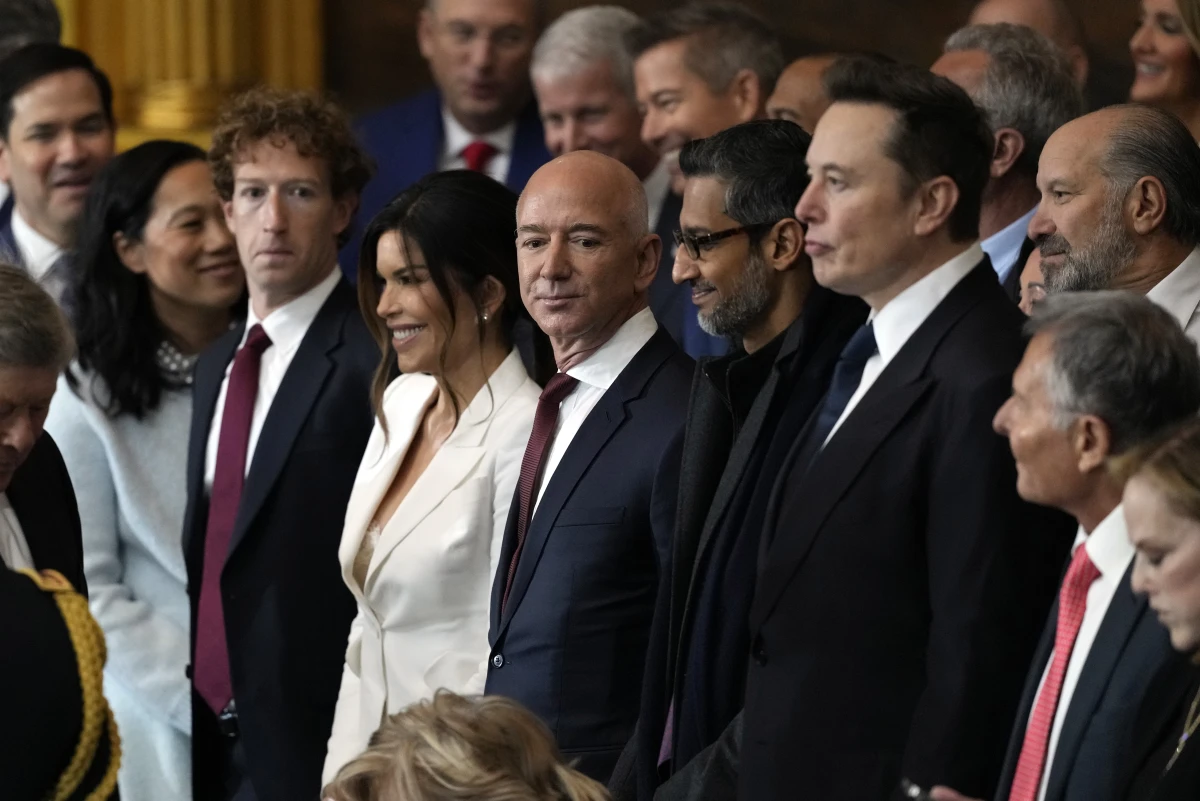
People across the political spectrum have been using the term as President Trump appointed billionaires to his cabinet, invited tech leaders to sit on his inauguration stage and gave Elon Musk control of DOGE (“Department of Government Efficiency”), an entity tasked with reducing spending and bureaucracy in the federal government.
Business and wealth are always connected to politics. But the link is rarely so explicitly on display. So we contacted David Hoffman, an expert on another country where very wealthy men grew very close to the state: Russia.
Oligarchy means rule by the few, and the word oligarchs entered Russia’s popular discourse beginning in the 1990s. Hoffman lived in Moscow as a journalist then, and later wrote a book called The Oligarchs. He described a Russian oligarchy that developed in stages:
Russia’s oligarchs became wealthy thanks to the weakness of the state.
The collapse of the Soviet Union in 1991 left state-owned industries open to privatization. Hoffman says a few men captured companies dealing in natural resources. “Timber, diamonds, oil, you name it,” Hoffman said. He added that the entrepreneurs were “these young hustlers, kids who had not been part of the Communist Party. And seven of them became prominent businessmen by glomming on to these big valuable assets.”
The oligarchs became involved in politics.
In 1996, when Russian President Boris Yeltsin stood for reelection, the oligarchs feared victory by a Communist candidate who might have undermined their position. “So they rallied behind Yeltsin and they used their media, one of their most powerful tools. They all had television and they had newspapers to support Yeltsin, and he was reelected,” Hoffman said. As a reward, “they collected a whole new round of factories and assets.”
Their fortunes turned under a new president.
Vladimir Putin, who abruptly replaced Yeltsin at the end of 1999, took a different attitude. “The oligarchs were not really very popular in Russia,” Hoffman said. “And when Putin came in, his attitude was very much reflective of this envy and resentment in the population. He said at the beginning, I will eliminate the oligarchs as a class.” Putin said: “The state holds a club, which it uses only once,” and warned, “If we get angry… we will use the club without hesitation.”
The oligarchs didn’t take the hint.
“Very early on, two of the most prominent of the first generation, Vladimir Gusinsky, who is a real entrepreneur, who had a television station and a prominent newspaper, [was] forced out. Boris Berezovsky, who had helped make Yeltsin and was even involved in picking Putin and had the biggest television station, [was] forced out. And then in 2003, [Putin] had a big roundtable with all the remaining businessmen. And at this roundtable, one of the remaining oligarchs, Mikhail Khodorkovsky, made a comment that suggested that the Kremlin was trying to extract… a big payoff in an oil company sale. And Putin was furious. And this remark was followed by Khodorkovsky’s arrest.”
Putin’s seemingly populist moves consolidated his own power.
Oligarchs who supported independent media were the first to go. The few who remained “were cowed into staying out of Putin’s way. Furthermore, as time went by, Putin didn’t change the system. What he did was he installed his own people as oligarchs. He changed the guy sitting in this chairs, but he didn’t change the chairs.”
America’s super wealthy are different—but some of the hazards are the same.
Hoffman credits U.S. business leaders with more entrepreneurial spirit. They generally created their own companies rather than plucking them from the state —although some, like Elon Musk’s SpaceX, have depended heavily on federal contracts.
What bothers Hoffman is the union of money and political power. “Capitalism needs the ability to get rich. What changed, though, is when they get involved as unelected power brokers, when they pull the levers from behind the scenes, then they become unaccountable,” Hoffman said. “And this is the danger, not that they are sitting at the inaugural or at a ball or even visiting the White House. Remember, Ronald Reagan had a kitchen cabinet of wealthy guys that he liked to pal around with… That’s not the problem. But when they begin to make decisions, that’s a merger of wealth and power that warps our democracy.”
Transcript:
STEVE INSKEEP, HOST:
We have a story this morning of oligarchy.
(SOUNDBITE OF ARCHIVED RECORDING)
ALEXANDRIA OCASIO-CORTEZ: I don’t think we’re witnessing the start of an oligarchy. I think we are fully here.
INSKEEP: Democratic lawmaker Alexandria Ocasio-Cortez said that on Instagram after President Trump’s election. Trump ally Steve Bannon used the word oligarchs on NPR.
(SOUNDBITE OF ARCHIVED NPR BROADCAST)
STEVE BANNON: These oligarchs in the Silicon Valley, they have a very different view of how people should govern themselves. I call it techno-feudalism.
INSKEEP: Tech billionaires were on stage for Trump’s inauguration, which critics took as a sign of their influence, and Bannon took as a sign that Trump had broken them. Their prominence leads to a question of what we might learn from another country where a few wealthy men grew very close to political power. David Hoffman knows that country – Russia. He lived there and wrote about it starting in the 1990s when Russia had a democratic government and a few super-rich men, popularly known as oligarchs.
DAVID HOFFMAN: When Soviet Union collapsed as a state and as a political system, it left on the ground this vast archipelago of factories and mines, of refineries, of natural resources. And the question was, who would inherit it? The really ones who began to inherit it in the early 1990s were these young hustlers, kids who had not been part of the Communist Party. And seven of them became prominent businessmen by glomming onto these big, valuable assets during the period of privatization.
INSKEEP: So they effectively inherited or seized factories, oil companies, energy assets, all kinds of different things.
HOFFMAN: Timber, diamonds, oil. You name it.
INSKEEP: Hoffman says it wasn’t just wealth that made them oligarchs. It was the way that they profited from the state and also influenced the state. They played a big role ensuring the reelection of President Boris Yeltsin in 1996. But then, just at the start of a new century, Russia got a new president, Vladimir Putin, who began to change the story.
HOFFMAN: The oligarchs were not really very popular in Russia. There was some real resentment among Russian people about, you know, what had happened. And when Putin came in, his attitude was very much reflective of this envy and resentment in the population. He said, at the beginning, I will eliminate the oligarchs as a class. He said, this is how I see it, the state holds a club, which it uses only once, and the blow connects with the head. We have not used the club yet. We have only shown it, and the gesture sufficed to get everyone’s attention. If we get angry, however, we will use the club without hesitation.
INSKEEP: So what did Putin do when he decided to swing the club? How did that come about?
HOFFMAN: Well, he decided basically to chase the oligarchs out of the country or take their assets. Very early on, two of the most prominent of the first generation, Vladimir Gusinsky, who was a real entrepreneur who had a television station and a prominent newspaper, forced out; Boris Berezovsky, who had helped make Yeltsin and was even involved in picking Putin and had the biggest television station, forced out.
And then, in 2003, he had a big roundtable with all the remaining businessmen. And at this roundtable, one of the remaining oligarchs, Mikhail Khodorkovsky, made a comment that suggested that the Kremlin was trying to extract a big payoff in an oil company’s sale. And Putin was furious. And this remark was followed by Khodorkovsky’s arrest.
INSKEEP: What happened to the remaining oligarchs after the first several were arrested or disappeared?
HOFFMAN: They were cowed into staying out of Putin’s way. Furthermore, as time went by, Putin didn’t change the system. What he did was he installed his own people as oligarchs. He changed the guys sitting in the chairs, but he didn’t change the chairs.
INSKEEP: I note that when you talked about oligarchs being picked off at the beginning, people with media assets were picked off at the beginning. Why was that?
HOFFMAN: Because this was their power. You have to remember, the Russian people and the whole Soviet experience were exposed to media that was all directed by the state, right? They were pummeled by propaganda for years. And so in the first decade of freedom – and believe me, Yeltsin brought them the most freedom that Russians had experienced in their history. In that first decade, seeing a free, independent media was very powerful.
INSKEEP: It seems to me that you’re describing a pattern where, at the beginning, these oligarchs were woven in with the government, but they were independent sources of wealth and power. And by the end of this narrative that you’ve told, there’s really only one power center, and everybody in it is there to support the one guy and the one-man ruling.
HOFFMAN: I would put it this way – capitalism evolves. It’s like biology. And at the very beginning, when they pulled the plug on the Soviet system, people were grabbing things, and it was without a rule of law. And the hope of that period was it would mature and evolve into a more Western system. That hope stopped in 2000 when Putin came to power.
INSKEEP: We now have a government in the United States where – we shouldn’t kid ourselves – very wealthy people have always held outsized influence. But now you have this class of people that is being described as oligarchs, and many of them were on stage with the new president at the inauguration. What lessons, if any, from that Russian story that you have learned apply here and now?
HOFFMAN: Steve, I think that capitalism needs the ability to get rich. What changed, though, is when they get involved as unelected power brokers. When they pull the levers from behind the scenes, then they become unaccountable. And this is the danger, not that they are sitting at the inaugural or at a ball or even visiting the White House.
Remember, Ronald Reagan had a kitchen cabinet of wealthy guys that he liked to pal around with every once in a while. That’s not the problem. But when they begin to make decisions, that’s a merger of wealth and power that warps our democracy. And I really worry about the lack of accountability because they don’t have a legitimacy in our elected system. And that’s the very, very dangerous part of this.
INSKEEP: David Hoffman is a contributing editor to The Washington Post and author of the book “The Oligarchs: Wealth And Power In The New Russia.” Thanks for talking with us. I really appreciate it.
HOFFMAN: Thank you, Steve.
(SOUNDBITE OF MUSIC)