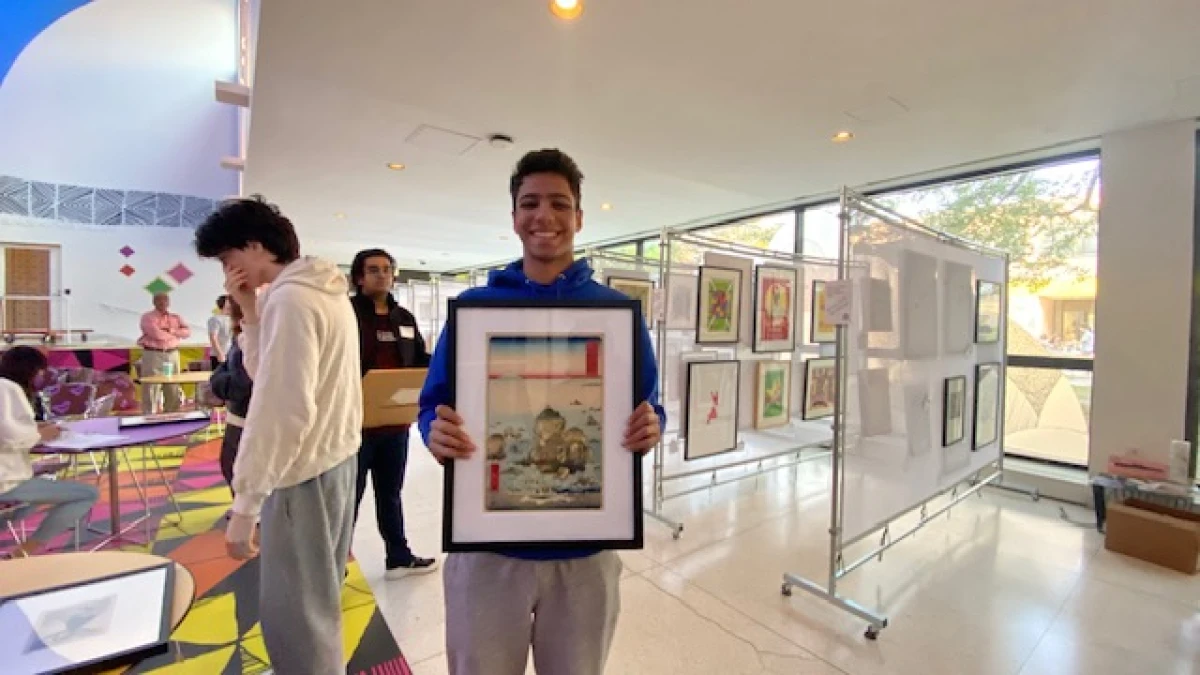
Students returning to college this fall are busy with the usual activities – getting to know their professors or studying in the library. At the University of Chicago, some students lined up for a different experience: the opportunity to borrow an original work of art from the school’s Smart Museum of Art.
Art to Live With makes its debut
The program Art To Live With began nearly 70 years ago, in 1958. It was the brainchild of the late Joseph R. Shapiro, a prolific art collector in Chicago.
The program’s premise was simple: Shapiro thought students would come to appreciate art if they could live with it. So, he gave the University fifty works- mostly by European and American artists- to start a lending program open to all students in campus housing.
It was a big hit from the start, and within four years, the collection grew to more than 500 pieces—including many contemporary works that Shapiro felt would appeal to students.
Despite its popularity, in the late 1980s, the program went dormant.
A new era of art lending
The program was rebooted in 2017, thanks to funds from Greg Wendt, a University of Chicago alumnus and Art to Live With participant. The Smart Museum took over running the program.
The current lending collection, separate from the Smart’s overall holdings, is entirely works on paper. Pieces rotate in and out from year to year. Near the beginning of the fall quarter, the Smart provides an online and in-person preview of the works available from the collection, this year numbering 134 pieces.
Students have about one week to peruse the collection and identify their favorites among the color lithographs by luminaries such as Joan Miró, Marc Chagall and Yves Tanguy, iconic prints by Gordon Parks and Jenny Holzer, and even a couple of Picassos.
Contemporary artists like Takashi Murakami and Robert Indiana are abundant, and Chicago artists, including Nick Cave, Amanda Williams and Karl Wirsum, are well represented.
In previous years, some enthusiastic students would camp out in the small courtyard outside the museum, pitching tents and hanging out, in some cases for two or three days. This year, the University introduced a new policy that states “no University spaces, indoor or outdoor, may be used by anyone for overnight stays or as places to sleep (either in the open or in structures or tents).”
Instead, the Smart implemented a series of check-ins over a two-day long weekend “Art Match,” where students could secure a place in line and demonstrate they were committed to showing up.
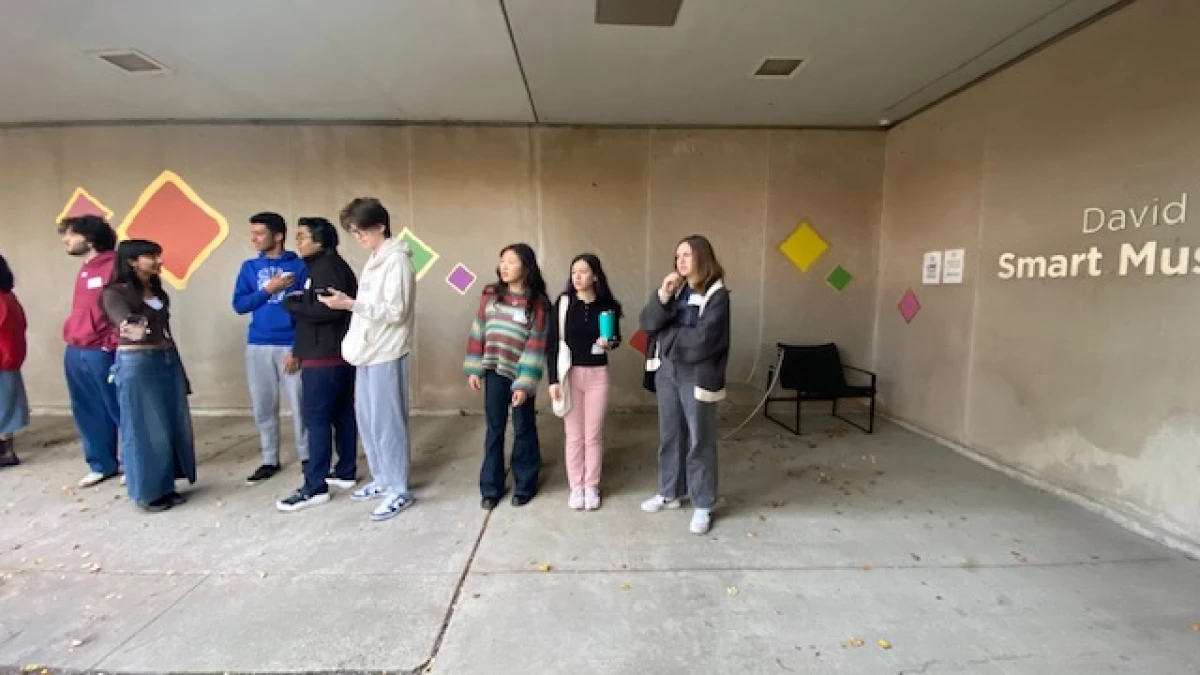
Still, early in the morning on the first day of check-ins, a warm and sunny Saturday, it was clear many students had spent the night. Instead of tents, they had improvised beds by dragging outdoor benches together and piling them with pillows and blankets, or hunkered down in chairs with their laptops, books and, in some cases, art supplies and knitting projects to pass the hours.
Lined up along a concrete wall, in clusters or on their own, they looked like attendees at a plein air slumber party.
Rafaela Grieco-Freeman, at the very front of the line, was the first to show up early Friday evening and spent a quiet night out, “nothing too scary.” In her second year of studying mathematics and economics, Grieco-Freeman is a huge art enthusiast and had her eye on a work by one of the old masters, Francisco de Goya. When she first heard about the program as a freshman, her immediate reaction was disbelief.
“I was like no way this is real, like this is just somebody’s making something up, I’m getting fake news,” she said. “It’s astonishing to be a part of this and have these like priceless, you know works of art and also like pieces of history…just in a dorm room!”
Vanja Malloy, the Smart’s Director, says there aren’t many programs like this – it is a lot of work. Her hope is that it provides students with a more in-depth view of art and life.
“It could be something you look at as you drink your morning coffee every day and you see it in a different way and maybe you notice things that you didn’t before,” says Malloy. “So living with the work allows you to have this depth of experience that you wouldn’t if you were just scrolling on your phone.”
Students play the waiting game
As the day wore on and the sun beat down, staff at the Smart Museum set out snacks and drinks. Some students were playing cornhole or hitting a volleyball back and forth.
Chris Wong, a first-year student from Hong Kong studying engineering, said he would have shown up just for the experience— the art was almost secondary. Still, he was eyeing works by Chagall and Miró. He said he wasn’t nervous about having museum-quality art in his dorm because he trusted that the university was “taking all the procedures it needs” to cover any damage, adding that he considered it a “great honor to live with such great works.”
Lauren Payne, who runs Art to Live With, says the Smart expects students “to be good stewards of the work and they take it very seriously.”
“Accidents definitely happen,” Payne says. “We kind of accept that’s sort of the nature of what we’re doing here. Sometimes it may fall off the student’s wall and the frame might get damaged or a hinge might get slipped. But you know, there’s never any malicious damage.”
Many of the students are not art history or even humanities majors but are studying science or engineering. Museum director Malloy thinks the program shows students that art can be a part of their college experience regardless of their academic focus.
“It encourages them to look closely at an artwork, to learn more about it, to have a curiosity that then develops throughout their lives,” Malloy explains. “So I think it can have a lifelong impact, but it is also something that brings down barriers in a very important way.”
Payne adds that students who participate in Art to Live With do become more involved in the museum. Some do internships and others have joined a committee that helps select new acquisitions for the lending collection, preparing and presenting proposals for consideration.
Getting ready for the big reveal
Sunday morning the students return to collect their art; lining up outside the museum. Lauren Payne advises them on the process and on how to take the art out of the museum.
“When you pull it off the wall, you’re going to hold it with two hands,” says Payne. “Don’t ever carry the artwork from the top rail. Once you have your artwork off the wall, you will go to a table to sign your loan agreement.”
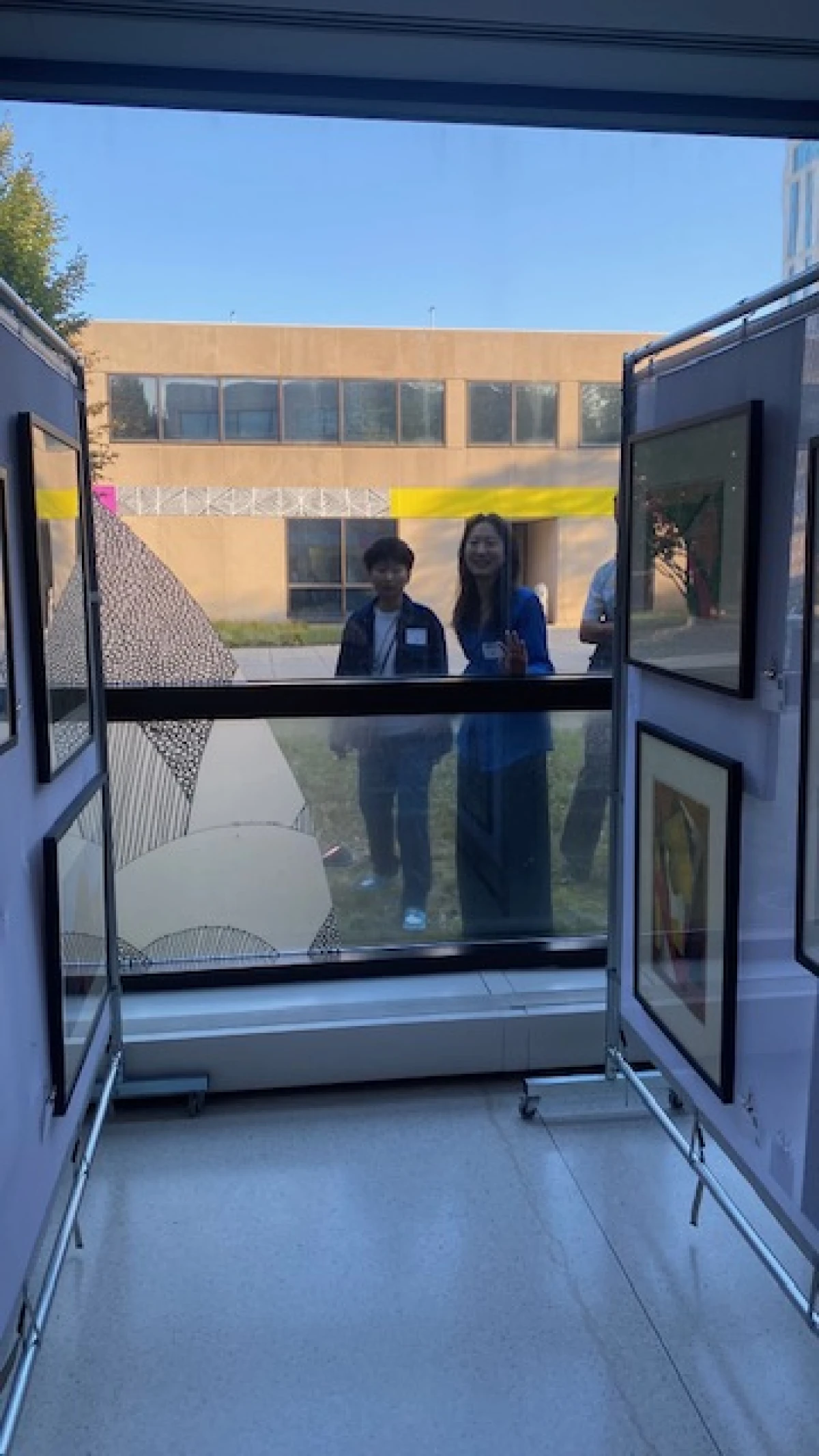
The museum wraps all the pieces and supplies the students need, including a packet of instructions and Command strips so they can hang the art without damaging it or their dorm walls.
The doors open, the students hesitate, still uncertain, and then rush in.
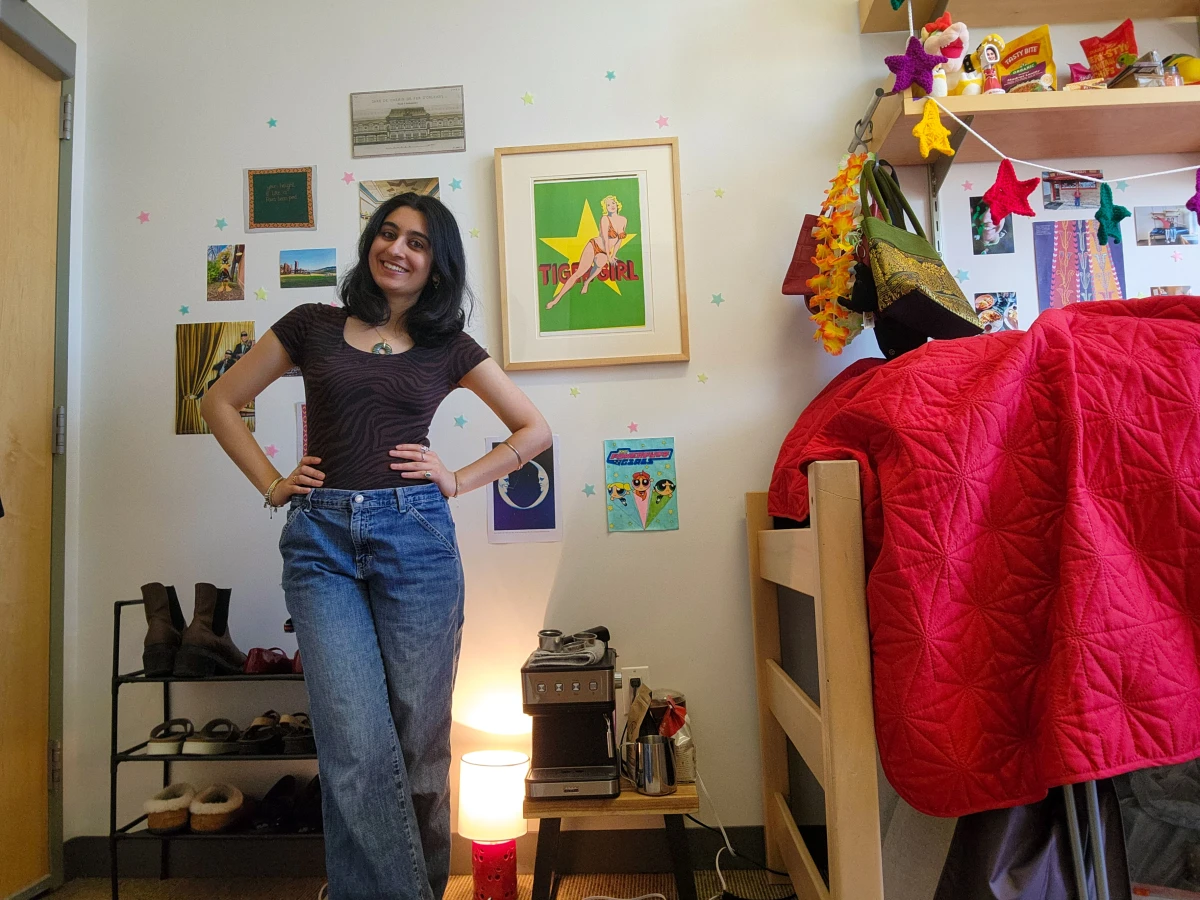
Isha Mehta was excited to get her first choice, a brightly colored lithograph by pop artist Mel Ramos. A second-year economics and human rights student, she says the program has changed her. “It did make me more interested in learning more about the art and going to the smart museum exhibits and it did encourage me to take a specific art history class last year.”
Chris Wong also ended up with a lithograph- one of the Mirós. Wong says he doesn’t know much about art, and made his selection based on instinct.
“I think it’s something unspeakable that attracts me to this,” he muses. “I do kind of like the forms, the quirkiness of the little monsters, birds, whatever you call them.”
The program’s potential impact is currently up in the air. Even as the Smart celebrates its 50th anniversary, the funding that brought Art to Live With back will run out after next year. For now, students head home happily clutching an original artwork to hang in their dorm.
Transcript:
AILSA CHANG, HOST:
Students returning to college this fall are busy with the usual activities – getting to know their professors, studying in the library. But some are lining up for a different experience. At the University of Chicago, students can borrow an original work of art from the school’s museum for free. From Chicago, Alison Cuddy reports.
ALISON CUDDY, BYLINE: The small courtyard outside the Smart Museum at the University of Chicago is normally an oasis of stately trees and stunning sculptures. On this warm fall Saturday morning, it looks and sounds more like a slumber party. Clusters of students are spread out along a concrete wall, wrapped in blankets, chatting and working on their laptops. Cups of coffee and bags of food are scattered around.
Rafaela Grieco-Freeman was the very first to arrive. She and the other students spent the night outdoors not as part of orientation, but for a work of art, museum-quality art – lithographs by Miro and Chagall, prints by Gordon Parks and Jenny Holzer, even a couple of Picassos.
RAFAELA GRIECO-FREEMAN: I was like, no way this is real. Like, this is just – somebody’s making something up. I’m getting fake news. And it’s astonishing to be a part of this and be able to have these, like, priceless, you know, works of art and also, like, pieces of history just in a dorm room (laughter).
CUDDY: This annual event is not only real, it’s been around since 1958 – the brainchild of an alum, Joseph R. Shapiro, an avid collector, and cofounder of Chicago’s Museum of Contemporary Art. Shapiro thought students would appreciate art if they could live with it, so he gave the university 50 works to start a lending program. The idea was a big hit from the start, and the collection grew. But in the late 1980s, it went dormant. Thanks to a new funder, it was rebooted in 2017 as Art to Live With, now run by the Smart Museum. Vanja Malloy, the Smart’s director, thinks it offers students a new view on art and life.
VANJA MALLOY: Could be something you look at as you drink your morning coffee every day, and you see it in a different way, and maybe you notice things that you didn’t before. So living with a work allows you to have this depth of experience that you wouldn’t if you were just scrolling on your phone.
CUDDY: Any student living in campus housing can participate. Lauren Payne, who runs Art to Live With, says they do have to sign a loan agreement to keep the art for the school year.
LAUREN PAYNE: Accidents definitely happen. You know, sometimes it might fall off the student’s wall and the frame might get damaged, or a hinge might get slipped. But, you know, there’s never any malicious damage or anything that has been taken.
CUDDY: By late afternoon, the sun is beating down. Some students pass the time playing cornhole. Then the first check-in starts.
UNIDENTIFIED PERSON #1: We’re starting right over there.
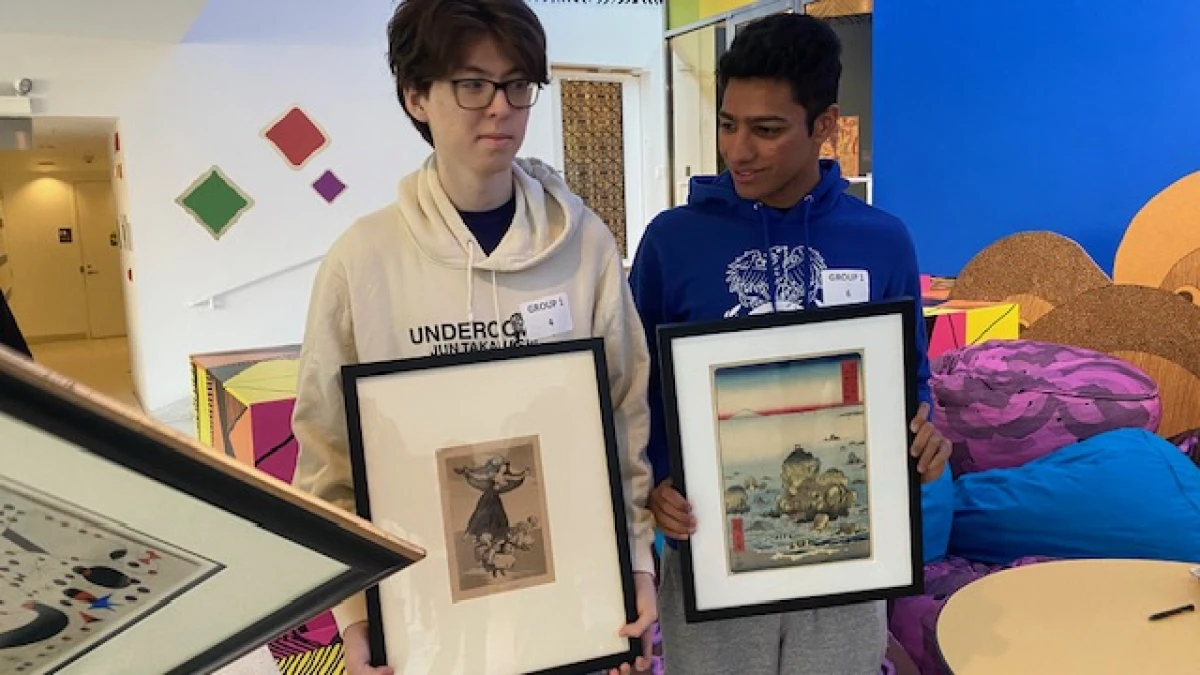
CUDDY: Economics students Anuar Kul-Mukhammed and Rudra Patel have been waiting near the head of the line for more than 12 hours. They think they’ve got a good shot at their picks when the museum opens in the morning. Then Patel learns they’ll go in as a group of 15.
ANUAR KUL-MUKHAMMED: Oh, my God, bro.
RUDRA PATEL: Oh, my God. Yeah, I thought it was groups of, like, one.
UNIDENTIFIED PERSON #2: All right, group one. Everybody is here – group one?
CUDDY: The next morning, they do get what they’d hoped for – an etching by one of the Old Masters, Francisco de Goya, and a woodblock by Japanese artist Ando Hiroshige – known for his epic landscapes. Even so, Anuar says he’s not sure it was worth it.
KUL-MUKHAMMED: Sleeping outside, you know, in the cold, it was just terrible. It was the worst night I’ve had here by far.
CUDDY: However, Isha Mehta did return for a second year. The economics and human rights student dressed to match her choice – a lithograph by pop artist Mel Ramos. She says the program has changed her.
ISHA MEHTA: And it did make me more interested in learning more about, like, the art and going to the Smart Museum exhibits. And it did encourage me to take a specific, like, art history class last year.
CUDDY: The future of Art to Live With might be up in the air. Its funding will run out after one more year. But for now, students head home, happily clutching an original artwork to hang in their dorm. For NPR News, I’m Alison Cuddy in Chicago.
(SOUNDBITE OF BLXST SONG, “PASSIONATE (FEAT. RODDY RICCH)”)