


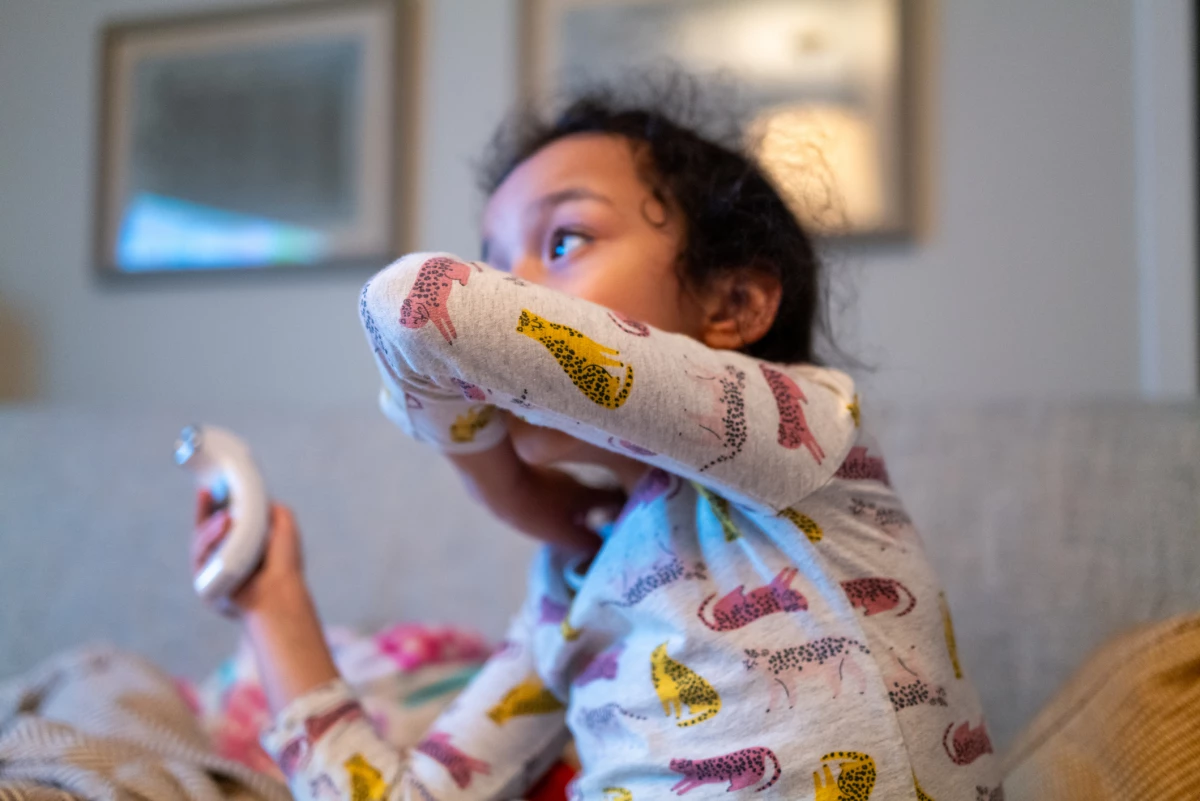
If you or your kid has a cough that’s been lingering, keep reading. The Centers for Disease Control and Prevention says cases of mycoplasma pneumonia are surging across the U.S., especially among young kids.
Preeti Sharma is a pediatric pulmonologist who has seen the rise up close. She’s an associate professor of pediatrics at UT Southwestern and Children’s Health in Dallas and a mom of two. At the end of May, her 12-year-old daughter came home from school with what looked like a typical summer cold.
“She had a runny nose, some sneezing, a little bit of sore throat, and a little bit of kind of feeling fatigued, lower appetite,” Sharma says.
And then the cough started. “We just kind of watched it progress until she had this very lingering, deep, disruptive cough,” she says.
That cough is what tipped Sharma off that her daughter had mycoplasma pneumonia. It’s caused by an infection with the bacteria mycoplasma pneumoniae. The CDC says cases began rising across the U.S. in the spring and summer, and that surge has continued into fall. Sharma says in Dallas, they saw a big spike after kids went back to school.
“Kids are spreading it to one another in schools and they are likely bringing it home to their parents and families as well,” Sharma says.
Mycoplasma pneumonia usually manifests with upper respiratory symptoms, though some kids can also develop red eyes or rashes. Headaches are also common.
Caleb Ward is a pediatric emergency medicine physician with Children’s National Hospital in Washington, D.C., where he says cases of mycoplasma pneumonia are up about tenfold this year. He says the good news is that many cases tend to be mild — that’s why it’s often called walking pneumonia.
“Folks historically may have been going to school, going to work, assuming they just had a kind of mild, cold virus and in fact, had mycoplasma pneumonia,” Ward says.
New York City has also seen a surge in cases. Dr. Adam Ratner, the director of the division of pediatric infectious diseases at New York University and Hassenfeld Children’s Hospital, says people of all ages can be affected, though typically, the infection is seen in kids and teens ages 5 to 17.
However, “that has changed in the last year with this current spike,” Ratner says. While the infection is still more common in older kids, he says they’re seeing more cases in the 2-to-4-year-old range. “That’s being seen nationwide and it’s consistent with what we are seeing here,” Ratner says.
Sharma, Ward and Ratner agree that most kids can be treated at home – just keep them hydrated, give them age-appropriate medicines for their fever as needed, and make sure they get plenty of rest. If a child is over age 1, honey can help ease a cough.
As for when to call the doctor, Ward says, “if parents or caregivers notice that their child is having difficulty breathing, is not drinking enough fluids to stay hydrated, seems much sleepier than usual, or if they remain sick – particularly with fever – for more than five days, they should be assessed by a health care provider.”
Mycoplasma pneumonia is easily treated with antibiotics, says Dr. Preeti Sharma, as long as you get the right one. Amoxicillin — the go-to antibiotic for kids with other types of pneumonia — doesn’t work against mycoplasma pneumonia, so a macrolide antibiotic like Azithromycin is needed.
Sharma says kids can go back to school once they’ve been fever-free, without the use of fever reducers, for at least 24 hours — as long as they feel physically up to it.
Just know that symptoms like cough and runny nose can stick around for weeks, and they could still be shedding infectious bacteria the whole time. Doctors say that’s one reason why outbreaks of mycoplasma pneumonia tend to last a long time.
So, it’s as good a time to remind kids — and ourselves — to wash our hands and cover our coughs and sneezes. After all, winter respiratory virus season is just getting started.
This story was edited by Jane Greenhalgh
Transcript:
AILSA CHANG, HOST:
So if you or your kid has a cough that’s been lingering, you may want to listen closely to this next story. The CDC says cases of a type of walking pneumonia are surging across the U.S., especially among young kids. NPR health correspondent Maria Godoy has more.
MARIA GODOY, BYLINE: Dr. Preeti Sharma is a pediatric pulmonologist at UT Southwestern and Children’s Health in Dallas. She’s also a mom of two. At the end of May, her 12-year-old daughter came home from school with what looked like a typical summer cold.
PREETI SHARMA: She had a runny nose, some sneezing, a little bit of sore throat and a little bit of kind of feeling fatigued, lower appetite.
GODOY: And then the cough started.
SHARMA: We just kind of watched it progress until she had this very lingering deep, disruptive cough.
GODOY: That cough is what tipped Sharma off that her daughter had Mycoplasma pneumonia. It’s caused by a bacterial infection. The CDC says cases begin rising across the U.S. in the spring and summer, and that surge has continued into fall. Sharma says in Dallas, they saw a big spike after kids went back to school.
SHARMA: Kids are spreading it to one another in schools, and they are likely bringing it home to their parents and families as well.
GODOY: This pneumonia usually manifests with upper respiratory symptoms, though some kids can also develop red eyes or rashes. Dr. Caleb Ward is with Children’s National Hospital in Washington, D.C., which has seen a tenfold increase in cases this year. He says the good news is many cases tend to be mild, hence the term walking pneumonia.
CALEB WARD: Folks historically may have been going to school, going to work, assumed they just had a kind of mild cold virus and in fact had Mycoplasma pneumonia.
GODOY: New York City has also seen a jump in cases. Dr. Adam Ratner is an infectious disease specialist at NYU and Hassenfeld Children’s Hospital. He says Mycoplasma pneumonia is usually seen in kids ages 5 to 17.
ADAM RATNER: That has changed in the last year with this current spike.
GODOY: He says while the infection is still more common in these older kids…
RATNER: We’re seeing more cases in sort of that 2- to 4-year-old age rates. That’s being seen nationwide, and it’s consistent with what we’re seeing here.
GODOY: Most kids can be treated at home. Just keep them hydrated, give them age-appropriate medicines for their fever as needed and make sure they get plenty of rest. If a child is over age 1, honey can help ease a cough. As for when to call the doctor, Ratner says use the same judgment you would anytime your kid is sick.
RATNER: If there’s a child who is breathing faster or seems like they’re having trouble breathing, they’re having more fever, then that’s a situation where you probably do want to go to the pediatrician for evaluation.
GODOY: If a kid needs an antibiotic, they’ll likely get a macrolide like azithromycin. That’s because amoxicillin, which is the go-to antibiotic for pediatricians, it doesn’t work against Mycoplasma pneumonia. Here’s Dr. Preeti Sharma again.
SHARMA: The good news about Mycoplasma is that it is not a new bacteria. It is easily treated with antibiotics. And usually, kids feel better fairly readily after the correct antibiotic is started.
GODOY: Sharma says kids can go back to school once they’ve been fever free without the use of fever reducers for at least 24 hours, as long as they feel physically up to it. Just know that symptoms like cough and runny nose can stick around for weeks, and they could potentially still be shedding infectious droplets the whole time. Doctors say that’s one reason why outbreaks of Mycoplasma pneumonia tend to last a long time.
Maria Godoy, NPR News.
