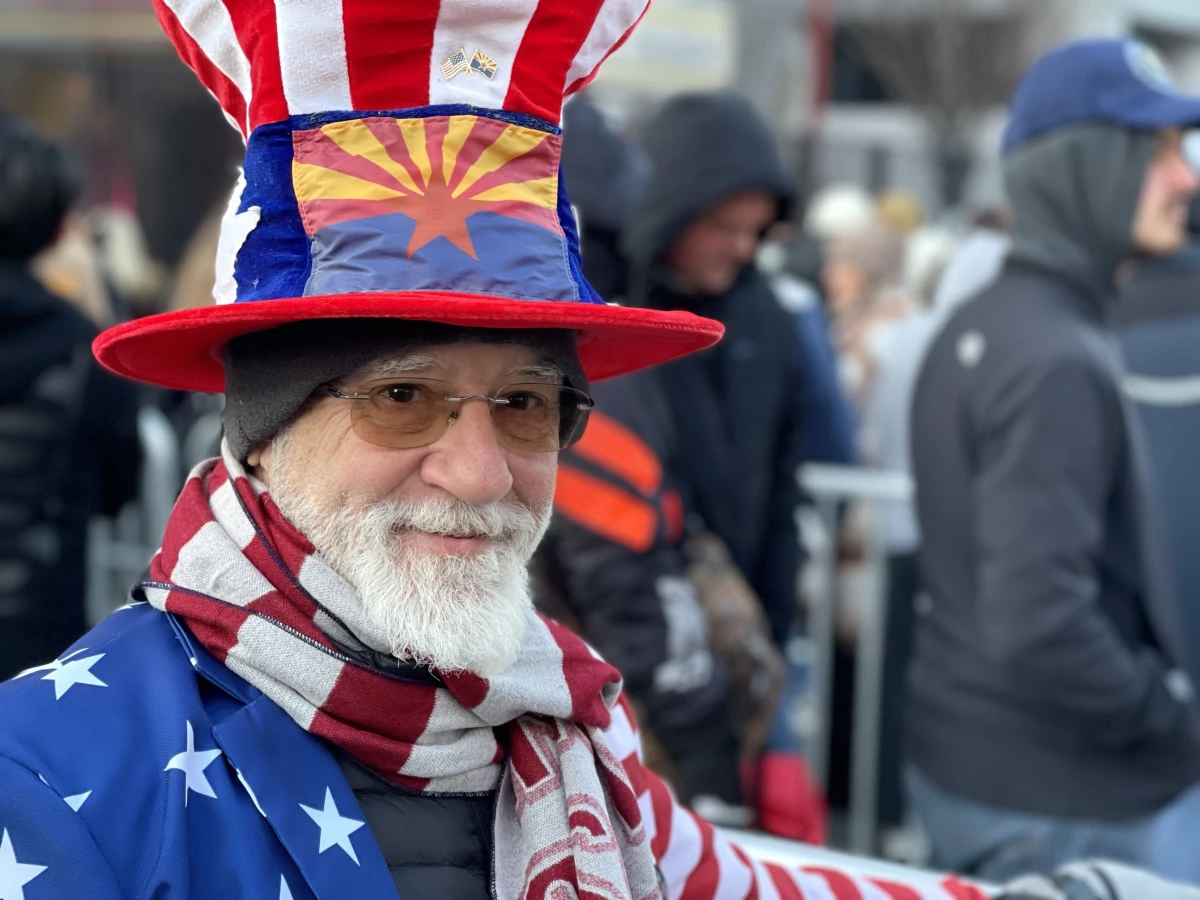
WASHINGTON – With the inauguration indoors, thousands waited in line in frigid temperatures to get into the Capital One Arena in downtown Washington on Monday, where they could view the event on-screen and hope to see President Trump during an appearance planned there for later in the day.
Despite the weather and the venue change, many supporters were determined to see the nation’s 47th president and that meant standing in line in the cold not just on Monday but also the day before.
Joe Ann Floyd, who works at a high school technical center in Mississippi, says she stood in line for five hours on Sunday for Trump’s victory rally only to find when she arrived at the entrance that the venue was at capacity.
“I think a lot of people were breaking line,” said Floyd, who wore a black fur hat in the 21 degree Fahrenheit air.
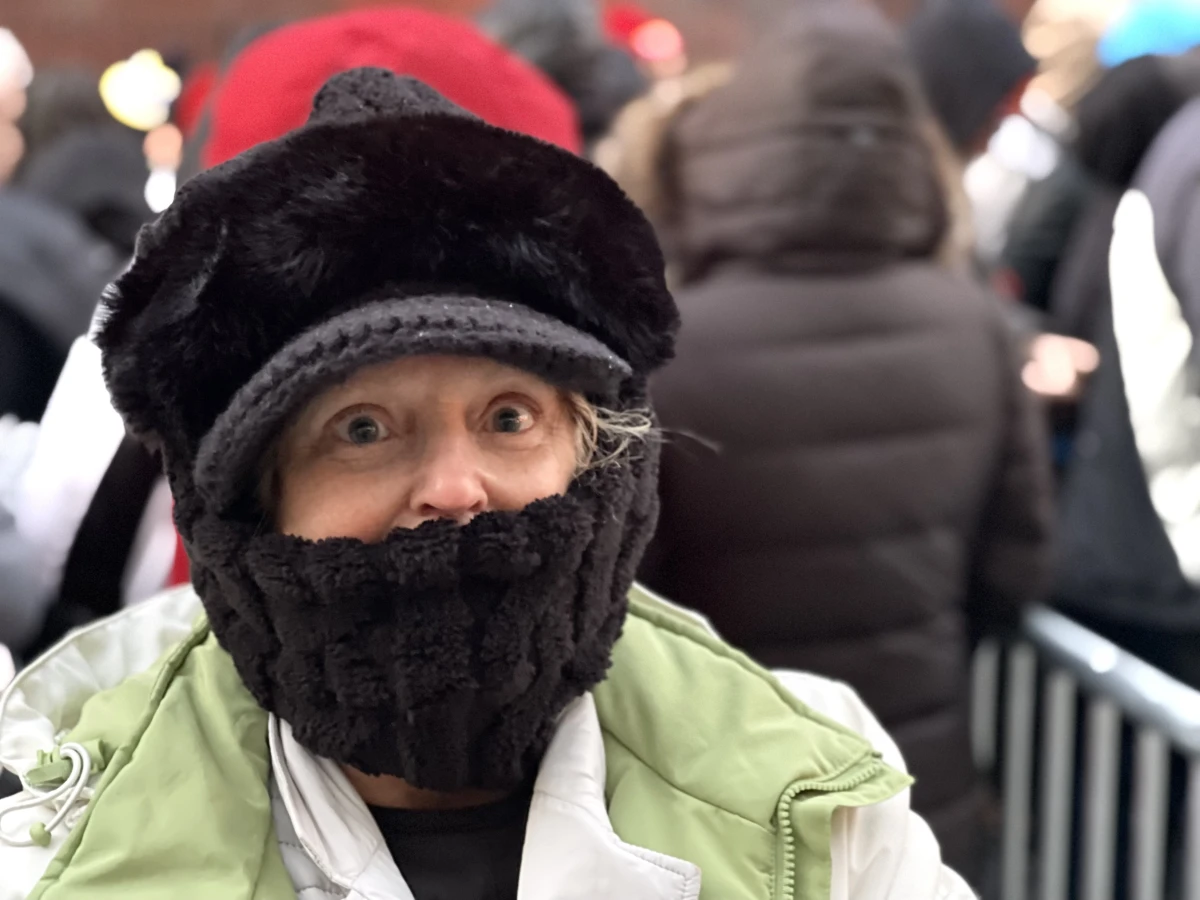
Floyd, who has a ticket for Monday’s event thanks to a state senator, was more optimistic she’d get in this time. By Monday afternoon, she had made it inside the arena.
Many people standing in line said they had come to Washington because they support Trump’s policies, especially on immigration.
Ethan Zhang, who is originally from China and works in marketing in New York, says since the pandemic, conditions in the city have deteriorated. He blames much of that on immigrants who are in the U.S. with no legal status.
“I used to live in Queens,” said Zhang. “My neighborhood used to be quiet. When they get in, they play music very loud and they just don’t respect anything.”
“I’m an immigrant myself,” Zhang continued, “but I have to do a ton of paperwork, I have to pay my tax dollars.”
Some Trump supporters here today also came for Trump’s inauguration in 2017. They say back then they didn’t feel welcome in this overwhelmingly Democratic city.
“We had a lot of hate,” recalled Amanda Travis, a respiratory therapist from Arizona. “People screamed at us, (saying) ‘We hate you! Scum of the earth!’ We were really afraid.”
Today, she says, the most she gets is a dirty look and no one is mean. Her husband, Steven Schreiber, says that may be because Trump won both the electoral and popular vote this time
“I think that legitimizes it much more,” he said.
NPR producer Kaity Kline contributed to this report.
Transcript:
LEILA FADEL, HOST:
With the inauguration moving indoors, thousands waited in line this morning to get into the Capitol One Arena in downtown Washington, where they can view the event on screen. That is also where President Trump will appear after he’s sworn in, in the Capitol Rotunda. NPR’s Frank Langfitt was out this morning chatting with people and standing in line to get into the arena. Good morning, Frank. Thanks for being here.
FRANK LANGFITT, BYLINE: Hey. Good morning, Leila.
FADEL: So what was it like? Were people disappointed that they couldn’t get to the inauguration in person?
LANGFITT: You know, I don’t think they were that disappointed. I think people were just excited to be there. And it was kind of – it was quite a scene. It was block after block of people in these pedestrian barriers, and there were these vendors who were trying to sell them stuff. I was trying to talk to people.
FADEL: Yeah.
LANGFITT: Secret Service were chasing us away. I did talk to this woman named Joanne Floyd (ph) – she’s from Mississippi – and she tried to get into Capitol One yesterday for Trump’s rally. And here’s what happened.
JOANNE FLOYD: Now, let me tell you this – stood in line, like, yesterday in the freezing cold to get in. And guess what? When we got about right to it, they said that it was of – at full capacity. I think a lot of people were breaking line.
LANGFITT: Now, Leila, she was – Floyd was disappointed and a bit mad that people were butting in front of her.
FADEL: Right.
LANGFITT: But she’s optimistic she’s going to get to see Trump today in person, and that would make her one of the lucky Trump supporters because Capitol One only has a capacity of about 20,000 people.
FADEL: Yeah, but the news the inauguration was moving inside, that happened a few days ago, and still people came. What brought them?
LANGFITT: Yeah, it was interesting. You know, people often talk – his supporters – about a real connection to President Trump. What was so interesting today, Leila, is everybody talked policy to me. And the word that came up is what we’re covering a lot today is immigration. I talked to this guy, Ethan Jong (ph). He’s from western China. He works in marketing in New York. He told me, you know, after the pandemic, that the situation in New York had really deteriorated, and he blamed a lot of it on immigrants who are here and have no legal status. This is what Ethan said.
ETHAN JONG: I used to live in Queens. My neighborhood used to be quiet. And when they got here, they play music very loud, and they just don’t respect anything, you know?
FADEL: Oh, you said Ethan’s from western China, but working in the U.S. So isn’t he also an immigrant?
LANGFITT: He is. But what he says is he did this all legally. He filled out a lot of paperwork. He’s got a green card. He’s going to become a citizen next year. And he says he resents people who have entered the country without permission. And I heard that from other people, too, today. There was a woman who’s a lawyer in San Antonio. Her family’s originally from Argentina. She said something similar. Another thing that was interesting, Leila, is I asked Ethan. He’s been here, I think, about a decade in the States. He said this is his first inauguration, and this is one of the reasons he said why.
JONG: Before, I didn’t pay much attention about politics. Then I realized, you know, like, it involves all of us.
FADEL: This is Trump’s second inauguration. The first one was in 2017. Did you talk to anyone who went to that one and came to this one?
LANGFITT: Yeah, I did. And some people said that they’ve seen a difference. They – I talked to a woman named Amanda Travis (ph). She’s a respiratory therapist in Arizona. And she said back then, in 2017, people here in Washington – of course, it’s a very democratic city – she felt they were very hostile towards her. Here’s what she said.
AMANDA TRAVIS: When we came in 2017, we had a lot of hate, and then people screamed at us, we hate you. Scum of the earth.
LANGFITT: Really?
TRAVIS: Yeah, we were really afraid.
LANGFITT: I wasn’t here then.
TRAVIS: Yeah, we were really afraid. And then now, no. Even – you can tell, even if people don’t like Trump or they don’t like it, they just give you a dirty look, and they just walk on. They don’t – they’re not mean.
FADEL: So what did she think changed?
LANGFITT: Well, I talked to her about it, and she said – and the person that she was with said – that they thought the success, as they saw it, of Trump’s first term, but they also said that this time around that Trump had won the popular vote and that the victory seemed more legitimate nationally.
FADEL: Well, thank you for reporting out in the freezing cold for us. That’s NPR’s Frank Langfitt. Thank you, Frank.
LANGFITT: Happy to do it, Leila.