


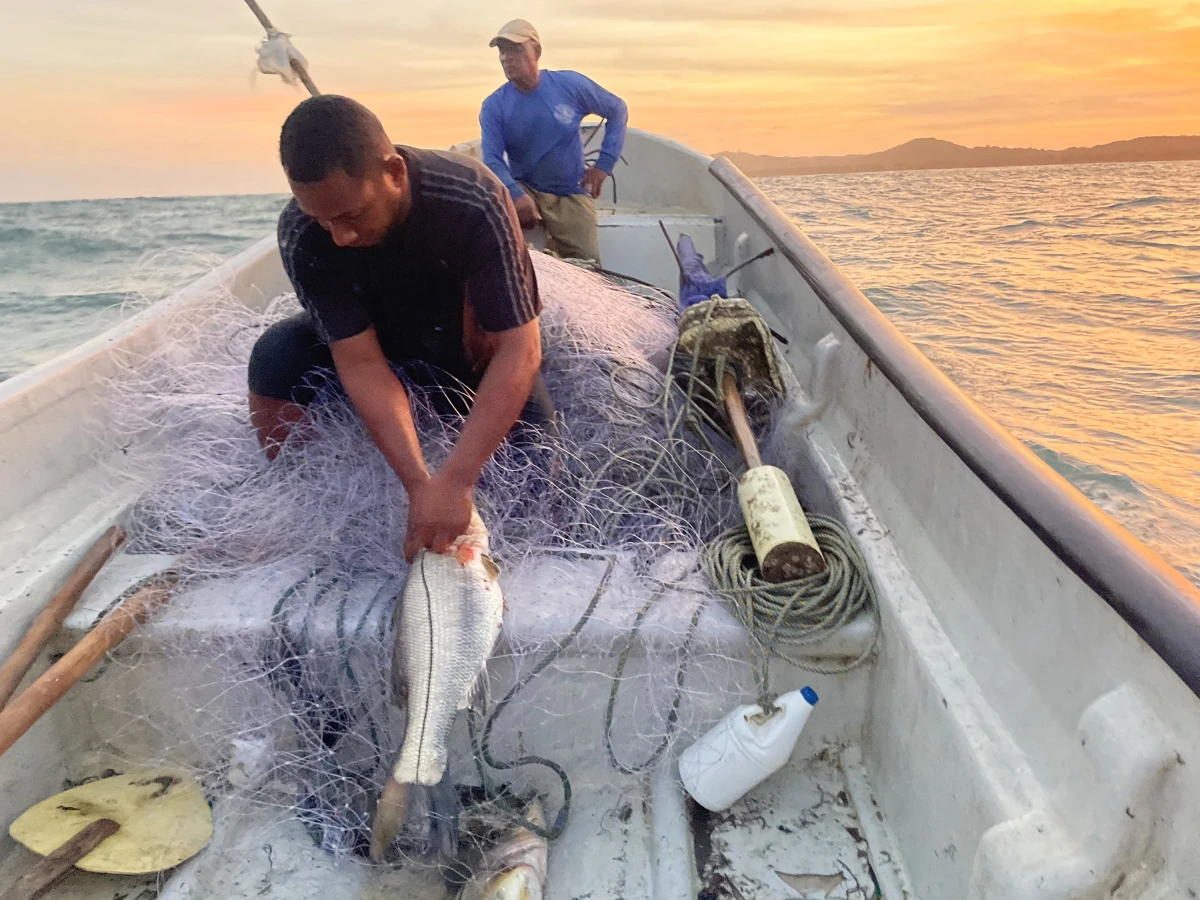
PUNTA CANOA, Colombia — Euris Cervantes starts the outboard motor of his fishing boat and pushes off from shore. It’s 5 a.m., still dark, and the Big Dipper shines overhead. As Cervantes maneuvers through a mangrove swamp towards the open sea, hundreds of herons take to the air.
It’s a placid scene but Cervantes is nervous. He used to navigate some 40 miles offshore where the fishing is much better. But he fears the U.S. military could mistake him for a cocaine trafficker and bomb his boat. For his own safety, Cervantes now stays close to shore.
“You always think about the attacks,” Cervantes says.
Over the past five months, the U.S. military has carried out at least three dozen lethal attacks on alleged drug smuggling boats in the Caribbean Sea and the eastern Pacific. The White House and Pentagon has consistently characterized the operations as measures of national self-defense against “narco-terrorism.” The latest strike on Friday killed two people and brought the death toll from such operations to 126, according to U.S. officials.
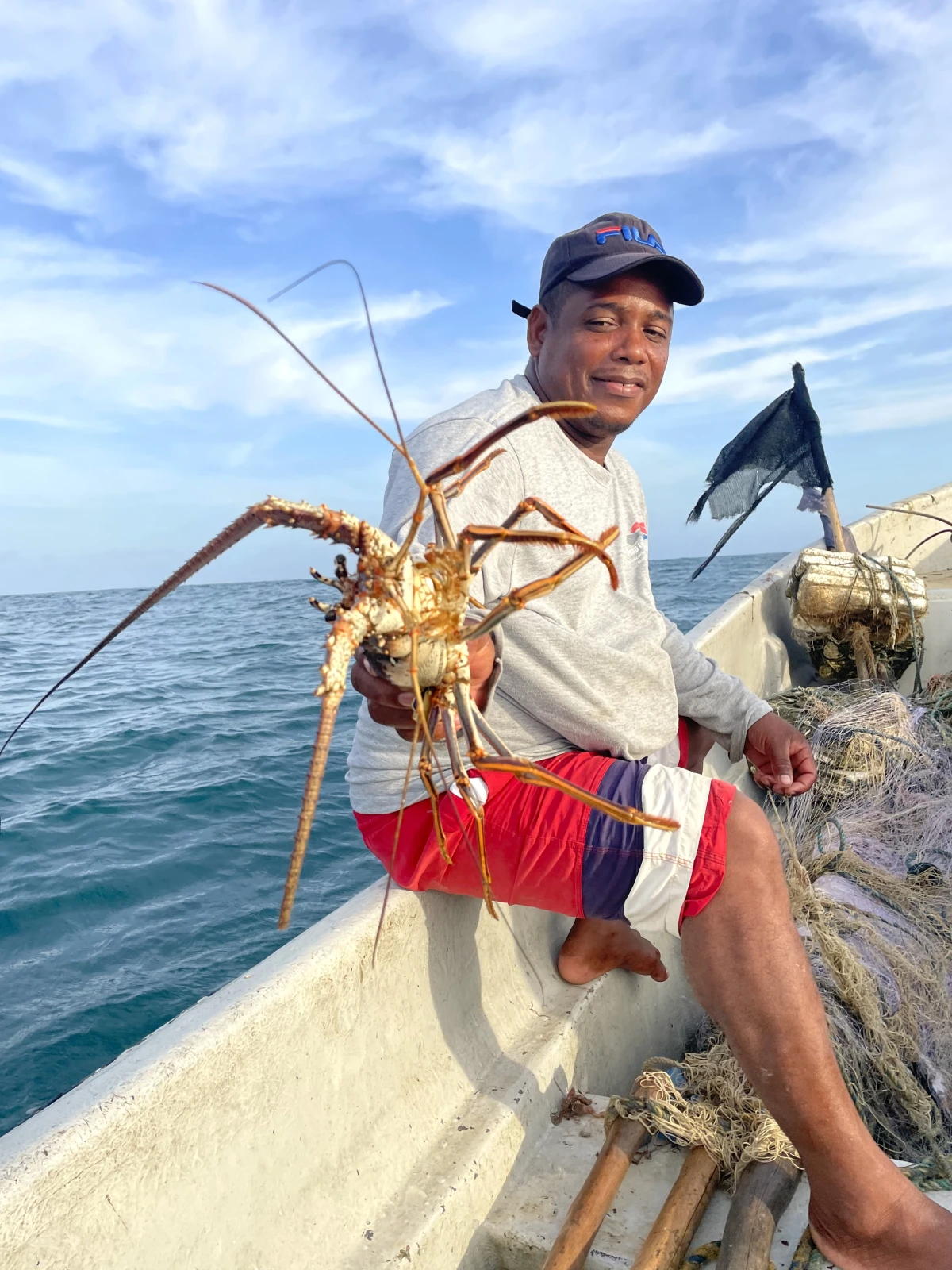
Besides disrupting the lives of Colombian fishermen, the lethal strikes have outraged American allies. However, drug-seizure data suggest that the attacks are doing little to stop the flow of illegal narcotics into the United States.
President Trump claimed last week that the bombings have stopped 97% of all illegal drugs coming into the U.S. by water.
However, Adam Isacson, a defense and security expert at the Washington Office on Latin America, points out that most narco-boats drop off their cargo in Central America or Mexico with the drugs then taken overland to the U.S.
During the last three months of 2025 – when the U.S. bombing campaign was in full force – cocaine seizures at the U.S.-Mexican border amounted to 10,593 pounds, according to U.S. Customs and Border Protection data. That’s a 34% increase over the amount of cocaine seized during the same period in 2024 when there were no lethal strikes.
“We didn’t see less cocaine,” Isacson said. “In fact, we saw more.”
In addition, European authorities have confiscated huge amounts of cocaine in recent months, including a record nine-ton seizure by Portuguese police from a semi-submersible vessel crewed by three Colombians and a Venezuelan.
InsightCrime, which studies organized crime in Latin America, determined that the massive seizures in Europe show “that after more than three months of lethal U.S. attacks on alleged drug boats, global drug flows have not halted — at most, they’re simply shifting routes.”
The boat strikes, which Human Rights Watch and many legal experts describe as unlawful executions, may be backfiring in other ways.
Phil Gunson who is based in Venezuela for the International Crisis Group, says the United Kingdom, the Netherlands and France used to share with the U.S. its intelligence on drug smuggling in the Caribbean but that’s no longer the case.
“The allies don’t want their intelligence to be used for what they regard as illegal operations. In other words: killing people on the high seas,” he said.
Another U.S. ally — Colombia — produces most of the world’s cocaine. But instead of destroying drug boats, its military captures them.
The navy base in the coastal city of Cartagena is full of impounded narco-submarines and go-fast boats, some of which can carry up to five tons of cocaine. The four outboard motors on one of the go-fast boats is riddled with bullet holes because the navy fired at the vessel to force it to stop.
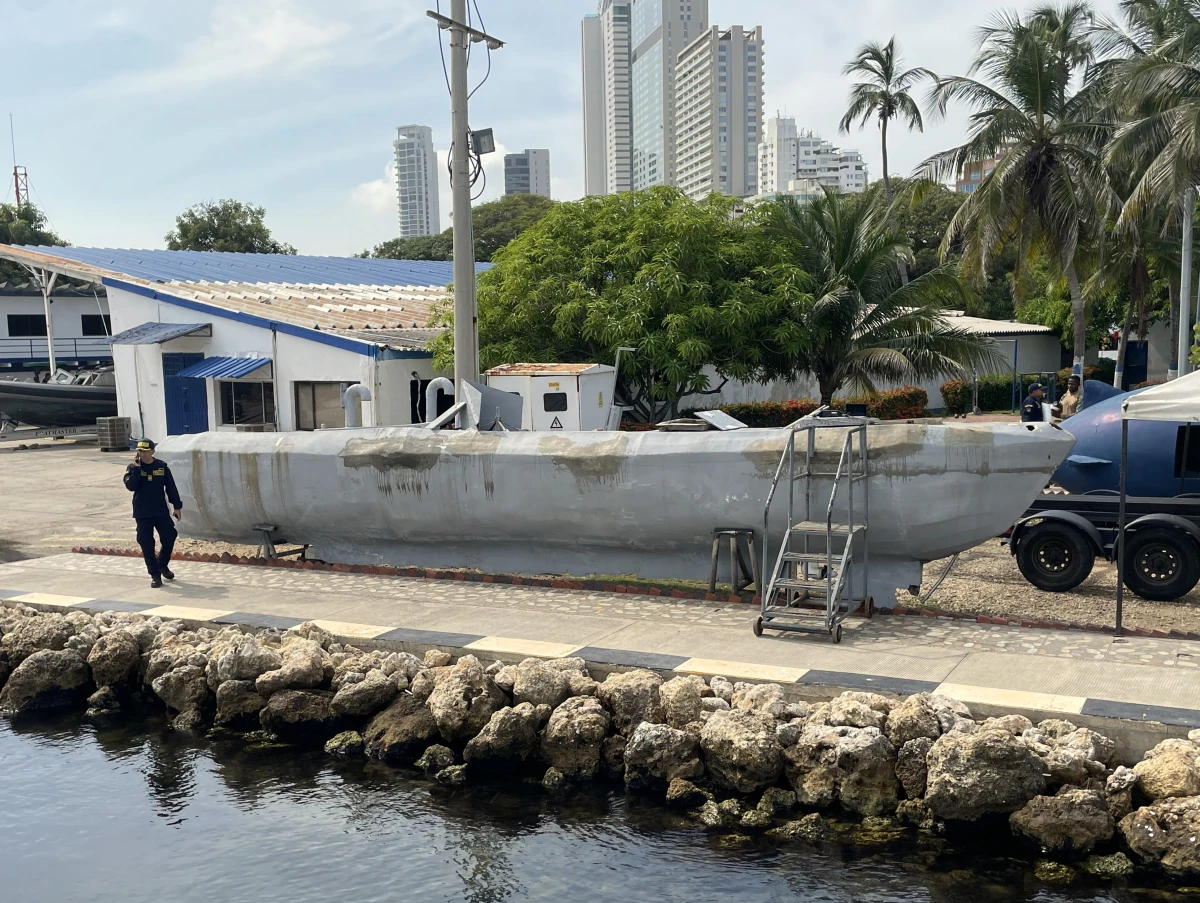
However, the navy almost never uses lethal force, preferring instead to take suspected drug traffickers alive to face legal charges and provide intelligence.
Like the Europeans, Colombian authorities have seen no pause in drug smuggling in the wake of the U.S. bombing campaign. One navy captain involved in counternarcotics operations, who asked to remain anonymous for his own safety, pointed to two recent seizures of go-fast boats, one carrying two tons of cocaine, the other four-and-a-half tons.
Drug boats, he said “are still going out.”
Ben Stechschulte, a Tampa-based attorney who has defended suspected drug smugglers in U.S. federal court, said that when they lose a few boats, traffickers simply shrug it off, change some of their routes, and launch more boats.
“I don’t think it has any deterrent effect,” he said of the U.S. bombing campaign. “The drug cartels understand it’s the cost of doing business.'”
Some families of the fisherman killed in the strikes are now taking legal action. On Tuesday civil rights attorneys filed a federal lawsuit against the U.S. government on behalf of the families of two men from a small fishing village in Trinidad who were killed in a U.S. strike on October 14.
In a separate December case, the family of Colombian national Alejandro Carranza, killed in another strike, filed a human rights complaint with the Inter-American Commission on Human Rights, part of the Organization of American States.
Meanwhile, the boat bombings continue to upend the lives of Colombian fishermen like Cervantes. Alongside three crew members, he hauls in his nets, bringing up a few sea bass and 14 lobsters that flop across the bottom of the boat.
It’s not much for a day’s work but at least they’re still fishing.
By contrast, some fishermen have been so traumatized by watching videos of the boat bombings that they no longer venture out to sea, says Fermin Pérez, vice president of one of the local fisher’s association.
“But we need to fish because that’s how we live,” he says. “That’s how we eat.”
Transcript:
STEVE INSKEEP, HOST:
It’s easy to forget, given the government’s use of force within the United States, that the government is also using force outside the United States. The military has carried out nearly three dozen lethal attacks on boats that the government says were smuggling drugs. The latest strike on Friday killed two people and brought the death toll from such operations to at least 126. The policy is meant to stop drug trafficking to the United States. John Otis reports it’s not.
(SOUNDBITE OF MOTORBOAT STARTING)
JOHN OTIS, BYLINE: Here on Colombia’s Caribbean coast, Euris Cervantes (ph) starts his outboard motor and pushes off from shore.
(SOUNDBITE OF MOTOR REVVING)
OTIS: It’s 5 a.m. and still dark. The Big Dipper shines overhead, and as we approach the open sea, we spot hundreds of herons.
OTIS: It’s a placid scene, but Cervantes is nervous.
EURIS CERVANTES: (Speaking Spanish).
OTIS: He used to navigate some 40 miles offshore, where the fishing is much better. For his own safety, Cervantes now stays close to shore. That’s not the only change brought about by the lethal boat strikes, which Human Rights Watch and many legal experts describe as unlawful executions.
PHIL GUNSON: The allies don’t want their intelligence to be used for what they regard as illegal operations. In other words, killing people on the high seas.
OTIS: That’s Phil Gunson, who’s based in Venezuela for the International Crisis Group. He says the United Kingdom, the Netherlands and France used to share with the U.S. its intelligence on drug smuggling in the Caribbean, but that’s no longer the case. Another U.S. ally, Colombia, produces most of the world’s cocaine. But instead of destroying drug boats, its military captures them.
(CROSSTALK)
OTIS: The navy base in the coastal city of Cartagena is full of impounded narco-submarines and go-fast boats, some of which can carry up to 5 tons of cocaine.
Colombian navy had to fire on this go-fast boat to get it to stop, and its four outboard motors are just riddled with bullet holes.
But the Colombian navy almost never uses lethal force, preferring instead to take suspected drug traffickers alive to face legal charges and provide intelligence.
UNIDENTIFIED NAVY CAPTAIN: Well, the Colombian navy have rules of engagement in the sea.
OTIS: That’s a navy captain involved in counternarcotics operations, who asked to remain anonymous for his own safety. Since the U.S. bombing campaign began in September, he’s seen no pause in drug smuggling.
UNIDENTIFIED NAVY CAPTAIN: Last week, we have a big seizure here in Colombia of a go-fast with 4.5 tons of cocaine.
OTIS: In other words, the go-fast boats are still going.
UNIDENTIFIED NAVY CAPTAIN: Yeah, they are still going out. Yeah.
OTIS: President Trump claims the bombings have stopped 97% of all illegal drugs coming into the U.S. by water. However, drug policy analysts point out that most Narco-boats drop off their cargo in Central America or Mexico, with the drugs then taken overland to the U.S. And during the last three months of 2025, when the U.S. bombing campaign was in full force, drug seizures at the U.S.-Mexican border actually increased. They were up by 34% compared to the same period in 2024, when there were no bombings, according to U.S. Customs and Border Protection data.
BEN STECHSCHULTE: I don’t think it has any deterrent effect.
OTIS: Ben Stechschulte is a Tampa-based attorney who has defended suspected drug smugglers from Latin America.
STECHSCHULTE: The drug cartels kind of figure out, OK, we’re going to lose some of these shipments. Right?
OTIS: But the boat bombings have disrupted the lives of Colombian fishermen, like Cervantes. They catch a few sea bass, as well as 14 lobsters that flop around in the bottom of the boat.
(SOUNDBITE OF LOBSTERS FLOPPING)
OTIS: Back on shore, Fermin Perez of the local fishers association says some of his members have been traumatized by watching videos of the boat bombings.
FERMIN PEREZ: (Speaking Spanish).
OTIS: “Many no longer go out on the ocean,” he says, “but we need to fish because that’s how we live. That’s how we eat.”
For NPR News, I’m John Otis on the Caribbean coast of Colombia.
(SOUNDBITE OF MUSIC)
