


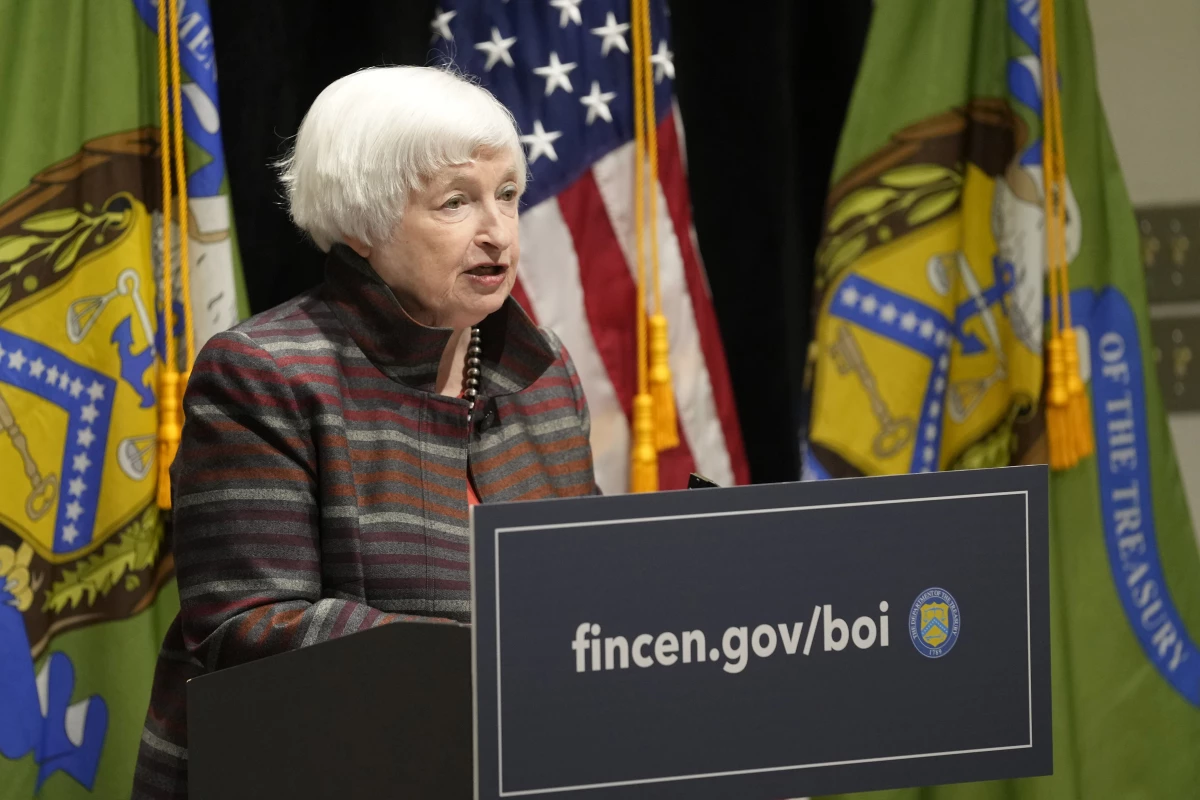
WASHINGTON — Treasury Secretary Janet Yellen said her agency will need to start taking “extraordinary measures,” or special accounting maneuvers intended to prevent the nation from hitting the debt ceiling, as early as Jan. 14, in a letter sent to congressional leaders Friday afternoon.
“Treasury expects to hit the statutory debt ceiling between January 14 and January 23,” Yellen wrote in a letter addressed to House and Senate leadership, at which point extraordinary measures would be used to prevent the government from breaching the nation’s debt ceiling — which has been suspended until Jan. 1, 2025.
The department has in the past deployed what are known as “extraordinary measures” or accounting maneuvers to keep the government operating. But once those measures run out the government risks defaulting on its debt unless lawmakers and the president agree to lift the limit on the U.S. government’s ability to borrow.
“I respectfully urge Congress to act to protect the full faith and credit of the United States,” she said.
The news comes after President Joe Biden signed a bill into law last week that averted a government shutdown but did not include President-elect Donald Trump’s core debt demand to raise or suspend the nation’s debt limit. The bill was approved by Congress only after fierce internal debate among Republicans over how to handle Trump’s demand. “Anything else is a betrayal of our country,” Trump said in a statement.
After a protracted debate in the summer of 2023 over how to fund the government, policymakers crafted the Fiscal Responsibility Act, which included suspending the nation’s $31.4 trillion borrowing authority until Jan. 1, 2025.
Notably however, Yellen said, on Jan. 2 the debt is projected to temporarily decrease due to a scheduled redemption of nonmarketable securities held by a federal trust fund associated with Medicare payments. As a result, “Treasury does not expect that it will be necessary to start taking extraordinary measures on January 2 to prevent the United States from defaulting on its obligations,” she said.
The federal debt currently stands at roughly $36 trillion — which ballooned across both Republican and Democratic administrations. And the spike in inflation after the coronavirus pandemic pushed up government borrowing costs such that debt service next year will exceed spending on national security.
Republicans, who will have full control of the White House, House and Senate in the new year, have big plans to extend Trump’s 2017 tax cuts and other priorities but debate over how to pay for them.
