



In Somerville, Massachusetts just outside of Boston, everyone has a horror story about the rats.
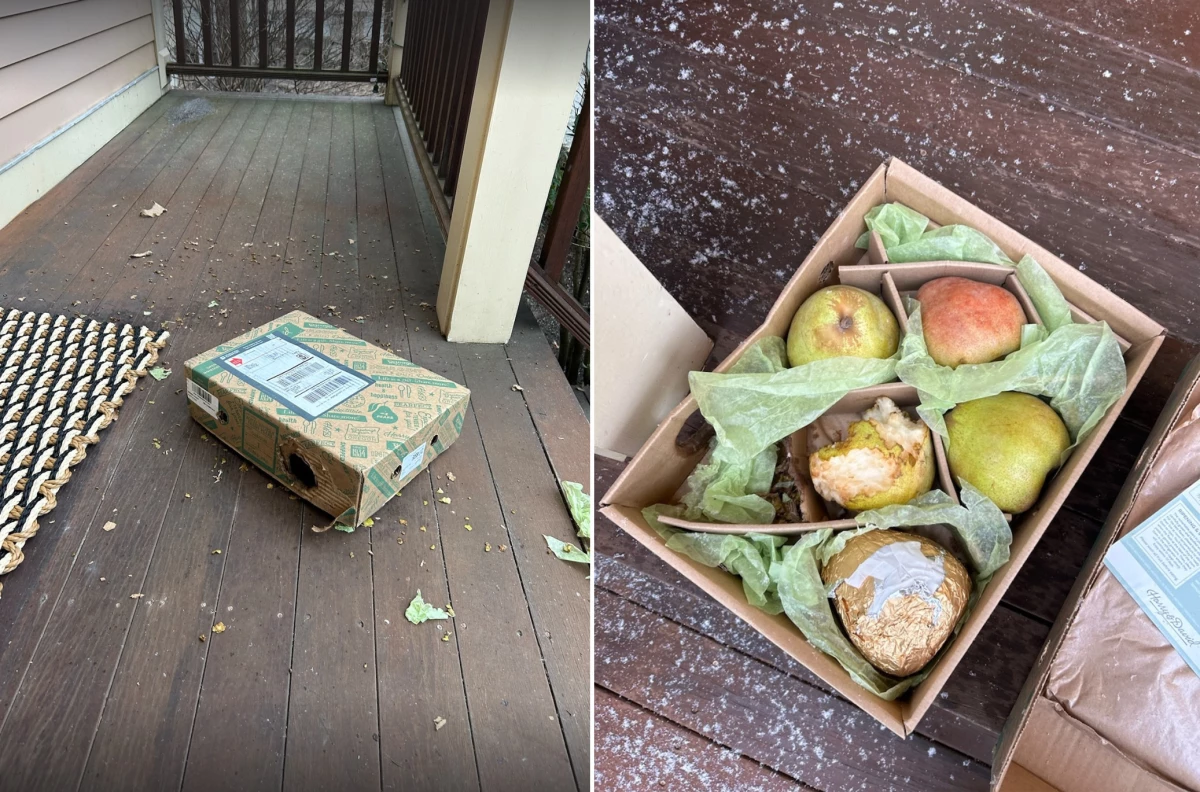
Adeline Lining says they ruined Christmas for her last year. She had received a delivery of Bartlett pears.
“They were on my porch for two hours,” she says. “And then my neighbor texted me a picture and was like, ‘You probably don’t want these anymore.’ No, I don’t want them anymore because there were rats inside the box feasting on my Christmas pears. They are directly responsible for ruining Christmas,” she says.
Then there’s Donine Williams who says that a couple years back, rats got under her deck, chewed through the subfloor, and nested in the insulation. “I could smell the urine and their poo,” she says. “I can still smell it.”
And Andrew Jefferies can’t un-remember the noises he heard at his last apartment. “All night in the summer, the rats would scream” as they rifled through his trash, he says. He requested new trash cans but they chewed right through them. Matter-of-factly, he concludes “rats are crazy.”
Now, the city of Somerville is trying to control these rats (and perhaps save Christmas in the process) by introducing a safer form of rodent birth control.
“I have no illusion that we can actually outsmart the rats,” says Williams. “But if we could just reduce them, that would be good.”
City officials agree and they’ve launched a field trial to evaluate the new approach.
A ratty world
Rats aren’t just nuisances. They cause real problems.
“Rats can carry diseases — mostly leptospirosis [and] hantavirus,” says Alicia Privett, Somerville’s Environmental Health Coordinator — aka the city’s rat czar. “They also are one of the leading causes of property damage.”

That’s because they chew through wires, fencing, decks, and even cinderblock to keep their incisors trim.
In addition, rats create extensive underground tunneling. According to Sam Lipson, the Senior Director of Environmental Health in Cambridge, Mass., when the one-mile red line subway extension was built between Harvard and Porter Squares in the 1980s, the digging unearthed thousands of rat tunnels.
“You gotta admire their tenaciousness, their ability to adapt,” allows Privett. Even so, she says, “they’re like my ultimate nemesis.”
Public servants Privett and Lipson have thrown all sorts of things at the problem, trying to keep rat numbers down and their vandalism contained. But homeowners and renters don’t always follow best practices like improving sanitation and reducing the animals’ shelter and food options.
Plus, the whiskered bandits outwit traps. And they penetrate supposedly impenetrable containers.
“You can try as much as you can to get rid of them and sometimes they’ll still find a way ’cause they’re just so scrappy,” says Privett. “In my opinion, I don’t think anything’s rat proof.”
Even attempts at poisoning can backfire when pets or birds of prey eat the rats or the bait and get sick or die.

Rat birth control
For all these reasons, Somerville is trying something else — an anti-fertility chemical that targets the mature eggs in female rats.
“It basically stops the pregnancy before it starts,” says Lipson, who’s overseeing the field trial of the product at several sites in Cambridge and Somerville.
He says the birth control doesn’t lead to permanent infertility. Rather, it acts on the rats only while it’s circulating in the bloodstream. “You need to have a steady supply or diet of this in order to have an effect on the local population,” says Lipson.
The goal, however, is not total eradication. “That is not going to happen,” he says. The idea is if the overall population can be lowered, other efforts to minimize rat activity will be more successful.
This is why Lipson and his colleagues are testing whether this chemical, when dispensed in bait boxes in a dense and variable urban environment, might lead to less overall rat activity.
“And if we find that it does, I think we’ll make that part of our city strategy,” he says.
Fighting the rat-riarchy
The field trial relies on community volunteers. Privett and Dave Power — Cambridge’s rat czar — lead four residents on an orientation in south Somerville. “We just appreciate the extra hands,” he says.

“I’ll show y’all how to check for rodent activity in the area and on the properties,” says Privett, including cut throughs under fences, telltale trails in the grass, scattered food waste, and signs of burrowing.
She walks through how to examine the bait boxes that are scattered across a handful of people’s yards in this part of Somerville. “You just push in and it’ll pop up,” she explains.
Over the course of about a year, the city will gauge whether the approach helps.
At the very least, the volunteers will help encourage their neighbors to comply with other measures that help reduce rat numbers. “That education component is the thing that I’m looking forward to the most,” says Privett.
“We really want to raise levels of knowledge and consciousness among residents and property owners,” Lipson adds. “When the level of discourse around rat control goes up, we expect there to be greater awareness of doing the right thing.”
Transcript:
MARY LOUISE KELLY, HOST:
No one wants rats scurrying around their neighborhood, but they are a cunning and ever-evasive foe. Now a community near Boston is trying a different approach – rat birth control. Reporter Ari Daniel has more.
ARI DANIEL, BYLINE: I’m outside a school in Somerville, Massachusetts, with a few locals. And it seems like everyone’s got a horror story about the rats here – like Adeline Lining.
ADELINE LINING: I get, like, the beautiful Bartlett pears every Christmas. And this year, they were on my porch for two hours. And then my neighbor texted me a picture and he was like, you probably don’t want these anymore. No, I don’t want them anymore because there were rats inside the box feasting on my Christmas pears.
DANIEL: It was a delivery.
LINING: Yeah, it was a delivery.
DANIEL: And they ruined Christmas.
LINING: They did.
ANDREW JEFFERIES: Rats are crazy.
DANIEL: Andrew Jefferies says he can’t unremember (ph) the noises he heard at his last apartment.
JEFFERIES: All night in the summer, the rats would, like, scream.
DANIEL: As they, like, bathed in your trash?
JEFFERIES: Yeah. We, like, requested new trash cans. They ate through, like, the bottom and the top.
DANIEL: Besides being nuisances, the rodents cause real problems. Alicia Privett is Somerville’s environmental health coordinator, aka the city’s rat czar.
ALICIA PRIVETT: Rats can carry diseases, mostly leptospirosis, hantavirus. And then they also are one of the leading causes of property damage.
DANIEL: Due to the way they chew through wires, fencing, decks, even cinder block to keep their incisors trim, not to mention their extensive underground tunneling. One local health official told me when the subway was extended a mile in the ’80s in neighboring Cambridge, the digging unearthed thousands of rat tunnels.
PRIVETT: They’re, like, my ultimate nemesis. You got to admire their tenaciousness, their ability to adapt.
DANIEL: People like Privett have thrown all sorts of things at the problem, trying to keep rat numbers down and their vandalism contained. But residents don’t always follow best practices. And the rats? They outwit our traps, penetrate so-called impenetrable containers.
PRIVETT: In my opinion, I don’t think anything’s rat-proof ’cause they’re just so scrappy.
DANIEL: And even attempts at poisoning can backfire when pets or raptors eat the rats or the bait and get sick or die. So Somerville is trying something else – an antifertility chemical that targets female rats.
SAM LIPSON: So it basically stops the pregnancy before it starts.
DANIEL: Sam Lipson is the senior director of environmental health in Cambridge, and he’s overseeing a field trial of the chemical in Cambridge and here in Somerville. Lipson says the birth control doesn’t lead to permanent infertility, only while it’s circulating in the rat’s bloodstream. The goal, however, is not total eradication.
LIPSON: That is not going to happen. The idea of bringing the sea level down is sort of the way I think about it because other types of bait and efforts to minimize rat activity are going to be way more successful if you can bring the overall population down.
DANIEL: So Lipson and his colleagues are testing whether this chemical, when dispensed in bait boxes in a dense and variable urban environment, might lead to less overall rat activity.
LIPSON: And if we find that it does, I think we’ll make that part of our city strategy.
PRIVETT: All right, let’s go get this started.
DANIEL: The field trial relies on community volunteers, and Alicia Privett’s leading four of them on an orientation.
PRIVETT: We’re going to head over this way.
DANIEL: She walks through how to look for rodent activity and check the bait boxes that are in a handful of people’s yards in this part of Somerville.
PRIVETT: You just push in, it’ll pop up.
(SOUNDBITE OF BAIT BOX OPENING)
DANIEL: Over the course of a year or so, the city will gauge whether the approach helps. Donene Williams, a longtime resident of Somerville, is one of the volunteers. Her job will be to search out evidence of rats and fill the boxes with the antifertility bait.
DONENE WILLIAMS: I have no illusion that we can actually outsmart the rats, but if we could just reduce them, that would be good.
DANIEL: She calls her involvement a form of resistance. For NPR News, I’m Ari Daniel.
(SOUNDBITE OF DAFT PUNK SONG, “INSTANT CRUSH (FEAT. JULIAN CASABLANCAS)”)
