


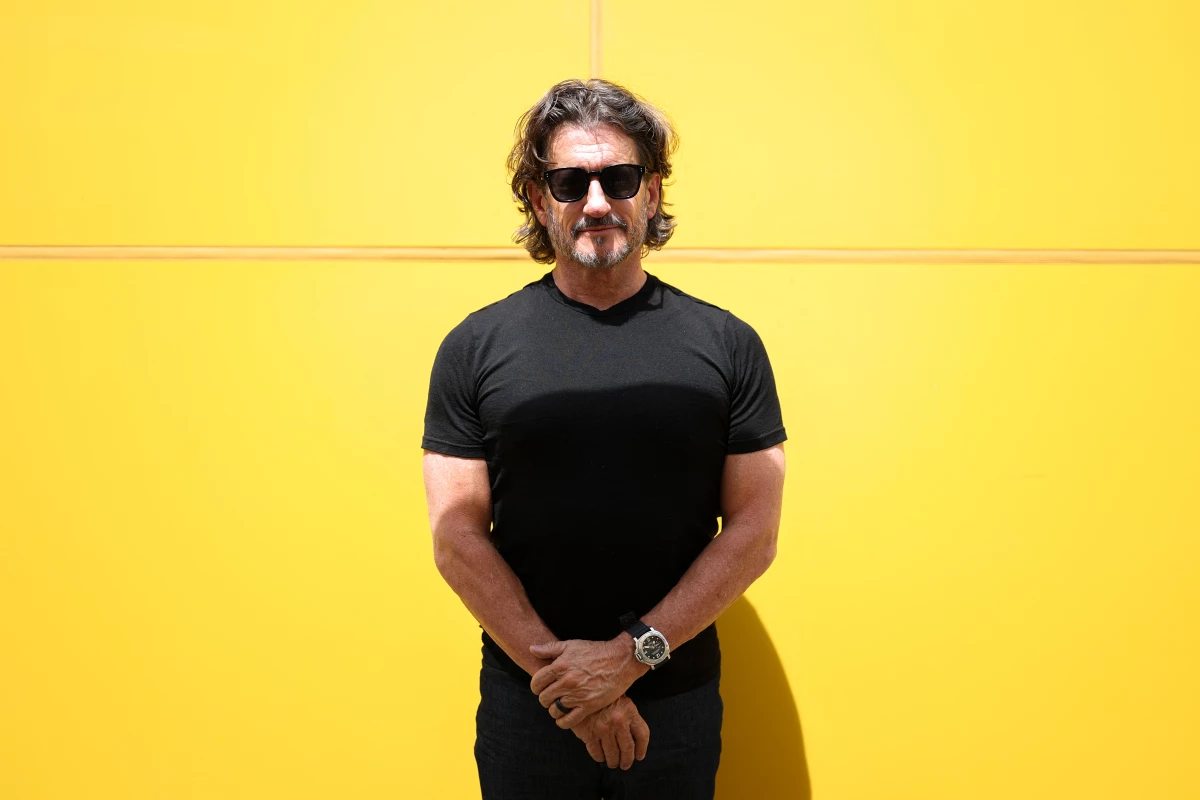
The deep ocean covers most of the planet. Gerard Barron wants his company to be the first to mine it.
That’s been his dream since 2001, when Barron’s then-tennis partner asked him to invest in a first-of-its-kind project to extract gold and other metals from a hydrothermal vent off the coast of Papua New Guinea.
“I knew very little about the ocean. I knew very little about mining,” Barron told NPR. “But I was curious.”
Barron, 58, is a serial entrepreneur from Australia who always seems to be in a different time zone — calling from Vancouver, London or Dubai. He’s founded companies in fields ranging from finance to industrial manufacturing.
That first deep-sea mining project didn’t quite go as planned. The company struggled to attract financing and went bankrupt in 2019, though not before Barron sold his stake at a profit.
Along the way, he learned about a different, potentially more lucrative, opportunity: “The big game was this nodule field off the coast of Mexico.”
That “big game” is a remote stretch of the Pacific Ocean, believed to hold massive amounts of minerals like nickel and cobalt. It would become the target of his latest firm, The Metals Company.
Barron argues that securing access to those minerals, which are used in defense and energy technologies, could help usher in a new era of industrialization for the U.S.
“ This resource can help America become mineral independent, just like it became energy independent through shale and gas,” he says.
That argument has caught the attention of the Trump administration. The Metals Company is now seeking approval for the project from federal regulators – the first time U.S. agencies have considered such a project.
But scientists worry about the impact of deep-sea mining on a little-studied ecosystem. And most other countries say these minerals, which fall beneath international waters, aren’t even America’s to mine.

What is The Metals Company?
The Metals Company is a relative newcomer to the mining industry. It was founded in 2011 and went public in 2021. It’s backed by companies including the engineering firm Allseas, which designs much of The Metals Company’s mining technology.
It is among a handful of mining firms eyeing the same stretch of Pacific Ocean between Mexico and Hawaii, called the Clarion-Clipperton Zone (CCZ). The U.S. Geological Survey has estimated that the seabed there contains more nickel and cobalt than all known terrestrial reserves combined.
Barron, who became CEO in 2017, says mining in the CCZ is a no-brainer. Unlike traditional mining, which extracts metals from underground, the metals in the CCZ sit right on the seabed surface, bound up in trillions of potato-shaped rocks called polymetallic nodules.
“They literally sit there like golf balls on a driving range,” Barron says. “We can pick those nodules up and turn them into metals at a fraction of the environmental and human impacts compared to mining on land.”

In 2022, The Metals Company tested its mining system in the miles-deep waters of the CCZ. The technology works something like a giant, remote-controlled vacuum cleaner that sucks nodules off the seafloor. In that test, the firm retrieved 3,000 tons of nodules from the seabed, a feat unmatched by most industry peers.
By operating in the remote CCZ, Barron says his company can avoid the harms of land-based mining, which can include displacing communities or clearing forest.
“This is the perfect place,” he says “There’s no alternative [use] for this part of the seafloor. You can’t grow crops there. People can’t live there. It’s perfect.”
Not everyone agrees.
What do critics say?
Dozens of countries have called for a moratorium on deep-sea mining until more is learned about potential impacts, and hundreds of marine researchers have also come out in opposition.
They say mining could damage a little-explored ecosystem where scientists still routinely discover new animal species.
“On land, we all see how destructive mining is. But on the seafloor, no one’s going to see it,” says Sheryl Murdock, an oceanographer at Arizona State University. “So I don’t think it’s going to be less destructive. It’s that people are going to be less aware of it.”
Murdock says deep-sea mining could destroy seabed habitat by removing the nodules on which sponges and other animals live. The operation would also create underwater plumes of sediment that may contain heavy metals, she says.
The Metals Company says its mining system is designed to limit environmental impacts. It plans to leave 15-20% of the nodules behind on the seabed, allowing some animals to recolonize the disturbed area. The firm says that its models suggest the sediment plumes would dissipate to background levels within two miles, only impacting the area immediately surrounding the mining operation.
The firm also points to studies finding that animal life in the CCZ is far less abundant than in many terrestrial mining hotspots.
Still, some manufacturers — including Volvo, BMW and Google — have pledged not to use ocean-mined minerals in their supply chains due to environmental concerns.
Some analysts also question the business case for deep-sea mining. Many EV carmakers have shifted away from using batteries that contain nickel and cobalt. There’s currently a global oversupply of those metals — even some terrestrial mines are going idle.

A ‘lifeline’ from the Trump administration
Just a few months ago, it wasn’t clear any company would be mining the deep sea any time soon.
Mining in international waters is traditionally overseen by the International Seabed Authority (ISA). For more than a decade, the United Nations-affiliated group of more than 165 countries has been drafting regulations for a future deep-sea mining industry. Those regulations are still being negotiated – leaving companies like Barron’s in limbo.
In April, Barron’s fortunes changed. President Trump signed an executive order promoting deep-sea mining as a way for the U.S. to counter China’s dominance of global mineral supplies. It also directed federal agencies to fast-track permitting for deep-sea mining projects, in both federal and international waters.
“The industry got a lifeline with the Trump executive order,” says Dan Ives, a tech analyst at Wedbush Securities. “Everything else was kind of on a backwards treadmill.”
The order also put the U.S. at odds with nearly every other country.
“The area is an international possession,” says Leticia Reis de Carvalho, Secretary-General of the ISA. “Therefore, any activity without an authorization of the International Seabed Authority constitutes a violation of international law.”
The ISA defines these seabed minerals as the common heritage of all humans. Dozens of countries have condemned the Trump administration’s unilateral approach to mining them.
The Trump administration says it’s not bound by ISA rules. The U.S. is one of the few countries that never ratified the treaty that created the ISA, though past administrations have generally cooperated with it.
The executive order seems to have buoyed The Metals Company’s prospects. Its stock price has more than doubled since Trump’s signing. The firm has also announced $85 million-worth of new corporate investment.
What comes next?
Barron plans to seize the newfound opportunity. Days after the executive order, The Metals Company officially applied for approval from the National Oceanic and Atmospheric Administration (NOAA) to begin commercial-scale mining in international waters.
NOAA says it is “committed to an expeditious review” of the application, though an exact timeline is unclear, since the agency has never conducted such a review.
If and when The Metals Company receives approval, it will likely take at least a year to build out a full-scale mining system, according to the engineering firm Allseas.
Deep-sea nodules were first discovered more than a century ago. Now, Barron says The Metals Company is on the cusp of hauling them up from the seabed on a commercial scale: “I’m certain it will be while Trump is president.”
Transcript:
STEVE INSKEEP, HOST:
The Trump administration is considering whether to permit a mining project at the bottom of the Pacific. The plan involves a new way of extracting minerals used in defense and energy technologies. Daniel Ackerman reports on the company behind it and the questions the project is raising.
DANIEL ACKERMAN, BYLINE: The idea for deep-sea mining has been around for a while. Take it from this very 1980s documentary.
(SOUNDBITE OF ARCHIVED RECORDING)
UNIDENTIFIED NARRATOR: The sea – a new reserve of global resources.
ACKERMAN: That’s an educational film by Allegro Productions. The ocean floor holds a lot of metal. That includes nickel and cobalt, used in technology like electric cars, and those metals are bound up in these strange-looking rocks called polymetallic nodules.
(SOUNDBITE OF ARCHIVED RECORDING)
UNIDENTIFIED NARRATOR: Potato-sized objects covering thousands of square miles of sea bottom.
ACKERMAN: But those potato-sized nodules have never been mined. Now a startup called The Metals Company wants to be the first. CEO Gerard Barron says those nodules are just waiting.
GERARD BARRON: They literally sit there like golf balls on a driving range. We can pick those nodules up and turn them into metals at a fraction of the environmental and human impacts compared to land-based mining.
ACKERMAN: Barron is a serial entrepreneur from Australia. He’s done everything from software to manufacturing to finance. But since he became head of The Metals Company in 2017, Barron has been laser-focused on deep-sea mining. His firm has developed technology – something like a giant remote-controlled vacuum cleaner – to suck up nodules off the seabed. It wants to use that vacuum in a remote patch of the Pacific Ocean. He says mining there means you don’t have to clear-cut a rainforest or displace communities, like you might on land.
BARRON: This is the perfect place. There’s no alternative for this part of the sea floor. You can’t grow crops there. People can’t live there. It’s perfect.
ACKERMAN: But not everyone agrees. Sheryl Murdock is an oceanographer at Arizona State University. She says mining beneath miles of seawater would just hide the impacts.
SHERYL MURDOCK: On land, we all see how destructive mining is. But on the sea floor, no one’s going to see it. So I don’t think it’s going to be less destructive. It’s that people are going to be less aware of it.
ACKERMAN: Some analysts have also questioned the business case for deep-sea mining. Many EV carmakers have shifted away from using nickel and cobalt, and right now there’s a global oversupply of those metals. Even some terrestrial mines are going idle. But Dan Ives, a tech analyst at Wedbush Securities, says the outlook for deep-sea mining improved this past April with a stroke of Donald Trump’s pen.
DAN IVES: I’d say the industry got a lifeline with the Trump executive order. That’s what changed everything.
ACKERMAN: The order called on the U.S. government to fast-track deep-sea mining in both federal and international waters. And that puts the U.S. at odds with nearly every other country on Earth.
LETICIA CARVALHO: The area is in international possession.
ACKERMAN: Leticia Carvalho is secretary-general of the International Seabed Authority. That’s the body recognized by more than 160 countries that regulates the deep sea beyond national control, including the part of the Pacific where The Metals Company wants to mine. Carvalho says those minerals belong to all humans.
CARVALHO: Therefore, any activity without an authorization of the International Seabed Authority constitutes a violation of the international law.
ACKERMAN: But the Trump administration says it’s not bound by that law. The U.S. never ratified the underlying treaty. And Trump says the U.S. needs its own supply of critical minerals because global supplies are now dominated by China. Barron plans to seize this new political opportunity. He says The Metals Company is ready to start mining nodules while Trump is still in office, even though other countries say they’re not America’s minerals to mine.
For NPR News, I’m Daniel Ackerman.
(SOUNDBITE OF MUSIC)
