


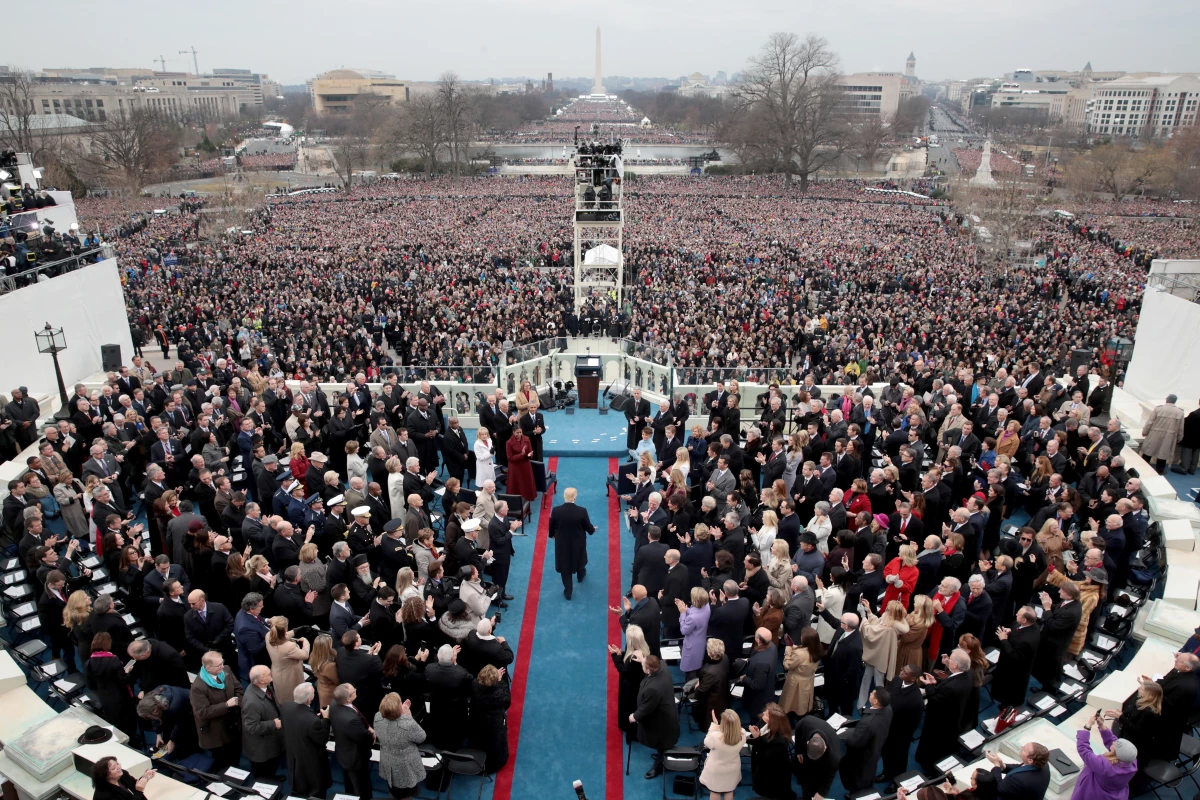
Thousands of people will gather on the National Mall on Monday to watch President-elect Donald Trump take the oath of office.
How many thousands? We won’t be able to tell you that. And neither will the National Park Service.
For decades, that agency released official crowd counts for events on the National Mall, including inaugurations, protests, parades and even concerts. But back in the 1990s, Congress quietly forced the National Park Service to stop.
That decision was aimed at keeping the agency out of raging debates over the size of crowds — debates like the political firestorm that broke out over the size of the audience for Trump’s first inaugural.
‘The largest audience to ever witness an inauguration. Period’
On the day after his inauguration in 2017, protesters filled the streets and President Trump fumed about press coverage that he said underestimated the size of his crowd.

“I looked out, the field was — it looked like a million, million and a half people,” Trump said, complaining that television footage showed empty patches on the Mall. He said it looked nothing like what he saw from his perch at the Capitol.
Sean Spicer, Trump’s newly minted press secretary, charged into the White House press briefing room to falsely insist that it had been “the largest audience to ever witness an inauguration. Period.”
The back and forth over the size of Trump’s inaugural crowd went on for days, and while there were plenty of photos to compare, there was no official crowd count to settle it.
The decision dates back to the Million Man March in 1995
The National Park Service was taken out of the crowd-counting business after a similar controversy over the 1995 Million Man March, organized by Nation of Islam leader Louis Farrakhan.

Speaking on the Mall that October day, Farrakhan boasted about the impressive turnout.
“People told me, ‘You had better change that figure to one more realistic,'” Farrakhan said. “I should have changed it to the Three Million Man March.”
It was a big crowd, but not that big.
“The Park Service did an official estimate,” said David Barna, who was the chief of public affairs for the Park Service at the time. “It was taken at the time when Mr. Farrakhan was giving his main talk, and we estimated 400,000 people — and that became controversial.”
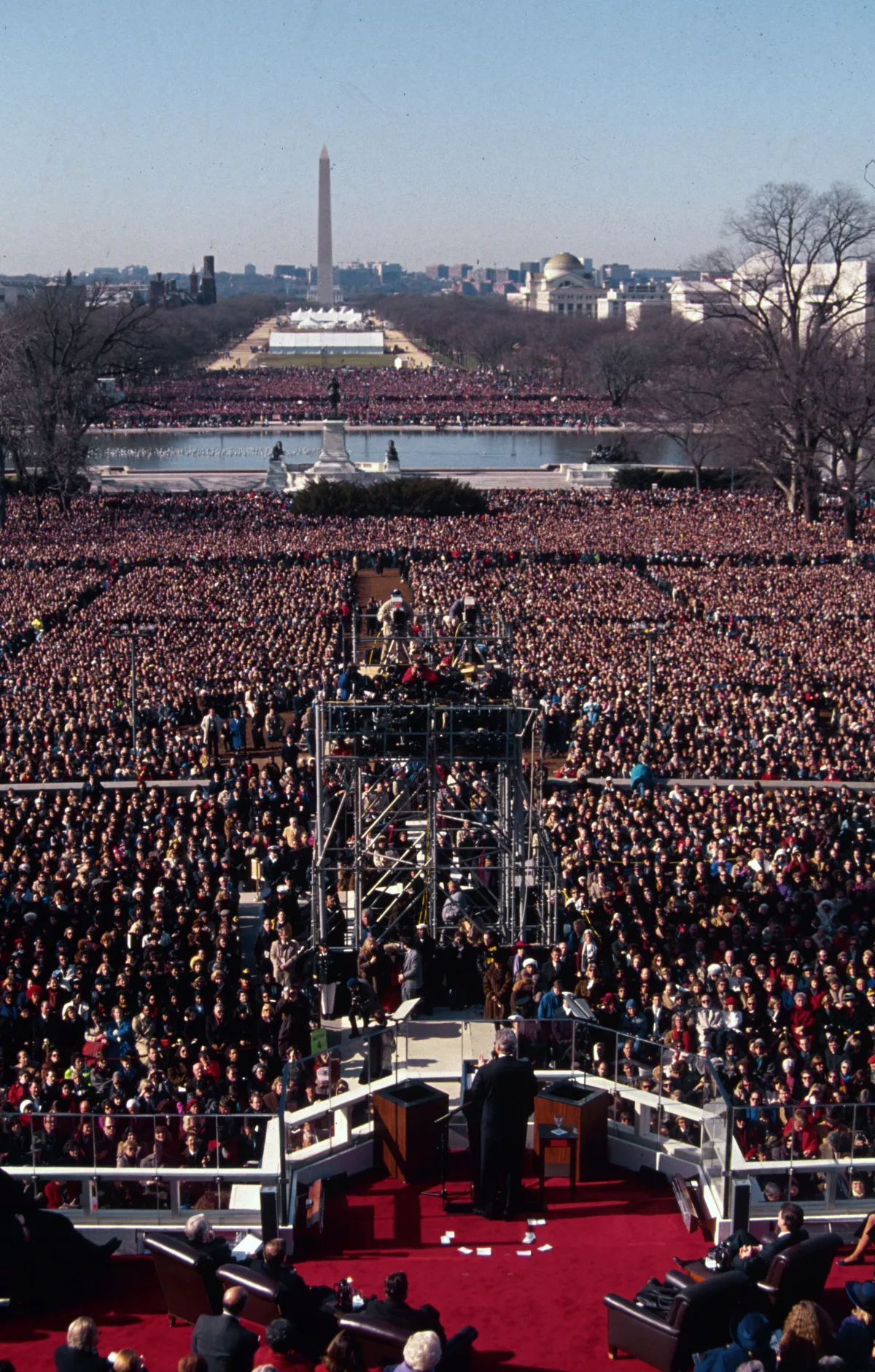
To estimate the crowd that day, Barna said the agency had used the same method it had used for decades. It overlaid aerial photographs with a grid, counting the density of people in the squares, and did the math. It was never an exact count, Barna said. The numbers were always round estimates.
Farrakhan and his supporters disputed the count and commissioned a Boston University professor to do his own estimate, which came back at 800,000 people — still short of a million.
It was an “enormous controversy,” said Jason Alderman who was a young congressional aide back then. “And this had happened many times before.”
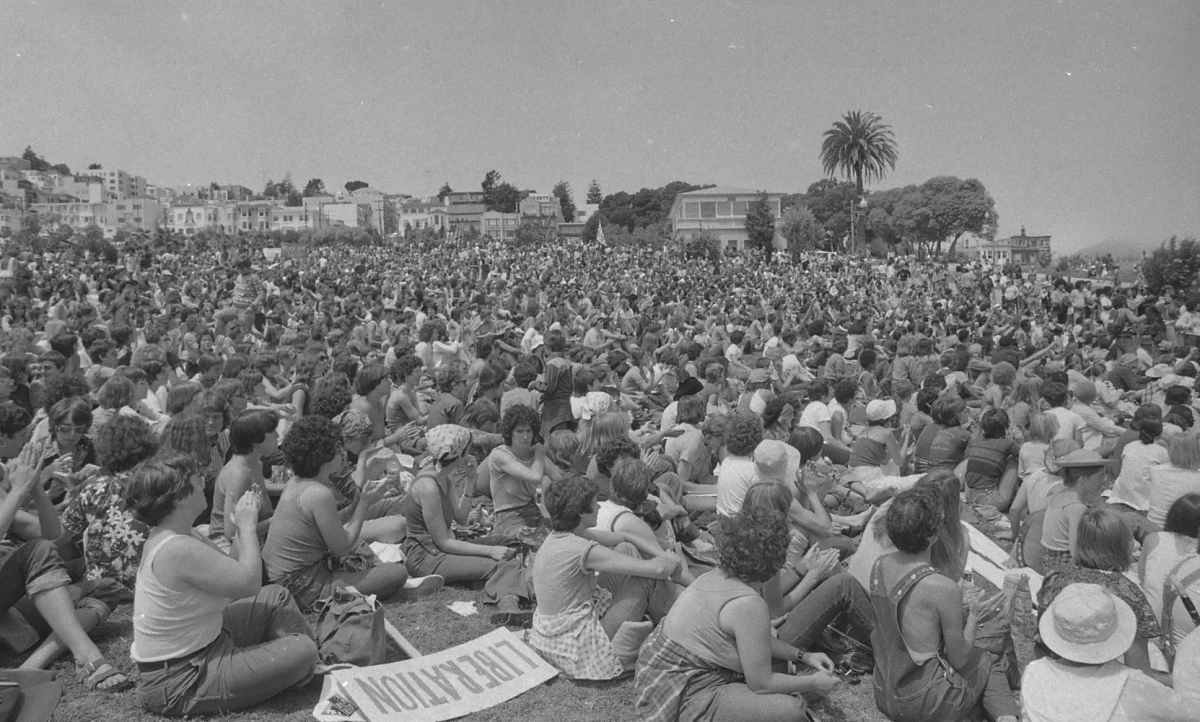
A young congressional aide saw a solution
Alderman was working on the fiscal year 1997 appropriations bill for the Interior Department around the time of the controversy. It was a spending bill that included funding for the National Park Service, which gave him a unique opportunity to do something about the ongoing issue of crowd count controversies.
Organizers of events always thought the agency’s estimates were too small, while opponents of the organizers always complained the crowd counts were too big, said Alderman, now a corporate communications executive in the San Francisco Bay Area.
“The Park Service was caught in the middle,” he said.

So, with the blessing of his boss, Rep. Sidney Yates, D-Ill., Alderman inserted some language in the appropriations process:
The Committee has provided no funding for crowd counting activities associated with gatherings held on federal property in Washington, D.C. If event organizers wish to have an estimate on the number of people participating in their event, then those organizers should hire a private sector firm to conduct the count.
And with that simple paragraph, the National Park Service stopped counting crowds.
“Better to hire another ranger to give another tour to school kids at Yosemite than to count a crowd to feed somebody’s ego,” said Alderman.
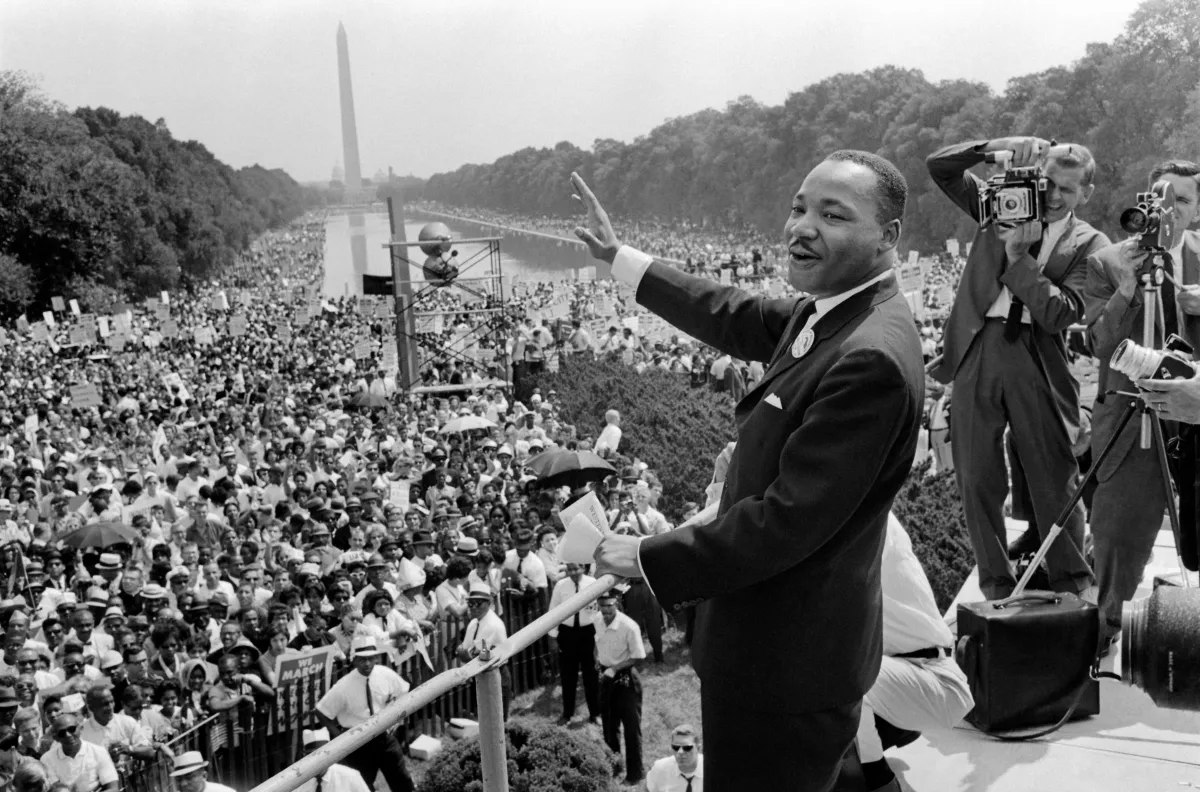
But, David Barna, the retired Park Service spokesman, said he feels something was lost with the end of the official — albeit often disputed — crowd counts.
“I know personally, I was disappointed we weren’t doing it anymore,” Barna said.
He said there’s historical value in knowing how many people were there on the Mall for big events like Martin Luther King Jr.’s “I have a dream” speech, and having a point of comparison for modern-day demonstrations.
Transcript:
LEILA FADEL, HOST:
Thousands of people will gather on the National Mall Monday to watch President-elect Trump take the oath of office. How many thousands, come Monday? Well, we won’t be able to tell you that, and neither can the National Park Service. For decades, it’s released official crowd counts for events on the Mall. Not anymore. NPR’s senior White House correspondent Tamara Keith has the surprising backstory.
TAMARA KEITH, BYLINE: On the day after the inauguration in 2017, protesters filled the streets and President Trump was furious about press coverage that he said underestimated the size of his crowd.
(SOUNDBITE OF ARCHIVED RECORDING)
DONALD TRUMP: I get up this morning. I turn on one of the networks and they show an empty field. I say, wait a minute. I made a speech. I looked out. The field was – it looked like a million, million and a half people.
KEITH: He even sent then Press Secretary Sean Spicer out to make a statement.
(SOUNDBITE OF ARCHIVED RECORDING)
SEAN SPICER: This was the largest audience to ever witness an inauguration – period.
KEITH: That wasn’t true, but another thing he said was completely accurate.
(SOUNDBITE OF ARCHIVED RECORDING)
SPICER: No one had numbers because the National Park Service, which controls the National Mall, does not put any out.
KEITH: The National Park Service stopped releasing crowd counts in the 1990s after a different controversy over the Million Man March organized by Nation of Islam leader Louis Farrakhan.
(SOUNDBITE OF SPEECH)
LOUIS FARRAKHAN: People told me you better change that figure to one more realistic. And I should have changed it to the Three Million Man March.
(CHEERING)
KEITH: It was a big crowd, but not that big, says David Barna, who was the chief of public affairs for the Park Service at that time.
DAVID BARNA: The Park Service did an official estimate, and we estimated 400,000 people.
KEITH: He says that crowd was estimated using the same method the Park Service had used for decades – overlaying aerial photographs with a grid.
BARNA: Then you can say, OK, in this area, there were four people per square or two people or one person per grid, and then you add these grids up and come up with an estimate.
KEITH: Farrakhan and his supporters disputed the count and commissioned a professor to do his own estimate, which came back at 800,000, still short of a million. Jason Alderman was a young congressional aide back then, working on the spending bill that included funding for the Park Service. And all that controversy bugged him.
JASON ALDERMAN: Everybody wanted a crowd count from the National Park Service. They dutifully obliged and the organizers of the event always thought it was too small. Opponents of the organization always thought that the crowd count was too large, and the Park Service was caught in the middle.
KEITH: So with the blessing of his boss, a Democratic congressman from Chicago, Alderman inserted some language in the appropriations process. It said, quote, “The committee has provided no funding for crowd counting activities associated with gatherings held on Federal property in Washington, D.C.” And with that, the National Park Service stopped counting crowds.
ALDERMAN: Better to hire another ranger to give another tour to school kids at Yosemite than to count a crowd to feed somebody’s ego.
KEITH: But David Barna, the retired park service spokesman, says something is lost with the end of the official, if often, disputed crowd counts.
BARNA: Personally, I was disappointed we weren’t doing it anymore.
KEITH: He says there’s historical value in knowing how many people were there on the National Mall for big events, like Martin Luther King Junior’s, “I Have A Dream” speech and other protests, parades and presidential inaugurations going back to the 1960s. Tamara Keith, NPR News.
(SOUNDBITE OF THE DIASONICS SONG, “BALANCE”)
