


For her entire life, Diana Pinones’ parents took care of racehorses.
Her mom, now retired, would walk the horses each morning. Her dad still grooms them, which can mean feeding, brushing and dressing the horses in preparation for race day.
Originally from Michoacán, Mexico, the Pinones became U.S. citizens and have turned horse-racing into a family affair, as have many others in the industry.
Pinones herself is now a staple at the Laurel Park race tracks in Maryland. On a recent Saturday, she was greeted with dozens of shouted “Good morning”s from workers on trucks driving by, or on horses walking past.
The success of this racetrack, like many others, relies on hundreds of immigrant workers on temporary H-2B visas — many of whom Pinones has gotten to know over the last decade as part of her work with the Maryland Thoroughbred Horsemen’s Association.
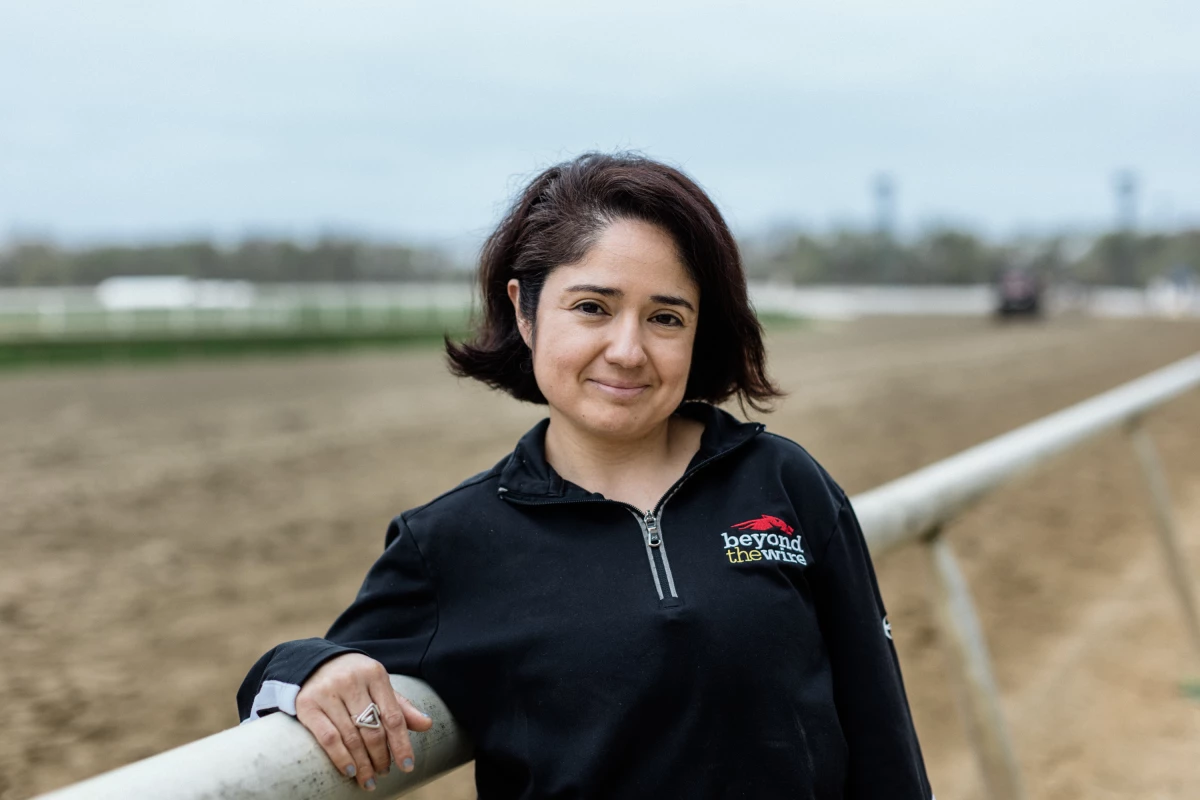
“Everyone is an immigrant. We rely 100% on immigrants, from the hot walker to the groom to the jockey,” Pinones said, talking about the people who prep, ride and cool down the horses after they run at breakneck speed. “Everyone comes from another country to work in the industry.”
Horse racing generated some $36 billion in 2023, the latest figures available, according to the American Horse Council. The industry heavily relies on workers with H-2B visas to get a horse on the track, because owners and trainers say they’re unable to find enough U.S.-born workers. (Jockeys can qualify for a special visa for athletes.)
Still, a large portion of the workforce is estimated to be without legal status, according to industry groups.
Two widely-sought worker visa programs have already reached their annual caps, the U.S. Citizenship and Immigration Services announced in March.
Visas no longer available for 2025 include the H-1B visa, which goes to those with bachelor degrees or higher, and the H-2B visa, for non-agriculture seasonal labor such as in hospitality, landscaping, or working with animals.
In some states, like New York, horse racing is one of the biggest recipients of H-2B visas. The workers who have been granted 2025 visas will start work in the fall, which means the trainers at Laurel Park are staffed for this year. But Pinones and others at the track are closely watching changes with visa programs as they brace for what their staffing needs are next season.
Demand for foreign labor continues amid crackdowns
Labor experts say that the demand for visas shows a pressing need for immigrant workers. But as the Trump administration promises a general crackdown on both illegal and legal migration, some fear that their industries could be targets of enforcement, including worksite raids and changes in visa programs.
James O’Neill, director of legislative affairs at the American Business Immigration Coalition, describes the H-visas as programs of “last resort.”
“It’s more expensive to use those visa programs than it is to hire domestically,” O’Neill said. “You actually have to prove that you cannot find somebody domestically to do that job in order to qualify for one of those visas.”
He said that even with an incoming administration, and changing political climate, the trend of reaching the caps on H-1B and H-2B is not surprising.
“The caps have been hit every year for the past several years,” O’Neill said. “The fact that all of the visas were used up is an indication of how desperately needed that workforce is.”
Lynden Melmed, a former chief counsel of U.S. Citizenship and Immigration Services under former President George W. Bush, said employers can see the administration wants to limit both legal and illegal migration.
So employers “are certainly looking at those visa categories as a way to say, we need to secure a consistent workforce because we’re not really sure how these immigration enforcement trends are going to affect current employees and future employees,” said Melmed, now a partner at BAL, an immigration law firm.
The majority of H-1B visa holders come from India, followed by China. Mexico was the top country for H-2B visas in 2024, followed by Jamaica, Guatemala, El Salvador and Honduras.

The annual cap for H-2Bs is 66,000 this year. Employers worry that Trump will lower the caps next year — or freeze the programs entirely, as he did for the H-1B visa program during his first administration.
The politics of the program can be fraught. The H worker visas have received criticism from both Democrats and Republicans over the potential for abuse from employers and workers, and for limiting pathways to get more permanent status.
“I just want to make sure they’re okay”
Back in Laurel Park, tucked in the back of the sandy racetrack, sky-blue housing units can be seen: housing for hundreds of workers under visas.
Pinones explains that each trainer may have one worker for every five horses. And trainers may have dozens of horses, she said. Many live nearby, and Pinones is responsible for helping with their everyday needs, including work related to their immigration processes.
“This is a 24/7 job. It’s people who need you on a day that you’re off because they don’t understand paperwork that came in the mail and they needed to translate,” Pinones said, noting that she helps the workers even apply for green cards.
“I take my job very seriously, especially right now with everything that’s going on,” Pinones said. “They’re really young, 18, they just came here and I just want to make sure they’re okay because this is brand new for them. They had never been to the United States.”

Ferris Allen has been a racehorse trainer for 27 years. He needs about 14 employees to take care of his horses, and the cost for the visas and green cards add up to thousands of dollars. It’s a process that he describes as “daunting” but worth it for a workforce he is proud of.
“We have a couple of Mexican families that we work with, multiple family members,” Allen said. “Those workers are essential to our business.”
Like most who utilize H-2B visas, Allen said it is a challenge to find a dedicated domestic workforce.
“[Immigrant laborers] love their work and they’re proud of their work. And finding that on Main Street, it’s just unlikely to happen,” Allen said. “They’re so good and kind and easy with their horses. I mean, these animals are not play toys there. They can be very rambunctious and very dangerous.”
Experts say that although there is stability for now, there are concerns about what might lie ahead for the H visa programs in the future.
“Generation after generation, they have been doing this job,” Pinones said. “But without the visas, we cannot continue to do this.”

Transcript:
MARY LOUISE KELLY, HOST:
Horse racing season is here. The fastest horses at some of America’s most popular races are supported by dozens of workers. They spend every day grooming, walking, raising the horses to be winners. Well, many of those workers are immigrants. As the 2025 horse racing season ramps up, employers who hire them on visas are watching to see what the Trump administration’s stricter immigration policy may mean for them. Here’s NPR’s Ximena Bustillo with more.
(SOUNDBITE OF JOSEPH DAVID BUHL’s “FIRST CALL”)
XIMENA BUSTILLO, BYLINE: Racehorse trainers gather around the track at Laurel Park in Maryland. Six horses are led into the green metal gates, and then…
(SOUNDBITE OF STARTING STALLS OPENING)
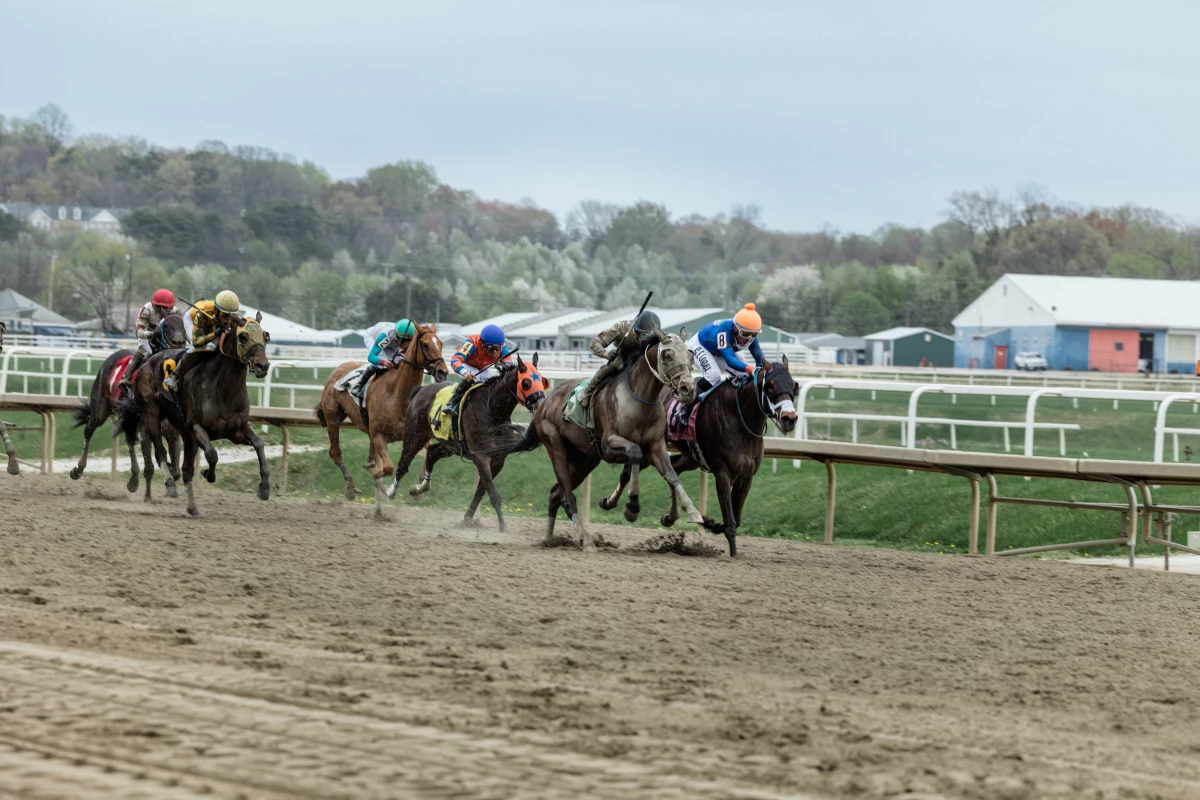
BUSTILLO: …They are literally off to the races, galloping around the mile-long sandy track in barely a minute.
(CHEERING)
BUSTILLO: It’s an exciting moment as the first muddy horse pushes across the finish line. The jockey, also caked in mud, breathes easy, knowing that he has won the big prize. It’s not an easy journey getting a horse to the track, and trainers say that work depends on immigrants.
DIANA PINONES: Everyone is an immigrant. I think we rely a hundred percent on immigrants.
BUSTILLO: That is Diana Pinones. She says H-2B visas, which are for nonagricultural seasonal labor, are needed to find workers to groom, walk and raise the horses. She’s the executive assistant at Laurel Park, and she helps the migrant workers settle in.
PINONES: I treat them like family, and they do the same thing – they treat me like family. It’s a big family.
BUSTILLO: Family – it’s a common theme in the horse racing world. Those in the industry say that it is made possible by the generations of individual families who come to the U.S. on H-2B visas year after year. Pinones said, like many others, her family came to the U.S. from Michoacan.
PINONES: (Through interpreter) My mom and dad dedicated themselves to this work all their lives. As a child, I would come here. That’s how I got into this work.
(Speaking Spanish).
BUSTILLO: Mexico is the top country for H-2B visa holders, followed by Jamaica, Guatemala, El Salvador and Honduras. The visas are used by employers when they can’t find anyone domestically to do the work. H-2B visas have an annual cap of 66,000 – a cap already reached this year. And employers are taking note.
LYNDEN MELMED: They can look and see that the border is much tighter than it was before, and that affects both legal and illegal workers coming across the border.
BUSTILLO: That’s Lynden Melmed of BAL, an immigration law firm.
MELMED: What we hear is that they are certainly looking at those visa categories as a way to say, we need to secure a consistent workforce because we’re not really sure how these immigration enforcement trends are going to affect, you know, current employees and future employees.
BUSTILLO: The trainers at Laurel Park are set for this year, but Pinones said that there’s already uncertainty about visa availability for next year.
PINONES: We still don’t see it ’cause everybody who had a visa hadn’t come here in October, November, so we still don’t see it. But eventually it will hurt the industry.
BUSTILLO: That fear is felt across the board.
FERRIS ALLEN: Come on, girl.
BUSTILLO: Ferris Allen has been a racehorse trainer for 27 years. He stands by a white picket fence, cheering on, taking notes and checking his watch as one of his horses – a glossy brown one with a No. 6 tag – races through the finish.
ALLEN: We finished fourth.
BUSTILLO: As he waits for another one of his horses, named Who Ways So, to run, he tells me the visa process is very complex.
ALLEN: Oftentimes it’s very daunting to skate (ph) through all of this stuff.
BUSTILLO: And he has also heard concerns from his workers.
ALLEN: The workers that I have are all within legal status, but that doesn’t mean everyone they associate with here is, so they’re worried for their friends and for some of their relatives. And they’re also worried that if they go home, will they be able to come back?
BUSTILLO: Allen calls these workers essential. Without them, his own family business wouldn’t continue. He and others in the industry are cautiously hopeful they will be able to bring in more workers to help them race next season. Ximena Bustillo, NPR News, Washington.
(SOUNDBITE OF MUSIC)
