


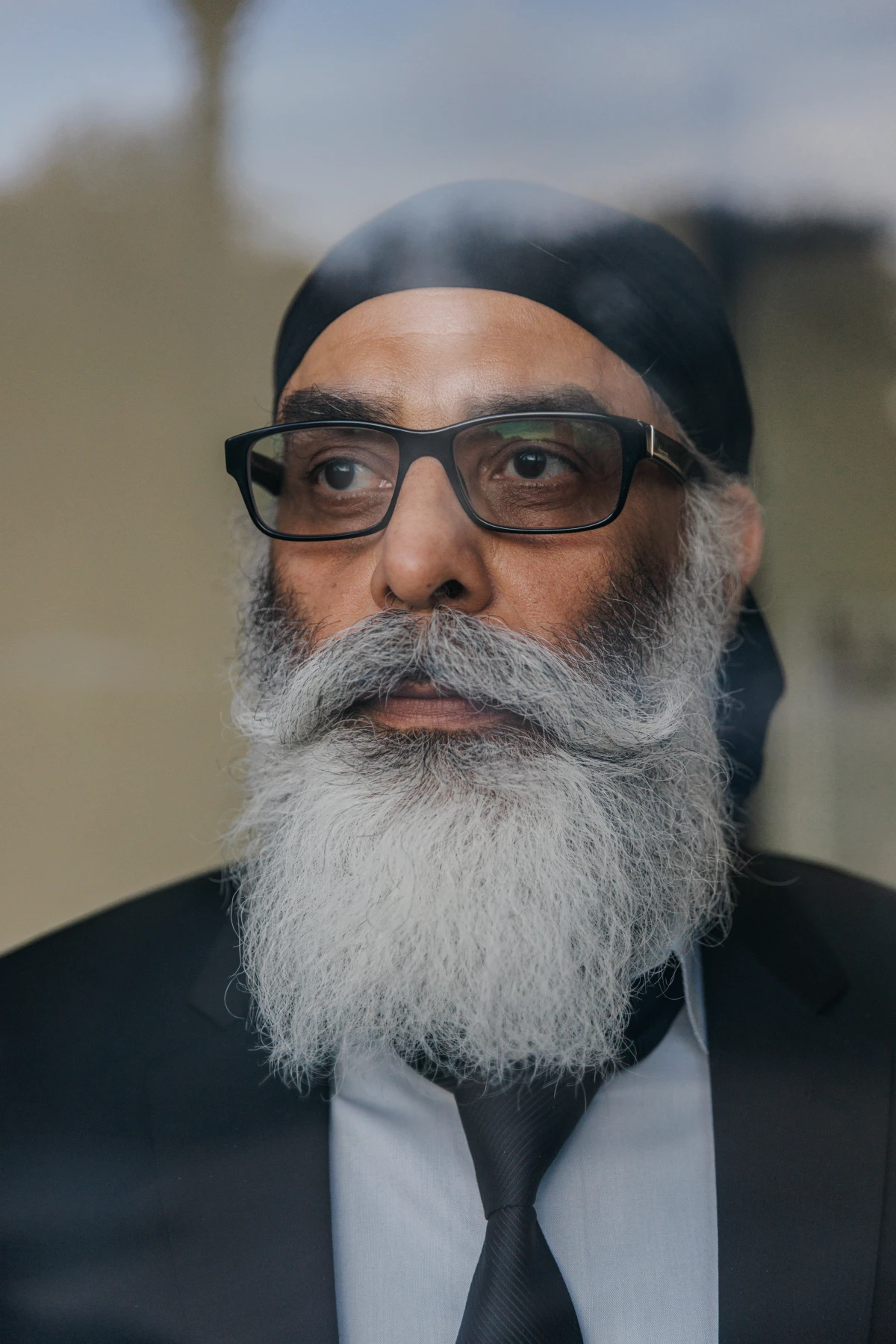
It is a phone call Gurpatwant Singh Pannun remembers well. It was June 17, 2023. After playing phone tag for a day, he and his close aide in Canada finally managed to connect.
“He told me that he was informed by the Canadian intelligence officials that there is a serious threat to his life and he might be killed,” Pannun recalled.
On that call, his aide, Hardeep Singh Nijjar, said that assassins were coming for Pannun as well. The conversation is seared into Pannun’s memory because of what Nijjar told him — but also because it was the last time the two men spoke.
The following day, gunmen shot Nijjar dead in the parking lot of a Sikh temple outside Vancouver, Canada. Canadian authorities have arrested four Indian nationals in connection with the murder.
Nijjar’s warning for Pannun, a dual U.S.-Canadian citizen, also proved prescient. Five months later, the U.S. Justice Department announced it had foiled a plot to assassinate Pannun in New York City. An Indian national was charged in the alleged murder-for-hire scheme, and has pleaded not guilty.
Nijjar’s killing and the purported plan to assassinate Pannun are part of a broader trend around the world in which foreign governments seek to silence critics overseas, including in the United States.
Last week, prosecutors announced charges against a new defendant in Pannun’s case: a former Indian intelligence officer, Vikash Yadav, who allegedly orchestrated the plot.
In the last few years, the Justice Department says it has foiled at least four assassination plots tied to a foreign power. Three of those allegedly link back to Iran, including one targeting Iranian-American activist and journalist Masih Alinejad. The fourth — allegedly targeting Pannun — involves India.
The Indian government denies any involvement in Nijjar’s killing or the purported plot against Pannun.
After the U.S. announced charges in the Pannun case, India set up its own internal inquiry to investigate. Just over a week ago, Indian officials were in Washington for meetings to discuss the case and for both sides to provide an update on their respective investigations.
The State Department called the meetings “productive.” The Indian Embassy did not respond to a request for comment.
“Well-documented” threats from India
Pannun, who was born in India but moved to the U.S. in 1992, told NPR earlier this year that the threat to his life came as no surprise.
“I have been threatened directly by the Indian parliamentarians while sitting in the Indian parliament,” he said. “They have stated that we are going to kill Pannun, even if we have to do a surgical strike. These are well-documented, the statements of the government officials.”
In particular, he points to remarks Indian Prime Minister Narendra Modi has made several times in recent years, including early this July in India’s parliament.
“Today, post 2014, India enters your home and kills you,” Modi said before lawmakers. “Carries out surgical strikes. Carries out air strikes.”
In Pannun’s view, Modi’s threat about how India deals with its perceived enemies is directed at people like him.
Pannun is a Sikh separatist. He is a leading figure in the Khalistan movement, which wants to create an independent Sikh homeland carved out from northern India. He and his organization, Sikhs for Justice, have been spearheading a global referendum for independence.
Khalistan referendum campaign
Pannun is a practicing attorney. At his law office in Queens, boxes of case files and legal books lined the walls. His legal work pays the bills, but much of his time he dedicates to the Khalistan cause.
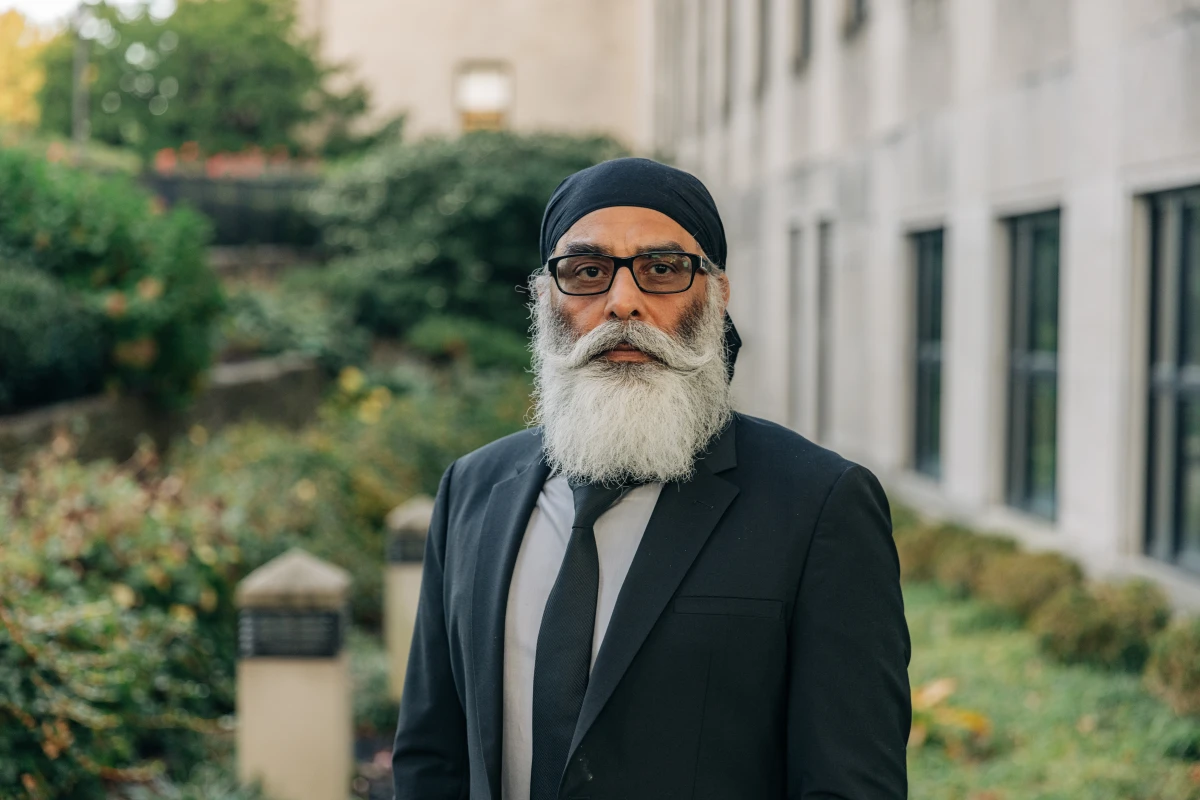
In his office, he has a green screen set up and camera for the videos he produces and posts online for the campaign.
Behind his desk hung a yellow and blue Khalistan flag. On the wall was a framed picture of the Golden Temple in Amritsar, India, the holiest site in Sikhism.
Pannun and Nijjar first worked together to document the events surrounding the Indian military’s attack on the temple in 1984, known as Operation Blue Star, and the government’s bloody, nearly decade-long effort to stamp out an armed Sikh insurgency fighting for independence. Thousands were killed.
The two men then shifted their focus to the future and started the Khalistan referendum campaign. The idea is to have Sikhs around the world vote on the question of creating an independent Sikh state. It is an unofficial referendum, and not legally binding.
Pannun has dedicated his life to the campaign. He told his family years ago that his advocacy work would put him at odds with India’s government.
“I have told them very clearly what it would entail and where it can lead,” he said. “That’s why when we are talking about assassination attempts and killings and threats, that doesn’t come as a surprise to us. That doesn’t come as a surprise to the family.”
“Survive to the finish line”
The Modi government in 2020 designated Pannun and Nijjar terrorists for their separatist work.
Pannun rejects the allegation. He said he follows the law, and that his campaign is a peaceful, democratic process.
India’s response, he said, has been to come after him, and that has forced him to look over his shoulder.
“That’s how I’m going to survive to the finish line,” he said.
The alleged assassination plot was not a one-off. He said there are active threats against his life right now. That danger has not forced him to end his separatist work, but it has forced him to take precautions.
At his office, a security team screens visitors with a metal detector. Body guards ferry him to and from work. He had security before the alleged plot, he said, but he’s beefed it up since the case was charged last year.
“Today, what you see is very, very obvious,” he said of his security detail. “This is a message that I’m giving that I’m not out there to do it in suicide mode. I’m going to continue to campaign and I’m going to continue to protect myself.”
Still, the threat on his life has altered, to a degree, how he operates. The interview with NPR was in his office, in part, because it is secure.
“I cannot just abruptly take a car and jump in the car and go anywhere,” he said. “That’s what I have been advised by my security details. That’s where you get killed.”
He’s changed his residence several times since the alleged plot was foiled. He doesn’t go to restaurants much. He said he hasn’t been to the grocery store in years; he gets things delivered instead. And he’s curtailed his on-the-ground campaign appearances.
Boycotting Indian-owned businesses
He remains very active online, though, and regularly posts videos on Instagram. Some of them show pro-Khalistan rallies, while others offer heated challenges against India or Indian officials.
In one from last November, Pannun declares: “Sikhs are facing existential threat under the successive India regimes.”
“We are going to target India,” he adds. “From Air India to made in India, we are going to ground everything.”
Some Indian media outlets interpreted that as a threat in light of the 1985 bombing of an Air India passenger jet flying from Canada to India that killed more than 300 people. A Canadian Sikh was found guilty in 2003 for involvement in the bombing. A Canadian court acquitted two others.
Pannun pushed back, calling that interpretation of his video an “Indian narrative,” and saying he was calling for a Sikh boycott of Indian-owned businesses.
“The objective behind it is that I want the (Sikh) community to stop funding their own genocide,” he said. “I want the community not to spend a dime on Indian-owned businesses.”
Breaking up the Indian state
He’s also come under criticism over posters with the words “Kill India” and the names and photos of Indian officials that the placards claim were involved in Nijjar’s killing. One of the officials pictured was Sanjay Kumar Verma, India’s high commissioner, who was among the six Indian diplomats recently expelled from Canada.
Pannun said his goal is to break up the Indian state.
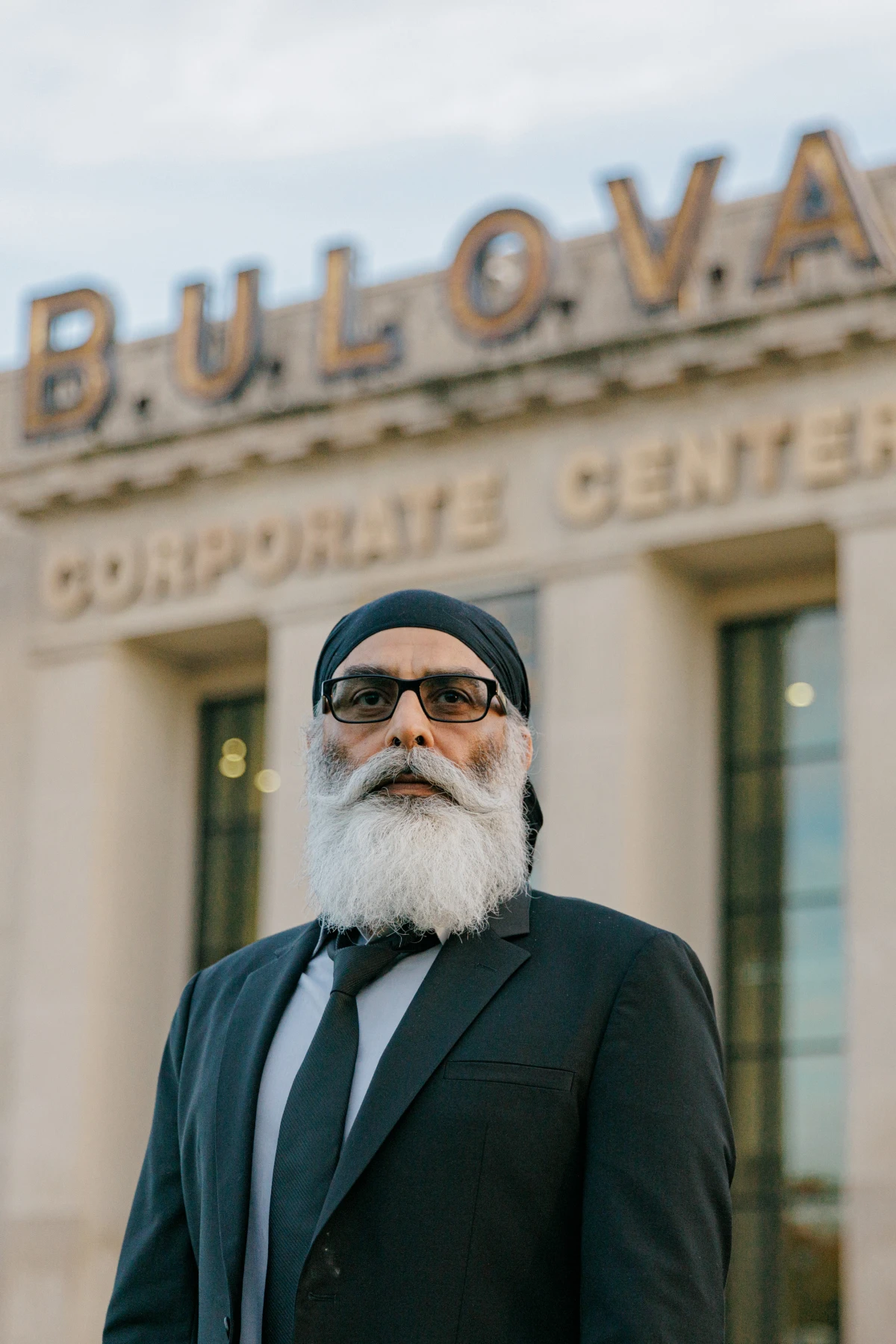
“I say to kill Modi politics. We are in America. We say ‘kill Biden politics,’ we say ‘kill Trump politics,’” Pannun said. “’Kill India’ means balkanize India. India is not a human being. India is in a union of states. We want to balkanize India.”
Some of his posts on social media are about his late colleague and friend, Nijjar. His assassination, Pannun said, has left a hole.
“You feel the vacuum, but then you also get the strength and the courage: what Nijjar stood for, for what he gave his life, for what he has spent the last 15, 16 years with us,” he said.
But Pannun also said there’s no time to sit back and grieve. There is work to be done, a campaign to run, despite the risks.
“I would rather take a bullet in my head than stop the Khalistan referendum campaign,” he said.
Transcript:
JUANA SUMMERS, HOST:
Foreign governments are increasingly trying to silence critics overseas. That includes here in the U.S., where the Justice Department says it has foiled at least four assassination plots in recent years tied to a foreign power. One case involves India. And last week, Indian officials were here in Washington for talks about the alleged plot to target an American activist in New York. NPR’s Ryan Lucas recently visited the activist to hear about how having a target on his back has changed his life.
RYAN LUCAS, BYLINE: It is a phone call that Gurpatwant Singh Pannun remembers well. It was June 17, 2023. And after playing phone tag for a day, he and his close aide in Canada finally managed to connect.
GURPATWANT SINGH PANNUN: He told me that he was informed by the Canadian intelligence officials that there is a serious threat to his life, and he might be killed.
LUCAS: On that call, his aide, Hardeep Singh Nijjar, said that assassins were coming for Pannun as well. This conversation is seared into Pannun’s memory because of what Nijjar told him, but also because of what happened the following day.
(SOUNDBITE OF ARCHIVED RECORDING)
UNIDENTIFIED REPORTER: Police say the killing of a man outside a Sikh temple Sunday night appears to have been targeted. They say the victim was the temple’s president, Hardeep Singh Nijjar.
LUCAS: On June 18, 2023, gunmen shot Nijjar dead in the parking lot of a Sikh temple outside Vancouver. Canadian authorities have arrested four Indian nationals in connection with the murder. Last week, Canada said India’s top diplomat in the country and five other diplomats were persons of interest in the case and expelled them. As it turns out, Pannun’s life also was in danger.
Five months after Nijjar’s killing, the U.S. Justice Department announced it had foiled a plot to assassinate Pannun in New York City. An Indian national was charged in the alleged murder-for-hire scheme. He has pleaded not guilty. And then last week, prosecutors announced charges against a new defendant, a former Indian intelligence official who allegedly orchestrated the plot. Pannun tells NPR the threat to his life came as no surprise.
PANNUN: I have been threatened directly by the Indian Parliamentarians. While sitting in the Indian Parliament, they have stated that we are going to kill Pannun even if we have to do a surgical strike. These are all well documented statements of the government officials.
LUCAS: In particular, he points to a statement Indian Prime Minister Narendra Modi has made several times in recent years, including early this July, to lawmakers in India’s Parliament.
(SOUNDBITE OF ARCHIVED RECORDING)
PRIME MINISTER NARENDRA MODI: (Through interpreter) Today, post 2014, India enters your home and kills you, carries out surgical strikes, carries out air strikes.
LUCAS: In Pannun’s view, Modi’s threat about how India deals with its perceived enemies is directed at people like him. Pannun is discussing all of this at his law office in Queens. Boxes of case files and legal books line the walls. Pannun is a practicing attorney. That work pays the bills. But much of his time he dedicates to the cause of the Khalistan movement, which wants to create an independent Sikh homeland carved out from Northern India. He and his organization, Sikhs for Justice, have been leading a global referendum for independence. This office is the center of his campaign work. Against one wall, he has a green screen set up and cameras.
PANNUN: That’s where we make our messages, like, even for the campaign.
LUCAS: Behind his desk, hangs a yellow and blue Khalistan flag.
PANNUN: Yeah. That’s where we run our operations right now.
LUCAS: On the wall is a framed picture of the Golden Temple in Amritsar, India, the holiest site in Sikhism. Pannun and Nijjar first worked together to document the events surrounding the Indian military’s attack on the temple in 1984, known as Operation Blue Star, and the government’s bloody, nearly decade-long effort to stamp out Sikh separatism. Thousands were killed. The two men then shifted their focus to the future and started the Khalistan referendum campaign. The idea is to have Sikhs around the world vote on the question of creating an independent Sikh state. Pannun has dedicated his life to the campaign. He told his family years ago that his advocacy work would put him at odds with India’s government.
PANNUN: That’s why when we are talking about assassination attempts and killings and threats, that doesn’t come as a surprise to us. That doesn’t come as a surprise to the family.
LUCAS: The Modi government has designated Pannun a terrorist for his separatist work, Nijjar too. Pannun rejects the allegation. He says he follows the law and that his campaign is a peaceful democratic process. India’s response though, he says, has been to come after him, even trying to kill him. And that has forced Pannun to look over his shoulder.
PANNUN: Hundred percent – that’s how I’m going to survive to go to the finish line.
LUCAS: The foiled assassination plot was not a one-off, he says. There are active threats right now against his life. That danger has not forced him to end his advocacy work, but it has forced him to take precautions. At his office, a security team screens visitors with a metal detector. Bodyguards ferry him to and from work. He says he had security before the alleged plot, but it’s been beefed up since then.
PANNUN: Today what you see is very, very obvious. And this is a message I’m giving – that I’m not out there to do it on a suicide mode. I’m going to continue campaign, and I’m going to continue to protect myself.
LUCAS: Still, the threat on his life has altered to a degree how he operates. Our meeting is in his office in part because it is secure. I ask whether we could have met in a cafe instead.
PANNUN: Yeah, if we would have known it in advance, maybe we could have gone. I cannot just abruptly take a car and jump in the car and go anywhere. That’s what I have been advised by my security details. That’s where you get killed.
LUCAS: He’s changed his residence several times since the alleged plot was foiled. He doesn’t go to restaurants much. He says he hasn’t been to the grocery store in years. He gets things delivered, and he’s curtailed his on-the-ground campaign appearances. But he’s still very active online. He posts videos to Instagram on a regular basis. Some of them show pro-Khalistan rallies. Others are heated challenges against India or Indian officials.
(SOUNDBITE OF ARCHIVED RECORDING)
PANNUN: Sikhs are facing existential threat under these successive Indian regimes.
LUCAS: In this one from last November, he’s calling for a boycott of India’s national airline.
(SOUNDBITE OF ARCHIVED RECORDING)
PANNUN: And we are going to target India. From Air India to made in India, we’re going to ground everything.
LUCAS: Some of the posts are about his late colleague and friend, Hardeep Singh Nijjar. His assassination, Pannun says, has left a hole.
PANNUN: You feel the vacuum, but then you also get the strength and the courage, what Nijjar stood for, for what he gave his life for, for what he has spent the last 15, 16 years with us.
LUCAS: But Pannun also says there is no time to sit back and grieve. There’s work to be done, a campaign to run, despite the risks, and he would rather take a bullet in his head, he says, than stop his work for the movement. Ryan Lucas, NPR News, New York.
(SOUNDBITE OF ERIC TUCKER SONG, “FWM (FT. FRE$H)”)
