


TUSCALOOSA, Ala. — Lakethia Clark has spent most of her adult life taking care of children, first at a church day care and later in a child care center. She loves children, but after 15 years, she was getting paid too little and looking after too many kids.
So like many child care workers, she quit. Clark became a housekeeper at a hospital, which paid better, but she missed her old profession.
“It kind of broke my heart,” she says. “I miss my babies.”
She had long thought about starting her own child care business but always found the licensing process and the startup costs daunting.
Today, however, Clark is getting ready to return to a line of work she loves — on her own terms. She’s starting her own small business, caring for as many as six children. And she’s doing it right in her own home.
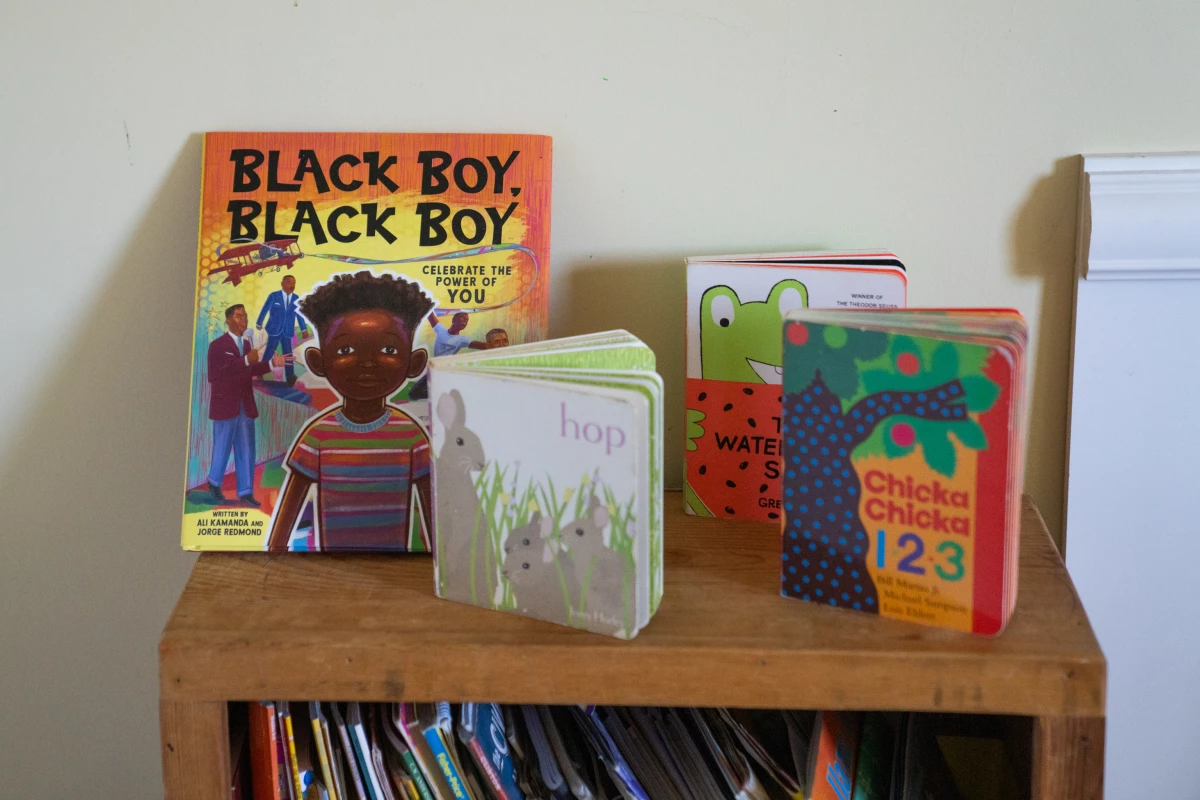
For months, she has been working hard to turn her three-bedroom ranch house and her tree-lined backyard into a children’s wonderland.
Clark is among the first participants in a program called 3by3. It’s the brainchild of Holly Glasgow, a longtime child development educator at Shelton State Community College.
Her vision for the program: dramatically growing the number of small, home-based child care businesses, formally known as family child care homes. It’s a program that could prove important for Alabama, by providing more child care options to help boost the state’s workforce.
Home-based child care is not new, but Glasgow’s exhaustive efforts to provide wrap-around training and guidance, elevating the often invisible child care workforce, have drawn attention and even visitors from states including Colorado and California.
To go to work, parents need child care
The initiative is one of many being piloted around the U.S. as federal and state governments, along with the business community, have come to recognize child care as essential to economic growth.
It’s an especially pressing issue in Alabama, a state with one of the country’s lowest labor force participation rates.
To get her program going, Glasgow got creative, “blending and braiding” funding from a number of sources, including the federal Workforce Innovation and Opportunity Act, which aims to help job seekers move into high-quality careers.
Other funders include the Chamber of Commerce of West Alabama as well as the Women’s Foundation of Alabama, a philanthropic organization focused on accelerating economic opportunity for women.
“It’s an interesting narrative shift, that child care isn’t just on the mom,” says Lillian Brand, vice president of external affairs at the Women’s Foundation of Alabama. “It’s really on the entire economy in order to keep us all moving forward.”
Child care needs are severely unmet
The need for more child care is evident in the numbers. Glasgow estimates Tuscaloosa County has over 12,000 children under age 5 but just over 3,000 child care spots.
Some of those spots are at the community-based pre-K center on the campus of Shelton State, which Glasgow oversees.
While a couple of kids paint pictures at an arts and crafts station, others check in on caterpillars on their journey of metamorphosis. Across the room, more children take turns playing customer and shopkeeper in a make-believe flower shop.
“Happy, healthy, safe is our goal,” says Glasgow.

She would love for every young child in Alabama to have a spot at a center like this one. But she knows that’s impossible. The main impediment is cost.
When an Alabama nonprofit foundation approached her with a fundraising proposal and asked how many child care centers could be built with $10 million, she told them: less than one.
“They were floored,” she says.
So instead, Glasgow is focusing her efforts on family child care homes. She believes these small businesses can achieve the same level of quality as larger centers but at a much lower cost and in a way that may better suit Tuscaloosa’s working parents.
A diversity of child care needs
Among the top employers in this region are hospitals and manufacturers, including Mercedes-Benz and the food company Smucker’s, which has been recruiting workers for a brand-new plant not far away.
Glasgow points out that these employers need workers around the clock, but few child care providers offer care in the evenings, on weekends and overnight.
Family child care homes, which are typically run by women who care for their own children and a handful of others, can be more flexible with their hours. They can also provide a more homelike environment, which many parents who work overnight shifts prefer, Glasgow says.
“Your kids still go to bed in a bedroom,” she says. “They still have breakfast at the kitchen table.”
“Can’t wait”
The first cohort of 3by3 participants wrapped up their coursework this spring. This included five intensive weeks of classes on child development, health and safety, and how to run a small business.
On top of that, there are the home visits.

On a recent sunny morning, Glasgow headed to Clark’s home on a corner lot to help her reimagine her living quarters as play and learning spaces and to ensure that everything is up to code.
Glasgow works quickly, whipping out a laser measuring tool as she sketches a floor plan.
“Miss Holly … that lady is awesome,” says a smiling Clark.
Clark lays out her vision for her formal living room: one sofa moved to the side, another one taken out to make room for children’s tables, a couple of carpets, and shelves for toys and books.
“I can’t wait to put stuff on the walls,” she says.

Glasgow has $5,000 to $10,000 to spend on furniture and supplies for each new family child care home. Paths for Success, the nonprofit foundation that originally approached Glasgow about building child care centers, provides the health and safety materials, including fire extinguishers, hardwired smoke detectors, flashlights, and cribs and cots.
It’s the assist Clark needed to get her business off the ground. Before now, she says, her finances always got in the way.
Although she had worked in child care for years, Clark’s hourly wage never topped $13.50 an hour. For a while, she worked a second job at Taco Casa to save enough money for the down payment on her house.
Now, she is looking forward to becoming a small-business owner. There are tax benefits, including being able to deduct part of her mortgage as a business expense. She may qualify for a new Alabama tax credit for child care providers.
Best of all, she’ll get to be her own boss.

Looking out over her spacious, shady backyard, she imagines children covering her wooden fence with chalk drawings, something she loved watching kids do at her last child care job.
“The owners of the day care used to get so mad,” she says, laughing. “It’s just artwork! It’s going to disappear.”
Already, parents she knew from her old job have been calling her, hoping to send her their younger kids.
“They know what type of worker I was,” she says. “They know I always put the kids first.”
With all her paperwork submitted, Clark is hoping to get final clearance this summer, in time to welcome kids into her home.
Transcript:
ARI SHAPIRO, HOST:
Now some fresh ideas for solving one of our country’s most vexing problems, child care. Trouble finding care is why many people, women in particular, don’t work. It’s an issue for Alabama, which ranks near the bottom when it comes to women in the workforce. NPR’s Andrea Hsu reports from Tuscaloosa on a new initiative that’s chipping away at that.
ANDREA HSU, BYLINE: Holly Glasgow has dedicated her career to doing child care right.
HOLLY GLASGOW: What are you building?
UNIDENTIFIED CHILD #1: For the butterflies.
GLASGOW: Oh, for the butterflies.
HSU: She’s a child development educator at Shelton State Community College. She also directs a pre-K center on campus where 4-year-olds busy themselves with art and science and a make-believe flower mart.
GLASGOW: Happy, healthy, safe is our goal. Learning takes place whether they know it or not.
HSU: Case in point…
What’s going to happen with those caterpillars?
UNIDENTIFIED CHILD #2: They’re going to turn into a butterfly.
HSU: Glasgow would love it if every child in Alabama had what they offer here, but she knows that’s not possible. Building a center like this can cost millions of dollars. She’s convinced this kind of quality can be done at a much lower cost, and in a way that may better serve families. The answer?
GLASGOW: Family child care homes.
HSU: Child care in someone’s home – now, this is not a new idea. In fact, lots of women look after other people’s kids in their homes. But Glasgow envisions dramatically growing the number of family child care homes, populating neighborhoods with them. And she’s got funding from the Women’s Foundation of Alabama and the federal government to jumpstart that in Tuscaloosa.
GLASGOW: All right. Space-wise, show me what you’re thinking.
HSU: Glasgow has brought me to the home of Lakethia Clark, who’s been planning a living room makeover.
LAKETHIA CLARK: Here, I plan on having, like, carpets and different learning center areas.
HSU: Clark is one of the first participants in a new program, a boot camp of sorts. Over five intensive weeks, she completed trainings in child development, health and safety.
CLARK: They’re making sure we’re CPR certified, piece of cake pass.
HSU: Also got a crash course on how to run a small business – the goal? Well, there are two of them – opening up more child care slots so more Alabamians will go to work and, for caregivers, making child care a more attractive profession.
CLARK: It’s going to help tremendously.
HSU: Like the other women in this program, Clark has actually worked in child care for years.
CLARK: I started off working in a church day care, First Baptist Church. But then I moved from there into the center base.
HSU: Growing up in a big family and with four kids of her own, she says caring for kids comes naturally.
CLARK: Just love to see them grow, learn and grow and go home to their parents and talk about what Miss Clark did with me today, what I learned with Miss Clark.
HSU: But she was not happy working at the center. Teacher turnover was high, and she had so many children to look after.
CLARK: Eighteen to 1 – 3- and 4-year-olds. It’s a lot.
HSU: And this work does not pay well. She started out at $9 an hour, worked her way up to $13.50 an hour. For a while, she resorted to working a second job at Taco Casa. Last year, she finally quit child care and moved to a housekeeping job at a hospital.
CLARK: It kind of broke my heart. It broke my heart, and I miss my babies, and I can’t wait to get this started.
HSU: Holly Glasgow can’t wait either, given how many families need care.
GLASGOW: Tuscaloosa County – we have just over 12,000 children under the age of 5. If every spot was filled to capacity, we have just over 3,000 child care spots.
HSU: Also, some of the region’s largest employers are in health care and manufacturing. They need workers round the clock, but…
GLASGOW: We have no centers in Tuscaloosa right now that are providing late evening care, weekend care or overnight care.
HSU: Family child care homes can be more flexible with their hours and provide a more homey environment, putting parents who work nights more at ease.
GLASGOW: If you’re having overnight care, your kids still go to bed in a bedroom. They still have breakfast at the kitchen table.
HSU: Now, some of the women in this program had tried to start child care businesses on their own, but getting licensed is complicated. Startup costs are often a hurdle. That’s where the funding is key. Glasgow has 5- to 10,000 dollars to spend on furniture and supplies for each new child care home.
GLASGOW: I might try to find some things for the porch…
CLARK: OK.
GLASGOW: …If you can do cover.
HSU: After too many years of working for too little pay, Lakethia Clark is looking forward to becoming a small-business owner. For one thing, there are tax benefits, including deducting part of her mortgage. Also she’ll get to be her own boss. She had dreamed of doing this years ago, and now, under Glasgow’s tutelage, it’s becoming reality.
CLARK: Thank you, Miss Holly. You have made sure we have done this.
GLASGOW: I got you.
CLARK: Everything…
GLASGOW: Yep. I got you.
CLARK: I’m so excited.
HSU: Lakethia Clark expects to welcome kids into her home this summer.
Andrea Hsu, NPR News, Tuscaloosa.
(SOUNDBITE OF NAS SONG, “I CAN”)
