The auto industry is already feeling the effects of President Trump’s broad and sweeping tariffs.
Days after the president’s tariff announcement, Stellantis, which makes Chrysler, Jeep and Dodge, announced that 900 people would be temporarily laid off. The affected U.S. employees work in factories across the Midwest, including Michigan, a state where the auto industry drives the economy and where voters helped elect Trump for a second presidential term.
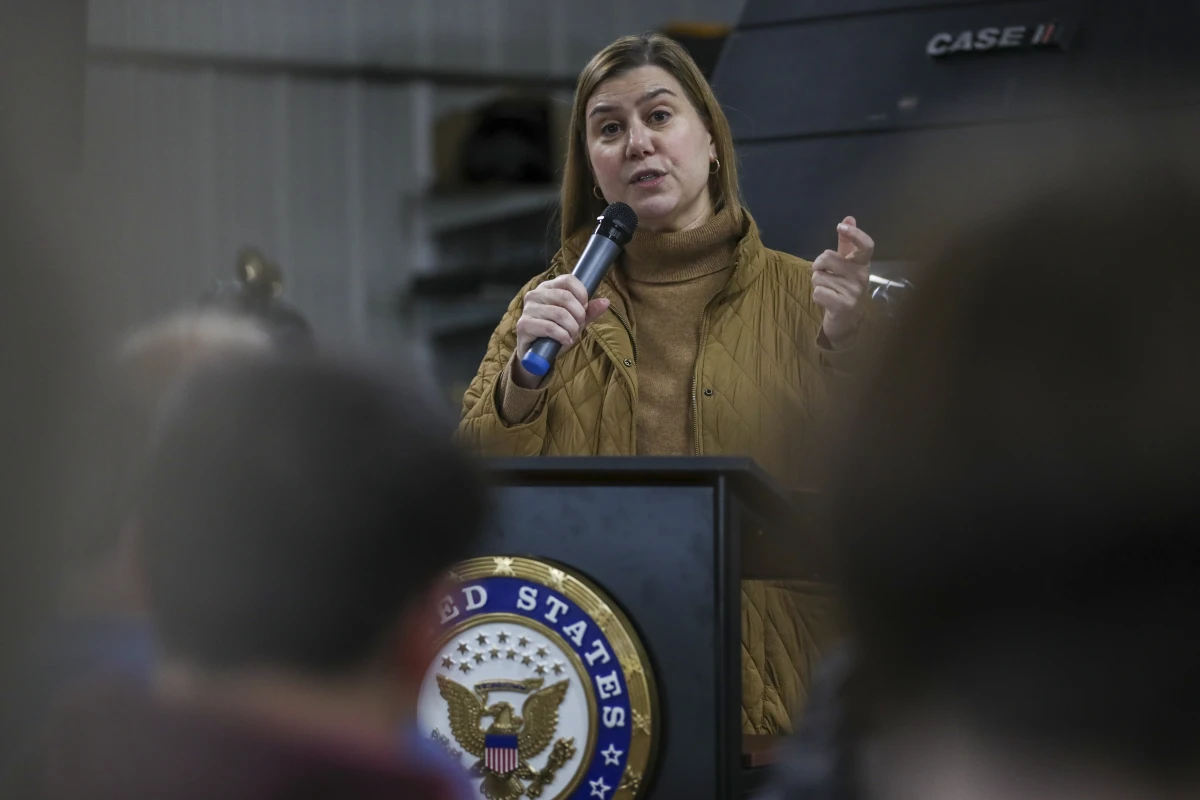
Democratic Sen. Elissa Slotkin of Michigan told Morning Edition that she cannot “overstate the level of instability and open questions about the future.” She expressed concern for the auto workers and farmers in her state, many of whom were affected by Trump’s tariffs during his first term.
“Trump did this in his first administration,” Slotkin said. “I live on my family farm. We lease our farm to a soybean farmer. Soybeans were targeted in the tariff war in the first Trump administration. We’ve never made up market share from the markets we lost. China just stopped buying from us, and they went to Brazil and to Argentina. We just permanently lost that market.”
“So we’re waiting for the next shoe to drop, but it’s a lot of instability,” she added.
Trump maintains that tariffs will benefit U.S. manufacturers and strengthen the nation’s position in the global trading system.
NPR’s Michel Martin spoke to Slotkin about how the new tariffs are already affecting the people of Michigan.
The following excerpt has been edited for length and clarity.
Interview Highlights
Michel Martin: What are you hearing from your home state, especially from autoworkers, since we’re hearing that people are already being laid off?
Slotkin: I can’t overstate the level of instability and open questions about the future. It to me, it’s the same level of uncertainty from our business leaders, our auto workers, our farmers that we had during COVID five years ago, where you kind of don’t know what’s going to happen next.
Obviously, on the manufacturing side we are trying to understand what this is going to do. But I think it’s hard to say that it won’t do anything other than raise prices of cars.
But for me, we haven’t yet seen the next chess moves from the other countries. China just this morning announced what their retaliation is. All these other countries are about to announce a retaliation and they get to pick and choose where it hurts us most. And so I’m very concerned about our farmers, which is a big part of our industry in Michigan.
Martin: You supported a resolution in the Senate to revoke the tariffs on Canadian goods. It did get some bipartisan support, but it’s non-binding and it’s unlikely to see a vote in the House. Congress is supposed to play a role in trade policy. The work around for this administration has been by declaring it an emergency.
What’s the next step here?
Slotkin: I think everyone understands we need a 21st century trade policy. And there are plenty of countries that are cheating in the international system, particularly China. We understand that. I think it’s just doing it strategically and responsibly and not this kind of slapstick way that they’re doing it that risks raising prices and hurting the economy.
You’re right. We passed this resolution. It was a non-binding resolution. But can we just take note, it was the first time that anything has passed in the House that pushes back on Trump’s policies since he was sworn in.
Martin: I have to note that the tariffs are being pitched as a way to bring jobs back to the United States. We know that President Trump made inroads with union voters in his last campaign, including in your state.
Is your main goal or task right now to persuade your colleagues that this is bad economic policy or to persuade voters that they need to be more vocal that this is hurting them?
Slotkin: The voters, they understand their own pocketbooks. They may not understand the federal budget and all the ins and outs of all these things. They understand the price of a car. They understand the price of milk, coffee and sugar. They understand the basic things in their lives. So, we’re going to see. We’re going to see in the next couple of weeks what this does. No one wants anything other than to bring jobs back home, but people need some predictability. Things don’t flip overnight.
China just today put a huge retaliatory tariff on rare earth minerals, we just don’t dig a lot of rare earth minerals out of the ground in the United States of America. That doesn’t happen overnight. So, I think people are going to start to feel that pain. And again, no one wants that. We don’t want a recession. We don’t want that pain. We want jobs back. And a strategic policy does that not this kind of slap stick approach.
This digital piece was edited by Treye Green and Kristian Monroe.
Transcript:
MICHEL MARTIN, HOST:
Now to President Trump’s tariffs. The impact is already being felt in the car and auto parts industry. Stellantis, which makes Jeep and Chrysler, just announced what they call a temporary layoff of 900 workers across five U.S. plants. That includes factories in Michigan, a state where the auto industry still drives the economy and where voters helped elect President Trump, as well as our next guest, Democratic Senator Elissa Slotkin. And she’s with us now to give us her take on all this that’s happening. Senator, thanks so much for joining us.
ELISSA SLOTKIN: Thanks for having me.
MARTIN: So before we talk about tariffs, though, I do want to note that before you were elected to Congress, you had a career in national security. You served in the CIA and the Defense Department, dealing with what you’ve noted were sensitive matters – from fighting ISIS to confronting Russian aggressing (ph). So what are your thoughts on what appears to be a significant shakeup in the country’s national security team? I mean, this team, after all, is charged with briefing the president regularly.
SLOTKIN: Yeah. I mean, look, I think what people don’t understand about national security is people who go into that profession – especially in uniform, right? – they fired generals, senior – very senior generals – they go into it ’cause they want to protect the country. They do not have loyalty to one political party. They come in. They do their job every day. They keep their heads down, and they protect American citizens from things they have no idea are happening, threats they have no idea are happening. General Haugh has come and briefed us many times on the Armed Services Committee in private and public sessions. And I just – I think it’s just another example how they’re putting politics at the Trump White House ahead of the security of people.
And it’s offensive, right? It seems like this woman came in – this white nationalist conspiracy theorist came in, told the president that there’s a bunch of bad guys who are serving for him, and then they were out within a week. And on top of that, it distracts from, obviously, their own mistakes and what went on with the Signal chain last week. But it’s just another way that they’re politicizing the uniformed military and making American citizens less safe with these arbitrary firings.
MARTIN: So now to the tariffs. What are you hearing from your home state – especially from autoworkers, since we’re hearing that people are already being laid off?
SLOTKIN: Yeah. I think – I can’t overstate the level of sort of instability and open questions about the future. It’s – to me, it’s the same level of uncertainty from our business leaders, our autoworkers, our farmers that we had during COVID five years ago, where you kind of don’t know what’s going to happen next. Obviously, on the manufacturing side, you know, we are trying to understand what this is going to do, but I think it’s hard to say that it won’t do anything other than raise prices of cars. And we have already seen layoffs in Stellantis, and it’s just a – but for me, we haven’t yet seen the next chess moves from the other countries, right? China, just this morning, announced what their retaliation is. All these other countries are about to announce their retaliation, and they get to pick and choose where it hurts us most.
And so I’m very concerned about our farmers, which is a big part of our industry in Michigan. And, look, the – Trump did this in his first administration, right? I live on my family farm. We lease our farm to a soybean farmer. Soybeans were targeted in the tariff war in the first Trump administration. We’ve never made up market share from the markets we lost. China just stopped buying from us, and they went to Brazil and to Argentina. We just permanently lost that market. So we’re waiting for the next shoe to drop, but it’s a lot of instability.
MARTIN: Now, you supported a resolution in the Senate to revoke the tariffs on Canadian goods. It did get some bipartisan support, but it’s nonbinding, and it’s unlikely to see a vote in the House. So what’s the next move? I mean, Congress is supposed to play a role in trade policy. The workaround for this administration has been by declaring it an emergency. So what’s the next move? Are you trying to persuade more of your colleagues that this isn’t good economic policy – it’s not truly an emergency? What’s the next step here?
SLOTKIN: Yeah. Well, it’s interesting. You know, I think everyone understands we need a 21st century trade policy. What’s working right now – I mean, there are plenty of countries that are cheating in the international system, particularly China. We understand that. I think it’s just doing it strategically and responsibly and not this, like, kind of slapstick way that they’re doing it that risks raising prices and hurting the economy.
You’re right – we passed this resolution. It was a nonbinding resolution, but can we just take a note? It was the first time that anything has failed in the House – or, sorry, has passed in the House that pushes back on Trump’s policies since he was sworn in. We did it with Democrats and Republicans. Republicans voted with Democrats on this. And I think that it’s instructive that the first time we push back on Trump, it’s over his, you know, sort of policy of kicking our allies in the teeth, particularly Canada. What’s interesting is that Senator Grassley, a Republican, has now put forward a piece of legislation that would say, you know what? Congress needs a bigger role in this because the way you’re doing this, you’re threatening our economy. That’s a Republican putting that forward.
MARTIN: So my question is, are you trying to persuade your colleagues, or are you trying to persuade voters that they need to be more vocal in pushing back on this? I have to note that the tariffs are being pitched as a way to bring jobs back to the United States. We know that President Trump made inroads with union voters in his last campaign, including in your state. So my question is, is your main goal or task right now to persuade your colleagues that this is bad economic policy or to persuade voters that they need to be more vocal that this is hurting them?
SLOTKIN: Well, I think, look, the voters are going to – they understand their own pocketbooks. They may not understand the federal budget and all the ins and outs of all these things. They understand the price of a car. They understand the price of milk and coffee and sugar. They understand the basic things in their lives, so we’re going to see. We’re going to see in the next couple of weeks what this does. No one wants anything other than to bring jobs back home, but people need some predictability. Things don’t flip overnight. You know, if China just today put a huge retaliatory tariff on rare earth minerals, we just don’t dig a lot of rare earth minerals out of the ground in the United States of America. I mean, that doesn’t happen overnight. So I think people are going to start to feel that pain. And again, no one wants that. We don’t want a recession. We don’t want that pain. We want jobs back, and a strategic policy does that, not this kind of slapstick approach.
MARTIN: So two more questions for you. What – in your state, what sectors are you most concerned about?
SLOTKIN: Well, look, we have the auto sector, obviously. People forget, you know, we have tier 1, tier 2, tier 3 suppliers, mom-and-pop shops that make widgets that go in cars. They’re also deeply worried, particularly the smaller ones, that they’re going to go out of business. And I’m worried about the farming section of our economy. They were the ones who paid the brunt of the pain last time. I think that’s poised to happen again. But, look, even things like medical devices, big MRI machines in our hospitals – those are things we could see that become much more expensive and unable for our – they’re the ones talking to me about that. So I think we have to see the second- and third-order effects. It’s going to affect a lot of our country and our states.
MARTIN: And as briefly as you can, what’s your message in this moment to voters who say that they might be feeling the pain now but believe the president when he says this will be better in the long run? Do you have a message for that?
SLOTKIN: Yeah. My message is we all want jobs to come back home, but we have to do it in a strategic way. And we’re going to see. We’re going to see. People know their own budgets. They’re not stupid. They’re going to know whether this is going to help in the medium term and the long term or not. So let the proof be in the pudding.
MARTIN: That is Senator Elissa Slotkin. She is a Democrat from Michigan. Senator, thank you so much for joining us.
SLOTKIN: Thank you.
(SOUNDBITE OF MUSIC)