(Anna Moneymaker/Getty Images)
A Senate committee on Thursday narrowly advanced Sen. Markwayne Mullin’s nomination as the Department of Homeland Security secretary 8-7 to the full Senate. During the heated confirmation hearing, the Oklahoma Republican faced tough questions about political violence, some of his prior combative remarks and his vision for the DHS. President Trump nominated Mullin for the job after removing DHS Secretary Kristi Noem from the role earlier this month -– following several months of turmoil for the agency.
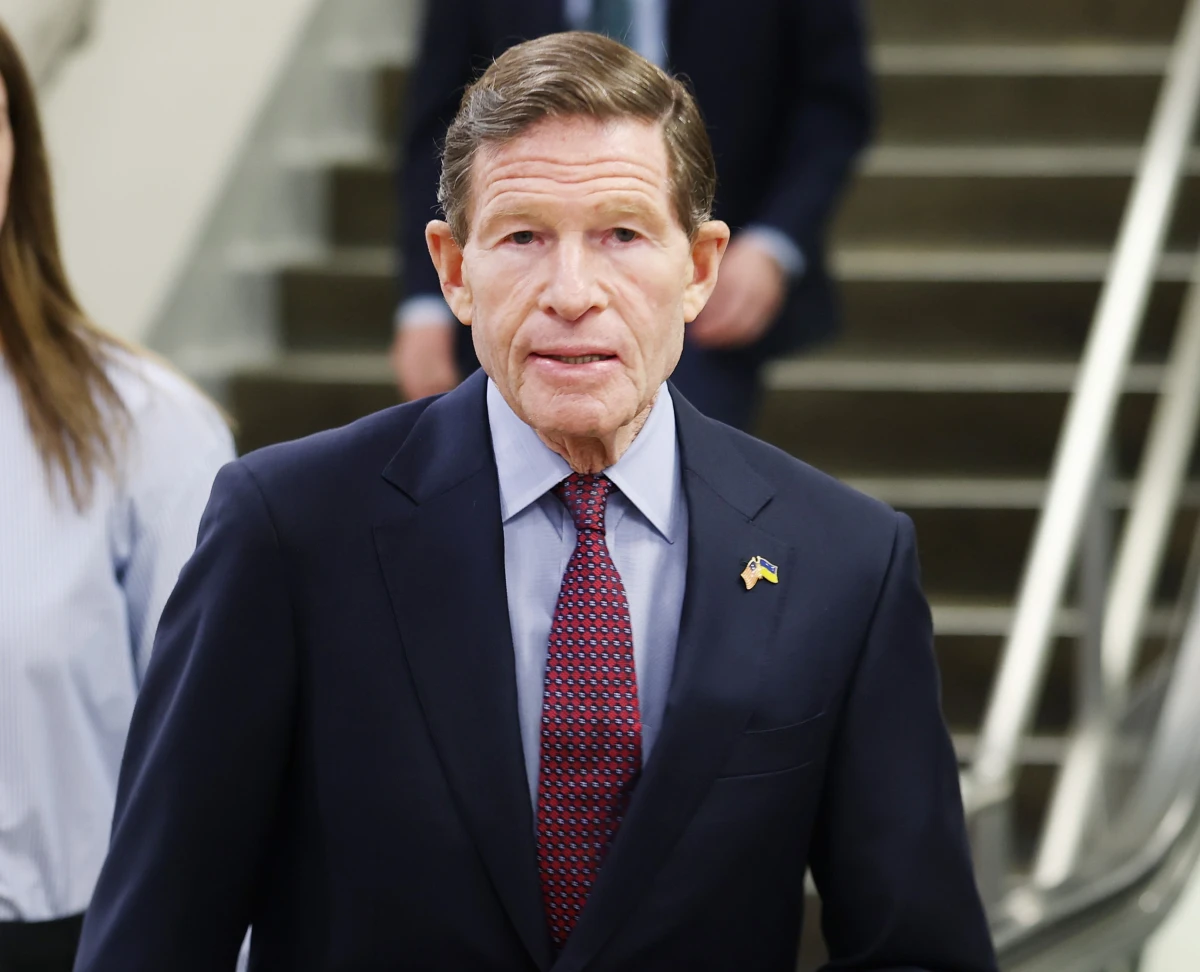
Democratic Sen. Richard Blumenthal of Connecticut was on the confirmation panel. Ahead of Thursday’s vote, he told Morning Edition that Mullin failed during the questioning to establish policy differences between him and the predecessor.
Blumenthal said the reforms people are seeking from DHS are what police forces across the U.S. are routinely required to do, including wearing badges and identification, not wearing masks, having body cameras on and giving people the right to go to court when officers harm them illegally. “These basic reforms, so far, the administration has failed to agree to,” he said.
While speaking with NPR’s Steve Inskeep, Blumenthal discussed why the American people want DHS reforms and gave his thoughts on the war with Iran and the prospect of American troops on the ground in the region.
Listen to the full interview by clicking on the blue play button above.
The web copy was written by Brittney Melton and edited by Suzanne Nuyen.
Transcript:
STEVE INSKEEP, HOST:
Now, one of the senators on the panel considering President Trump’s choice joins us now. Senator Richard Blumenthal is a Democrat from Connecticut. Senator, good morning.
RICHARD BLUMENTHAL: Good morning to you. Thanks for having me.
INSKEEP: Senator Mullin, in some cases, tried to put a little bit of distance between himself and the previous management of the Department of Homeland Security, saying, for example, that even though he had political differences with people in the room there, that he would protect everyone equally. What did you make of that?
BLUMENTHAL: What I made of it is an attempt to be a little bit warmer and fuzzier. He’s known to be pugilistic. He once challenged a witness to a brawl. He’s a former mixed martial arts fighter and very strongly advocating on behalf of the administration’s immigration position. So he tried to draw some distinctions between himself and his predecessor, who was such a deeply obvious failure. But where he really failed is to establish policy differences. He did agree, under pressure from me in my questioning, that they would require judicial warrants to break into people’s homes, which is required by the Fourth Amendment. But on other reforms, he seemed to stand fast against the demands made by the American people who have been watching the violence and brutality of ICE and CBP agents all around America, not just in Minneapolis.
INSKEEP: Just to be clear on what you said, Homeland Security personnel have been going into homes on administrative warrants, which is a much lesser warrant, not an independent judge’s warrant. And he says that he will end that practice. But what is something that he failed to promise to end that you wanted him to do?
BLUMENTHAL: You know, the reforms demanded by the American people after they have seen U.S. citizens detained illegally, some of them shot, dragged from cars, denied medical treatment, kept in custody for three days or more, those reforms are what police forces all around the country are required to do routinely, namely wear badges and identification, masks off, body cameras on, rights to go to court when harm is done to them illegally by officers of the law. These basic reforms, so far, the administration has failed to agree to.
INSKEEP: Senator Blumenthal, as you and I are speaking here this morning at a little bit after 8 o’clock in the morning, Eastern time, 5 o’clock Pacific. Defense Secretary Pete Hegseth is giving a news conference. We’ve been watching it here, and I’d like to invite your response to a couple of things that Secretary Hegseth has been saying. He led off this news conference, this extended statement, taking advantage of his platform and the media to attack the media and calling his fellow citizens and the media dishonest. He went on to answer the charge that President Trump has led the United States into an endless war or a quagmire in Iran. I’m using his words. He said, it’s not an endless war. It’s not a quagmire. And then he said, quote, “nothing could be further from the truth.” What’s your response to that, if any?
BLUMENTHAL: The American people have eyes and ears, and he is speaking directly to them right now, not through the media. And so far, this administration, speaking directly to American people, has failed to explain its objectives, its exit strategy, what success looks like. A Connecticut National Guard officer texted me the other day, saying, what is the vision of success? And my great fear after these classified briefings has been that the success of some of these major objectives, like securing the enriched uranium or changing the regime, can be accomplished only if there are significant numbers of Americans’ sons and daughters, our troops, on the ground. And that would be a quagmire and a forever war that this president promised never to undertake. And the administration has given us no costs – reliable estimates of what this war entails. It has never come to Congress for approval as required by the Constitution. It has failed to specify what its strategy is in the straits of – Strait of Hormuz to keep it open. And so I think that we are in a very bad path right now heading toward potentially a quagmire or an endless war.
INSKEEP: I want to continue to discuss this for a moment then. Secretary Hegseth went on to speak of the objectives in the war, answering the charge that the president keeps changing the rationale for the war or the objectives of the war. Hegseth says – again, this is a quote – “the objectives are the same as on Day 1” (ph). Do you believe that?
BLUMENTHAL: If they are the same as on Day 1, that is even more frightening because on Day 1, the president said that we would completely destroy Iran’s nuclear capability, which can be done only with an American presence at the site of the enriched uranium, which means troops on the ground, regime change, which he specified at the time, yes, some of the leaders have been killed. Iran has been weakened in terms of destruction of its missile and drone capacity, but a lot more remains to be done and can be done, not at 30,000 feet with bombing. Bombing alone won’t do it. It requires troops on the ground. Also pretty anxiety-creating because it poses the threat of another forever war and tremendous American resources. And then, of course, the energy situation right now, which is raising prices all across the globe, inhibiting economic growth in America and around the world. This kind of, again, open-ended claim that the administration’s objectives are the same just confuses.
INSKEEP: Senator, this is very important to get to in the minute or so that we have left. Senator Ron Johnson was on the air the other day, and he said, well, Congress eventually will vote on this. They’ll – we’ll be asked for a supplemental appropriation – extra money to pay for the war. NPR has not confirmed this, but The Washington Post is reporting that the Pentagon has been talking about asking Congress for 200 billion, with a B, $200 billion to fund the war in Iran. That would be a request to you. That would be on the table for you. And as I understand it, Democrats would have the power to block that. Are you liable to vote for a supplemental appropriation to continue this war?
BLUMENTHAL: A $200 billion supplemental seems to me a nonstarter. The administration said the war costs so far in the range of 11 billion. I think that figure is lowballed. But the administration has also requested 1.5 trillion. That’s right, $1.5 trillion for the next fiscal year. On top of that amount, 200 billion strikes me as a number that Congress will never approve.
INSKEEP: Connecticut Senator Richard Blumenthal, a Democrat. Thank you very much for your insights. Really appreciate it.
BLUMENTHAL: Thank you.
(SOUNDBITE OF DO MAKE SAY THINK’S “THE LANDLORD IS DEAD”)