A decade ago, Amy Sherald was still struggling to make her mark. But even before she was commissioned to paint former First Lady Michelle Obama’s portrait, she knew she’d have a major museum retrospective some day, and she came up with its title: American Sublime.
That dream has now come true. This week, the Whitney Museum of American Art in New York opened the first major survey of her work, after the traveling exhibit’s first stop at the San Francisco Museum of Modern Art.
Sherald, who has toyed with differing notions of American identity, relates it all to her family’s roots in the South. “When I think of American Sublime, I think about my mother, who was born in Mobile, Al., in 1935, and what she survived to become and live in the year 2025,” Sherald said. “So the beauty and the terror of what it was to be raised in the south.”
Sherald spoke after walking through the museum galleries, flanked by her large-scale portraits of Black people. Their skin tones are rendered in shades of gray that contrast with the canvases’ pops of color, allowing viewers to consider their humanity before their race.
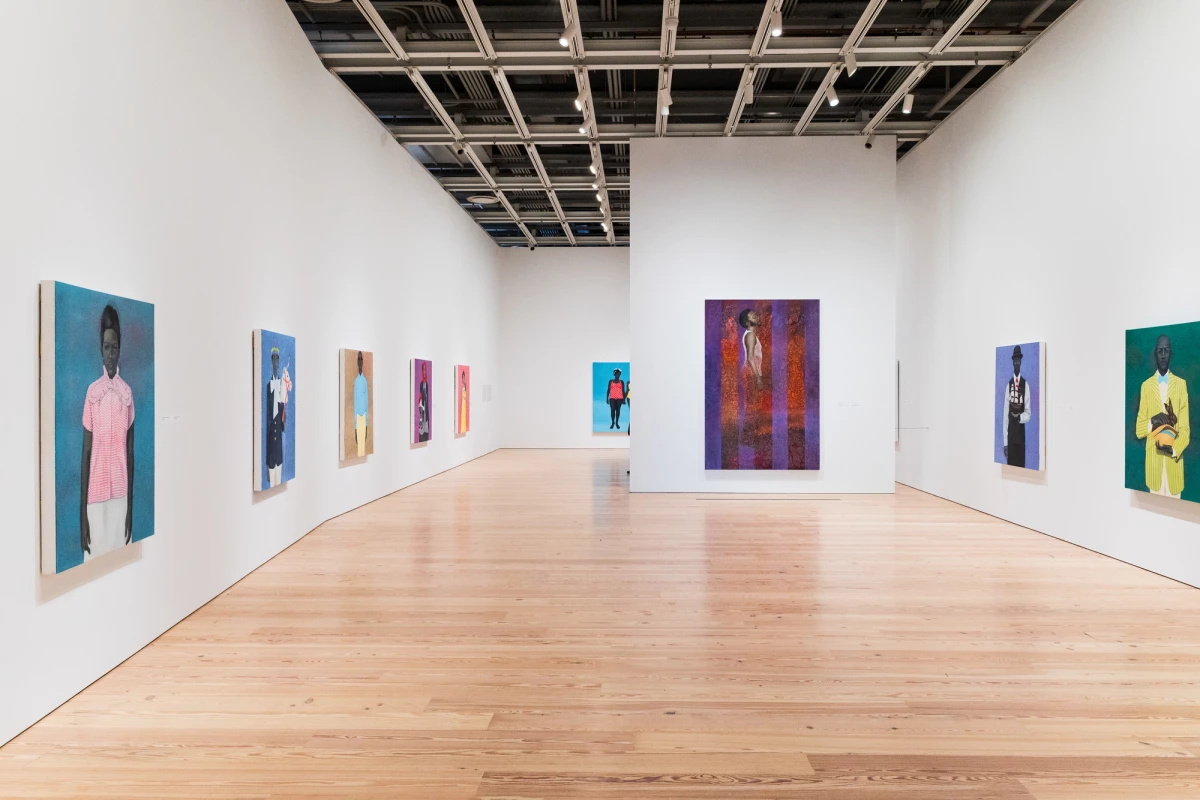
Today, her bright, bold portraits are owned by collectors, including CNN’s Anderson Cooper, investment billionaire Robert F. Smith and sportscaster Bryant Gumbel. But the journey was a long one. She worked as a waitress into her mid-30s, “to my mother’s dismay,” she says, to help stay afloat. While her friends became doctors, she’d go to her studio to work from morning to afternoon before waiting on tables until midnight.
“I was broke for a very long time, but I always believed in myself and believed in the work and knew I had something special,” Sherald recalled. “And so I always tell young artists, the world is full of quitters, so don’t quit and you’ll eventually rise to the top. And here I am, tada.”
The shift is palpable. During early access to the show, people recognized Sherald. They snapped pictures, praised her and broke out into applause as she walked through the exhibit.
Sherald’s breakthrough didn’t come until she was 45, when she painted Michelle Obama. That work was commissioned by the National Portrait Gallery, which is set to host American Sublime next in September. But it’s part of the Smithsonian Institution, where President Trump has called in an executive order for the removal of “divisive, race-centered ideology.” The museum confirmed the show is still currently set to take place as planned.
(Whitney Museum of American Art)
The current political climate, with Trump more broadly targeting diversity, equity and inclusion efforts and material, gives Sherald a sense of renewed urgency in her work. “We’re talking about erasure every day. And so now I feel like every portrait that I make is a counterterrorist attack to counter some kind of attack on American history and on Black American history and on Black Americans,” she said.
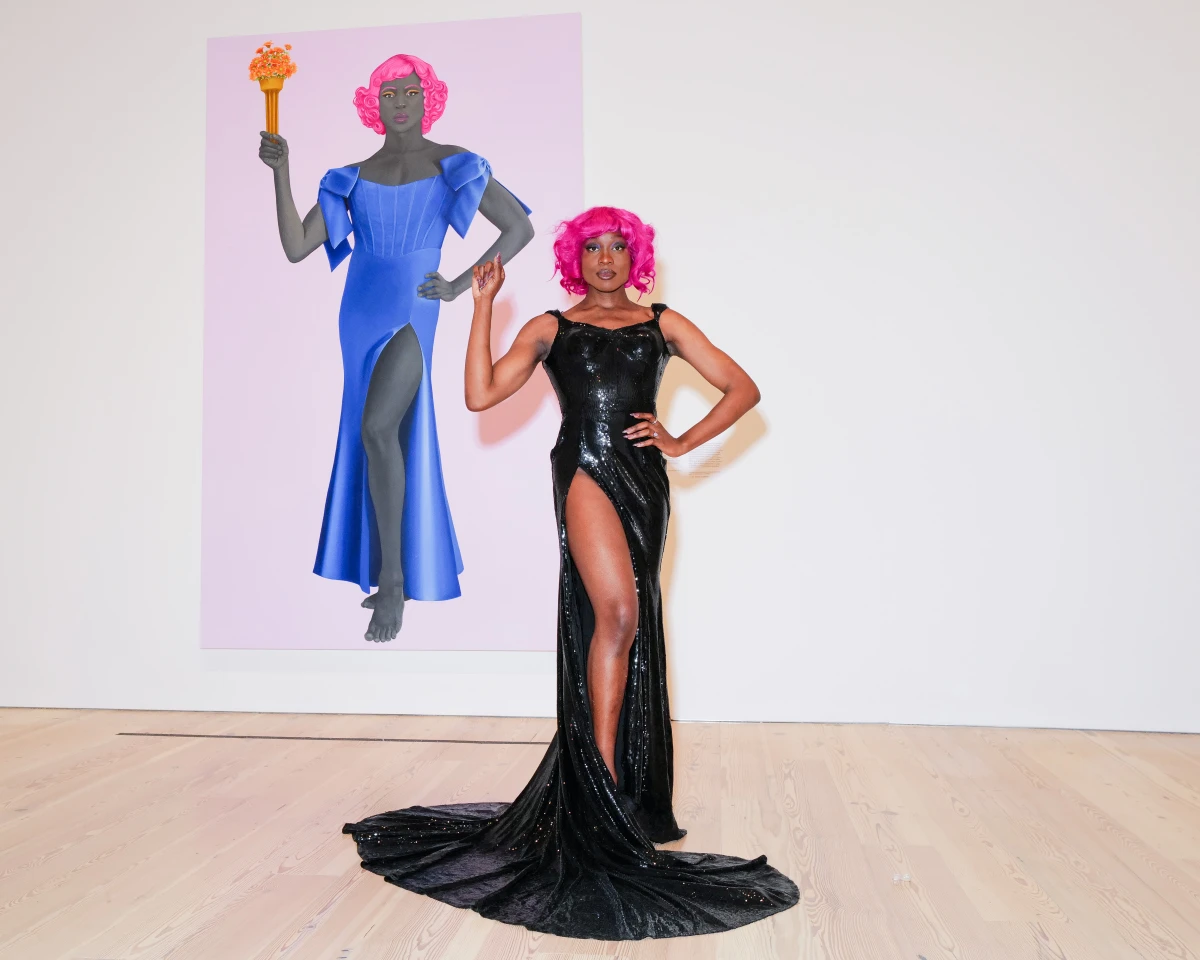
Sherald says her subjects are “everyday” Americans. Among them, there’s a Black couple standing proud in front of their car and yellow house, a transgender Statue of Liberty with bright pink hair and a brawny boxer without legs in a ring.
Her portraits look out at the viewer with an almost indifferent gaze that also offers a glimpse at the rich interior lives of her subjects.
“It’s really about kind of individuality, interiority, how we adorn ourselves, how we move through the world and the kind of idiosyncrasies of everybody in the world,” said Rujeko Hockley, who curated the Whitney’s iteration of the exhibit.
(Whitney Museum of American Art)
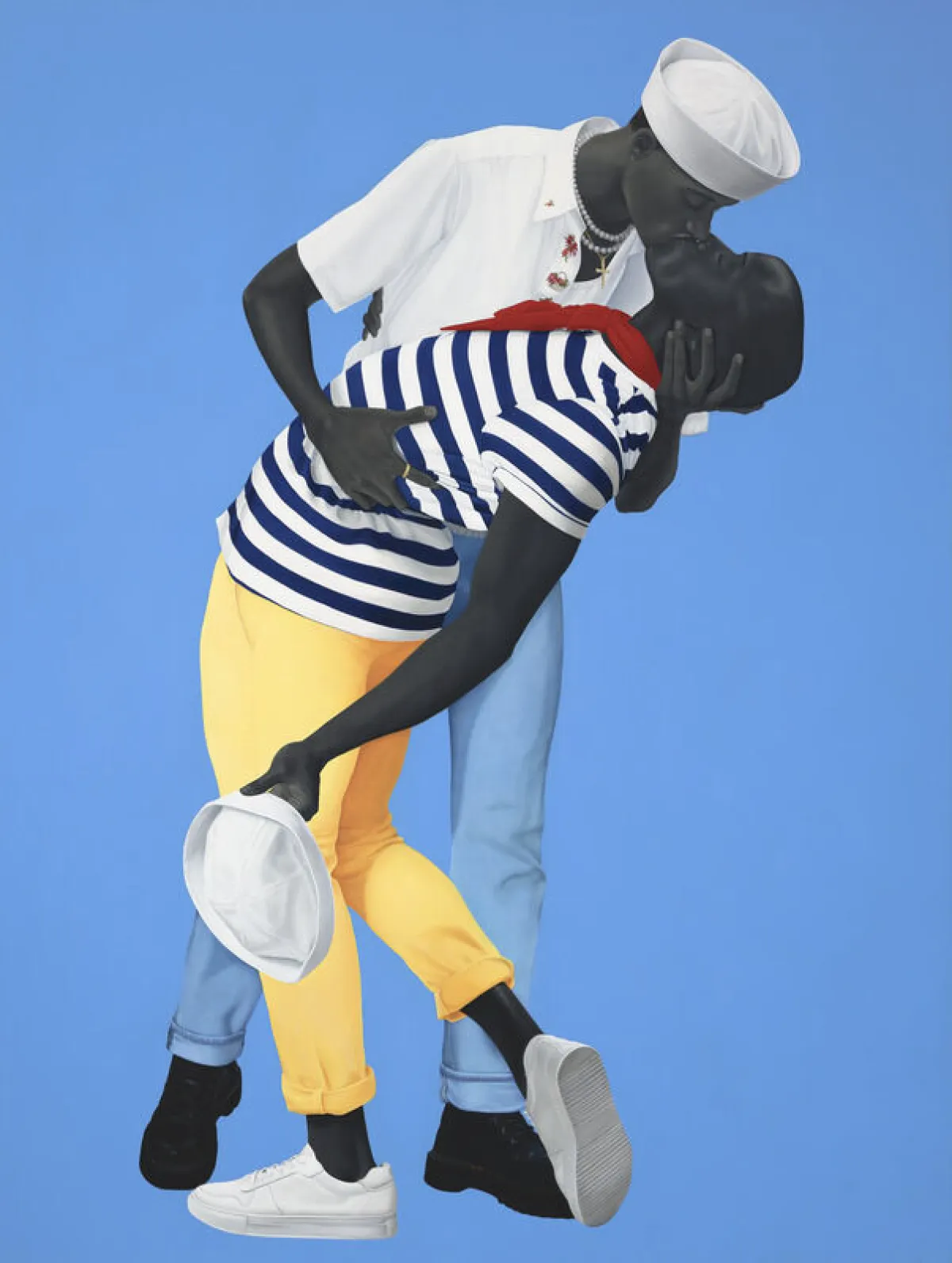
Hockley spoke of the “quietly subversive” nature of some of the imagery used by Sherald, like having two Black men restage the iconic World War II photo of a white male sailor kissing a white nurse in Times Square. In Sherald’s portrait, the men are both sailors kissing against a blue sky.
The curator sees Sherald’s work as expanding on the tradition of American realism, historically represented by Edward Hopper and Andrew Wyeth — both white men — by incorporating the stories of Black Americans. In that sense, her artistic lineage can be traced to Laura Wheeler Waring and Archibald Motley, who were both associated with the Harlem Renaissance.
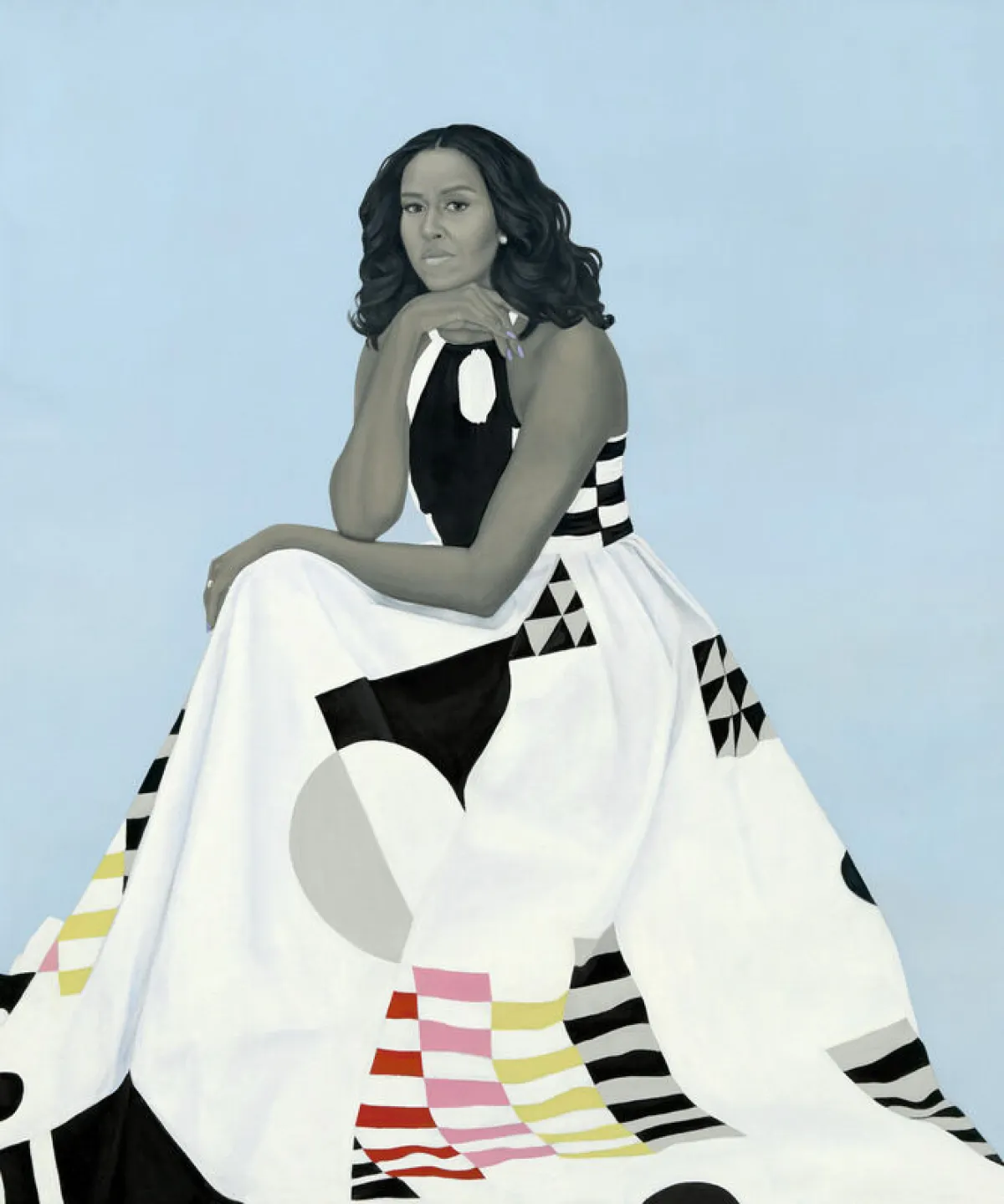
Sherald relies heavily on reference photographs she takes of chosen models or people encountered in her own daily life before setting them in oil on a large, often monochrome background. That approach has echoes of the late Barkley L. Hendricks.
“Painting Black figures, whether I want it to be or not, it’s political. The Black body is political,” Sherald said. Her use of grayscale, a technique known as grisaille that was used in the Renaissance to imitate sculpture, aims to reduce the emphasis on race.
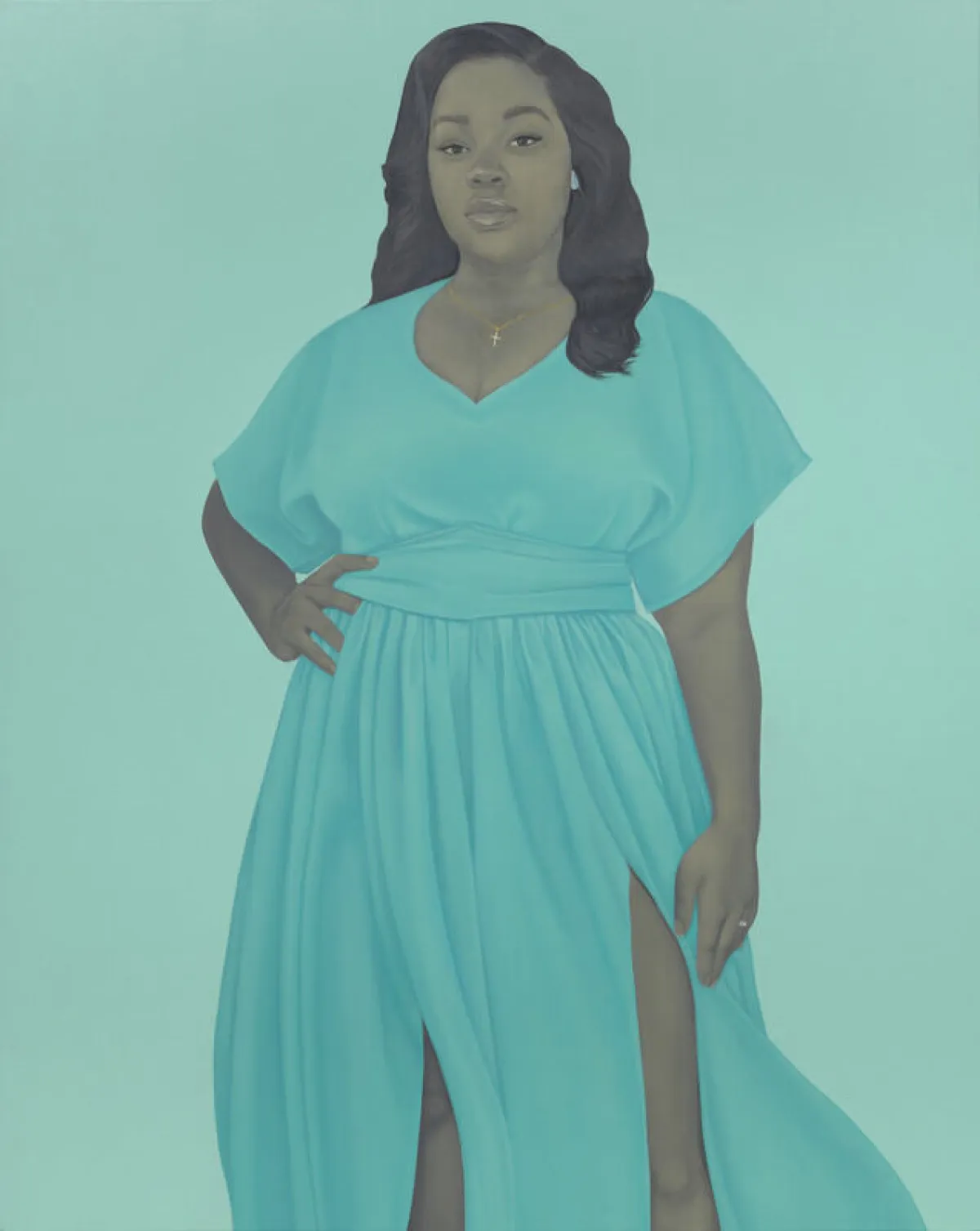
“I had a fear of the work being marginalized and the conversation about my work solely being about identity and race. And I didn’t want that,” she explained. “This work has to speak to not only people that look like me, but also sit in the world for all of us to understand.”
The broadcast version of this story was produced by Carla Esteves and edited by Jennifer Vanasco. The digital version was edited by Obed Manuel.
Transcript:
A MARTÍNEZ, HOST:
Painter Amy Sherald has a retrospective opening today at New York’s Whitney Museum of American Art. In 2018, she painted Michelle Obama’s portrait, seated in a flowy, white poplin dress, resting her chin on her hand. NPR’s Olivia Hampton met Sherald at the Whitney and brings us this report.
OLIVIA HAMPTON, BYLINE: The show is called “American Sublime.” For Amy Sherald, who came up with the title, it links back to her family roots in the South.
AMY SHERALD: When I think of “American Sublime,” I think about my mother who was born in Mobile, Alabama, in 1935, and what she survived to become and live in the year 2025. So the beauty and the terror of what it was to be raised in the South.
HAMPTON: Sherald paints Black subjects using shades of gray for their skin tones, and it contrasts with her otherwise striking color palette. It lets viewers consider the subject’s humanity before their race.
SHERALD: I think, subconsciously, I had a fear about my work solely being about identity and race, and I didn’t want that. I think that was one of the important things that I thought about. It’s like this work has to speak to not only people that look like me but also sit in the world for all of us to understand.
HAMPTON: Sherald is subverting traditional narratives of who is American. There’s a Black couple standing proud in front of their car and yellow house, a transgender Statue of Liberty with bright pink hair, a brawny boxer without legs in a ring. The portraits look out at the viewer. They seem to have a rich interior life. Rujeko Hockley curated the Whitney’s iteration of this traveling exhibit after its first stop in San Francisco.
RUJEKO HOCKLEY: It’s really about kind of individuality, interiority. How we adorn ourselves. How we move through the world, and the kind of idiosyncrasies of everybody in the world.
HAMPTON: Hockley points to a 10-foot canvas where two Black men restage the iconic World War II photo of a white male sailor kissing a white nurse in Times Square. In Sherald’s portrait, the men are both sailors kissing against a blue sky.
HOCKLEY: It’s a very kind of quietly subversive, but very impactful act to re-imagine – this image that people really have burned into their minds. This kiss is kind of one of the most iconic and well-known photographs of the 20th century, and just this tweak transforms it entirely.
HAMPTON: Today, Sherald’s bright, bold portraits are owned by collectors like CNN’s Anderson Cooper or sportscaster Bryant Gumbel. But her journey was a long one.
SHERALD: I was waking up and going to my studio at 8 o’clock in the morning and working until 3 p.m. and leaving my studio, and then going to wait tables from 3 to 12. I was broke for a very long time, but I always believed in myself and believed in the work and knew I had something special. And so I always tell young artists, the world is full of quitters, so don’t quit, and you’ll eventually rise to the top. And here I am. Tada.
HAMPTON: Sherald’s breakthrough didn’t come until she was 45, when she painted Michelle Obama. That work was commissioned by the National Portrait Gallery, which is set to host the show in September, but it’s part of the Smithsonian Institution, which President Trump has targeted in an executive order for being, quote, “under the influence of a divisive race-centered ideology.”
SHERALD: We’re talking about erasure every day. And so now I feel like every portrait that I make is a counter terrorist attack that has to counter some kind of attack on American history and on Black American history and on Black Americans.
HAMPTON: The show is at the Whitney through August 10.
Olivia Hampton, NPR News, New York.
(SOUNDBITE OF MICHAEL HEDGES’ “RICKOVER’S DREAM”)