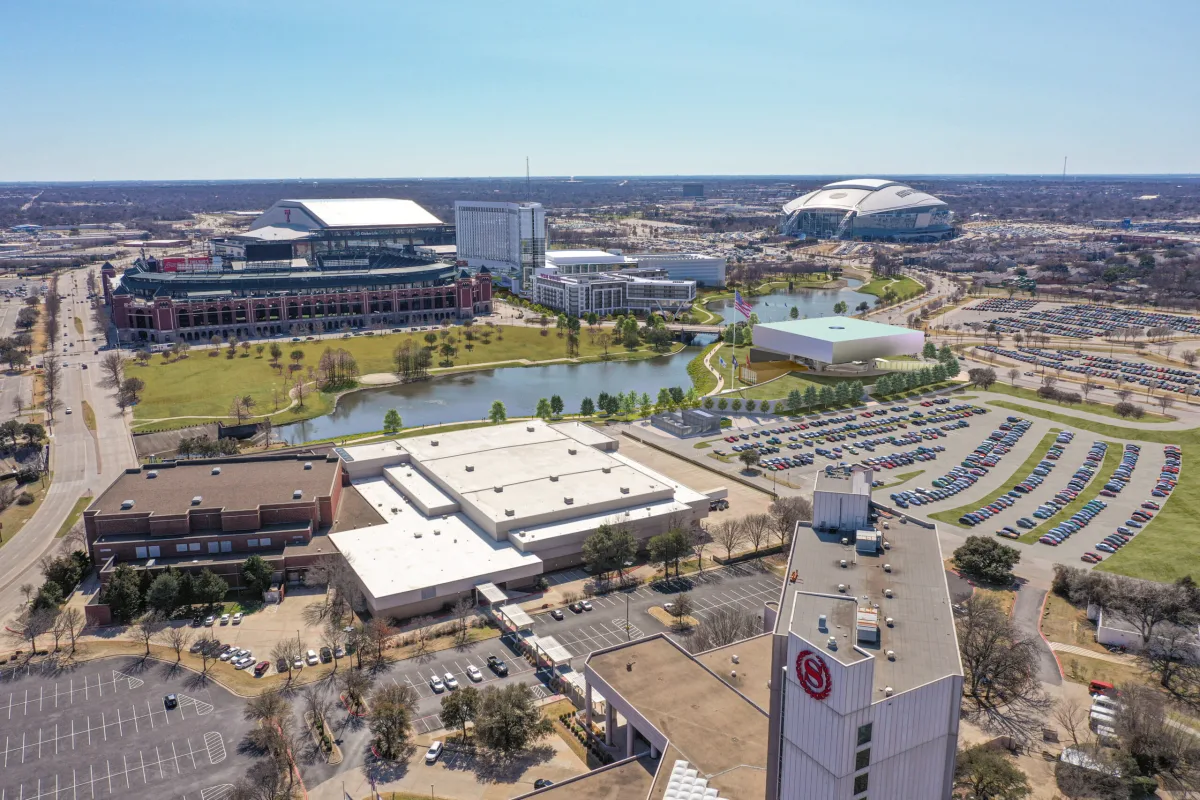
The doors are now open at the new National Medal of Honor Museum in Arlington, Texas. The Medal of Honor is the highest military decoration in the U.S. for valor on the battlefield.
The museum’s mission, according to CEO and president Chris Cassidy, is to inspire.
“We’re going to do that through the stories of Medal of Honor recipients and the values that the medal has, such as courage, sacrifice, commitment, service over self, service to others, and patriotism, citizenship,” Cassidy said. “All those kinds of things are embedded in the DNA of the medal.”
Cassidy served in the Navy for 28 years, including 11 years in the SEAL teams and 17 years as a NASA astronaut at the Johnson Space Center in Houston.
The Medal of Honor was first awarded during the Civil War, and since then, 3,547 service members have earned it. Only 61 are alive today.
The names of Medal of Honor recipients are engraved around a rotunda called the Ring of Valor, and their photos cover the museum’s walls. Among them is Army Capt. William Swenson, who was serving in Afghanistan in 2009 when his unit was ambushed. Swenson risked his life to carry the wounded to safety.
“Obviously, I was called to serve at a very high level. Sometimes that’s what happens in military service,” Swenson said. “And that was for action in 2009, and the award is 2013.”
The firefight claimed the lives of five Americans and 10 Afghan army troops.
For Swenson, attending the museum’s opening was an incredible experience.
“One of the things that comes with this award is the understanding that you don’t wear it for yourself. You wear it for others. You wear it for your teammates who were there at the battle, but you ultimately wear it for the service members who, if they were called upon to do the same thing I did, they would, as well,” he said.
Swenson also says the museum represents the stories of everyday American service members.
“When you go inside, when you see this physical structure and you look at these stories and you think to yourself, this is history, it’s not so much history as it is vignettes of what everyday Americans did on behalf of their comrades.”
The museum, which opened to the public on March 25, is backed by high-profile donors, including Dallas Cowboys owner Jerry Jones.
Transcript:
A MARTÍNEZ, HOST:
The doors are now open at the new National Medal of Honor Museum in Arlington, Texas.
MICHEL MARTIN, HOST:
The Medal of Honor is the highest military decoration in the U.S. for valor on the battlefield. The museum’s mission, according to CEO and president Chris Cassidy, is to inspire.
CHRIS CASSIDY: We’re going to do that through the stories of Medal of Honor recipients and the values that the medal has, such as courage, sacrifice, commitment, service over self, service to others, and patriotism, citizenship. All those kind of things are embedded in the DNA of the medal.
MARTÍNEZ: Cassidy is also a veteran.
CASSIDY: I was in the Navy for 28 years, 11 of those in the SEAL teams and 17 as a NASA astronaut down at the Johnson Space Center in Houston, and flew in space three different times.
MARTÍNEZ: The National Medal of Honor was first awarded in the Civil War, and since then, about 3,500 service members have earned it. Only 61 are alive today.
MARTIN: The museum is backed by high-profile donors, like Dallas Cowboys owner Jerry Jones. The names of medal recipients are engraved around a rotunda called the Ring of Valor, and photos of the recipients cover the museum’s walls.
MARTÍNEZ: Among them is Captain William Swenson, who was serving in Afghanistan in 2009 when his unit was ambushed. Swenson risked his life to carry the wounded to safety.
WILLIAM SWENSON: Obviously, I was called to serve at a very high level. Sometimes that’s what happens in military service. And that was for action in 2009, and the award is 2013.
MARTÍNEZ: The firefight claimed the lives of five Americans and 10 Afghan army troops.
MARTIN: The museum’s opening, Swenson says, was an incredible experience for him.
SWENSON: One of the things that comes with this award is the understanding that you don’t wear it for yourself. You wear it for others. You wear it for your teammates who were there at the battle, but you ultimately wear it for the service members who – if they were called upon to do the same thing I did, they would, as well.
MARTÍNEZ: Ultimately, he says, the museum represents American values.
SWENSON: When you go inside, when you see this physical structure and you look at these stories and you think to yourself, this is history, it’s not so much history as it is vignettes of what everyday Americans did on behalf of their comrades.
MARTIN: Even though Swenson says the museum can’t fully capture the service and sacrifice, it is a place where their stories can be told.
(SOUNDBITE OF MUSIC)