


When I first read about how Texas Republicans were preparing to engage in mid-decade redistricting, I sent a text message to a Republican aide in state government, jokingly wondering if Missouri would get in on the fun.
It’s no secret that my interest in Missouri redistricting borders on obsession. Some of my love for the subject stems from its importance. The lines and where they are drawn can determine which party has a better shot at winning any given district. But I also have a lifelong interest in cartography, including nearly winning my middle school geography bee and getting to talk to a National Geographic mapmaker while tagging along on a work trip with my dad.
Still, at the time I sent that text, I thought there was no way that Missouri Republicans would plunge back into congressional mapmaking in 2025 — especially after redistricting in 2022 sparked a bitter schism within the Missouri legislature.
I was wrong.
Very wrong.
Missouri ended up becoming the second GOP-led state behind Texas to redraw congressional lines at the behest of President Trump. And Missouri Republicans were upfront about their rationale: They wanted to oust Democratic Congressman Emanuel Cleaver of Kansas City to help prevent Republicans from losing control of the U.S. House in 2026.
And Missouri Republicans didn’t just pass a new map: They broke all sorts of legislative norms and precedents to push it to Gov. Mike Kehoe’s desk.
But in the rush to obtain a short-term victory for Republicans in Washington, D.C., Missouri Republicans may have ushered in the new map’s doom from at least two different directions.
EnterAir Bud
Redistricting detractors have filed a slew of lawsuits — including a particularly important one around whether it’s even allowed for Missouri lawmakers to redraw congressional boundaries in the middle of a decade. That case is still in its early stages, but the Missouri Supreme Court is expected to decide sometime next year.
On the surface, redistricting foes seem to have a solid case — a constitutional amendment that they say only allows for congressional redistricting after a census. But Missouri Republicans appear to have a secret weapon to counter that contention: The Air Bud Rule.
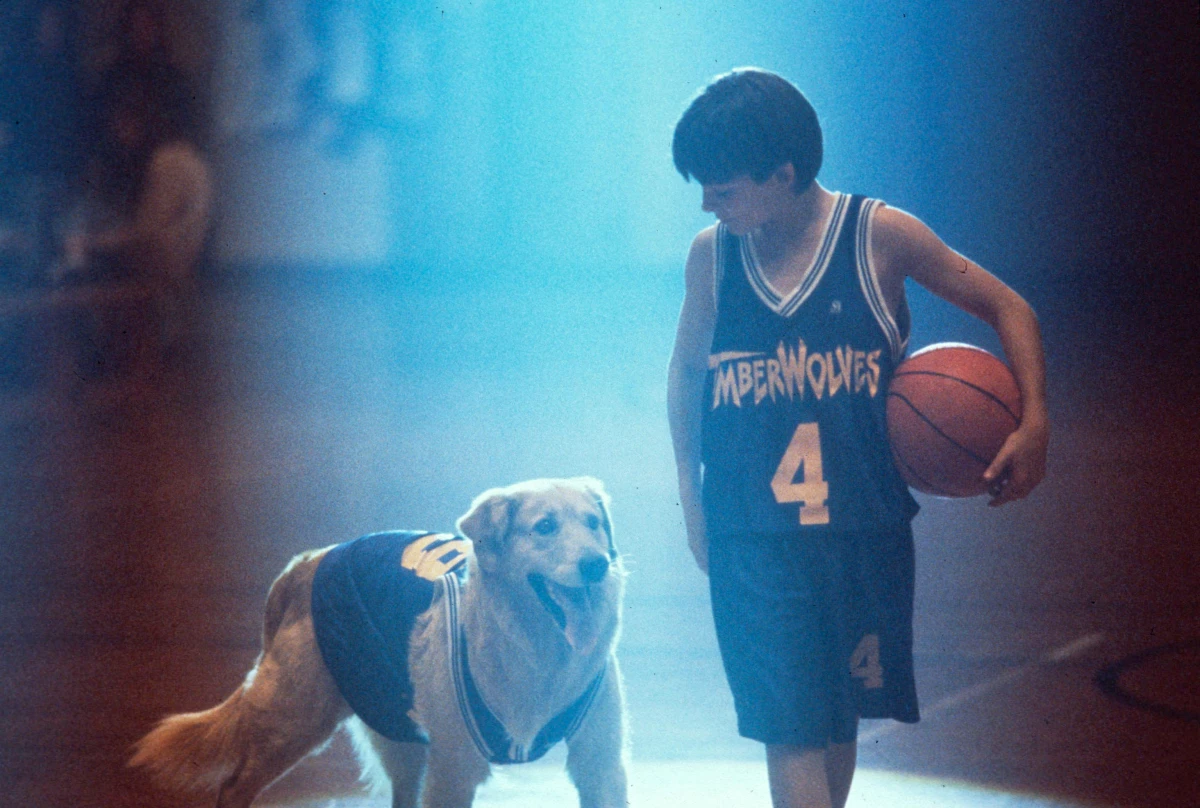
In the 1997 Walt Disney film, a referee allows Buddy the Dog to play basketball because, after searching frantically through a rule book, “there ain’t no rule that says a dog can’t play basketball.”
Flash forward to 2025: Defenders of the Missouri redistricting plan have rallied behind a similarly constructed argument: “There’s nothing in the Missouri Constitution that says lawmakers can’t redistrict mid-decade.”
Air Bud analogy is a slam dunk
When I first heard this argument, I started to ask Missouri lawmakers if they’d seen Air Bud.
Some, like Republican Secretary of State Denny Hoskins, had seen it — and acknowledged that the GOP defense of the map was basically the Air Bud Rule. (When he was a state senator, Hoskins successfully sponsored a bill designating two legendary canines, Old Drum and Jim the Wonder Dog, as Missouri’s official Historical Dog and the state’s official wonder dog.)
“Other states have different processes as far as when they can redistrict for congressional seats. But in Missouri, there’s nothing, in my opinion, that says that we cannot do this,” said GOP Secretary of State Denny Hoskins, who then joked that the new map should be named the “Air Bud Clause” if judges uphold it.
The analogy gained popularity among those entangled in redistricting.
Democratic state Rep. Mark Boyko mocked Republicans by citing the Air Bud Rule on the House floor. And during arguments earlier this month in Jefferson City, Chuck Hatfield, an attorney representing plaintiffs trying to strike down the new congressional lines, said in court this month, “we don’t do Air Bud rules in Missouri for very good reason, but that’s essentially what the argument is from the state.”
“It’s like if my children ask me: ‘Can we have ice cream tonight?’ And I say, we’re going for ice cream tomorrow,'” Boyko said. “And they say: ‘Well, you haven’t said we’re not having ice cream tonight, so we’re having ice cream tonight, too.’ No.”
Although Missouri Attorney General Catherine Hanaway had never seen the film, in an interview with me, she said the “ain’t no rule that says a dog can’t play basketball” principle is “not a bad analogy” in describing the state’s main argument.
“The Constitution says that redistricting shall happen after the decennial census. It doesn’t say that it shall happen immediately after; that it should happen only once per decade; that it can’t be revisited,” Hanaway said. “I don’t know what happened to Bud. I’m guessing he probably didn’t get to play basketball since you’re using that analogy. But I think our chances of prevailing are pretty good.”
When I informed her that Buddy not only got to play basketball, but he also played football in the classic film Air Bud: Golden Receiver, Hanaway said: “Man, I have missed a whole genre. I really got to catch up on that.”
A surprise referendum
But the biggest threat to the Missouri redistricting plan may not be the lawsuits.
One day, after the draining first week of the redistricting special session in September, I took a walk near my house in St. Louis. That’s when a question popped into my head: If lawmakers managed to pass the map, were there enough members in the Missouri House to make the map go into effect right away? If not, Republicans wouldn’t be able to avoid Missouri’s very robust referendum process.
While getting my kids ready for bed, I realized the answer was … no. The new map that Trump and Missouri Republicans wanted so badly could be subject to a statewide vote. If signature gatherers just got enough names collected before Dec. 11, the map couldn’t go into effect for the 2026 election cycle, defeating the entire purpose of the redistricting special session.
My story for St. Louis Public Radio was published before members of the House ended up giving first-round approval to the redistricting bill. Lawmakers ended up passing the map anyway, without much trouble — even though voters could end up wiping out their work.
After the special session ended, though, it was clear that a lot of lawmakers had no idea that the map could potentially be nullified through a statewide vote.
Opponents of the map have been scouring the state to collect signatures to put the plan up for a statewide vote. State Rep. Bryant Wolfin said he was unaware the map could go up for a statewide vote — adding “I guarantee the majority of the caucus did not as well.”
Whether the Trump White House realized that Missouri’s new map could be put up for a vote is unclear. Officials did not reply to a request for comment. But there’s no debate that the referendum generated a lot of excitement among despondent Missouri Democrats who suffered through yet another bad election cycle in 2024.
“I don’t even like politics, OK? I just know we need transparency,” Jefferson City resident Frida Tucker told me in September. “We need to stop the power grab. We don’t need to do it every three years, OK? Like, something’s not right here.”
So what did I learn from following along on this wild Missouri redistricting saga?
For one thing, it’s important to pay attention to seemingly insignificant details, like the vote count of a bill that was always expected to pass.
And other takeaway? Maybe revisit 1990s Disney films before a redistricting cycle, because you never know when a throwaway scene could inspire a legal theory that sinks or saves a nationally-watched proposal.
Jason Rosenbaum is a political correspondent for St. Louis Public Radio.
Transcript:
MILES PARKS, HOST:
It’s fair to say there’s a canon of political movies. At the top’s got to be the 1976 classic “All The President’s Men” about the Watergate scandal.
(SOUNDBITE OF FILM, “ALL THE PRESIDENT’S MEN”)
ROBERT REDFORD: (As Bob Woodward) Supposedly, he’s got a lawyer with $25,000 in a brown paper bag.
HAL HOLBROOK: (As Deep Throat) Follow the money.
PARKS: There’s also 1939’s “Mr. Smith Goes To Washington.”
(SOUNDBITE OF FILM, “MR. SMITH GOES TO WASHINGTON”)
JAMES STEWART: (As Jefferson Smith) Liberty’s too precious a thing to be buried in books, Miss Saunders.
PARKS: Even the 1999 movie “Election,” about a high school race for student body president, might make the cut.
(SOUNDBITE OF FILM, “ELECTION”)
MATTHEW BRODERICK: (As Jim McAllister) But one person assured of victory kind of undermines the whole idea of democracy, don’t you think?
PARKS: Now a new addition to that list – “Air Bud,” the 1997 kids movie about a basketball playing golden retriever who gets to take the court on a technicality.
(SOUNDBITE OF FILM, “AIR BUD”)
BILL COBBS: (As Arthur Chaney) Check in your rulebook. Bet you won’t find anything in there that says a dog can’t play.
JAY BRAZEAU: (As referee) He’s right. Ain’t no rules says the dog can’t play basketball.
NORMAN BROWNING: (As Buck Willingham) This is a joke. OK, dogs don’t play basketball.
PARKS: If you’re not a politics junkie in Missouri, this might not make much sense. But the movie has become a hot topic in that state’s battle over congressional redistricting thanks to St. Louis Public Radio’s Jason Rosenbaum. He popularized the phrase, the “Air Bud” rule, in Missouri, and much of it has to do with what the state constitution says.
JASON ROSENBAUM, BYLINE: The opponents of this new map have said, there is nothing in this clause that gives lawmakers the right to redraw the districts in the middle of the decade. Well, the proponents of the new map, mainly Republicans – they’re saying, well, there is nothing that says you cannot do mid-decade redistricting.
PARKS: That’s when the movie reference became clear to Rosenbaum.
ROSENBAUM: Once I heard that argument, it is almost identical to the “Air Bud” rule that we have just heard.
PARKS: The battle over maps in Missouri is part of a larger nationwide push by President Trump to get states to redraw their congressional maps so Republicans can try to hold on to the U.S. House of Representatives in next year’s midterm elections. Although Missouri’s Republican majority legislature did approve new maps, the story is far from over there.
ROSENBAUM: I’ve seen a lot of national publications basically say that Missouri’s new map, which seeks to eke out another Republican seat to prevent the GOP from losing control of the U.S. House, is a done deal in the Show Me State, and that couldn’t be further from the truth.
PARKS: There are lawsuits that have placed the fate of the map in limbo, a potential referendum that could derail it, as well. And there is growing anger in that state over the “Air Bud” rule. It all seemed so bizarre that for this week’s Reporter’s Notebook, I wanted to talk to Rosenbaum. I started by asking him how that analogy is landing with the Republican lawmakers themselves.
ROSENBAUM: I actually started asking elected officials, have they seen the movie “Air Bud” – some had, some hadn’t – and then asked, it really seems like the argument that Republicans are making to defend this map is identical to the “Air Bud” rule. I actually asked this to Missouri Attorney General Catherine Hanaway.
CATHERINE HANAWAY: I haven’t seen “Air Bud.” It’s not a bad analogy. That is the argument. It does not – the Constitution says that redistricting shall happen after the decennial census. It doesn’t say that it shall happen immediately after, that it should happen only once per decade, that it can’t be revisited, you know, during the span of the decade. There isn’t a limitation. And so I don’t know what happened to Bud. I’m guessing he probably didn’t get to play basketball, since you’re using that analogy, but I think our chances of prevailing are pretty good. I mean…
PARKS: Right. So then you tell her that Buddy did get to play basketball, and I imagine she was kind of excited about that.
ROSENBAUM: Not only did I tell her that Buddy got to play basketball – he also got to play football…
PARKS: (Laughter).
ROSENBAUM: …In a classic movie, “Air Bud: Golden Receiver,” which I remember fondly because, for some reason, Warren Moon and Joey Galloway were in this film…
PARKS: Oh, wow.
ROSENBAUM: …At the end. And she was like, wow, man, I got to go see those movies.
PARKS: When politicians change the rules in some way to benefit themselves, it leaves voters with a bad taste in their mouth. And I guess, have you heard from any voters on how they feel about what’s happening in Missouri right now and about this general argument?
ROSENBAUM: This isn’t a subject that is really accessible to a lot of people. And – but as far as, like, Democratic voters in Missouri, like, they are enraged. Like, they are energized unlike anything I’ve seen – since when abortion was banned in Missouri in 2022, and voters from both parties mobilized to put something on the ballot, then ended up repealing the most restrictive abortion ban in the country.
And we’re seeing a similar dynamic here where people are getting clipboards. They’re going to get people to sign this referendum. They see, like, what Republicans are doing as underhanded and just trying to game the system ahead of a midterm election cycle that’s probably not going to go well for them. And I think we’ve seen in multiple ways that this supposedly sure thing of a redistricting process has really backfired on Republicans. And I think that when people hear this argument that is similar to a Walt Disney movie, their reaction is sort of like, they’re trying to defend something that is difficult to defend.
PARKS: To get this done, the Missouri legislature had to break through some norms to get it done so quickly. And that – it could have a lasting impact on how the government works there. Can you explain that a little bit?
ROSENBAUM: So there’s often lots of changes when a redistricting proposal is put forward because there’s a lot of competing ideas about what people want. This is probably the first time in decades that you didn’t have a single Black Democrat vote for this redistricting plan because, like, there is a long tradition in Missouri, especially around redistricting time, of African American Democrats, especially in St. Louis, partnering with Republicans in order to keep majority African American districts, namely in St. Louis, majority African American, because it helps, like, harness Black political power, and it makes surrounding areas more Republican.
Well, this time, they made the first district, which is the only minority-majority district in Missouri, less African American. And more importantly, they’re targeting an African American congressman in Kansas City, Emanuel Cleaver, and basically splitting Kansas City into three pieces and pairing that, like, highly diverse area of the state with largely white rural areas.
And I think, like, this was a breaking point for African American lawmakers who have usually worked together with Republicans in this process because they see it as a direct attack on their political power, and they see it as a betrayal of a decades-long partnership that they felt was intact until President Donald Trump wanted another seat in Missouri.
PARKS: I feel like you’re touching on something that I’ve noticed a lot covering this the last few months from a nationwide perspective, which is that, like, no one really knows how it’s going to end, and every chapter feels a bit unpredictable. Have there been moments of genuine surprise over the last couple months covering this for you?
ROSENBAUM: I think, like, the more surprising thing is just that, like, the people that pushed this redistricting plan forward just seem to either not calculate the fact that it could be put up for a statewide vote and invalidated or, at the very least, not put into effect for 2026. They ended up, like, passing the map with not enough votes to go into effect right away, which would have foreclosed the referendum.
This is just – was just a really poorly planned and poorly executed situation. And I even think Republicans who even really like the outcome of this would acknowledge that, like, there wasn’t enough, like, foresight and planning put into this and not thinking of, like, the unintended consequences that kind of went down the line. That, I think, was the most surprising thing by far.
PARKS: Well, Missouri State House reporter Jason Rosenbaum of St. Louis Public Radio, thank you so much, and I think you may have inspired an “Air Bud” watch with my toddler this weekend.
ROSENBAUM: I don’t – I – we actually did watch “Air Bud” before I talked with you for research, and I don’t recommend doing it.
PARKS: (Laughter).
ROSENBAUM: It is not a good movie.
PARKS: That’s never stopped us before. Jason Rosenbaum, thank you so much.
ROSENBAUM: Thank you.
