As often happens in the immigration world, the news spread first on social media. On TikTok and Facebook, Haitians posted videos of themselves fleeing the country by plane.
And not just on any planes, but on charter planes, whose sole purpose seems to be to help people migrate.
In New Jersey, Pierre avidly watched video after video. He and his wife had hurriedly fled Haiti in 2016 after his father survived an assassination attempt, leaving their three children behind.
They had been trying to reunite with them ever since, and these flights presented an opportunity. In September 2023, Pierre decided it was worth the risk. He paid nearly $8,000 for his children, ages 10, 13 and 18, to take a charter flight from Haiti to Nicaragua.
They would travel with an acquaintance and, after arriving there, travel by foot, bus and car to the U.S. border. Once in the U.S., they would apply for asylum.
“Everybody, my fellow Haitians, were talking about the planes and taking advantage of them,” he says. “The price was high, but we didn’t have a choice.” NPR is not identifying Pierre by his full name because he is concerned speaking out could hurt his asylum claim, which is still unresolved.
Nicaragua as a runway to the U.S.
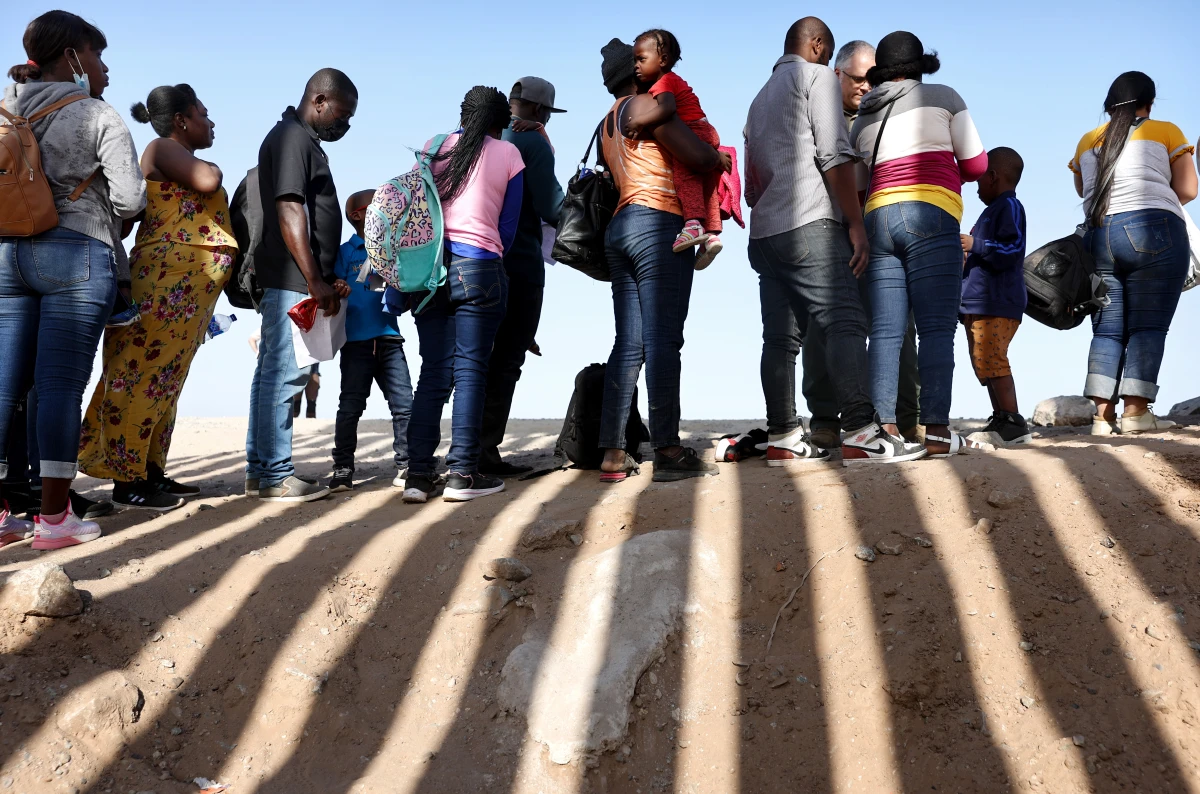
Pierre’s children are among hundreds of thousands of migrants who have used charter planes since 2022 to reach the U.S., according to immigration analysts. These migrants are flying into Nicaragua and, from there, making their way north.
The Biden administration accuses these charter companies of collaborating with global human smuggling networks and is taking steps to clamp down on them and their executives.
“These charter companies are working with criminal organizations. Often, they are part of criminal organizations,” says Blas Nuñez-Neto, deputy assistant to President Biden and senior advisor for migration and southwest border coordination.
He says some migrants pay as much as $70,000 for the journey from their home country to the U.S., with a large portion of the money going to charter companies.
Nuñez-Neto also says Nicaragua is knowingly serving as a launching pad for migrants trying to reach the U.S.
“The authoritarian regime of Nicaragua has essentially become a human smuggling entity in and of itself,” Nuñez-Neto says.
Nicaragua doesn’t intend for migrants to actually stay in the country, he says, noting that the government requires most to leave within 96 hours.
The Nicaraguan government didn’t respond to repeated attempts by NPR to answer allegations that it’s facilitating human smuggling. In a recent speech, Nicaraguan President Daniel Ortega accused the U.S. of engaging in a war against migrants.
Migration as political retribution
The phenomenon of migrants taking charter planes began in late 2021 when Nicaragua eliminated its visa requirements for Cubans. Over the next year, tens of thousands of Cubans flew to Nicaragua and, from there, paid smugglers to help them make their way to the U.S. border.
According to analysts, charter flights serve two purposes for Nicaragua’s government: They bring in millions of dollars in revenue through landing fees, airport taxes and hotel stays, and serve as retribution against the U.S., which has imposed economic sanctions on Nicaragua because of political repression.
“Nicaragua realized that this was a way— to use the term—weaponize migration. Basically to utilize migration as a way to attack directly the United States by sending thousands of migrants,” says Manuel Orozo, director of the Migration, Remittances, and Development Program at the Inter-American Dialogue, a D.C.-based think tank.
During a six-month period last year, Orozco counted more than 14 daily flights from Haiti, mostly A320 planes, which seat between 140 and 170 passengers. While most migrants who took charter flights to Nicaragua came from Haiti and Cuba, some also traveled from faraway countries like India and Mauritania.
Orozco says the charter companies facilitating their travel tend to be small, with fleets of less than 20 planes, and the companies are based around the world, including Libya and Romania.
Adam Isaacson, a migration analyst with the Washington Office on Latin America, says “enterprising” travel agencies fueled the wave of migrants taking charter planes. The travel agencies rented—and sometimes owned—the charter planes and then sold tickets to migrants for thousands of dollars.
The trip came with risks for the migrants because the Biden administration has made it harder to claim asylum at the border.
“But if you’re from someplace on the other side of the planet, these travel agencies can still promise you that you will get into the United States and that you will get to stay there because the United States doesn’t have the capacity to deport you,” Isaacson says about the messaging to people wanting to reach the U.S.
The travel agencies are “really on a blurry line between travel agency and smuggling operation,” he says.
U.S. reaction
U.S. officials watched the surging number of charter flights into Nicaragua with alarm. As the Biden administration has tried to stem the unprecedented flow of migrants reaching the U.S. border, the charter flights present a massive problem—in large part because there wasn’t an obvious solution for how to crack down on flights outside of U.S. air space.
Also, since migrants were legally allowed to enter Nicaragua, there was nothing the Biden administration could do to prevent them from buying plane tickets to that country.
Instead, the Biden administration sought workarounds. In late 2023, it convinced Haiti to impose a total ban on charter flights to Nicaragua.
The administration has also revoked the visas of numerous charter company executives, but declined to say how many visas it has revoked or provide the names of the executives.
Still, those measures appear to have had an impact as the number of charter flights into Nicaragua in recent months has declined.
“In this space you can never declare victory so we are certainly not doing that. But we are cautiously optimistic that what we are doing has been working and will continue to do it,” says Nuñez-Neto, Biden’s senior advisor for migration.
For Pierre, the Haitian father, the charter flights were a lifeline.
He was reunited with his children in July, at his home in New Jersey, after nearly a decade apart. He estimates he spent as much as $30,000 on their journey to the U.S.
The life of his kids was more important that money, he says, adding that even if he had to spend more to bring them to the U.S., he would have done it.
Transcript:
ARI SHAPIRO, HOST:
Migrants from around the world are using charter planes to try to reach the U.S. They fly into Nicaragua and, from there, make their way north. The Biden administration is accusing these charter companies of collaborating with global smuggling networks. Emily Green reports.
EMILY GREEN, BYLINE: Pierre’s story begins in Haiti. He and his wife fled the island in 2016 after his father survived an assassination attempt, and he eventually ended up in the U.S.
PIERRE: (Non-English language spoken).
GREEN: He left in such a hurry, he couldn’t take his three kids with him, he says. He started coming up with a plan to reunite with them. NPR is not identifying him by his full name because he is concerned speaking out could hurt his asylum claim, which is still unresolved. But getting his children out of Haiti was much harder than Pierre ever expected – until last year, when Pierre paid nearly $8,000 for his three children, ages 10, 13 and 18, to take a charter flight to Nicaragua.
PIERRE: (Non-English language spoken).
GREEN: “You heard about it on Facebook and TikTok. Everybody seemed to be taking them,” he says.
The phenomenon began when Nicaragua eliminated its visa requirements for Cubans in late 2021. Other countries soon followed. Manuel Orozco studies migration for the Inter-American Dialogue, a D.C.-based think tank.
MANUEL OROZCO: Nicaragua realized that this was a way to use the term weaponized migration.
GREEN: The Biden administration has imposed economic sanctions on the country because of political repression. For Nicaragua’s government, the flights served a political purpose, according to Orozco.
OROZCO: Basically, to utilize migration as a way to attack directly the United States by sending thousands of migrants.
GREEN: Nicaragua also raked in millions of dollars through the charter planes, from landing fees, airport taxes and hotel stays. Orozco counted more than 14 daily flights from Haiti to Nicaragua over a six-month period, each carrying up to 190 passengers. Over the last year, he estimates charter planes ferried hundreds of thousands of people into Nicaragua.
ADAM ISACSON: I would put most of the credit on enterprising travel agencies in those home countries, which are really on a blurry line between travel agency and smuggling operation.
GREEN: That’s Adam Isacson, an analyst with the Washington Office on Latin America. He says the travel agencies sold plane tickets for thousands of dollars.
ISACSON: If you’re from someplace on the other side of the planet, these travel agencies can still promise you that you will get into the United States and you will get to stay there because the United States doesn’t have capacity to deport you.
GREEN: U.S. officials watched the surging number of charter flights into Nicaragua with alarm. Blas Nunez-Neto is senior adviser for migration to President Biden.
BLAS NUNEZ-NETO: The authoritarian regime in Nicaragua has essentially become a human smuggling entity in and of itself.
GREEN: Nunez-Neto says Nicaragua doesn’t intend for migrants to actually stay in the country. In fact, he says, the government requires most to leave within 96 hours. The Nicaraguan government didn’t respond to repeated attempts by NPR to answer allegations that it’s facilitating human smuggling. And there’s another concern.
NUNEZ-NETO: These charter companies are working with criminal organizations. Often, they are part of criminal organizations.
GREEN: Criminal organizations, he says, that are fronting as travel agencies and arrange the entire trip to the U.S. border for up to $70,000. In recent months, the Biden administration has revoked the visas of charter company executives and taken other actions to stop these flights.
PIERRE: (Non-English language spoken).
GREEN: For Pierre, the father from Haiti, the life of his children was more important than the money. He was reunited with them in July after nearly a decade apart. He estimates he spent as much as $30,000 on their journey to the U.S.
PIERRE: (Non-English language spoken).
GREEN: He says he didn’t think twice about the money, that even if he had to spend more to bring them to the U.S., he would have done it. For NPR News, I’m Emily Green.
(SOUNDBITE OF POST MALONE SONG, “SOCIALITE”)