


It’s a critical time for hospitals and clinics in Yemen.
The country has a chronic malnutrition problem and ongoing outbreaks of cholera, measles and polio, says Marc Schakal, the program manager for Doctors without Borders.
“We are already seeing in our pediatrics an increasing number of admissions. We are reaching 120% bed occupancy,” Schakal says.
The group has procured over 100 tons of therapeutic foods to treat severe malnutrition in children under 5. But that, along with other key medications, is stuck in Dubai’s Jebel Ali port, a critical hub for medical and humanitarian supplies.
“Our main priority is to have this therapeutic food arriving in Yemen on time,” he says.
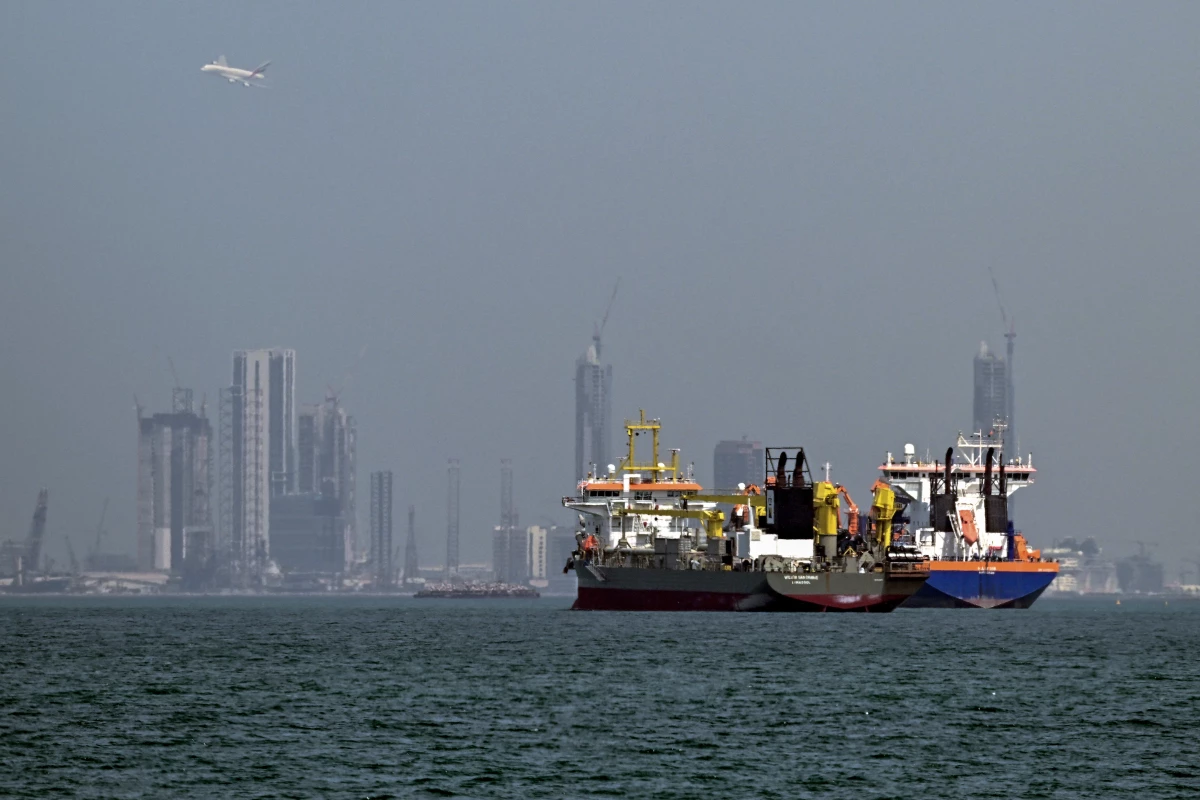
But the war in Iran has stalled global supplies of fuel, fertilizers and also medical supplies, due to the restriction of shipments in the Strait of Hormuz.
Aid groups are worried. The International Rescue Committee (IRC) and Save the Children told NPR that clinics and humanitarian centers across the Middle East, Asia and Africa are facing the risk of running out of basic medication and food.
“We’ve got one shipment that was supposed to be delivered into East Africa, which is now blocked,” says Bob Kitchen, Vice President, Emergencies & Humanitarian Action. He is based in Nairobi with the IRC. “The humanitarian depot there that’s managed by the U.N. has massive stocks that are now stuck. We can’t get them to acute crisis situations like Sudan, Ethiopia and across the northeastern part of Africa.”
Some of the items in the warehouses like tents and latrines can be stored for a long time, and the dry and canned foods have a long shelf life. But the medicines or treatments for malnutrition will expire, Kitchen says.
The situation has left aid organizations scrambling for alternatives, but options are slim, particularly in countries with limited resources.
“It’s extremely serious in countries that have very little resilience to shocks like this. Whenever one piece of the puzzle is missing or delayed, the consequences are very, very severe,” Kitchen says.
Sudan, for example, has no manufacturing capacity and is entirely dependent on imported medication, so they won’t be able to find alternatives in the local market, says Omer Sharfy with Save the Children in Sudan.
The group had also procured supplies of IV fluids, malaria tests and antibiotics.
But now, they can’t get them into the country. Save the Children’s various clinics, including in remote areas, only have supplies to last them through April. Sharfy is already hearing from his colleagues in the field that stocks are dwindling.
“There’s a growing fear of running out of essential treatments and health workers are having to think more carefully about how to prioritize these limited resources they have,” he says.
Sharfy’s worst-case scenario is that medications for common treatable illnesses like respiratory infections, diarrheal diseases or malaria won’t be available.
“A woman will take her child to a doctor. The doctor will refer them to the lab. The lab will draw the blood test. The blood test will say malaria positive. They’ll go to the pharmacy where Save the Children provides the medicines. There is no medicine. The woman will walk her out with her child who is malaria positive with no cure,” Sharfy says.
“It’s one of the most difficult situations for a health worker to be in when they know what the patient needs, but they don’t have the medicine available.”
Spiking costs are making things worse
The blockage in the Strait of Hormuz is affecting more than direct shipments of supplies, said Jean Kaseya, the director general of Africa CDC at a press conference on Thursday. Fuel shortages increased the cost of transportation, and the production of key health commodities like mosquito nets which are made of polyester, which is made of petrochemicals.
Save the Children CEO Janti Soeripto told NPR that the group has medicines stuck at a supplier’s warehouse in India that needs to get to Afghanistan urgently.
“We can’t take the road because there’s also been conflict, which means that is impossible,” Soeripto says. “We would then normally airship it. Those costs have doubled over the last month, because of the price of oil. So now the transport for the drugs is more expensive than the drugs themselves.”
Insurance costs for shipments from other places have also spiked exponentially, says Soeripto.
“Ironically, we and quite a few other humanitarian organizations actually had started to put more stocks in Dubai, because we felt it diversified our inventory, and it allowed us a better spread geographically.”
Despite recent disruptions to global supply chains, like the COVID-19 pandemic and the war in Ukraine, Kitchen says this crisis is acutely challenging.
“I haven’t seen before such a perfect storm,” he says. “There’s a massive surge in humanitarian need between Gaza, Lebanon, Sudan and Ethiopia on the brink. Then we’ve got this global economic shock, disruptions to food, fuel and fertilizers and 300 million people already facing acute food insecurity.”
All of this, he says, has been compounded by the Trump administration’s cuts to global aid in the last year, leaving aid groups with much less capacity to respond.
Transcript:
STEVE INSKEEP, HOST:
The war in Iran has stalled global medical supply chains. Iran’s effective closure of the Strait of Hormuz, which has interrupted oil shipments, also restricted shipments from warehouses in Dubai. Clinics and humanitarian centers across the Middle East, Asia and Africa will soon be at risk of running out of basic medication and food. NPR global health correspondent Fatma Tanis reports.
FATMA TANIS, BYLINE: It’s a critical time for hospitals and clinics in Yemen, according to Marc Schakal, program manager for Doctors Without Borders in Dubai. Yemen has a chronic malnutrition problem and ongoing outbreaks of cholera, measles and polio.
MARC SCHAKAL: We are already seeing in our pediatrics an increasing number of admissions. And this is our main priority now, is to have this therapeutic food arriving in Yemen on time.
TANIS: But the therapeutic food that treats child malnutrition is stuck in Dubai, a critical hub for medical and humanitarian supplies. Bob Kitchen is the vice president of emergencies and humanitarian action with the International Rescue Committee based in Nairobi.
BOB KITCHEN: We’ve got one shipment that was supposed to be delivered into East Africa, which is now blocked. The humanitarian depot there that’s managed by the U.N. has massive stocks that are now stuck. We can’t get them to acute crisis situations like Sudan, Ethiopia.
TANIS: Some of the items in the warehouses like tents and latrines have a long shelf life, so do the dry and canned foods, but not the drugs. They will expire. Alternative routes have also been disrupted. Janti Soeripto is the CEO of Save the Children. She says they have medication stuck in a warehouse in India that needs to get to Afghanistan urgently.
JANTI SOERIPTO: We can’t take the road because there’s been also there conflict, which means that is impossible. We would then normally airship it. Those costs have doubled over the last month because of the price of oil. So now the transport for drugs are more expensive than the drugs themselves.
TANIS: As a veteran humanitarian, Bob Kitchen says this crisis feels different.
KITCHEN: I haven’t seen before such a perfect storm where we’re dealing with, right now, a massive surge in humanitarian need between Gaza and Lebanon and Sudan, Ethiopia on the brink.
TANIS: All of this, he says, has been compounded by the Trump administration’s cuts to global aid.
Fatma Tanis, NPR News.
(SOUNDBITE OF UNCLE TUPELO’S “SANDUSKY”)
