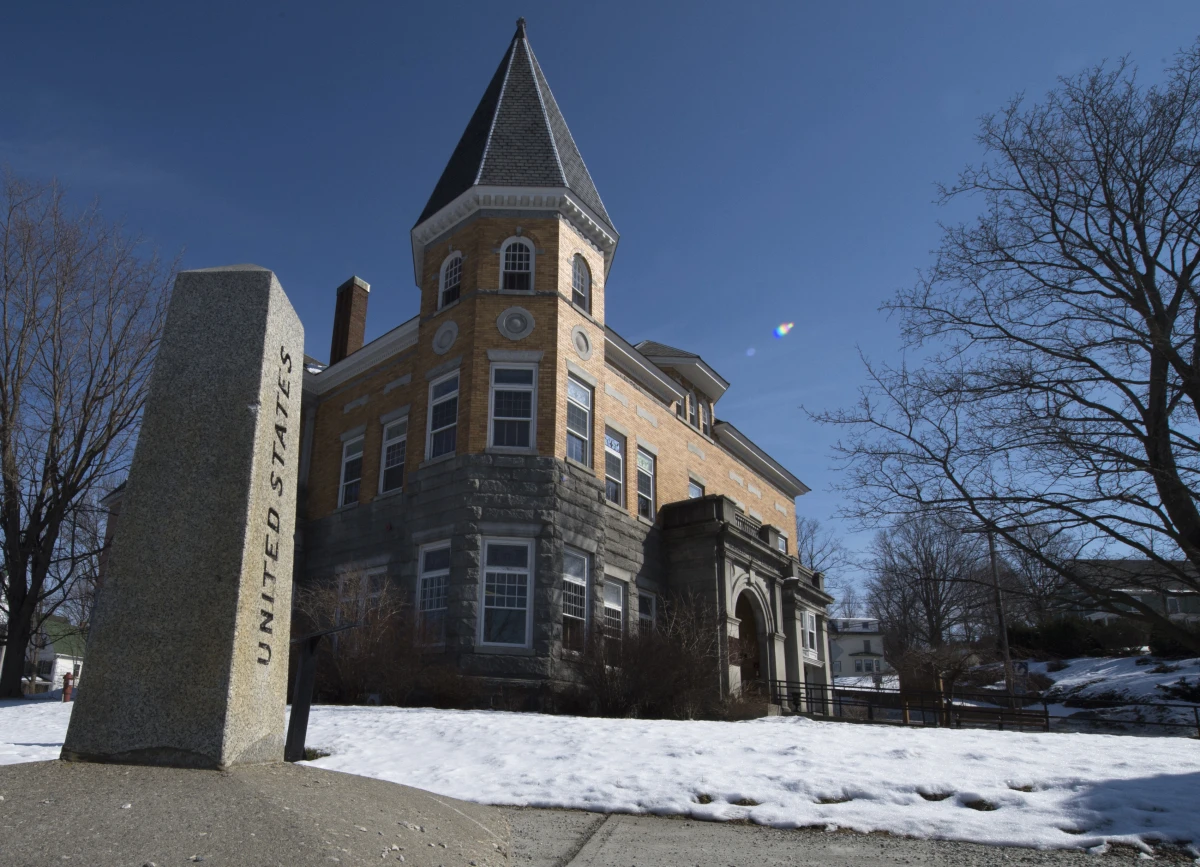
Straddling two countries, the historic Haskell Free Library and Opera House is unlike any other in the world.
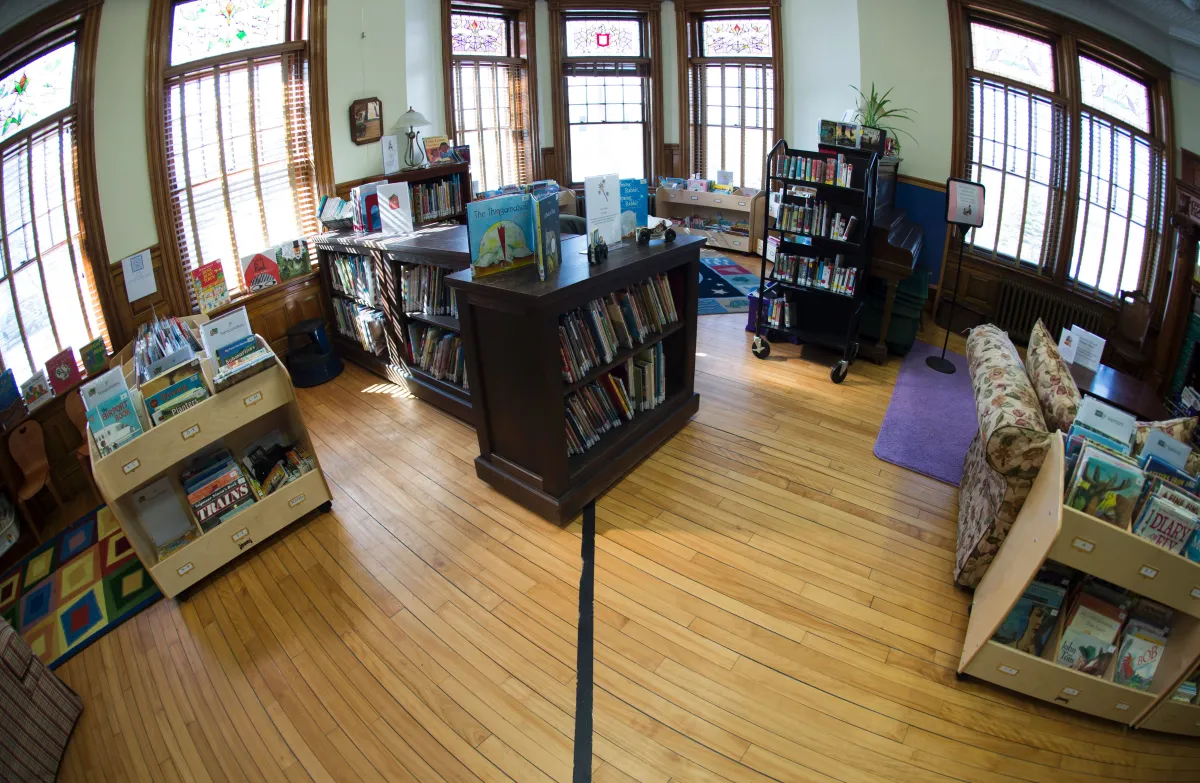
One half sits in Canada and the other half in the U.S. A thick black stripe runs across the library floor and under the opera house seats, marking the Quebec-Vermont border.
Since 1904, the citizens of both countries have used the cultural building without going through passport control and customs.
Now, citing safety concerns, the U.S. is beginning to impose restrictions in phases.
Canadians without a library membership will no longer be able to simply walk in the front door, which is on the U.S. side, in Derby Line, Vt.
They can still enter the library from the Canadian side, but it will be through an emergency exit door in the back of the library.
As of Oct. 1, to use the front door, all Canadians will first have to go through a border crossing to enter the U.S.
The U.S. Department of Homeland Security said the move is part of its mission to secure America’s borders.
“Drug traffickers and smugglers were exploiting the fact that Canadians could use the U.S. entrance without going through customs,” the DHS said in a statement. “We are ending such exploitation by criminals and protecting Americans.”
Though the new restrictions do not limit Canadians’ use of the library, the symbolism is not lost on people living on both sides of the border.
Library patrons and residents of Derby Line and neighboring Stanstead, Quebec, have been gathering at the library to express their grief at the announcement. Citizens from both countries are saying that it feels like a family is being torn apart.
At a press conference on Friday, Jody Stone, Stanstead’s mayor, placed the blame on President Trump.
“We love our neighbors,” said Stone, who stood flanked by the Canadian and American flags. “And no matter what this administration does, it will not change the fact that Stanstead and Derby Line are partners and friends forever.”
Sylvie Boudreau, the president of the library’s board of trustees, said she was shocked and angered by the decision. She said staff have long worked with U.S. border officials to prevent illegal activity in the library.
Boudreau told NPR’s Ayesha Rascoe that there have been very few incidents. An American once brought guns into the library bathroom, which were then picked up by a Canadian. That was more than a decade ago, Boudreau said, and both were caught. She understands security concerns, but said the crime statistics don’t bear this drastic move out.
“I’m training my employees and my volunteers to be aware to see if something is out of the ordinary, you know,” she said. “And we do all that to help the authorities.”
The library has established a GoFundMe page to raise funds to build a proper entrance on the Canadian side. In the first 24 hours, Boudreau said they raised $33,000 Canadian (about $23,000 USD).
Residents on both sides of the border remain hurt by the U.S. government’s unilateral decision to end open access to the shared library and cultural center.
“It’s been a connection to the two communities, with the two countries, with families,” Boudreau said. She pointed out that many have dual citizenship and are married to citizens born on the other side of the border.
“It’s kind of little Switzerland,” she said. “Everyone gets along inside.”
Transcript:
AYESHA RASCOE, HOST:
Since 1904, the Haskell Free Library & Opera House has straddled the Canadian and the Vermont border, literally. A black stripe running through the book stacks marks the border between the two countries. Citizens of both nations have been free to use the library as long as they exit the same door they enter. That’s set to change. The Department of Homeland Security said that drug traffickers and smugglers were exploiting the fact that Canadians could use the U.S. entrance without going through customs. The agency said it’s making the change to protect Americans.
Sylvie Boudreau lives on the Canadian side in Stanstead, Quebec. She’s the president of the library’s board of trustees, and she joins us now on the line. Welcome.
SYLVIE BOUDREAU: Hi.
RASCOE: For our listeners who aren’t familiar with the library, can you explain how the entry system currently works?
BOUDREAU: OK, the way it works is the main entrance is in United States, and there is a sidewalk that will cross the border. So that means that people that are in Canada – they have to use that sidewalk to enter the United States to use the main entrance. So it’s been like that for over 120 years, but starting Monday, that agreement is no longer validated.
RASCOE: Well, what’s your – what was your reaction to the U.S. saying that they were going to change this tradition, this agreement, and make all the Canadian visitors go through a – you know, a port of entry to get into the library?
BOUDREAU: I was angry. I was in disbelief. I couldn’t believe they would do something like that. But it wasn’t on my mind because few years ago, we had that discussion with USBP, with the authorities, and we were able to come to an agreement and to change a few little things, you know, inside the library so it would satisfy the authorities.
RASCOE: Well, has there been any problems with – you know, that you know of – with drugs crossing through the library…
BOUDREAU: Oh…
RASCOE: …Or some sort of illegal activity…
BOUDREAU: …There’s been…
RASCOE: …Or anything like that?
BOUDREAU: Yes. Few incidents happened, and, you know, I’m training my employees and my volunteers to be aware, to see if something is out of the ordinary, you know? And we do all that to help the authorities, but it was not enough, I guess.
RASCOE: So what has this library meant to the people of these two towns – Stanstead, Quebec, and Derby Line, Vermont?
BOUDREAU: It’s a connection with the two communities, with the two countries, with families, because, you know, there’s a lot of dual citizenship on both sides of the border. There’s a sense of friendship, a sense of family.
RASCOE: Are you concerned about the souring relations between the two countries? And President Trump keeps talking about Canada as the 51st state.
BOUDREAU: I can’t believe that. You know, really, I can’t believe that something like that is happening right now. I don’t like divisions. For me, Americans are my friends, my family, as much as my Canadians. I just want people to continue to look besides that and to see the real people.
RASCOE: Canadian Sylvie Boudreau is the president of the library’s board of trustees. Thank you for joining us.
BOUDREAU: Thank you very much.
(SOUNDBITE OF SONG “THIS LAND IS YOUR LAND”)
THE TRAVELLERS: (Singing) This land is your. This land is my land, from Bonavista…