For more on the 2024 race, head to the NPR Network’s elections updates page.
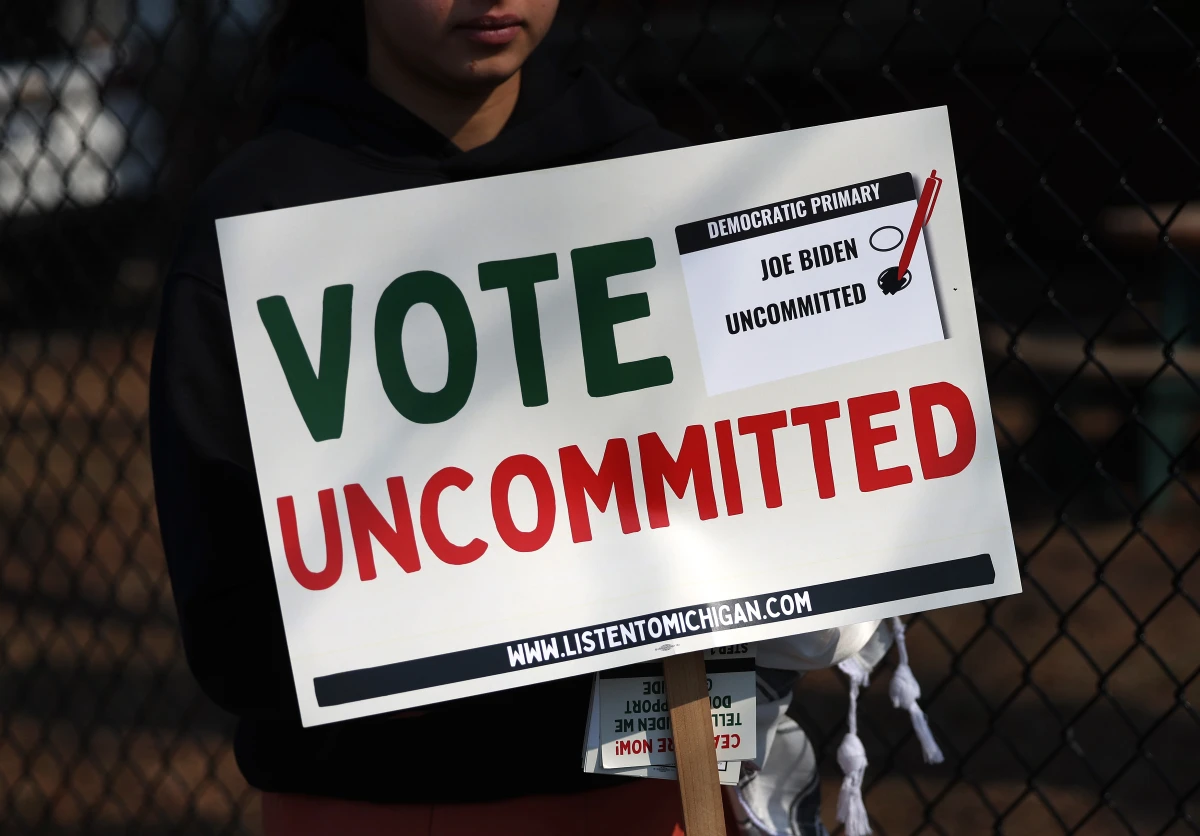
Hundreds of thousands of voters cast ballots marked “uncommitted” in Democratic presidential primaries this year in opposition to President Biden’s policy toward Israel’s war in Gaza.
Now that Vice President Harris has replaced Biden at the top of the ticket, organizers behind the movement are expressing cautious optimism about their ability to engage with Harris.
Abbas Alawieh, a co-founder of the uncommitted movement, said at a news conference in recent days, “There are early indications that there is an openness to engaging with our movement that feels like a shift from how our requests were being treated previously.
“And so I’m choosing to remain hopeful that the vice president won’t miss the opportunity to unite our party.”
Layla Elabed is another co-founder of the uncommitted movement, and said Harris’ candidacy provides a window of opportunity.
“VP Harris has shown that she is a little more empathetic to our movement. She spoke of Palestinian right to self-determination. She spoke about the suffering that Palestinians are experiencing right now,” Elabed said in an interview. “And so it’s a slightly different shift in language than what we’ve seen from President Biden and his administration.”
Elabed and other leaders cited the vice president’s comments after a meeting with Israeli Prime Minister Benjamin Netanyahu during his trip to Washington in late July, just days after Biden ended his candidacy.
Harris asserted Israel’s right to defend itself, but added, “how it does so matters.”
“The images of dead children and desperate hungry people fleeing for safety, sometimes displaced for the second, third or fourth time,” Harris said. “We cannot look away in the face of these tragedies. We cannot allow ourselves to become numb to the suffering, and I will not be silent.”
A key movement in a key state
The uncommitted movement grew out of the “Listen to Michigan” campaign ahead of that state’s February presidential primary. Its goal was to send a strong message to Biden that he needed to do more to prevent civilian deaths in Gaza. Organizers’ primary demands are for an immediate cease-fire in Gaza, and an end to U.S. weapons transfers to Israel.
Michigan has a sizable Arab American population, and in the presidential primary more than 100,000 voters cast ballots for “uncommitted,” representing about 13% of all votes cast.
Biden carried Michigan in 2020 by just 154,000 votes, and it remains a crucial swing state.
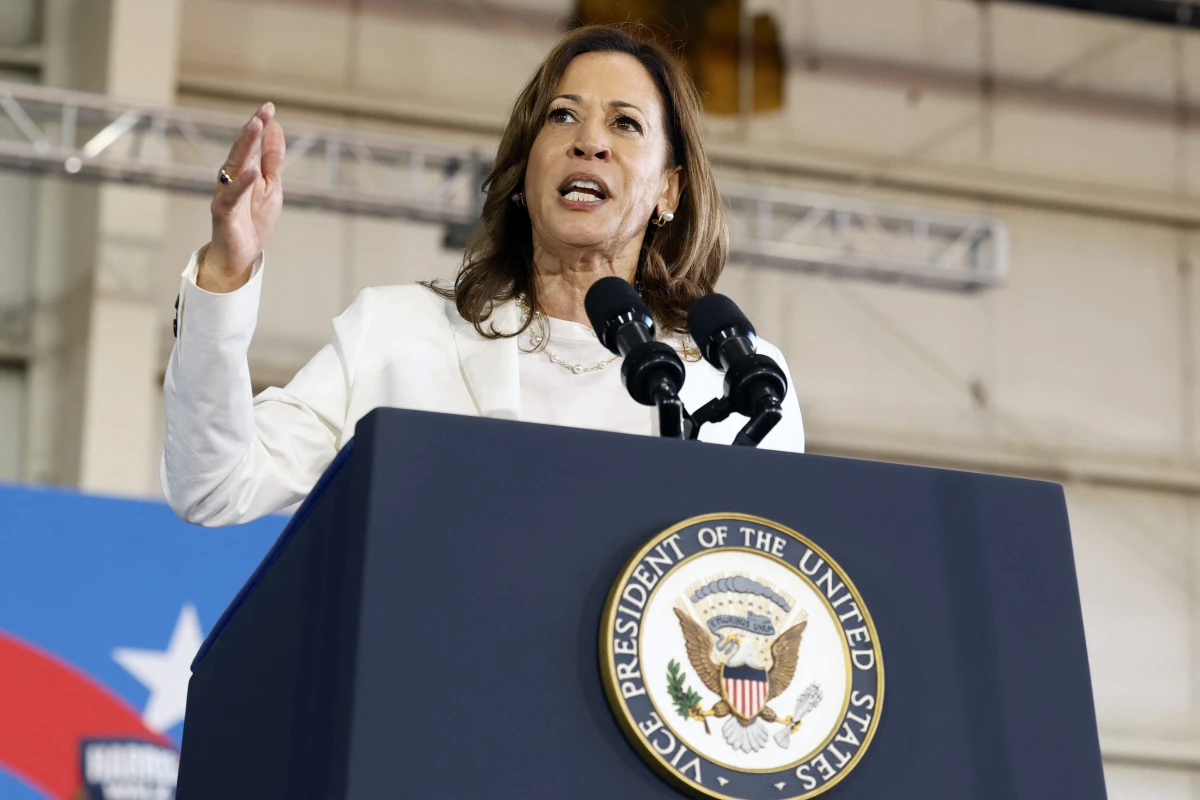
This week, Harris met briefly with two leaders of the movement prior to a campaign rally in Michigan.
Alawieh said it was a brief encounter backstage in a receiving line. He said he told Harris that previously uncommitted voters want to support her, but need to know she’ll take a different path on Gaza.
“And I asked her, ‘Will you meet with us so that we can discuss an arms embargo?’” he recounted. “And the vice president was very quick to say, ‘I’d really like that.’ And we took the photo and I said, ‘Thank you so much.’”
He said it was not a commitment of specific policy, but to keep meeting regarding these urgent concerns.
Later, Phil Gordon, a Harris national security adviser, stressed in a post on X that, “She does not support an arms embargo on Israel.”
There were some pro-Palestinian protesters at this week’s Michigan rally, who at one point interrupted the vice president with chants of, “Kamala, Kamala, you can’t hide. We won’t vote for genocide.”
At first, Harris gave them their moment, but as the interruption persisted she cut them off, implying that Donald Trump’s election would be truly bad for their cause.
“If you want Donald Trump to win, then say that. Otherwise, I am speaking,” Harris said.
What voters are looking for from Harris
It remains to be seen if Harris’ policy regarding Gaza would be substantively different from that of the Biden administration.
Organizers of the uncommitted movement stress that a shift in language is not enough. They continue to push for an immediate cease-fire in Gaza, plus an end of U.S. weapon sales to Israel. And they’ve requested speaking time at the Democratic National Convention later this month for a doctor who has worked on the frontlines in Gaza.
Abdullah Hammoud, the mayor of Dearborn, Mich., a city where a large portion of the population is of Middle Eastern or North African descent, praised Harris’ remarks after the Netanyahu visit, but said: “What we want is more than just someone who is tough on rhetoric. We want somebody who is tough on policy. From our perspective, our values have not changed. The policy positions that we’ve been advocating for have not been altered.”
Elabad, one of the co-founders of the uncommitted movement, said she wants to see guarantees that Harris is turning a page on Biden’s policy, and said that Palestinians “cannot eat words.”
The core of the uncommitted movement is Arab Americans and younger voters. Many are still deciding what they’ll do in November.
Kole Kudrna, an 18-year-old from Holland, Mich., voted uncommitted in February. He said he likely would have voted for Biden in the general election, but reluctantly.
“With Biden I did not feel any enthusiasm,” he said. “But with Harris, it’s like, yeah, I’m enthusiastic. I’m excited about Harris. I feel like she can win.”
But 41-year-old Jennifer Schlicht’s reaction was more tempered. She said she is waiting to see if Harris produces any policy changes toward the Middle East.
“Will I vote for her? Most likely,” said Schlicht, from Ypsilanti, Mich. “But I would feel a lot better voting for her if she did follow up with those words that she spoke to Netanyahu about, and came out in favor of something that respects the right to live of the Palestinian people.”
Then there are voters like Hank Kennedy, a student teacher from Hazel Park, Mich., who said a new candidate does not change his calculus at all.
“There needs to be a policy change, not just a change at the top of the ticket,” said Kennedy, 27.
If the election were tomorrow, Kennedy says he would likely vote for the Green Party, (For their part, uncommitted organizers are not recommending voters support a third party.)
And while Kennedy also said he’s concerned about what another Trump presidency might mean for Palestinians, he said he doesn’t feel like Democrats have done enough to stop the death and destruction in Gaza.
“If we’re supposed to vote for the lesser of two evils? I mean, what’s lesser? That’s the way I look at it,” he said.
Loading…
Transcript:
AYESHA RASCOE, HOST:
Presidential nominee Kamala Harris and her running mate, Tim Walz, swept through Michigan last week. It’s one of several swing states the Democrats are trying to win this fall. And it’s also where the uncommitted movement began to protest the White House’s support of Israel. NPR’s Don Gonyea reports on how these voters are feeling now with Harris at the top of the ticket.
DON GONYEA, BYLINE: Voters cast ballots marked uncommitted in the Democratic primaries to send a message to President Biden. It started in Michigan and grew into a national movement.
(SOUNDBITE OF ARCHIVED RECORDING)
UNIDENTIFIED PROTESTER: (Chanting) Uncommitted, uncommitted.
UNIDENTIFIED PROTESTERS: (Chanting) Uncommitted, uncommitted.
GONYEA: This was a rally six months ago in Hamtramck, Mich., a majority-Muslim city and a focal point of the uncommitted effort. Layla Elabed, a Palestinian American and a founder of the campaign, called that day for an immediate cease-fire in Gaza, urging the crowd to vote uncommitted in the primary.
LAYLA ELABED: Joe Biden needs to hear from his core constituency that he cannot support a genocide in 2024.
GONYEA: The uncommitted vote in Michigan exceeded expectations, totaling more than 100,000, a significant number given that Biden carried the state in 2020 by just 154,000. Now back to today. The war in Gaza continues, but President Biden is no longer a candidate. With Kamala Harris the nominee, Elabed says there’s a chance for a reset.
ELABED: We have heard from VP Harris to be somewhat more sympathetic or empathetic to the suffering of Palestinians.
GONYEA: As evidence, she cites this statement from Kamala Harris last month after the vice president met with Israeli Prime Minister Benjamin Netanyahu.
(SOUNDBITE OF ARCHIVED RECORDING)
VICE PRESIDENT KAMALA HARRIS: We cannot look away in the face of these tragedies. We cannot allow ourselves to become numb to the suffering. And I will not be silent.
GONYEA: Leaders of the movement say those remarks may have opened a door to more dialogue. And this past week, Harris did meet with two of them prior to a campaign rally in Michigan. Abbas Alawieh says it was a brief encounter backstage in a receiving line.
ABBAS ALAWIEH: And I asked her, will you meet with us so that we can discuss an arms embargo? And the vice president was very quick to say, I’d really like that. And we took the photo, and I said, thank you so much.
GONYEA: He says it was a commitment not to a specific policy but to keep meeting regarding these urgent concerns. Later, a Harris national security adviser stressed that she does not support an arms embargo on Israel. There were some pro-Palestinian protesters at the rally, who, at one point, interrupted the vice president with chants.
(SOUNDBITE OF ARCHIVED RECORDING)
HARRIS: It’s all good (ph).
GONYEA: At first, Harris gave them their moment. But as the interruption persisted, she cut them off, implying that Trump’s election would be truly bad for their cause.
(SOUNDBITE OF ARCHIVED RECORDING)
HARRIS: You know what? If you want Donald Trump to win, then say that. Otherwise, I’m speaking.
(CHEERING)
GONYEA: Meanwhile, members of the uncommitted movement are still deciding what they’ll do in November. Eighteen-year-old Kole Cuderna, from Holland, Mich., says he’s now actually optimistic about the Democratic ticket.
KOLE CUDERNA: With Biden, I did not feel any enthusiasm. But with Harris, it’s like, yeah, I’m enthusiastic. I’m excited about Harris. I feel like she can win.
GONYEA: More tempered is 41-year-old Jennifer Schlicht. She says she’ll likely vote Harris, but…
JENNIFER SCHLICHT: I would feel a lot better voting for her if she did follow up with those words, you know, that she spoke to Netanyahu about and came out in favor of something that respects the right to live of the Palestinian people.
GONYEA: And there are voters like Hank Kennedy, a 27-year-old student teacher.
HANK KENNEDY: There needs to be a policy change, not just a change at the top of the ticket.
GONYEA: He may vote Green Party. Yes, he says, he’s concerned about what another Donald Trump presidency would mean for Palestinians but says he doesn’t think Democrats are committed to stop the death and destruction.
KENNEDY: If we’re supposed to vote for the lesser of two evils, I mean, what’s lesser? That’s the way I look at it.
GONYEA: The Arab American vote in Michigan has long been a reliable piece of the Democratic coalition, and fully bringing them back into the fold could be decisive in what looks like a toss-up state this year. Don Gonyea, NPR News, Detroit.