


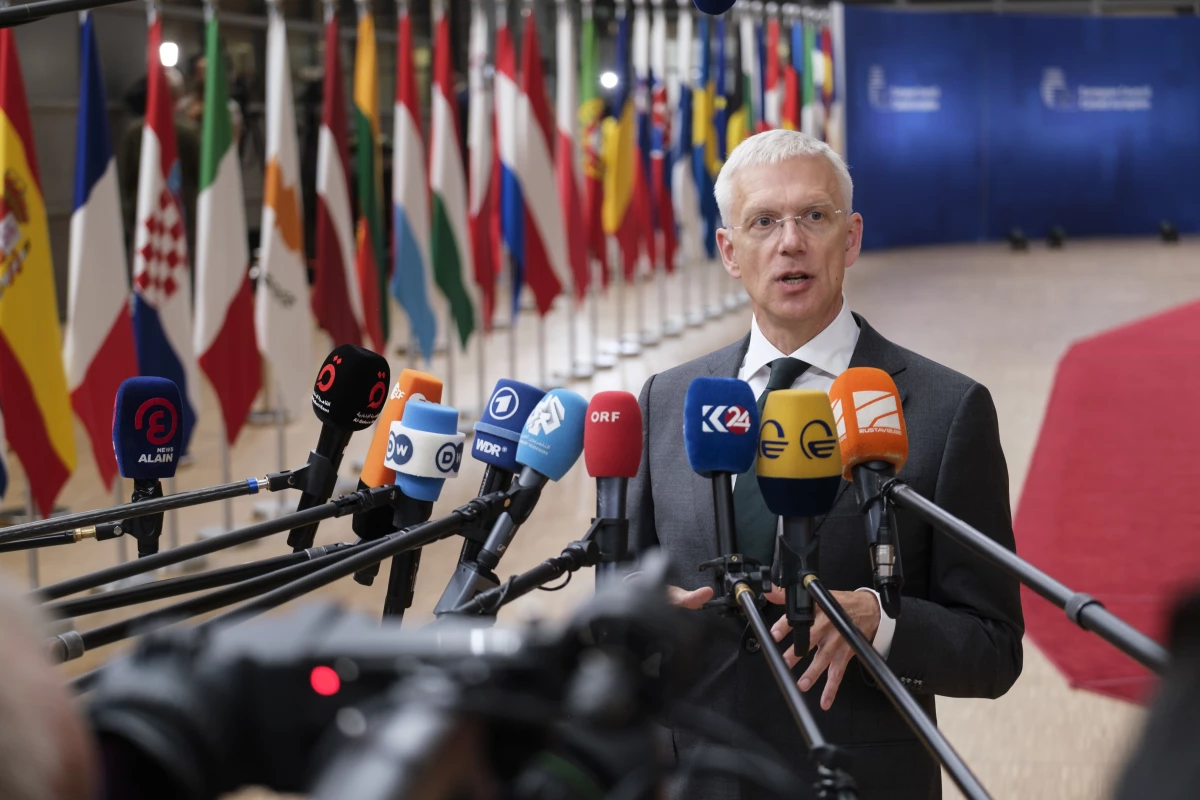
A month after Latvia hosted a major multinational NATO operation on the alliance’s eastern flank, the country’s former prime minister, Krisjanis Karins, spoke to Morning Edition about new signals from the White House suggesting a potentially dramatic shift in the Trump administration’s posture toward Russia.
Describing Trump’s comments following the contentious Munich Security Conference as “a very serious concern for peace in the world,” Karins also sees the value of prodding Europe toward increased military spending in line with their NATO obligations. However, he warns that as a small nation under threat from a larger power, Latvia “cannot exist without multilateralism, without democracies banding together to stand up against the countries that are threatening all of us.”
Karins concedes that Trump is justified in feeling that Europe has been freeloading on U.S. security. But he questions the administration’s tactics of excluding Europe from the initial negotiations and the victim-blaming being directed at Ukraine. Karins sees the potential for far reaching consequences if the U.S. is seen by Russia and China as a weak ally, which he feels could impact Europe and beyond.
Interview highlights, edited for length and clarity:
Michel Martin: You know our colleague, Greg Myre, just summed up comments by President Trump and other positions taken by the U.S. that look like a tilt toward Russia and away from Ukraine in the past week. What do you make of it?
Krisjanis Karins: Well, this is actually a very serious concern for peace in the world, certainly for Europe and certainly for a country like Latvia. We are a NATO member. We’re a member of the European Union. We invest in our defense. We’re at three and a half percent of GDP right now. Next year, the government’s going to go up to four. I think it’ll go even further, up to five eventually.
We participated when the U.S. asked for military action in Afghanistan and Iraq. Our soldiers have fought and died alongside American soldiers, and now we’re listening to the U.S. president, sort of casting doubt on this entire structure. And the difficulties, of course, is that Europe as a continent, is nowhere near ready to replace the U.S., say overnight, in terms of securing NATO’s defenses in Europe.
I agree with President Trump that Europe needs to pull its weight. Europe needs to invest in its defense. I fully agree with this. This is a message that really goes back 14 years to President Obama. In the east of Europe, in Latvia and the Baltic countries in Poland, we heeded this message. We have invested in our defense. We are up, you know, up to snuff, shall we say, in terms of what we need to do, but the rest of Europe, the larger parts of Europe, the big countries, like Germany, France, the UK, Italy, Spain, these countries are, unfortunately, not there. And we need them to follow our example so that the US could pivot more to Asia, to the Pacific. Europe can and should do it.
Martin: Do you think that this is a tactic, a negotiating tactic, to get Europe to boost its defense spending? Or do you think there’s something else behind it?
Karins: I would be the happiest person in the world, if this were a tactic, and certainly whatever Trump’s ultimate goal is, he is having the effect that is needed, that is rattling, shall we say, some of the more complacent European leaders into action.
This is very, very good news. What is unclear to me is, if this is a tactic, what is the purpose of actually saying complete falsehoods? Saying that democratically elected Zelensky is a dictator, but not saying that non-democratically elected Putin is not. So the tactic that sort of makes sense on one part, but it doesn’t make sense. Why is the U.S. president saying the things that he’s saying?
Martin: What do you see at stake for countries like Latvia?
Karins: Very simply, our freedom and our independence. We are a country of under 2 million people. That’s a small country. Next to us is an aggressive Russia. And they have occupied our country. They have tortured, they have deported, they have molested our citizens. We have experienced everything that Ukraine is experiencing now.
We exist because of the world order that says the rule of law is what guides everything, not the rule of force. So we cannot exist without multilateralism, without democracies banding together to stand up against the countries that are threatening all of us. There’s an axis. You can see it. It’s Russia, China, Iran and North Korea. Europe is interested in standing up against this, the U.S. is interested in standing up against this. We both need to stand together. And yes, I agree. Europe needs to invest in its defense and be able to take over the role in Europe from the U.S. within the NATO framework, all the time, working with the U.S.
Transcript:
MICHEL MARTIN, HOST:
We wanted to get a view from Europe, so let’s go to Latvia now. It’s a small country between the Baltic Sea and Russia, formerly part of the Soviet Union. We have Latvia’s former prime minister and foreign minister, Krisjanis Karins, on the line now from Riga. Good morning, Minister. Thanks so much for joining us.
KRISJANIS KARINS: Good morning. My pleasure to be with you.
MARTIN: You know, our colleague Greg Myre just summed up comments by President Trump and other positions taken by the U.S. that look like a tilt toward Russia and away from Ukraine in the past week. What do you make of it?
KARINS: Well, this is actually a very serious concern for peace in the world, certainly for Europe and certainly for a country like Latvia. We are a NATO member. We’re a member of the European Union. We invest in our defense. We’re at 3.5% of GDP right now. Next year, the government’s going to go up to four. I think it’ll go even further up to five eventually in a couple of years. We have participated when the U.S. asked in action – military action in Afghanistan, in Iraq. We – our soldiers have fought and died alongside American soldiers. And now we’re listening to the U.S. president sort of casting doubt on this entire structure. And the difficulty is – of course, is that Europe, as a continent, is nowhere near ready to replace the U.S., say, overnight in terms of securing NATO’s defenses in Europe.
I agree with President Trump that Europe needs to pull its weight. Europe needs to invest in its defense. I fully agree with this. This is a message that really goes back 14 years to President Obama. In the east of Europe, in Latvia and the Baltic countries, in Poland, we heeded this message. We have invested in our defense. We are up to snuff, shall we say, in terms of what we need to do. But the rest of Europe, the larger parts of Europe, the big countries like Germany, France, the U.K., Italy, Spain – these countries are unfortunately not there. And we need them to follow our example so that the U.S. could pivot more to Asia, to the Pacific. That makes sense. Europe can do – can and should do it.
MARTIN: Do you think that this is a tactic, a negotiating tactic to get Europe to boost its defense spending, or do you think there’s something else behind it?
KARINS: I would be the happiest person in the world if this were a tactic. And certainly, whatever Trump’s ultimate goal is, he is having the effect that is needed. That is rattling, shall we say, some of the more complacent European leaders into action. This is very, very good news.
What is unclear to me is, if this is a tactic, what is the purpose of actually saying complete falsehoods, saying that democratically elected Zelenskyy is a dictator but not saying that nondemocratically elected Putin is not? So it’s – it – the tactic sort of makes sense on one part, but it doesn’t make sense. Why is the U.S. president saying the things that he’s saying?
MARTIN: What do you see is at stake for countries like Latvia? If there is more behind this than a – what – just – and not just, but a negotiating tactic, what do you see is at stake for a country like yours and others that are similarly situated?
KARINS: Very simply, our freedom and our independence. We are a country of under 2 million people. That’s a small country. Next to us is an aggressive Russia – 110, 120 million people. The only way we can stand up against them – and they have occupied our country. They have tortured. They have deported. They have molested our citizens. We have experienced everything that Ukraine is experiencing now. We’ve done that in our past multiple times. We exist because of the world order that says the rule of law is what’s – what guides everything, not the rule of force. So we cannot exist without multilateralism, without democracies banding together to stand up against the countries that are threatening all of us.
There’s an axis. You can see it. It’s Russia, China, Iran, North Korea. Europe is interested in standing up against this. The U.S. is interested in standing up against this. We both need to stand together. And, yes, I agree Europe needs to invest in its defense and be able to take over the role in Europe from the U.S. within the NATO framework, all the time working with the U.S.
MARTIN: That is Krisjanis Karins. He is the former prime minister and the foreign minister of Latvia. He’s now a global security consultant. Minister, thanks so much for talking with us and sharing these insights. I do hope we’ll talk again.
KARINS: Thank you very much.
