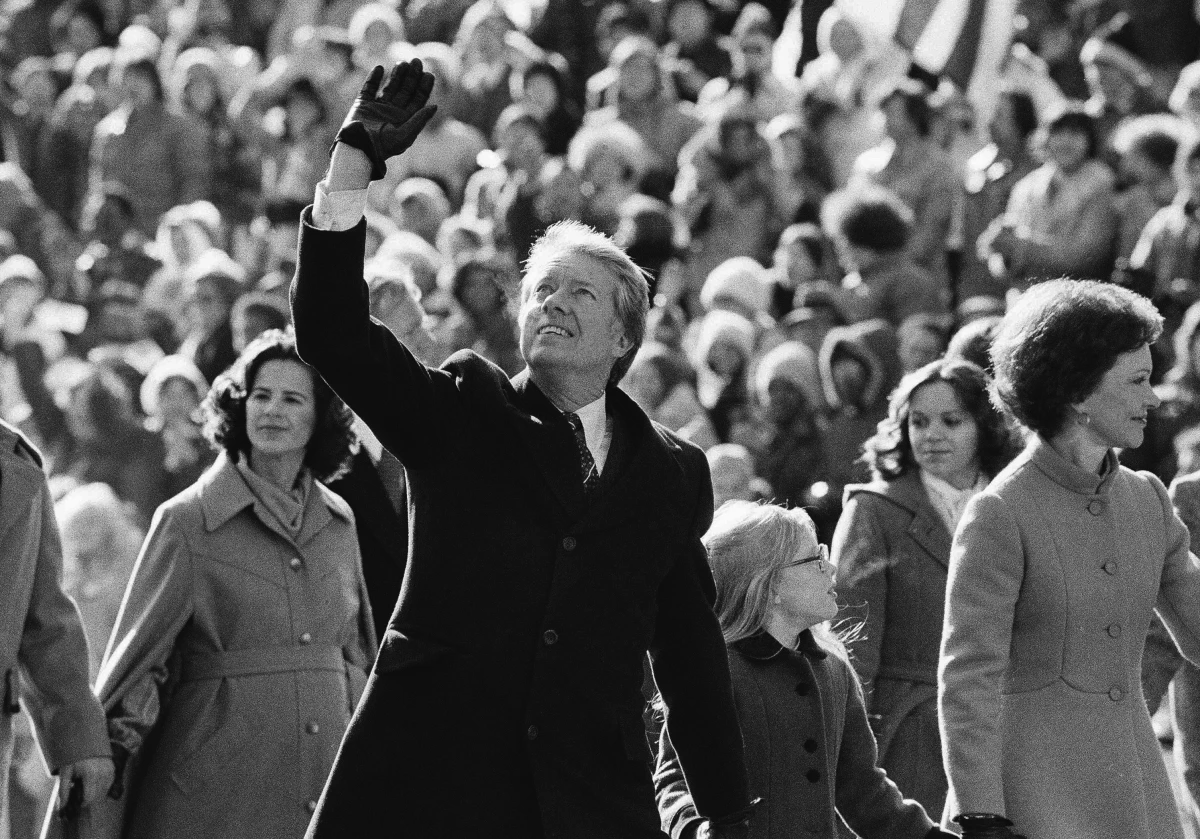
President Jimmy Carter was an outlier in more ways than one.
Born and raised on the humble farmlands of southern Georgia, Carter grew up without running water and used an outhouse. He played with the Black children in his community during a time of intense racial segregation in the U.S.
Despite societal norms and political pressure, Carter often followed his instincts and did what he believed was right, according to Kai Bird, biographer and author of The Outlier: The Unfinished Presidency of Jimmy Carter.
“He was always the smartest boy in the room in school,” Bird said. “And as president, he always thought he was the most intelligent, most well-read person in the room. So, he was faced with a dilemma, and that’s because he had ambition.”
Carter was a Southern Baptist, who believed pride was a great sin.
“He knew he had a lot of pride and ambition,” Bird said. “And so the way he reconciled this was to say to himself, ‘I will achieve power. I will do whatever I can to win the presidency or the governorship. And then when I do, I will do the right thing regardless of the political consequences. I will be righteous.'”
Carter served one presidential term as the 39th president of the United States. His term was filled with remarkable highs, like leading peace negotiations between Israel and Egypt, and irreversible lows, like his inability to repair a failing American economy. But, true to form and unlike other presidents, Carter excelled after his presidency, winning a Nobel Peace Prize for his humanitarian and peace initiatives.
Even in the last year of his life, Carter continued to mark milestones. This year he celebrated his 100th birthday — becoming the oldest living former president — and met his goal of voting for Kamala Harris in the 2024 presidential election.
NPR’s Steve Inskeep spoke to Bird about Carter’s legacy as a politician, president and person.
This interview has been edited for length and clarity.
Steve Inskeep: Why was [Jimmy Carter] an outlier, as you called him?
Kai Bird: He was an outlier in all sorts of ways. He grew up in south Georgia playing as a child with African-Americans. He was the only white boy in Archery, a tiny hamlet outside of Plains, Ga. So, that’s the most unusual childhood. He grew up in very Spartan circumstances, no running water, an outhouse. He sort of was a president still from the 19th century. And then as a politician, he was a southern white man who was a liberal, and yet he was also a politician who cared not for the political consequences of his decisions. He just always wanted to do the right thing. So, he was an outlier. He was a very unusual kind of politician.
Inskeep: I learned from your book that he grew up in this very rural way, but also was kind of an elite family locally, because his father had a number of Black workers and this was part of the unequal or patriarchal society that he then tried to change or improve.
Bird: Yes. You know, he grew up in deep segregation, a time when the South and much of the country was still dealing with racial segregation. And yet he empathized with the Black people that he grew up with. And when he became governor, he announced in his inauguration statement that the time for racial discrimination is over. Shocking his audience.
Inskeep: In 1979, he gave a famous speech about a crisis of confidence in America, doubt about the meaning of our own lives. I’m quoting his words now, ‘A loss of unity, of purpose for our nation, the erosion of our confidence in the future.’
This was well received at first, as you write. It was then criticized. Does it seem somehow prescient today?
Bird: Yes. He went on in that famous speech to say something quite extraordinary, saying too many of us now tend to worship self-indulgence and consumption. Now, he’s taking a page straight out from Christopher Lasch’s The Culture of Narcissism, which he had just recently read. But this also spoke to his Southern Baptist sense of morality and righteousness. And it was a sermon. And I think it’s very prescient today, because we’re still living in a culture, a political culture that is quite narcissistic.
I think history will judge Jimmy Carter as a president well ahead of his times. He’s, I would argue, the most intelligent and hardworking and decent man to have occupied the Oval Office in the 20th century.
Obed Manuel edited the digital story.
Transcript:
STEVE INSKEEP, HOST:
President Jimmy Carter, who died yesterday, delivered his inaugural address on a January day in 1977. It is a glimpse of that moment in history. He said Americans had secured their personal liberty and now needed more equal opportunity.
(SOUNDBITE OF ARCHIVED RECORDING)
PRESIDENT JIMMY CARTER: Our commitment to human rights must be absolute. Our laws, fair, our natural beauty, preserved. The powerful must not persecute. The weak and human dignity must be enhanced.
INSKEEP: Carter was elected in a time of discontent in the aftermath of the Vietnam War and the Watergate scandal. He accomplished a lot but did not much ease that discontent and lost to Ronald Reagan in 1980, then had an eventful decades of a post-presidency living to his 100th birthday. Kai Bird studied Carter’s life for the book, “The Outlier: The Unfinished Presidency Of Jimmy Carter,” and he’s back with us again. Mr. Bird, good morning, sir.
KAI BIRD: Thank you for having me, Steve.
INSKEEP: And sympathies on your loss. I know that you spoke with President Carter many times over the years.
BIRD: Yes, I did. It’s a sad day.
INSKEEP: Why was he an outlier, as you called him?
BIRD: You know, he was an outlier in all sorts of ways. He grew up in South Georgia, playing as a child with African Americans. He was the only white boy in Archery, a tiny hamlet outside of Plains, Georgia. So, you know, that’s a most unusual childhood. He grew up, you know, in very spartan circumstances – no running water, an outhouse. He sort of, you know, was a president still from the 19th century. And then as a politician, he was a Southern, white man who was a liberal. And yet, he was also a politician who cared not for the political consequences of his decisions. He just always wanted to do the right thing. So he was an outlier. He was a very unusual kind of politician.
INSKEEP: I learned from your book that he grew up in this very rural way but also kind of an elite family locally because his father had a number of Black workers and this was part of the unequal or patriarchal society that he then tried to change or improve.
BIRD: Yes. You know, he grew up in deep segregation, a time when the South and much of the country was still dealing with racial segregation. And yet he, you know, empathized with the Black people that he grew up with. And, you know, when he became governor, he announced in his inauguration statement that the time for racial discrimination is over, shocking his audience.
INSKEEP: Thanks for the reminder that he became governor of Georgia. He was elected in 1970 before being elected to the presidency in 1976. I want to ask about an aspect of this. We’ll hear a lot in the coming days about his life of service to others, which lasted long beyond the presidency. But to state the obvious, he was also an ambitious man who tried to rise in the world. How did he match his ambition with his ideals?
BIRD: Well, he was extremely ambitious. He was very intelligent. He was always the smartest boy in the room in school. And he – as president, he always thought he was the most intelligent, most well-read person in the room when he was working in the White House. So he, however, was faced with a dilemma in this because he had ambition, and yet, as a Southern Baptist, he understood that the greatest sin was pride. And so he knew he had a lot of pride and ambition. And so the way he reconciled this was to say to himself, I will achieve power. I will do whatever I can to win the presidency or the governorship. And then when I do, I will do the right thing, regardless of the political consequences. I will be righteous. I will figure out what’s the best thing to do, the most intelligent thing to do, and then pursue it. So, you know, he decided on the Panama Canal Treaty, which was a very unpopular move. He decided to pursue this in his first term, even though his lovely wife, Rosalynn, who had very good political instincts, urged him to put this off until his second term. Jimmy said, no, I’ve got to do it now.
INSKEEP: He was criticized by Ronald Reagan then for turning the Panama Canal over to Panama, still being criticized by President-elect Trump even now.
BIRD: Exactly.
INSKEEP: I want to ask about one other thing. In 1979, he gave a famous speech about a crisis of confidence in America – “doubt about the meaning of our own lives.” I’m quoting his words now. “A loss of unity of purpose for our nation, the erosion of our confidence in the future.” This was well received at first, as you write. It was then criticized. Does it seem somehow prescient today? Sounds like he’s talking like someone in 2024.
BIRD: Yes. You know, he went on in that famous speech to say something quite extraordinary, saying too many of us now tend to worship self-indulgence and consumption. Now, you know, he’s taking a page straight out from Christopher Lasch’s “The Culture Of Narcissism,” which he had just recently read. But this also spoke to his Southern Baptist sense of morality and righteousness. And it was a sermon. And I think it’s very prescient today because we’re still living in a culture – a political culture – that is quite narcissistic. So he’s – I think history will judge Jimmy Carter as a president well ahead of his times. He’s – I would argue – the most intelligent and hard-working and decent man to have occupied the Oval Office in the 20th century.
INSKEEP: Kai Bird wrote “The Outlier: The Unfinished Presidency Of Jimmy Carter.” Thank you so much.
BIRD: Thank you.