


As a child growing up in 1990s Iraq, Hasan Hadi feared one particular day each year: when teachers would pick children who had to prepare gifts for Saddam Hussein’s birthday, a compulsory national holiday. The most expensive item was a cake, which many families couldn’t afford in a country ruled by a kleptocrat and crumbling under American sanctions.
“One of my friends actually got picked for the cake. It was the most difficult item because there was such a scarcity in flour and sugar and all of these food items,” Hadi told Morning Edition host Leila Fadel. He says his friend couldn’t gather the cake ingredients, got expelled from school and was forced to join Saddam’s child soldiers.
That fearful memory inspired his debut feature film, The President’s Cake, where 9-year-old Lamia, played by Baneen Ahmed Nayyef, is tasked with baking a cake for the Iraqi leader. “Everything is on the table” if she fails, Hadi said, including “your life, your livelihood, your parents, your own personal safety.”

The director says brutal regimes like Saddam’s are intentionally ambiguous about exactly what the consequences might be for any particular perceived shortcoming. But one thing is clear: punishment will be swift and brutal. The regime was able to control the population by terrifying it, he explains.
“It’s so intentional to keep all these things ambiguous in order to create such an impactful fear element inside you,” Hadi said. “Because then you just do it. You don’t think about it, you just obey them. You don’t try to question them.”
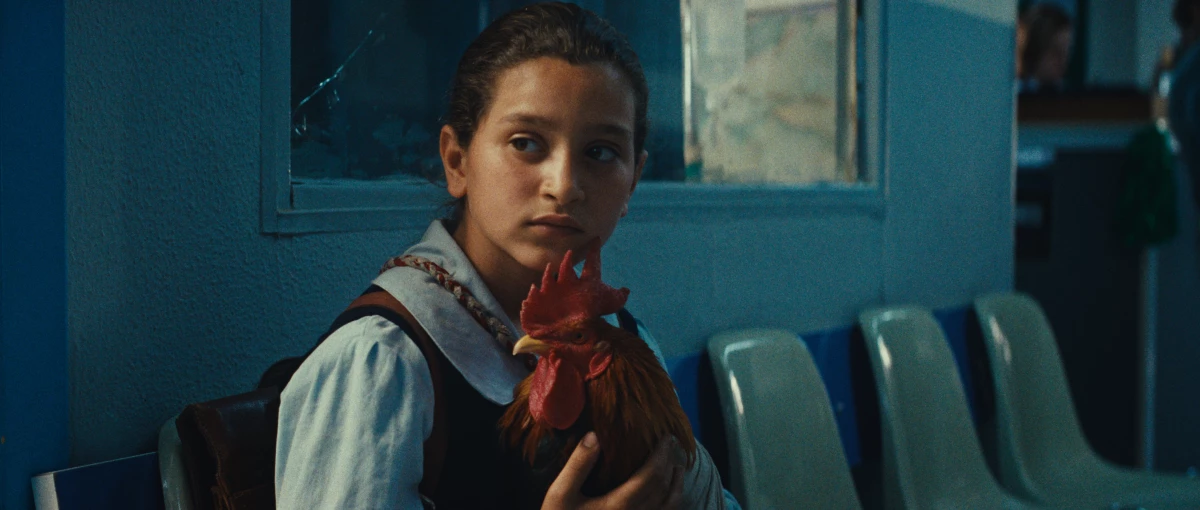
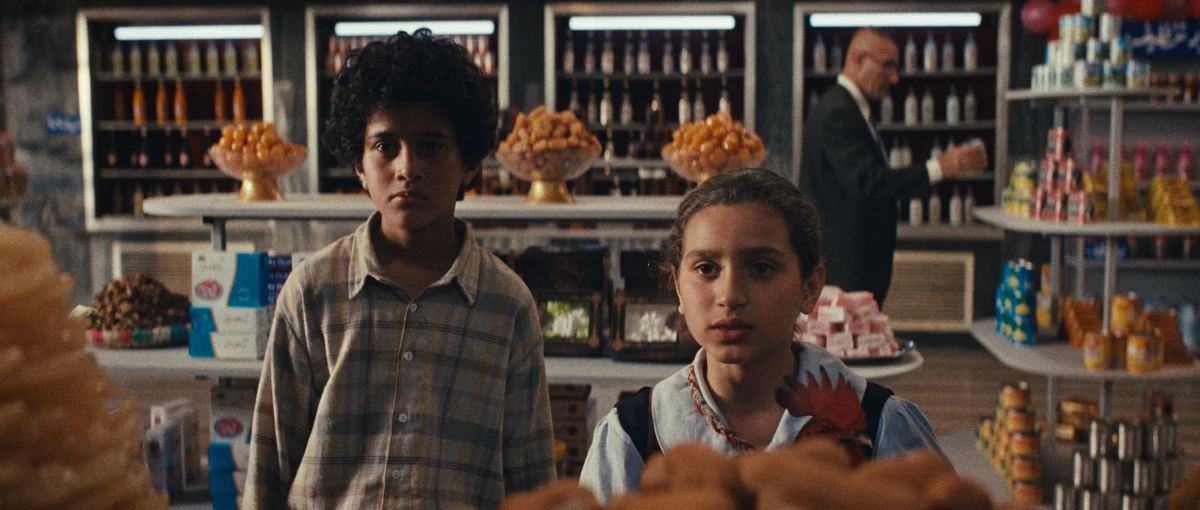
Lamia embarks on a life-altering hero’s journey to scrape together eggs, flour and sugar. She’s accompanied by her pet rooster, Hindi, and her best friend, Saeed, who is played by Sajad Mohamad Qasem. Like most of the other featured actors, the two child stars are untrained and this is their first film. Their interactions feel disarmingly spontaneous and genuine.
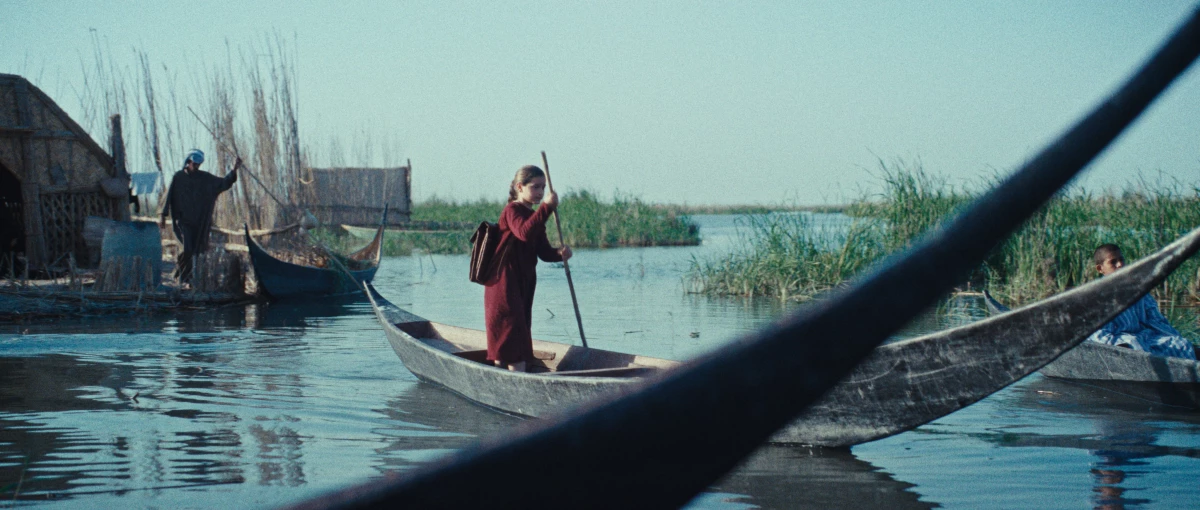
Shot on location in Baghdad and the Mesopotamian marshes using a digital camera, the movie has a grainy and saturated look suggestive of an old film. At Cannes, it was crowned with the Caméra d’Or best first feature film prize last year.
There is warmth and humor despite a brutal society where, Lamia warns, “the walls have ears.” Hadi recalls how the surveillance state would incentivize and coerce citizens into spying on each other to quash dissent.
“You cannot trust anyone, including your parents, including your partner, your friends … It’s like you’re growing up in an abusive family,” he said. “You grow up with a constant feeling of danger. And that somehow changes the nature of society, the ethical lines, the moral fabric, somehow all of these change. And it turns you into someone else.”
All this is shown through a child’s eyes, which also capture moments of heartbreaking beauty, like the marshes through which she punts while her grandmother recounts the Epic of Gilgamesh.
“It’s about the power of love, friendship and sacrifice under wartime sanctions and dictatorship,” Hadi said.
The film may be set in the 1990s, but it resonates today, against the backdrop of rising authoritarianism globally.
“There are lots of red flags all over the world. There is some sort of nostalgia for authoritarian leaders,” Hadi said. “That’s really the danger, when your birthday becomes a national theme, when your name becomes something that you see everywhere. This is all reminding me of my period during growing up in Iraq.”
The broadcast version of this story was produced by Kaity Kline. The digital version was edited by Treye Green.
Transcript:
LEILA FADEL, BYLINE: Iraqi filmmaker Hasan Hadi’s first feature film, “The President’s Cake,” draws on his own memories of growing up in 1990s Southern Iraq under Saddam Hussein. Iraqis are struggling to make ends meet under heavy American sanctions and a dictatorship that pools the country’s wealth for itself. And Saddam’s birthday is coming up, a national holiday. At school, there’s a draw for children to prepare gifts their families can’t afford for the occasion, and the most expensive item is a cake, which 9-year-old Lamia is chosen to bake.
HASAN HADI: I really think it’s about the power of love, friendship and sacrifice under wartime, sanctions and dictatorship. It’s about these two children and her grandmother embarking on this adventure on their own under these circumstances.
FADEL: So Lamia goes on a journey to find the ingredients with her friend Saeed and her pet rooster. Hadi told me he based the story on the draw in his own school when he was a kid.
HADI: One of my friends actually got picked for the cake, and it was the most difficult item because it was such a scarcity in flour and sugar.
FADEL: And that’s because of U.S. sanctions at the time.
HADI: Exactly. And he just failed to make the cake, and he was expelled from the school, and later, he had to join Saddam’s children army.
FADEL: Oh, my gosh. And now the main character, Lamia, she tries to not get picked.
HADI: Yeah.
FADEL: What does she think the consequences will be?
HADI: Everything is on the table. Your life, your livelihood, your parents, your own personal safety, under such brutal regimes, I think it’s so intentional to keep all these things ambiguous in order to, like, create such an impactful fear element inside you.
FADEL: Very early on in the film, Lamia, whose name is Baneen Ahmad Nayyef in real life…
HADI: Yes.
FADEL: …And she’s a brilliant – I mean, I guess she’s not an actress, right? You didn’t really hire any trained actors.
HADI: Yeah, it was all nonprofessional street-cast actors. Yeah.
FADEL: They’re amazing.
HADI: Yes. We were very lucky with them (laughter).
FADEL: So very early on in the film, before she’s picked for the cake, she’s talking to her friend Saeed, and she tells him the walls have ears.
HADI: Yeah.
FADEL: Where did that line come from?
HADI: (Laughter) It’s honestly from really our daily life. When Saddam took power, one of the first things he did, he literally posted phone numbers on the TV, asking people to call in if they know any spy. So somehow, he turned all the citizens of Iraq into informants.
FADEL: Yeah.
HADI: Anyone who has any kind of problems with anyone or, I don’t know, a wife has a problem with her husband or, like, a man has a problem with his cousin, something like that, then suddenly they turn into informant, they call the police or the authorities and report them as spies. Like you’re growing up in such an abusive family, sort of thing, do you know what I mean? You grow up with fear, you grow up with constant feeling of danger. And that somehow changes your – the nature of the society, the ethical lines, the moral fabric. Somehow, all of this changes, and it turns you into someone else.
FADEL: And there’s like a selfishness and a meanness to the adults around as they try to survive Saddam’s regime.
HADI: Yeah, they turn a society to hypocrites, liars. So in a way, especially at that time, childhood innocence didn’t exist. It actually was frowned upon when a child wouldn’t drop from the school because they were required to go and help their parents to bring food to the table.
FADEL: What I found so brilliant was the way that you showed these regular people trying to go to school and live life and eat every day, stuck between an oppressive dictator who’s turning everybody – informants on each other and forcing you to celebrate his birthday and U.S. foreign policy where sanctions are impacting not Saddam Hussein, who’s having lavish parties…
HADI: Yeah.
FADEL: …But Lamia’s family and Saeed’s family.
HADI: Yeah.
FADEL: Walk me through the way that you wove that in around their love story and their quest.
HADI: There’s this powerful love that Saeed has towards Lamia. And in the story, we have Saeed who sort of asks Lamia to refuge (ph) to stealing. And at the beginning, we see her being ethical and not – she’s not going to do that. But at the end, we see also her how she changes her mind only because there is war and sanctions.
FADEL: That she has to compromise her moral compass.
HADI: That she has to compromise the whole – yeah. There is a scene when Lamia comes out of the mosque and looks at F-16, which is – sort of represents the international community, sort of represents the U.S. sanctions. And she looks at the F-16 and the F-16 looks back. For me, that’s when Lamia is looking at the people, at us, as the audience, and sort of wondering why the silence.
FADEL: When I was watching it…
HADI: Yeah.
FADEL: …It was happening in 1990, but it felt so relevant for…
HADI: Oh, yeah.
FADEL: …Many things today, right?
HADI: Yeah.
FADEL: Syria just fell, and they had this Ba’athist regime. But also here in the U.S., we hear critics say that President Trump is building monuments to himself with plans around what he wants to do in D.C. or him renaming…
HADI: Yeah.
FADEL: …A building. And I just wonder, with the movie coming out now, do you see those parallels with the U.S.?
HADI: Oh, I see lots of red flags, but (laughter) all over the world, not only in the U.S. There is some sort of nostalgia for authoritarian regime or authoritarian leaders. And unfortunately, that’s really the danger. When your birthday becomes a national thing, when your name becomes something that everywhere you see, this is all remind me of growing up in Iraq.
FADEL: Like the strongman kind of…
HADI: The authoritarian regimes that really don’t care about the law, that the law cannot draw the line for them. It’s their own ethics. It’s their own morals that draws the line. And, you know, then it’s a chaos. Saddam was like that. There was no one, no parliament, no congress, no nothing could stop Saddam from doing a war because his moral line, his ethical line dictates that. And it’s becoming a bit like that in the rest of the region.
FADEL: That’s Hasan Hadi. His new film is out now. It’s called “The President’s Cake,” and it won the Audience Award in the best first feature film prize at Cannes last year. Thank you so much for your time and for this film. Congratulations.
HADI: Thank you very much, Leila. Thank you.
(SOUNDBITE OF MUSIC)
