


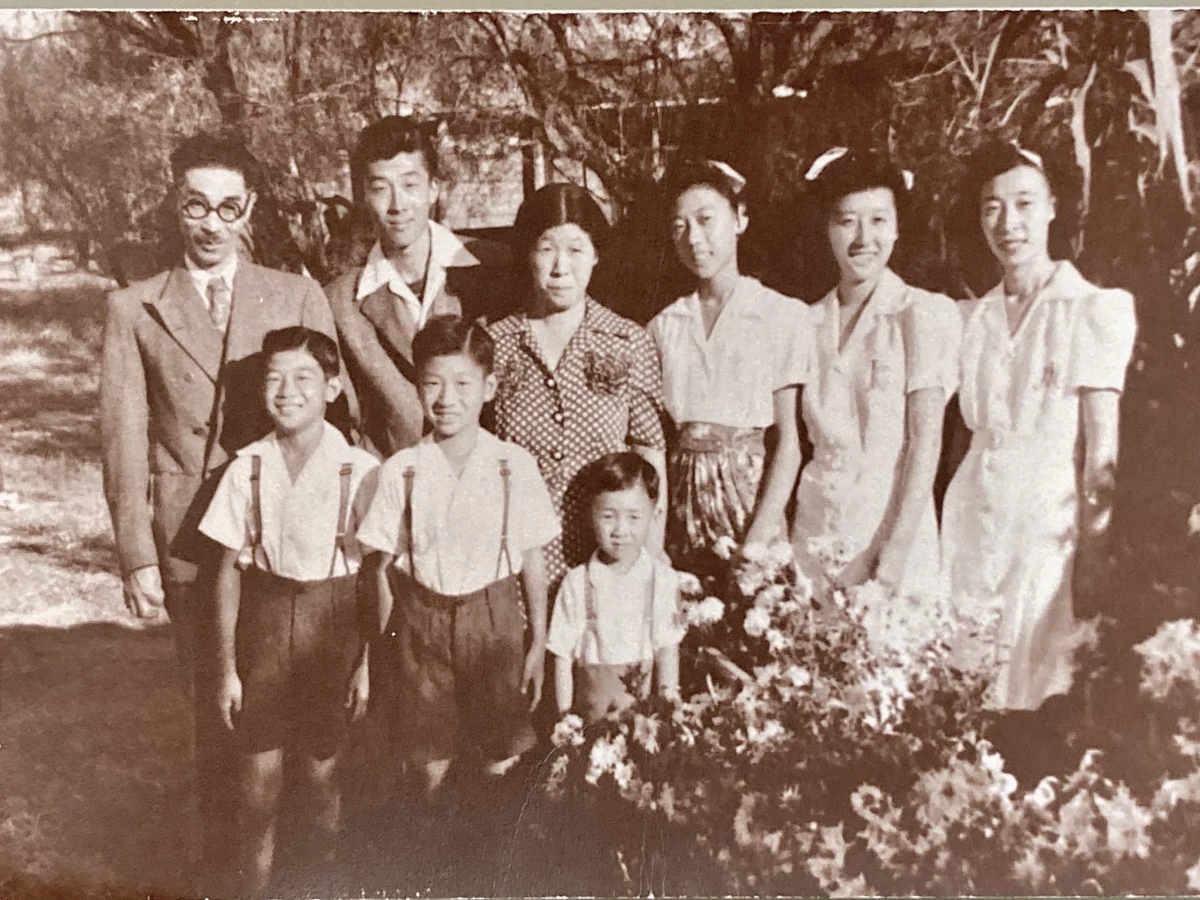
Libia Yamamoto was 7 years old on January 3, 1943, when local police came to her home in Chiclayo, Peru and arrested her father, Saburo Maoki, who worked on a sugar plantation.
“They banged on the door and they took my father to jail. And my father couldn’t understand why because he had not done anything wrong,” Yamamoto told Radio Diaries in 2019. “He asked to talk to the owner of the plantation and the owner said, ‘I’m sorry, I cannot do anything. This is by the order of the United States. My hands are tied.'”
Yamamoto’s father had immigrated to Peru from Japan in 1914. When he was arrested nearly three decades later, he had a family of five and ran a general store, in addition to working on the plantation. According to Yamamoto, the family was living comfortably and Maoki was respected by the community.
Yamamoto accompanied her mother to the police station and noticed that all the incarcerated men were Japanese, some of them were her father’s friends. “I asked my mother, ‘Where is he going?’ And she said, ‘Don’t know.’ It was like he was being kidnapped.”
People may be familiar with the incarceration of Japanese Americans in vast relocation camps during WWII. But, most are unaware that the U.S. government also detained thousands of Japanese, German and Italian immigrants living across Latin America — and their native-born spouses and children — and deported them to the U.S.
Their ultimate goal? To exchange them for U.S. citizens captured by enemy countries during the war.
Crafting the plan
The idea had been in development for years due to mounting concern the influence of the Axis powers would spread over the Western Hemisphere. In 1939, President Franklin D. Roosevelt authorized the FBI to station agents at U.S. embassies throughout Latin America to spy on individuals suspected of harboring sympathies for the Axis powers. They kept detailed reports and lists of target individuals.
The State Department also identified more than 100,000 U.S. civilians abroad, as of January 1939, who were at risk of being captured by the Axis powers should the U.S. enter the war, explains Jan Jarboe Russell in her book, “The Train to Crystal City: FDR’s Secret Prisoner Exchange Program and America’s Only Family Internment Camp During World War II.”
The U.S. would need prisoners of war to exchange for its citizens, Russell wrote.
“But because we hadn’t deployed, we didn’t have POWs,” explained Teresa Van Hoy, a history professor at St. Mary’s University in San Antonio. “Whom are we going to exchange to get our people free?”

The U.S. eventually made agreements with more than 15 Latin American countries and with the help of local authorities deported 6,600 Japanese, German and Italian immigrants and their families — including some of their native-born spouses and children. U.S. officials took their passports and sent them to America. Once on U.S. soil, they incarcerated them in the same camps as Japanese Americans by invoking the Alien Enemies Act of 1789, as documented in Russell’s book. The obscure law has been used infrequently throughout U.S. history to detain or deport nationals of an enemy nation during wartime or invasion. President Trump invoked it this year to expedite the deportation of people the administration said were members of a dangerous Venezuelan gang. The administration’s use of the law is being challenged in the courts.
“Countries in Latin America felt varying levels of pressure from the United States to comply — most of that pressure was economic,” Van Hoy, the history professor, said. “Many Latin American authorities did not want to round up its citizens who have never broken any law. But of course, the dictators who were being shored up by the United States enthusiastically complied, because they didn’t want to bite the hand that fed them.”
“No Latin American laws nor even U.S. treaty agreements permitted this. It was nothing less than kidnapping,” Van Hoy said.
The U.S. enters the war
On December 7, 1941, Japan bombed Pearl Harbor. The U.S. declared war on Japan and was catapulted into World War II. The plan to detain Japanese Americans swiftly went into effect. In March 1942, Lt. General John L. DeWitt issued Public Proclamation No. 4, which allowed the U.S. military to forcefully remove and detain people it deemed as national security threats. The country sent 122,000 Japanese and Japanese Americans, 11,500 people of German ancestry and 3,000 people of Italian ancestry into relocation camps across the U.S.
Meanwhile, FBI agents, along with local law enforcement officials, fanned out across Latin America and began making arrests. More than 6,000 people from Latin American countries such as Bolivia, Peru and Ecuador would eventually be deported to the U.S.
“A gratifying note is the fact that not one Japanese remains in Ecuador to the best of knowledge and the majority of the most dangerous Nazi agents have been deported,” states a declassified FBI report on Ecuador from 1942.
However, not everyone arrested was a Nazi agent, a Japanese or Italian conspirator, according to Russell’s book.
Gertrude Harten, a German internee from Ecuador, wrote in her diary that two U.S. soldiers with rifles knocked on her door in Cuenca, Ecuador, and apprehended her husband, Wolfgang Harten, in December 1943.
“Terrified. I saw in the vehicle a couple of our German friends … suddenly I felt an enormous emptiness. They had taken away my Wolfgang and I stayed behind alone with my three small children,” read the diary, which was translated from German to English by her daughter, Karin Harten Schramm.

Wolfgang Harten moved to Ecuador from Hamburg, Germany in 1928 to work at a company exporting tagua nuts. He later married Gertrude, also from Hamburg, and had three children in Ecuador.
“It was a very small town and there [was] no electricity, no water, so it was a really hard life for somebody coming from Germany. But they had their German friends and Ecuadorian friends, and they were very, very happy,” Schramm told Radio Diaries.
By the time of his arrest, Wolfgang was running the company as vice president.
“My father was not a criminal. He was a loving man and a loving dad, and I remember my hand in his big hand,” Schramm said.
He also wasn’t on the targeted list for deportation in the FBI report. At first, only men and their sons who were over 18 were arrested and deported.
“We sent our transport ships to pick them up,” Van Hoy, the history professor, said. “U.S. authorities confiscated their passports, brought them here, and then held them on grounds that they had entered the United States illegally … [But] the situation becomes more and more dire for the families back in Latin America. And the men’s desperation to be reunited with their families becomes more intense.”
The men initially refused to sign a document agreeing to be exchanged for American POWs unless their families also went with them to the U.S., Van Hoy explained. So, the government offered wives the option to join their husbands at a camp in Crystal City, Texas. Unlike other detention camps, this one was established specifically for families.
Many wives agreed, if it meant being together.
“We will be taken to an internment camp for families in Texas,” Gertrude Harten wrote in her diary in 1944. “So, we closed our farm in Cuenca, leaving so many things behind.”
The journey to Crystal City
The government sent ships to bring the family members to the U.S. “Sometime in the morning we boarded the ship. I remember going up the plank being so scared because one side of the plank was lined with the U.S. Army and they all had guns. I thought, ‘Oh, we’re not going to survive this.'” Yamamoto recalled.
The ships landed in New Orleans for processing before the prisoners were transported to Crystal City.
“The U.S. took our passports. Everything was stripped from us. We were Peruvians, but we had no paper or anything,” Yamamoto said. “The first thing the American authorities did to us was to clean us, putting us into hot water and disinfecting us using DDT,” Harten’s diary read. “Suddenly Wolfgang was standing in front of us, after 10 long months of separation, we were finally together again.”

Life inside the camp
The camp in Crystal City was originally a migrant labor camp that was converted by the Immigration and Naturalization Service (INS). It spanned 290 acres, was surrounded by 10-foot-high barbed wire fences, 24-hour guard towers and spotlights that were “visible almost to the Mexican border,” according to a 1943 film produced by INS officials.
“When we arrived there, my mom told me that she thought they were just going to kill us,” said Kazumu Julio Cesar Naganuma, a former Japanese Peruvian internee. “In a way, she was relieved when we got to the camp because she saw the other Japanese families.”
The detainees did most of the operational work for the camp. This included farming, policing, teaching, working in the fire department and hospital. Other tasks included sanitation maintenance, laundry, landscaping, delivering ice and the 2,500 quarts of milk for the hundreds of children in camp.
In the film, parts of the camp look like a typical American suburb in the 1940s. There are women in nice dresses and sunglasses shopping for groceries and clothing at a general store. Men are shown delivering milk to doorsteps. Doctors and nurses tend to patients, while children learn in school and families swim at the pool.
But there were frequent reminders that they were imprisoned.

“There was one incident when they were playing baseball and the ball went out of the fence,” Chieko Kamisato, a Japanese Peruvian internee told Radio Diaries. “And this little boy wanted to try and retrieve the ball, and that’s when the gunshot went up. They were a warning, you know, not to ever, ever go near the fence.
And of course, the camp was bustling with new families arriving, as other families were systematically sent to war-torn Germany, Italy or Japan to be exchanged for U.S. prisoners of war. Precise statistics about the number of people who were exchanged is hard to pinpoint, Van Hoy said. One ship manifest Van Hoy and her students studied from a February 1944 voyage revealed that 76% of the passengers were from Latin America. “They were sent on to Germany and in exchange Americans won their freedom,” Van Hoy explained.
“A list was published of hostages to be exchanged for American prisoners of war. Our names were not on the list,” Gertrude Harten, the German internee from Ecuador wrote in her diary. “And from Paraguay, Bolivia and other South American nations, more people kept coming.”
The shuffle left many in a state of limbo and panic as they awaited their turn.
“There were a lot of people that were sent to Japan as exchanged prisoners,” Kamisato said. “Thank god, my father fought against going to Japan, because people were suffering so much.”

End of the war
By the time the war ended in 1945, many of the camps had already shut down, but Crystal City remained open with more than 3,000 internees, according to Russell’s book.
“We are still in the camp in Texas, behind walls and barbed wire. After the terrible end of the war, we asked daily what will become of us?” Harten wrote in her diary.
“The war is over, but we basically had no country,” Naganuma, whose family was brought to Crystal City from Peru in 1943, said. “We never got a passport, no visa, no nothing. What we do have is papers from the government saying that we are illegal aliens and yet they don’t mention that they brought us here.”
The families had three options: be sent to post-war Italy, Germany or Japan; return to Latin America or stay.
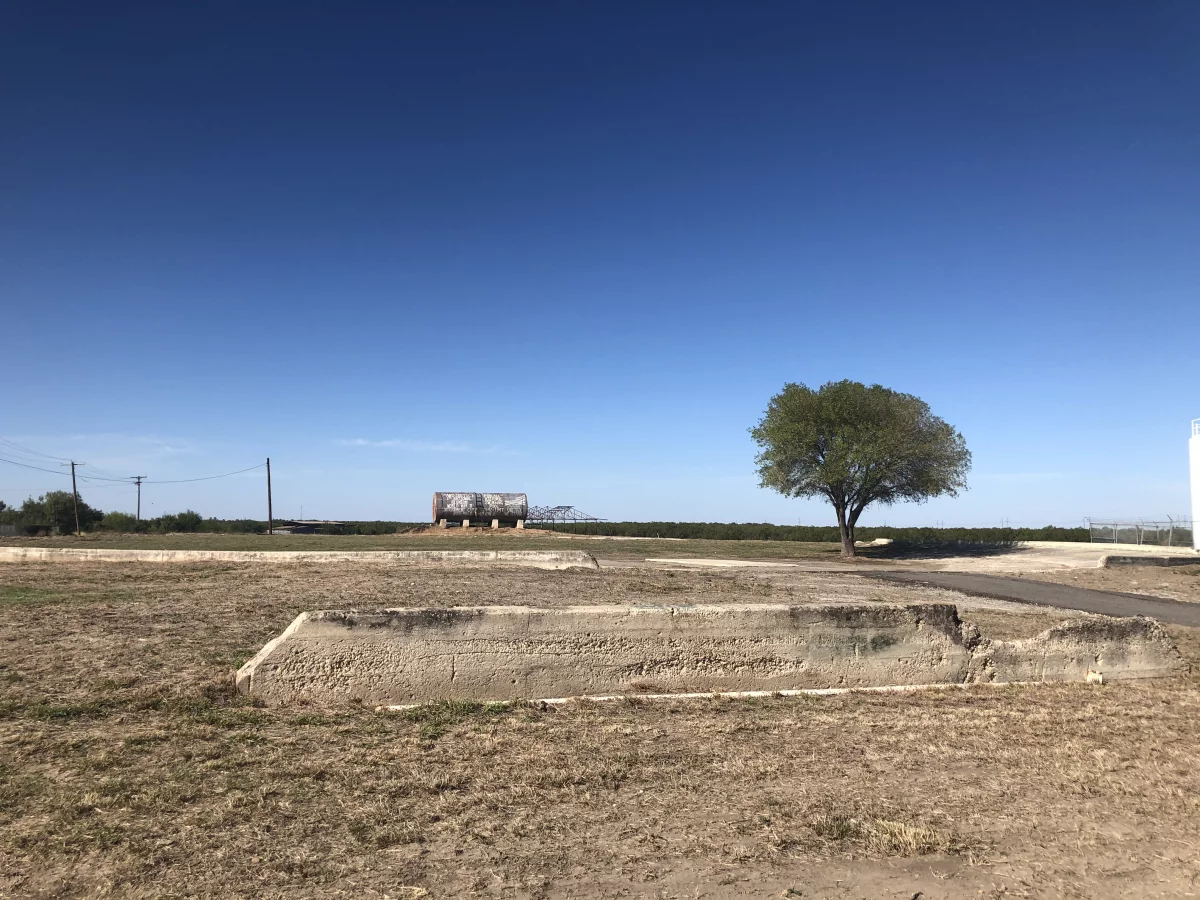
Schramm’s parents ultimately decided to return home to Ecuador.
“Since they had been in contact with their families in Germany and had known they were going hungry, they were freezing, there were very cold winters — they decided that if Ecuador will take us back again, then we go to Ecuador and start anew there. And that’s what they did,” Schramm said. Some Latin American countries, such as Peru, refused to take their people back, for varying reasons.
“The Peruvian government wouldn’t take us,” Yamamoto said. When asked why not, she said: “I don’t know … In retrospect, let’s go back to 1940 in Lima, the capital city. There was a big riot. The Peruvians were very jealous of the Japanese because they were doing very well.”
In order to stay in the U.S., they needed to find a sponsor and a job.
Konko Church of San Francisco led by Reverend Yoshiaki Fukuda sponsored some of the Japanese families, which is how Naganuma’s family was able to leave the camp.
Chieko Kamisato’s family was sponsored by Seabrook Farms, a fruit and vegetable factory in New Jersey, which hired many people who were detained in Crystal City.
“That was the only way we were able to leave camp,” Kamisato said. “After camp, we had to start all over again. That’s when we get angry. [My parents] had to suffer so much. I’m getting emotional because it was not easy.”
When asked how he made sense of what had happened to his family, Naganuma said, “My parents, they suffered through this, we were kidnapped from another country and yet, they hardly complain. Part of this is the Japanese culture. You might have heard the term ‘gaman.’ You just deal with it. You live through it. Gaman is just ‘suck it up.'”
Transcript:
SCOTT DETROW, HOST:
In a bid to speed up the deportation of alleged gang members from Venezuela, President Trump has invoked a 1798 law called the Alien Enemies Act. His use of the law is being challenged in the courts. It’s only been used a handful of times in American history and always during war. The last time came on the heels of Pearl Harbor and America’s entry into World War II. Concerned that Americans overseas would be seen as spies and captured by the Axis powers, President Roosevelt’s administration came up with an elaborate plan to find people who could be exchanged for American prisoners of war. The government turned to Latin America and offered to intern allegedly dangerous enemy aliens, immigrants from Germany, Japan and Italy. Thousands were arrested and deported to the U.S. where they were incarcerated in camps. “Radio Diaries” brings us their stories.
KARIN SCHRAMM: My name is Karin Schramm. Both my parents were from Germany, and my father went to Ecuador in 1928. They had their German friends and Ecuadorian friends, and they were very happy.
(SOUNDBITE OF MUSIC)
SCHRAMM: My mother used to write diaries, and after the war started, she wrote about my father, Wolfgang. This was one of those entries.
(Reading) December 23, 1943, I will never forget that day or that hour. Suddenly, a military vehicle stopped in front of our door. I held my breath. Two American soldiers holding rifles had picked Wolfgang up. I felt an enormous emptiness, and I stayed behind alone with my three small children.
LIBIA YAMAMOTO: My name is Libia Yamamoto, and my parents are Japanese. We lived in Chiclayo, which is northern Peru, and my father had a store there. I was 7 1/2 when my father was taken. It was January 3, and that was when the police came to the house, took my father to jail. He couldn’t understand why because he had not done anything wrong. After the truck disappeared in the distance, I asked my mother, where is he going? And she said, don’t know. It was like he was being kidnapped.
(SOUNDBITE OF ARCHIVED RECORDING)
UNIDENTIFIED ANNOUNCER #1: Ladies and gentlemen, the president of the United States.
FRANKLIN DELANO ROOSEVELT: Today’s threat to our national security is not a matter of military weapons alone. Spies, saboteurs…
TERESA VAN HOY: My name is Teresa Van Hoy. I am professor of history at St. Mary’s University.
(SOUNDBITE OF ARCHIVED RECORDING)
ROOSEVELT: They must not be allowed to spread in the new world as they have in the old.
VAN HOY: This is a memorandum for the attorney general, March 27, 1942. They, the State Department, have arranged for two vessels, which will pick up the aliens from the West Coast of South America. One vessel will have 700 males. The other vessel – there will be 250 men, women, and children, a total of 950 enemy aliens.
SCHRAMM: We were taken and used as, like, hostages to be exchanged with American prisoners of war. And there were FBI agents throughout the whole of Latin America, looking for people who were convenient for this purpose.
VAN HOY: Many Latin American authorities did not want to do this, did not want to round up its citizens who had never broken any law, including the women and children. But we exercised a lot of clout, and the U.S. authorities threatened to boycott their goods in our markets. So we sent our transport ships to pick them up. We brought them here, and then held them on grounds that they had entered the United States illegally.
(SOUNDBITE OF ARCHIVED RECORDING)
UNIDENTIFIED NARRATOR #1: The filming of the Crystal City facility, what you are about to see – a family facility 110 miles southwest of San Antonio shows how men, women and children, detainees of World War II, lived, worked and played.
CHIEKO KAMISATO: My name is Chieko Kamisato. I was an internee in Crystal City, Texas, in 1944. When we arrived to United States, we had to strip, you know, naked completely, and they sprayed us with DDT.
KAZUMU JULIO CESAR NAGANUMA: My mom thought they were just going to kill us. In a way, she was relieved when we got to the camp because she saw Japanese faces. My name is Kazumu Julio Cesar Naganuma. My friends call me Kaz.
KAMISATO: The U.S. took our passport. Everything was stripped from us, but my mother said we were going to be reunited with dad. He came, and all three of us kind of jumped on him and hugged him, and he still had his mustache, and he still wore glasses. But he had lost a lot of weight. His face was skinny, hollow. He just looked fragile.
(SOUNDBITE OF MUSIC)
VAN HOY: The Department of Justice produced a propaganda film about life in the camp, touting its good care and happy families.
(SOUNDBITE OF ARCHIVED RECORDING)
UNIDENTIFIED NARRATOR #2: Crystal City is an extremely isolated spot, and good food was good for morale in a climate which often reaches 120 degrees.
SCHRAMM: The climate was terrible because it was even hotter than Ecuador, and there were rattlesnakes and scorpions.
(SOUNDBITE OF ARCHIVED RECORDING)
UNIDENTIFIED NARRATOR #2: This is the perimeter over which armed guards kept a 24-hour watch. At night, the illumination from the lights along the top of this fence was visible almost to the Mexican border.
NAGANUMA: They built a whole community there. I mean, it became a real city, of course, that was a prison.
VAN HOY: Germans were housed in one section. Japanese were housed in another section. There was a laundromat, a butcher shop, a hospital, schools.
YAMAMOTO: The guard tower was what was really intimidating because on the top of the tower, there were soldiers, and they had machine guns facing us – not facing outside, but facing us – so we couldn’t go near the fence.
KAMISATO: It was understood that we cannot leave at all. There was one incident when they were playing baseball, and the ball went out of the fence. And this little boy wanted to try and retrieve the ball. And that’s when the gunshot went up. There were a warning, you know, not to ever, ever go near the fence.
(SOUNDBITE OF ARCHIVED RECORDING)
UNIDENTIFIED NARRATOR #3: We are setting a standard for the rest of the world in the treatment of people who may have loyalties to an enemy nation. We are protecting ourselves without violating the principles of Christian decency.
VAN HOY: The United States needed to reassure the Germans, hey, we’re taking care of your people, make sure and take care of ours.
(SOUNDBITE OF MUSIC)
SCHRAMM: Diary entry, January 1945.
(Reading) A list was published with names of hostages who had been chosen to be exchanged for American prisoners of war. Our names were not on the list. And from Paraguay, Bolivia and other South American nations, more families kept coming.
KAMISATO: A lot of people from our camp, they were deported to Japan as exchange prisoners. And thank God my father fought against going to Japan. A very close friend of my father sent a telegram. People are suffering so much. It’s devastating over here.
SCHRAMM: Germany was being bombed by Americans. There was war everywhere.
(SOUNDBITE OF MUSIC)
VAN HOY: So we found a ship manifest from the February 15, 1944 voyage. Seventy-six percent of the people on that boat were from Latin America. They were sent on to Germany, and in exchange, Americans won their freedom.
SCHRAMM: Diary entry, May 1945.
(Reading) We are still in the camp in Texas, behind walls and barbed wire. We ask daily, what will become of us?
(SOUNDBITE OF ARCHIVED RECORDING)
UNIDENTIFIED ANNOUNCER #2: President Truman announced the official surrender.
HARRY TRUMAN: This is a solemn but glorious hour. General Eisenhower informs me that the forces of Germany have surrendered to the United Nations.
NAGANUMA: Well, the war’s over, but we basically had no country. We never got a passport, no visa, no nothing. What we do have is papers from the government saying that we are illegal aliens. And yet, they don’t mention that they brought us here (laughter).
VAN HOY: Nobody was in any kind of hurry to liberate the enemy alien camps, and they languished for months and years, in some cases.
YAMAMOTO: I was interned from 1943 to 1947, four years. The government said, You either go to Japan or go back to Peru. We were Peruvians, but the Peru government wouldn’t take us. They didn’t want us back. And in Japan, it was war devastated.
NAGANUMA: In order to get out of camp, you have to have a sponsor family, and you’re supposed to have a job.
KAMISATO: We had this lawyer that helped us, and he found this food-processing (ph) company in Seabrook, New Jersey, and they needed labor over there, and they were able to sponsor us, and that was the only way we were able to leave camp. We had to start all over again, and that’s where I get very angry for my parents to go through all of the hardship because they had to suffer. So I mean, (crying) it was not easy.
(SOUNDBITE OF MUSIC)
VAN HOY: Upon release from Crystal City, people were required to sign a confidentiality document saying that they could not speak of the experience to anyone. And they did not because they had already lived through years of imprisonment, so they weren’t going to take any chances.
NAGANUMA: For me, I always credit my mom that – for the family’s sake, to take us through that. We were kidnapped from another country, and yet they hardly complained.
(SOUNDBITE OF MUSIC)
NAGANUMA: Part of this is the Japanese culture. You might have heard the term gaman. You just deal with it. You know, you live through it. Gaman is, you know, just suck it up.
(SOUNDBITE OF MUSIC)
DETROW: More than 6,000 people – men, women, and children – were taken from Latin America and incarcerated in camps in the United States during World War II. A few of the remaining survivors, who you heard in the story, will travel to Crystal City, Texas, this fall to visit the camp where they spent part of their childhood. This story was produced by JoAnn DeLuna and Nellie Gilles of Radio Diaries. You can find more stories on the “Radio Diaries” podcast.
(SOUNDBITE OF MUSIC)
