


NUSANTARA, Indonesia — Deep in the forest of Indonesia’s Borneo island, construction is underway for a new futuristic capital, powered by renewable energy and run by advanced technology.
Indonesia’s current capital, Jakarta — now the world’s largest city — is polluted and overcrowded, and it’s sinking. So in 2019, Indonesia’s government announced a bold plan: to build Nusantara, a new capital, from scratch.
The site is located about a two-hour drive away from the neighboring city of Balikpapan. Construction of Nusantara began in 2022, and the city’s core government district is nearly complete. The area features a sprawling green park surrounded by white office buildings with plants draping over their balconies, a bank that looks like a spaceship and the city’s centerpiece — a 250-foot-tall metal structure shaped like Garuda, an eagle-like mythical bird that is the country’s national emblem. Its 500-foot wingspan towers over the presidential palace.
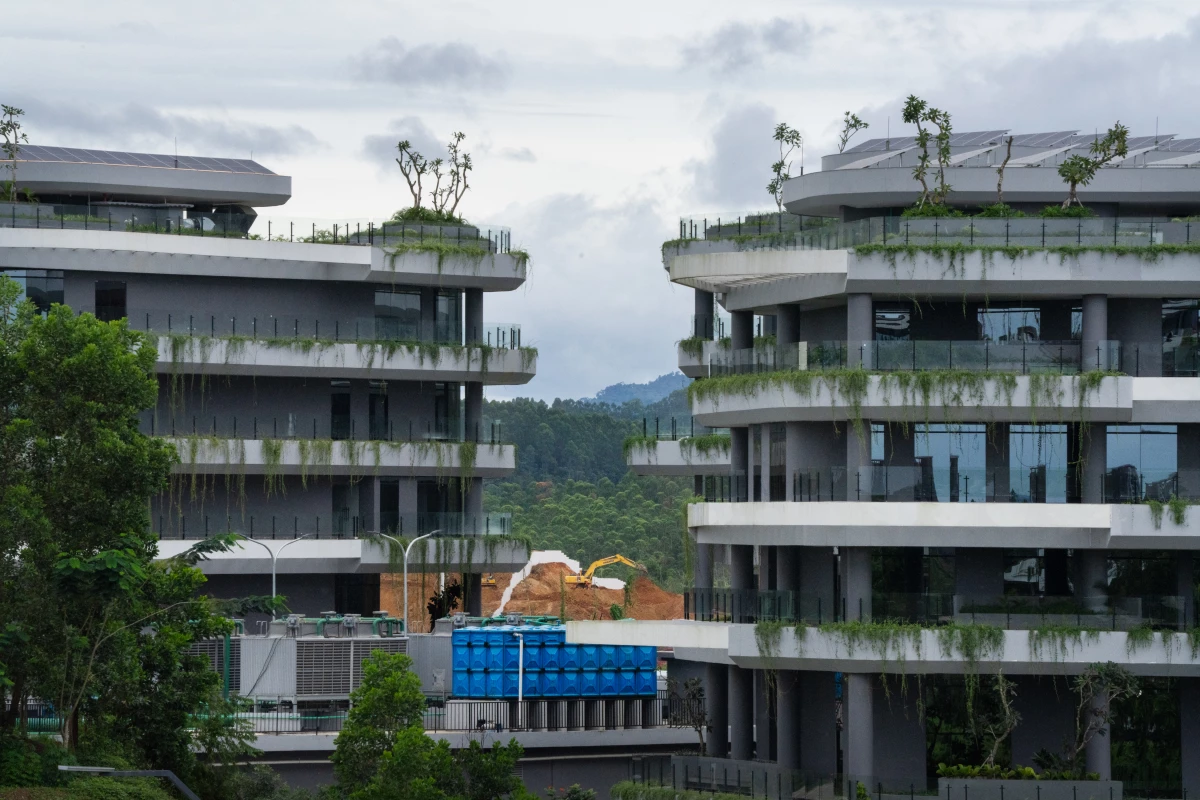
But there are concerns that progress on this more than $30 billion project has been slow. Logistics, funding challenges and a presidential election have delayed the timeline. And local critics worry that construction could harm the environment and nearby Indigenous populations.
Today, the broader metro area includes around 150,000 people — a mix of construction workers and long‑established villages. But the new city’s core is home to only about 10,000 residents, including roughly a thousand civil servants.
Nusantara was a signature project of former President Joko Widodo. Since the current leader, Prabowo Subianto, assumed office in October 2024, some critics of the projects have questioned whether he shares the same enthusiasm. State funding for the project was cut in half for 2026 compared with the previous year. Prabowo made his first visit to the site this January, more than a year after taking office.
The “political capital” by 2028
The uncertainty has fueled concerns, especially in the international press, that Nusantara could become a “ghost city.”
But Basuki Hadimuljono, the head of the Nusantara Capital City Authority, dismisses such concerns, saying, “ Don’t worry. It will be continued.”
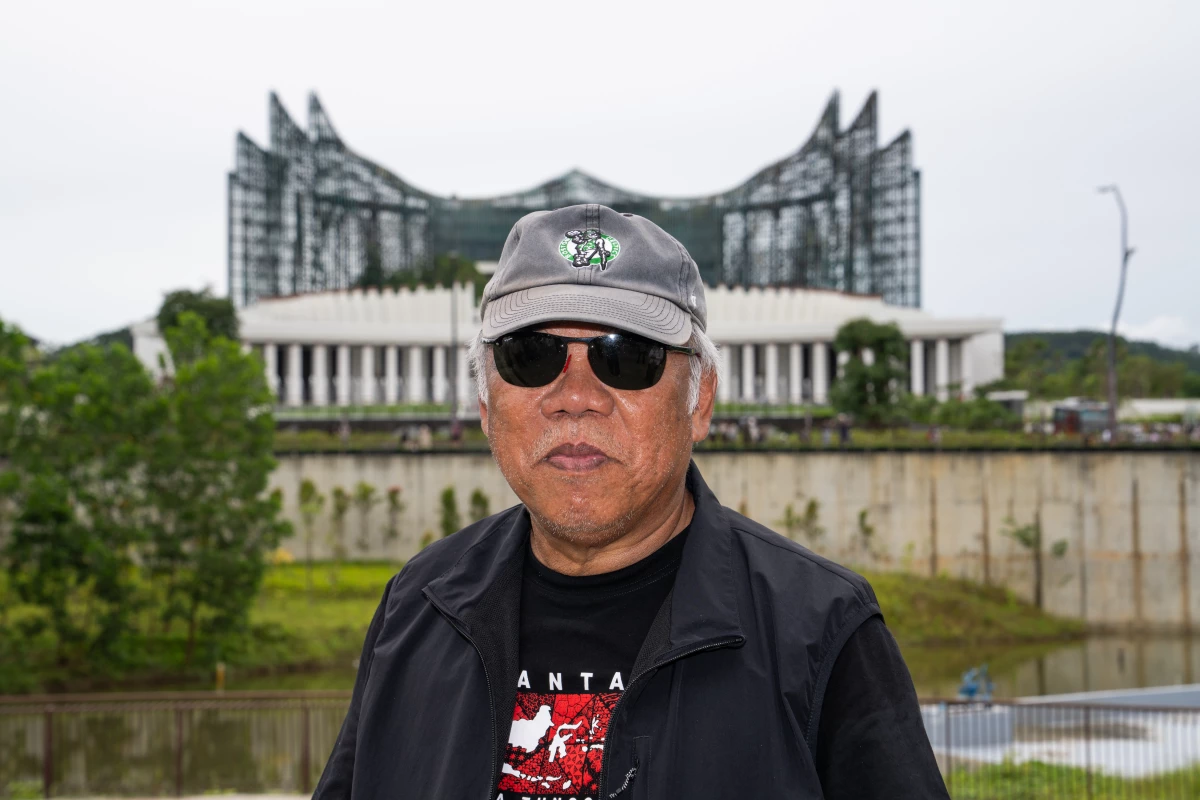
Last year, Prabowo signed a presidential regulation that Nusantara will be designated Indonesia’s “political capital” by 2028 — different from previous language calling it the “national capital.” The shift confused other lawmakers and policy experts worried about a de-emphasis on the project.
For Basuki, the regulation was a symbol of support from the president. Once the legislative and judicial buildings are completed next year, he says, the president plans to finally move to Nusantara in 2028. Meanwhile, there are plans to move 4,100 more civil servants to the city this year.
Still, this goal is far from moving some 1.2 million residents here by 2029. Essential infrastructure such as schools, housing for married civil servants, malls and other places for entertainment are still missing.
“Silent victims”

And not everyone is happy with the development.
Local environmental groups like WALHI say that construction has already caused mangrove deforestation around the Balikpapan Bay.
“The most impacted will be what we call silent victims — mangrove ecosystem and then proboscis monkey and owa Kalimantan,” says Fathur Roziqin Fen, executive director of WALHI East Kalimantan. The owa Kalimantan is an endangered primate living in the forest in East Kalimantan province.

“It’s hard to believe the dream that the construction will be a smart city, forest city and green city,” Fathur says. “It’s hard to believe that the future of [Nusantara] will be inclusive.”
Outside the city, the newly built dam and water treatment plant provide most of the city with filtered drinking water — a luxury not found in other parts of Indonesia.
But the plant was built on the edge of the Sepaku Lama village, where many Indigenous people from the Balik tribe have lived for generations.

Part of the dam and flood mitigation, a concrete wall built along the Sepaku River cuts off the village from using the water to bathe with and wash clothes as they used to. Alfian Brahmana Putra, the pump operator for the treatment plant, says the city provides free water for the village, but residents are responsible for having water pipes installed in their homes. Many families opt to use rainwater or buy tanks of water that are delivered to their houses.
Fifty-one-year-old Syamsiah and her husband, Pandi, who are both Balik and like many Indonesians have just one name, live in a concrete-block house on their farm in Sepaku Lama village. Here, they’ve planted cassavas, bananas, green beans, fruit trees and many more crops. For them, this land is more than a livelihood — it’s their family history.
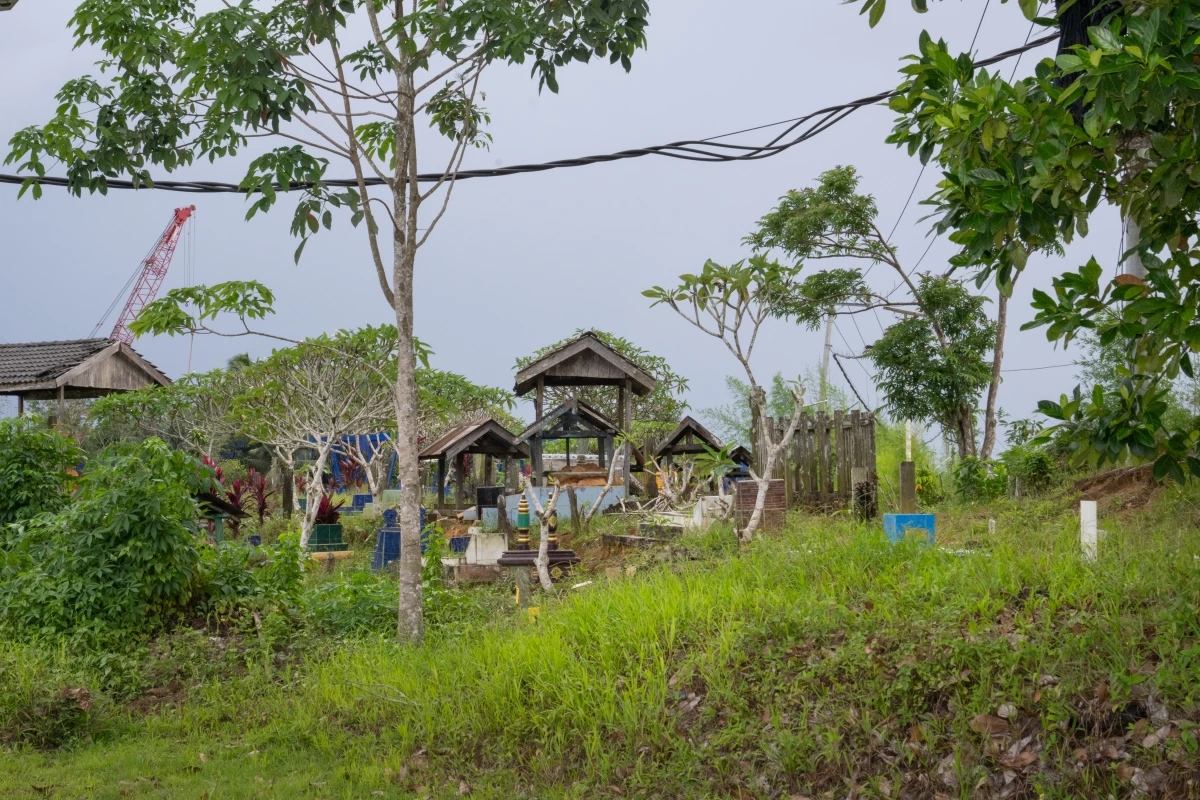
Both Syamsiah’s parents and grandparents are buried in the village’s graveyard.
Nearby, a rhino-shaped rock in the river — a sacred site for Balik people called Batu Badok — now sits inside the water treatment compound, cut off from the community.
An enormous promise and an enormous question
Nusantara is planned to span nearly 1,000 square miles, an area about three times the size of New York City. As the construction expands, the surrounding villages, including Syamsiah and Pandi’s, will eventually be absorbed. City officials have already told them that they will eventually have to sell their land to the project.

But Pandi, Syamsiah’s 53-year-old husband, says he’s not interested in selling. “Maybe the government can compensate me for the plants or even the house. But my memories, my history, can the government replace that?” he says. He and his wife also say they don’t have anywhere else to go if they have to move.
“They already have a capital city. Why build a new one? Why don’t they just leave us here peacefully?” Pandi adds.
Officials hope moving the capital will relieve some of the growing pains of Jakarta, which is now the most populous city in the world, with more than 40 million people. But even as Indonesia grapples with the challenges of Jakarta, Nusantara is expected to be home to only 2 million people by 2045.
For now, Nusantara remains both an enormous promise — and an enormous question.

Transcript:
JUANA SUMMERS, HOST:
Indonesia’s capital, Jakarta, is polluted, overcrowded, and it is literally sinking. So the government decided to build a new one from scratch – a futuristic city powered by renewable energy, full of parks and trees and run by advanced technology. That’s the vision. But four years in, many Indonesians are still skeptical. NPR’s Above the Fray fellow, Katerina Barton, has the story.
(SOUNDBITE OF MACHINERY)
KATERINA BARTON, BYLINE: Inside Nusantara’s trash and recycling facility, a crane sorts through piles of garbage and plastic bottles.
KATHLEEN MORA BERTA: Before the garbage is transported here, we already implement the waste segregation.
BARTON: Kathleen Mora Berta is one of the project officers of the waste treatment plant.
BERTA: And the second is the recycled one.
BARTON: She’s proud to be among the many young and energized civil servants who are running this emerging city. It’s an experiment, an effort to build a more sustainable city, and many things are being done for the first time.
Is it hard to, like, teach people to segregate their trash ’cause they’ve never done that before?
BERTA: Yeah. Yeah, it’s pretty hard ’cause it’s pretty new in Indonesia.
BARTON: She’s 24. She was one of the first people who moved here two years ago, and she says life has been a little challenging.
BERTA: For example, just finding foods itself is difficult. Even up until now, we don’t have much options. But I think that’s the good thing about working with Gen Z – we don’t need much (laughter).
BARTON: Yeah.
BERTA: Maybe Wi-Fi (laughter), but yeah.
BARTON: Wi-Fi because there’s not much else to do for fun here. There’s no malls or movie theaters yet. And that’s because the city’s main focus has been getting the government buildings completed, including an ornate presidential palace at the city center.
(SOUNDBITE OF CITY CROWD)
BARTON: Many tourists come here to see the progress. They walk along avenues lined with trees and office buildings draped in hanging plants. It’s different from the skyscrapers of Jakarta. It’s a city built deep in the forest of Indonesia’s Borneo island. But four years into this multibillion-dollar project, there’s concern that progress has been slow. The core city center is home to only about 10,000 people. The target is to have more than a million in the next four years. That’s why foreign media and critics say Nusantara could end up being a ghost city. This touches a nerve of Basuki Hadimuljono.
BASUKI HADIMULJONO: Yeah, that’s not fair.
BARTON: He’s the head of the Nusantara project. He says he’s not worried about the timeline.
HADIMULJONO: 2028 will be the declaration of the capital city for Nusantara. And then also, we start now to move the civil servant until 2028.
BARTON: And he says, once the president moves here in 2028…
HADIMULJONO: All of the economic activity also will…
BARTON: Move here.
HADIMULJONO: …Move here.
BARTON: The problem is, there’s still a lot to get done before then. The toll road that leads into the city?
HADIMULJONO: It not yet finished yet.
BARTON: There’s no school here yet, but the high school?
HADIMULJONO: Now under construction.
BARTON: And the judicial and legislative buildings?
HADIMULJONO: They start building and will finish on 2027.
BARTON: But despite Basuki’s optimism, he’s also facing complaints from the Indigenous populations who have long lived here, like the Balik tribe in the Sepaku Lama village. One of them is Syamsiah. As we walk on her farm, little ducklings scurry around. Syamsiah, like many Indonesians, just has one name.
SYAMSIAH: (Non-English language spoken).
BARTON: She was born in this village 45 years ago, and her parents and grandparents farmed on this land. As we walk around, she points out her rice paddies and other crops. Local journalist Niken Sitoningrum translates.
SYAMSIAH: (Non-English language spoken).
NIKEN SITONINGRUM: (Non-English language spoken).
SYAMSIAH: Cassava. Banana.
SITONINGRUM: Banana (laughter).
BARTON: Syamsiah and her husband, Pandi, tell me they’re worried that this could all go away when the city starts to expand. They were told they would have to sell their land to the project.
SYAMSIAH: (Non-English language spoken).
BARTON: “I want them to stop so I can keep farming,” she says.
PANDI: (Non-English language spoken).
BARTON: Pandi says, “Maybe the government can compensate me for my plants or even my house. But my memories? My history? Can the government replace that?” And he asks another question.
PANDI: (Non-English language spoken).
BARTON: “They already have a capital city. Why build a new one?” Officials hope moving the capital will relieve some of the growing pains of Jakarta, which is now the most populous city in the world, with more than 40 million people. But Nusantara is expected to be home to just 2 million people by 2045. So will it be a ghost city? Probably not. Will it be a capital city for everyone? That’s the question. For NPR News, I’m Katerina Barton in Nusantara, Indonesia.
