


OMDURMAN, Sudan- A year and a half of war in Sudan has led to a humanitarian catastrophe in one of Africa’s largest countries. Up to 150,000 people have been killed according to some estimates. The fighting has displaced 12 million people, according to the United Nations, which calls it the “largest displacement crisis in the world.” And medical services in much of Sudan have collapsed.
NPR spent three days reporting from one hospital in Omdurman, a city in Sudan’s capital region, to see the toll facing hospitals and medical staff.

52-year-old Dr. Jamal Mohammed is an orthopedic surgeon and the director general of Al Nao hospital in Omdurman.
Before the war, he lived in Khartoum with his family. But when the fighting began last April, his wife and children fled to Egypt, while he stayed behind.
When Khartoum was taken by the Rapid Support Forces, or RSF in the early months of the war last year, Dr Mohammed fled to Omdurman, which is controlled by the army. Then he joined Al Nao Hospital working as a volunteer, and then leading it.
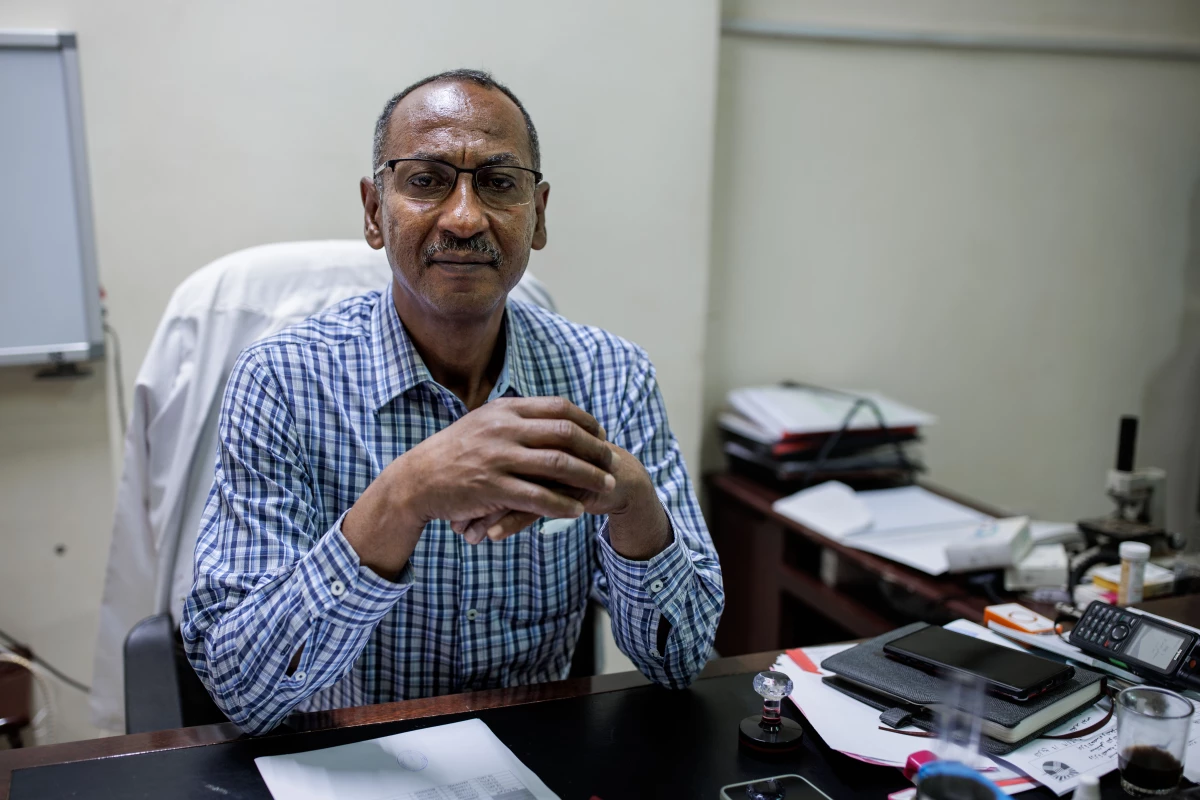
Like all the medical staff there, he hasn’t been paid a salary since the war began, only small stipends of less than $60
There used to be dozens of medical centers in Omdurman before the war. Most have been forced to shut down because of a lack of supplies, staff or funding, or because they’ve been destroyed by the fighting. Now there’s just seven and Al Nao is one of the largest still functioning.
The RSF controls large parts of the capital city, Khartoum, just across the Nile river. The Sudanese army has made gains there, in renewed fighting over the last week, and it also controls most of Omdurman.

Virtually every day, the army launches air strikes into Khartoum. The RSF constantly shell Omdurman, destroying homes, schools and hospitals.
Al Nao hospital has been shelled at least five times, according to Dr Mohammed, who says they’ve been deliberately targeted, which would constitute a war crime.
The day before NPR’s team arrived, it was shelled by the RSF, according to the hospital. While the team was there, the surrounding area was also shelled repeatedly.

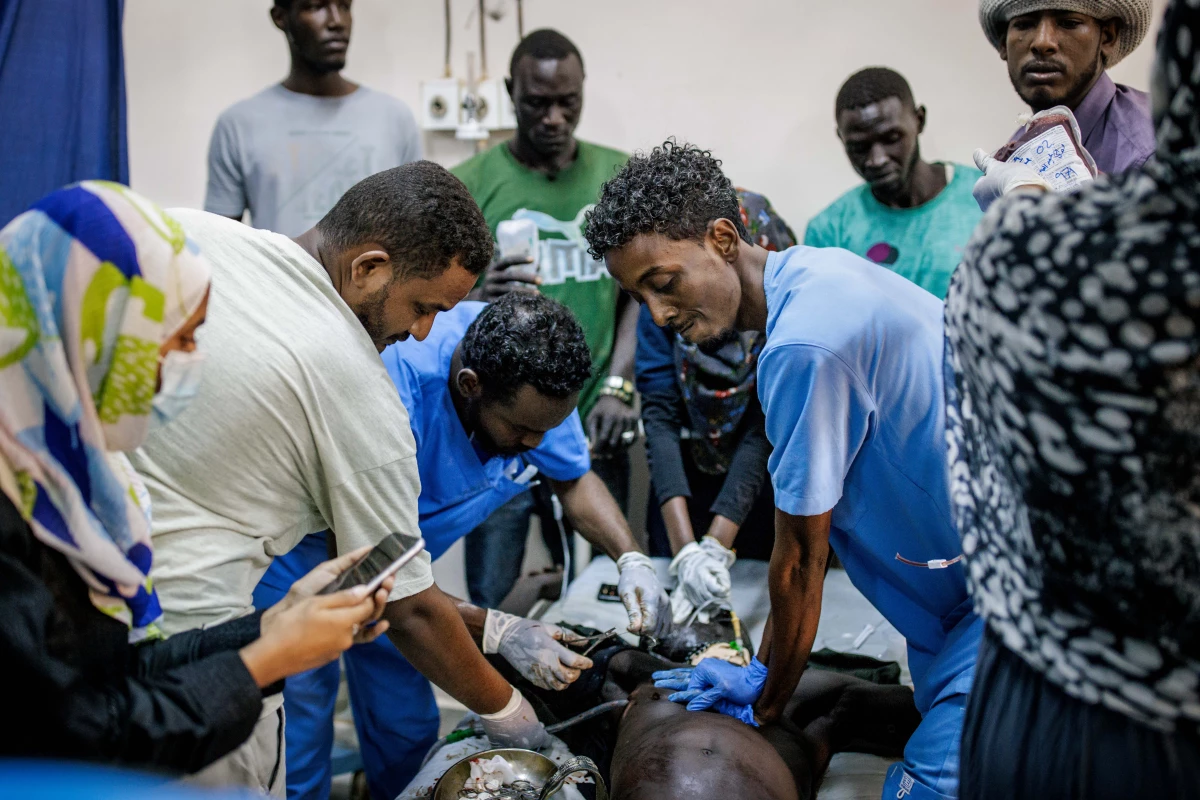
On one day, 20 people were rushed into the hospital emergency ward. Two of the casualties were pronounced dead when they arrived.
Medical staff fought to save a young man who was brought in unconscious. They administered CPR for several minutes before he died.
Everyday unidentified victims who died at the hospital are brought to a morgue.
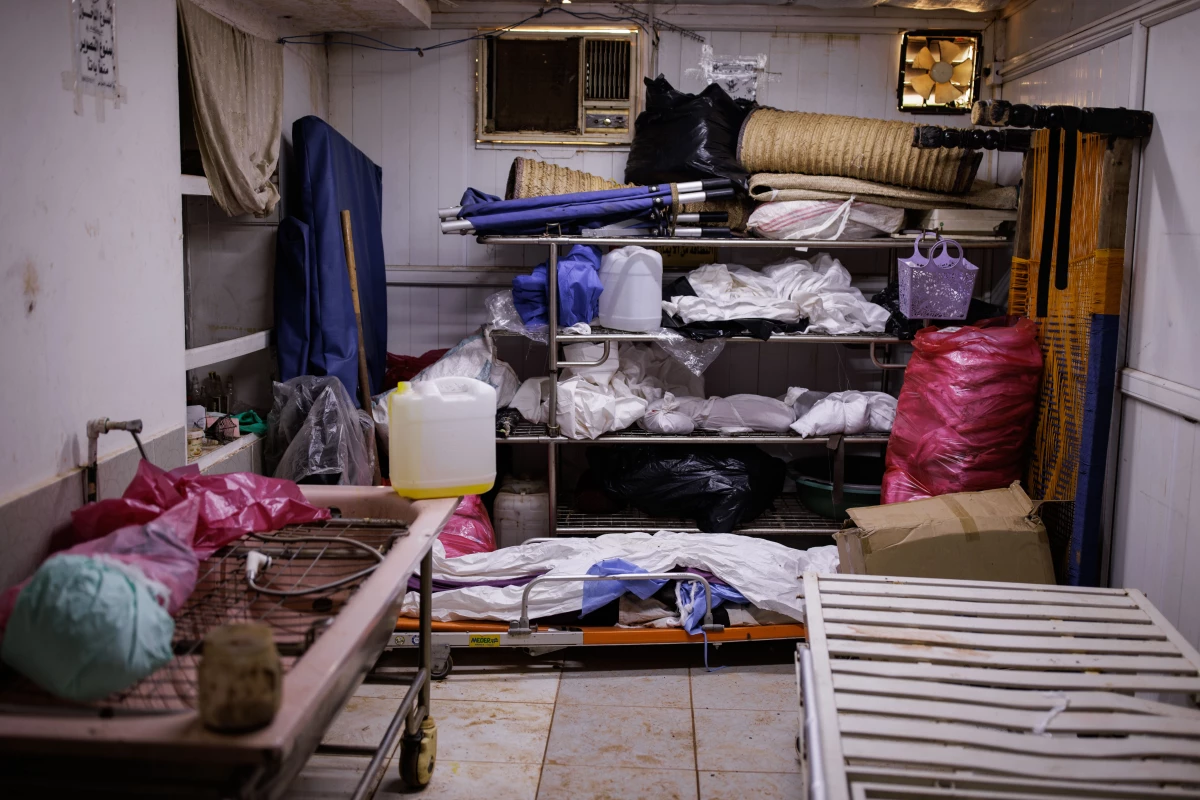
Their pictures are taken and posted on social media, in the hope of reaching their families. But most of the time, no one claims them and they are buried in unmarked graves near the hospital.
Some of the victims treated at the hospital now live and work there too, like Farata Jadeen who lived nearby in Omdurman. In June last year, RSF fighters arrested him, accusing him of being affiliated to the army. They shot him in the face with a rifle, from behind his jaw, with the bullet piercing out from his nose. After almost 4 months of treatment at Al Nao, he survived.

But by the time he was well enough to leave, his house was destroyed by the fighting.
Now he lives at Al Nao hospital, where he works as a cleaner. “Thanks be to God that I’m alive,” he said.
Transcript:
JUANA SUMMERS, HOST:
In Sudan, a year and a half of war has led to the collapse of medical services. Most hospitals have shut down or been destroyed in the fighting between the Sudanese army and a paramilitary group. Access to report in Sudan has been limited, but NPR international correspondent Emmanuel Akinwotu has just come back. And a note, this reporting will contain graphic descriptions of injuries. Hi, Emmanuel.
EMMANUEL AKINWOTU, BYLINE: Hi, Juana.
SUMMERS: So, Emmanuel, you’ve been reporting from hospitals in Sudan. Can you just give us a sense of what it was like there on the ground?
AKINWOTU: It was devastating. There are more people displaced there than anywhere else in the world – more than 10 million people. Half of the country is facing starvation. Millions of people are at risk of famine, and they’re just not getting the help that they need. It’s mostly from local groups and initiatives like Emergency Response committees – they’ve just been nominated for the Nobel Peace Prize – and also from the diaspora and from doctors working in pretty insane conditions.
SUMMERS: And these hospitals that you were reporting from – tell us about what it was like there, what you saw and heard.
AKINWOTU: I visited one of them in Omdurman. That’s a city that neighbors the capital, Khartoum, just across the River Nile. The hospital was completely overwhelmed and, at the same time, still dangerous. I spoke to one doctor who’s been there throughout the war.
JAMAL MOHAMED: Welcome to Al Nao hospital. It’s a big public hospital in Omdurman here.
AKINWOTU: Fifty-two-year-old Dr. Jamal Mohamed is an orthopedic surgeon and the director of Al Nao hospital. There used to be dozens of medical centers before the war in Omdurman, a twin city of the capital, Khartoum, divided by the Nile. Now there’s just seven.
MOHAMED: Since the war started, this hospital never stopped – not a single day.
AKINWOTU: We meet in his office while shelling periodically erupts in the background.
MOHAMED: In the most ugly way that you can imagine…
(SOUNDBITE OF EXPLOSION BOOMING)
MOHAMED: …If you have a problem with army…
AKINWOTU: He tells me patients and his colleagues have been killed while at the hospital, shelled by the Rapid Support Forces who are at war with Sudan’s army.
MOHAMED: We have been hit maybe five times. I’m talking about direct hit to the building of the hospital, not around.
AKINWOTU: I ask him when the hospital was last attacked.
MOHAMED: Yesterday. Seven people injured because of that but not dead, fortunately. Nobody died yesterday.
AKINWOTU: Dr. Mohamed lived in Khartoum with his family. But when the fighting began last April, his wife and children fled to Egypt while he stayed behind. And when Khartoum was taken by the RSF, Dr. Mohamed moved here to Omdurman, which is controlled by the army.
MOHAMED: Then I started working in this hospital as a volunteer. This was, I think, June – May, June last year.
AKINWOTU: He hasn’t been paid a salary since the war began, like most medical staff at the hospital.
MOHAMED: We’re working in spite of everything – in spite of lack of medications, in spite of lack of oxygen sometimes.
AKINWOTU: Even without anesthesia for operations, including amputations on children.
MOHAMED: This is the most painful thing, dealing with ill or injured child, some of them badly injured. And you are forced to go and amputate maybe their legs or their hands or their arm. And this was something I cannot describe.
AKINWOTU: We leave his office, and he shows us around the hospital.
MOHAMED: The hospital has two main parts. This is the ER.
AKINWOTU: We squeeze through the crowded emergency room, past scores of people injured by the war or suffering from conditions linked to malnutrition and starvation. Millions of people in Sudan are on the brink of famine.
MOHAMED: As you see, two patients in one bed.
AKINWOTU: Some beds are shared by mothers holding frail and thin children in their arms.
MOHAMED: Some of the patients bring their beds from their homes, like this one.
AKINWOTU: Even the hallways are crammed with patients lying on beds or on mats on the floor. No one is turned away, even at capacity. We head to another part of the hospital grounds under the sound of nearby shelling.
MOHAMED: I have a pillow here for victims that came to us without information.
(SOUNDBITE OF EXPLOSION BOOMING)
AKINWOTU: It sounds so loud.
MOHAMED: Yeah. It sounds very loud and very scary.
AKINWOTU: Two buildings stand face to face. One of them is a morgue.
MOHAMED: See a dead body there? We keep them here. We wash them here, sometimes, in our Islamic way. Sometimes, even, we don’t know their names.
AKINWOTU: Dr. Mohamed scrolls through a file showing the faces of hundreds of unidentified people who died at the hospital.
MOHAMED: They’re taking their pictures, putting it in the social media.
AKINWOTU: They post these images online, hoping to reach their families. But most of the time, no one claims them, and they’re buried nearby.
UNIDENTIFIED PERSON #1: (Vocalizing).
AKINWOTU: But even during war, there are bursts of joy.
MOHAMED: That’s our tradition here. There may be a new baby.
AKINWOTU: A maternity ward is just opposite the morgue. Twenty-four-year-old Mohammed Makhim is outside carrying his newborn baby, his first child.
Congratulations. Congratulations.
MOHAMMED MAKHIM: Thank you.
UNIDENTIFIED PERSON #2: Celebrate.
MOHAMED: Celebrate. Celebration.
AKINWOTU: Boy or girl?
MOHAMED: (Non-English language spoken).
MAKHIM: (Non-English language spoken).
MOHAMED: A girl.
(LAUGHTER)
AKINWOTU: But the joy is soon interrupted.
MOHAMED: (Non-English language spoken).
AKINWOTU: Twenty people have just been rushed to the hospital, injured by the constant shelling we’ve heard echoing through the ground. We run back to the emergency ward and find it in chaos.
(CROSSTALK)
AKINWOTU: There are pools of blood across the floor. Medical staff scramble to make room for the casualties, some dead and wrapped in sheets, some alive with gaping wounds. Medical staff perform CPR on a young man while his family look on in desperation.
MOHAMED: As you see, Emmanuel, all of them are civilians. They’re fighting us, civilians, peaceful people. They are killing us.
AKINWOTU: We leave the ward to allow room for the medical staff to work and head back to Dr. Jamal’s office to wait for him to return. I ask him whether he feels the outside world have done enough to help Sudan.
MOHAMED: No. No. They forget about us. It’s a forgotten war.
UNIDENTIFIED GROUP: (Chanting in non-English language).
AKINWOTU: The Quarter Prayer at sunset fills the room through the open windows. It drowns out distant pops of shelling in the background.
UNIDENTIFIED PERSON #3: (Crying).
AKINWOTU: But then weeping from the hospital grounds overwhelms it. Relatives of the young man medical staff were trying to save have just learned he has died.
UNIDENTIFIED PERSON #3: (Crying).
AKINWOTU: I asked Dr. Mohamed a final question before we leave. So many people have left Omdurman and Sudan. Why have you stayed?
MOHAMED: It’s my duty. Simply, it’s my duty. It’s my work. It is my country. I can’t live – I cannot imagine another – other life away from my home. And I don’t want it.
AKINWOTU: Emmanuel Akinwotu, NPR News, Omdurman.
(SOUNDBITE OF MUSIC)
