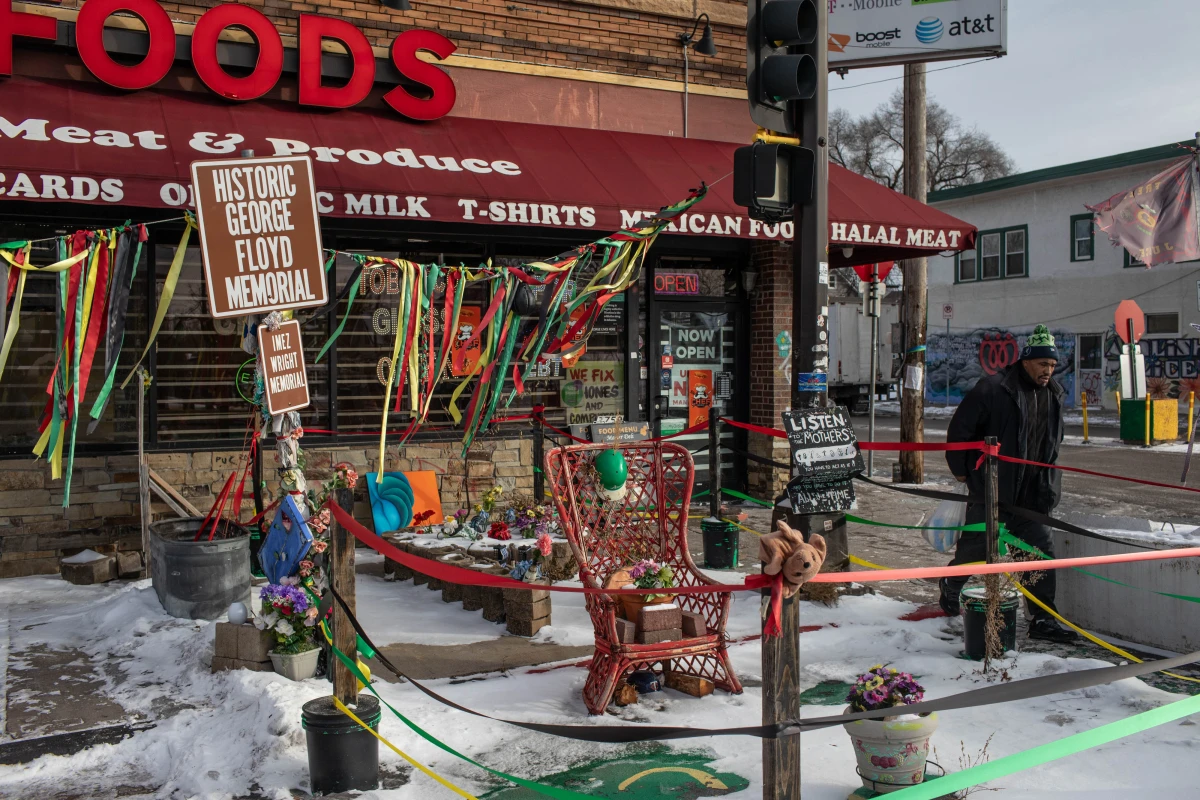
MINNEAPOLIS — At a Mexican restaurant in south Minneapolis, a line forms as people wait to order. It feels relatively normal, except for one thing: the front door is locked.
Customers lock and unlock it every time they come and go to keep the federal immigration enforcement agents who have been prevalent in the area from entering.
“It’s completely stressful and scary for everybody. It’s terrible,” says Marco, an immigrant who has been here for more than two decades and the owner of the restaurant.
He asked NPR not to use his full name, or the name of his restaurant, because he fears Immigration and Customs Enforcement might target him.
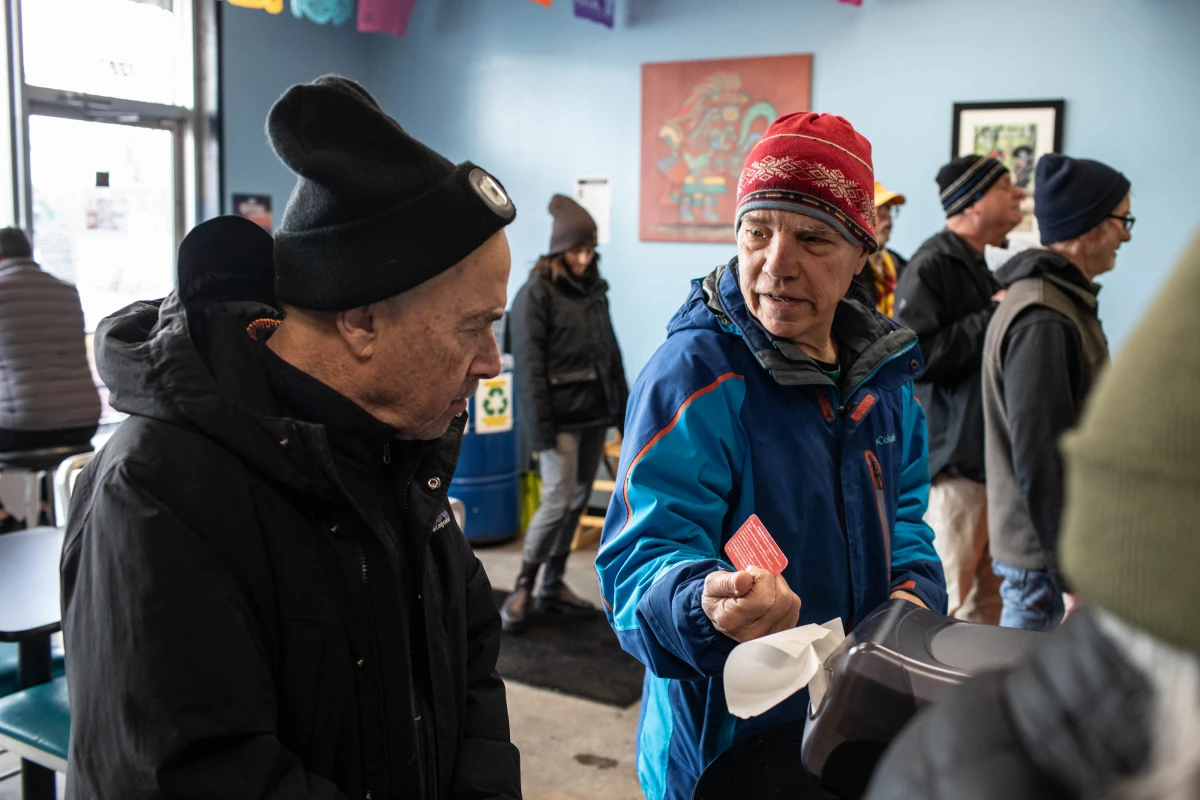
This restaurant was here back in 2020, when the neighborhood — and particularly this thoroughfare filled with businesses — was embroiled in protests and riots after the murder of George Floyd by a local police officer. Several buildings were burned to the ground. Marcos says that back then, neighbors helped patrol around his restaurant to keep it safe.
“Now, with this situation with ICE, it’s feeling kind of similar, or maybe worse,” he says.
Neighbors aren’t just protecting the building these days; they’re protecting the people inside of it, too.
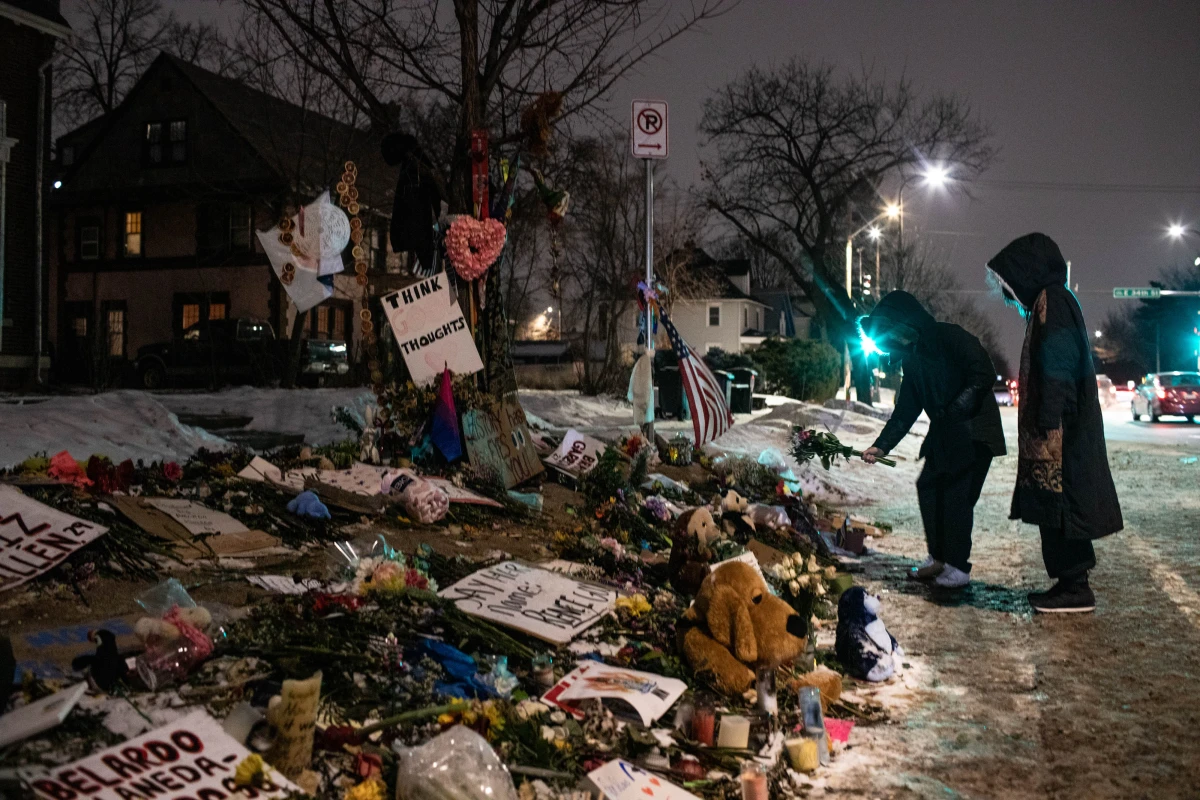
South Minneapolis has found itself at the center of multiple tragedies over the years, from the murder of Floyd to the killing of Renee Macklin Good by an ICE officer earlier this month. Both incidents happened within blocks of each other. And while both have been hard on the people living here, neighbors say the events brought them closer together and helped them organize to respond.
A few blocks from Marcos’ restaurant is a residential neighborhood filled with single family craftsman style bungalows along wide tree-lined streets. A blanket of snow covers the ground, and the sidewalks are all neatly shoveled.
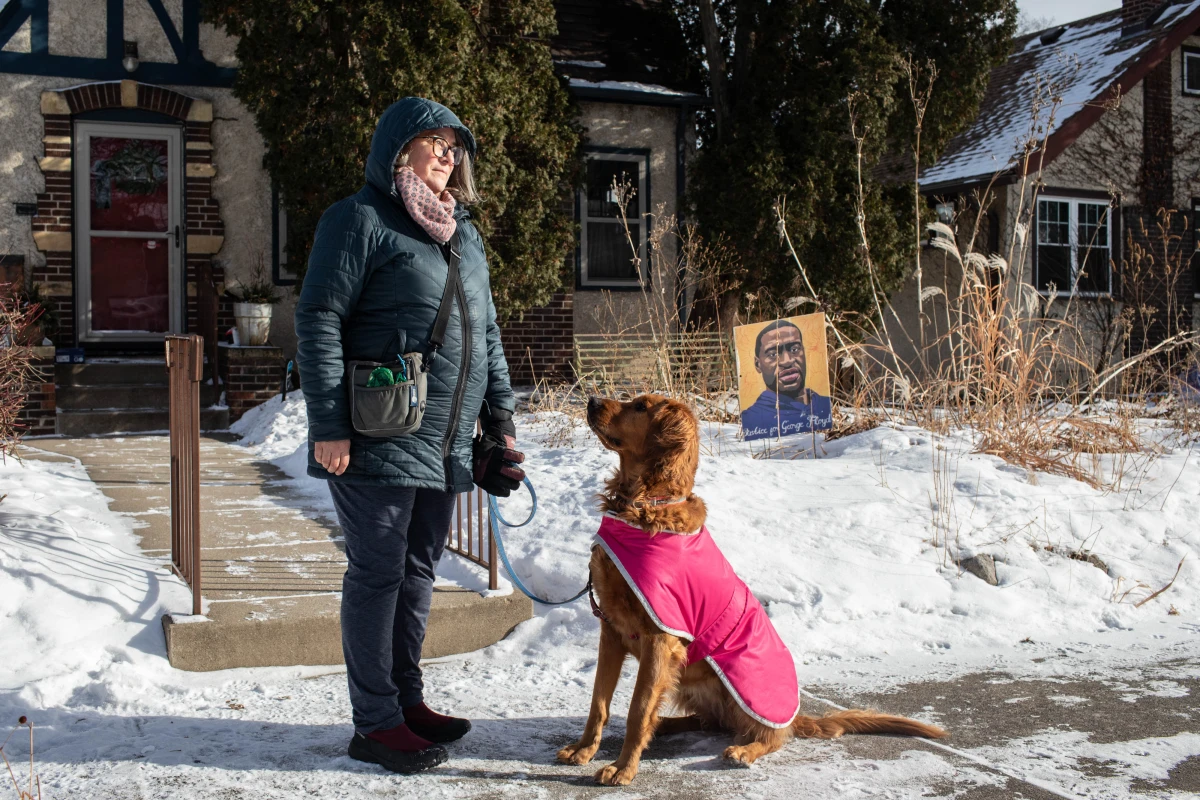
Mary Vavrus has lived in this area in south Minneapolis for more than 20 years. She has a copy of a painting of George Floyd staked into her front lawn.
“It’s pretty damn diverse, and we love that about this place. We really do,” Vavrus says.
She says in some ways, when Good was killed a few weeks ago nearby, it felt like the unrest after Floyd’s murder might happen all over again.
She remembers back to that time, when neighbors were patrolling streets at all hours of the day and night, and setting up makeshift roadblocks to keep unknown people out. Now, neighbors are patrolling again, standing on street corners with whistles ready to sound the alert if ICE shows up.
“But the ethos of the resistance is just a little bit different,” Vavrus says, explaining that now it feels kinder, and more helpful. “Maybe it’s because we learned some things. Maybe it’s because it’s a more widespread sort of siege. It’s a siege of the city.”
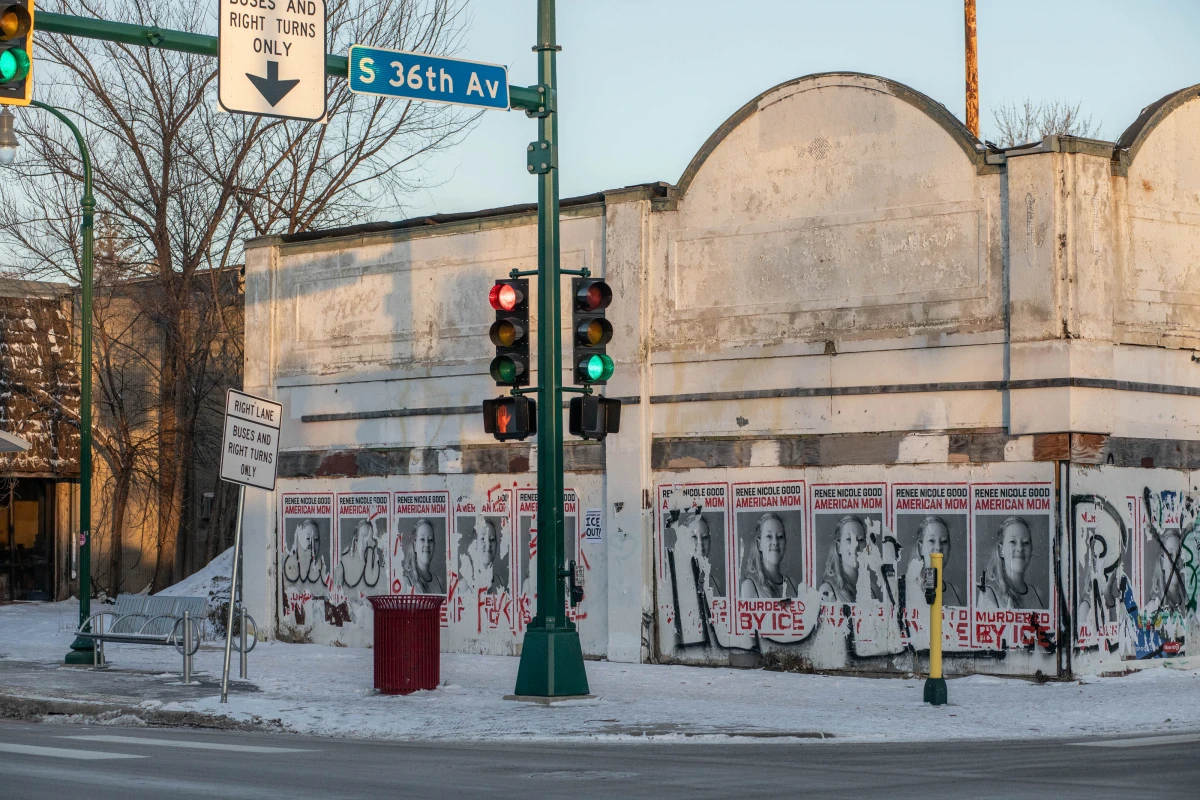
During the George Floyd protests, the city kind of turned in on itself, she explains. But now, residents are fighting back against a threat that’s more external.
Elizabeth Berget lives about a mile away with her husband and three kids. She says the energy of her tight knit community, where neighbors watch each other’s kids and borrow each other’s snowblowers after blizzards, only grew stronger in the aftermath of Floyd’s murder.
“After 2020, there was very much a feeling of like, let’s look out for each other,” Berget says.
She says she thinks that helped everyone here mobilize quicker, when tragedy struck again earlier this month.
“I already had all my neighbor’s numbers in my phone, and we could start a Signal chat like that,” she says snapping her fingers, referring to the encrypted chats that many neighborhoods here in Minneapolis have formed to help organize in protest against the federal immigration activity.
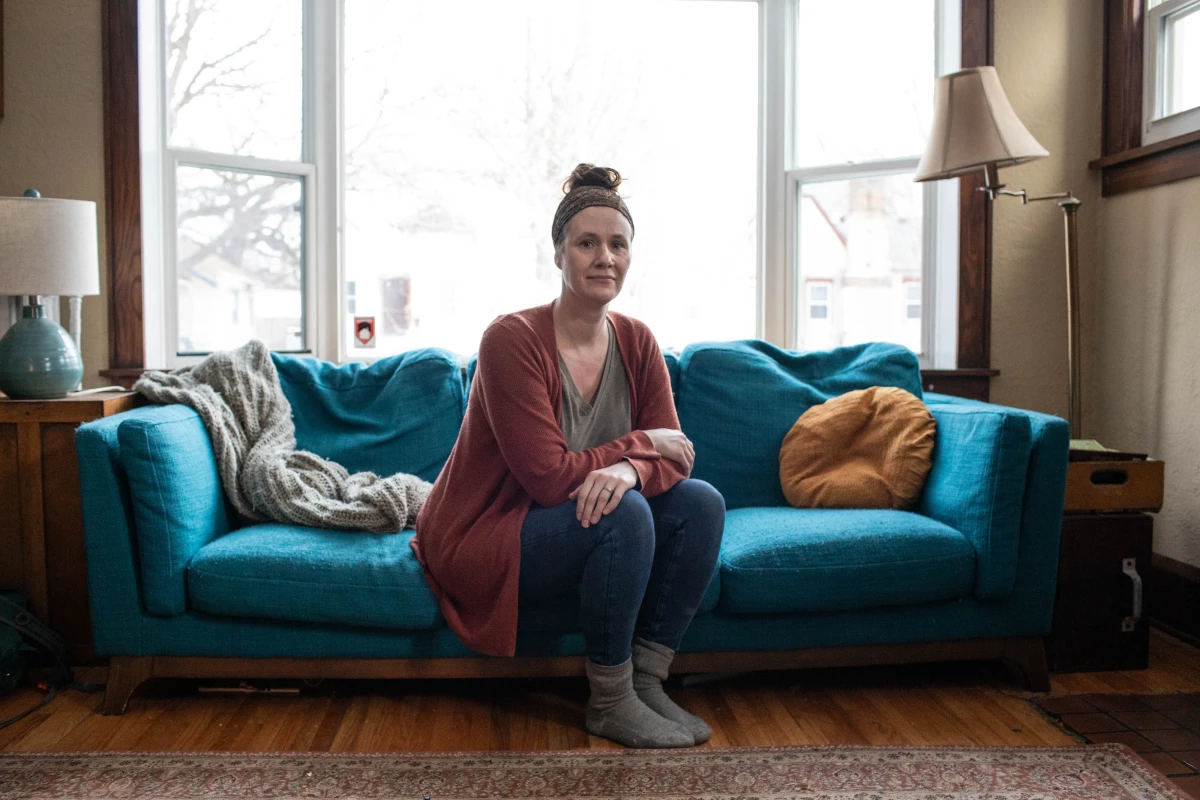
Berget and her neighbors have been using that Signal chat in part to organize grocery deliveries to immigrant families nearby who have been sheltering in their homes, afraid to leave.
On the day NPR visits, she’s dropping off supplies to 27-year-old E. and her family, who live just down the street.
E. is a U.S. citizen. She asked to only be identified by her first initial, as she fears for the safety of her family. She has two young kids, both also U.S. citizens. Her husband is undocumented, from Mexico.
“Processing this has been so difficult because I’m not used to being home,” says E., sitting at her kitchen table with her four-year-old daughter snuggled in her lap.
E. has lived in south Minneapolis for seven years now. She says between this and the unrest in 2020, she sometimes thinks about moving, going to a different neighborhood.
But she says there has been a small silver lining: She’s connected with new neighbors in all of this, and learned to trust them.
She says recently a woman brought over dog food for the family pet, and asked if maybe someday,when things hopefully return to normal, E. and her family wanted to come over and grill outside.
E. says it’s made her feel less alone in all of this.
“I don’t even know where she lives, but I know she’s around here. So it’s like, wherever you are, I will get to see you someday,” she says with a smile.
She hopes, when the time comes, that the two families can meet in a more traditionally American way, grilling in the backyard, instead of hiding in her home.
Megan Lim contributed reporting.
Transcript:
AILSA CHANG, HOST:
Minneapolis is no stranger to protest and unrest, especially recently. But one neighborhood, South Minneapolis, has found itself at the center of multiple tragedies over the years, from the murder of George Floyd by a local police officer to the killing of Renee Macklin Good by an ICE officer earlier this month. Both happened within blocks of each other, and while both have been hard on the people living there, neighbors say the events also brought them closer together and helped them organize to respond. NPR’s Kat Lonsdorf has this story.
KAT LONSDORF, BYLINE: It’s lunchtime at a Mexican restaurant in South Minneapolis, and a line forms to order.
UNIDENTIFIED PERSON: Hi. Can I do the three tacos with flour?
LONSDORF: Inside, it feels relatively normal, except for one thing.
(SOUNDBITE OF LOCK CLICKING)
LONSDORF: The front door is locked. Customers lock and unlock it every time they come and go.
(SOUNDBITE OF LOCK CLICKING)
MARCOS: It’s completely stressful, scary for everybody. It’s terrible.
LONSDORF: Marcos, an immigrant who’s been here for more than two decades, is the owner of this restaurant. He asked that we not use his full name or the name of his restaurant because he fears ICE might target him. He says keeping the door locked to keep ICE out feels like one of the only things that he can do to protect himself and his employees right now. This restaurant was here back in 2020, when the neighborhood – and particularly this thoroughfare filled with businesses – was embroiled in protests and riots after the murder of George Floyd. Several buildings were burned to the ground. Marcos remembers that back then, neighbors helped patrol around his restaurant to keep it safe.
MARCOS: And now, with this situation with ICE, it’s kind of feeling back to the similar or maybe worse.
LONSDORF: Neighbors aren’t just protecting the building. They’re protecting the people inside of it, too.
(SOUNDBITE OF FOOTSTEPS IN SNOW)
LONSDORF: A few blocks from Marcos’ restaurant is a residential neighborhood filled with single-family craftsman-style bungalows along wide tree-lined streets. A blanket of snow covers the ground, and the sidewalks are all neatly shoveled.
(SOUNDBITE OF KNOCKING)
LONSDORF: Mary?
MARY VAVRUS: Hi. Yes.
LONSDORF: Hey.
Mary Vavrus has lived here in South Minneapolis for more than 20 years.
VAVRUS: It’s pretty damn diverse, pardon my French. It’s pretty diverse, and we love that about this place. We really do.
LONSDORF: Vavrus has a painting of George Floyd displayed on her front lawn. She says, in some ways, when Renee Macklin Good was killed a few weeks ago just nearby…
VAVRUS: It felt like George Floyd all over again.
LONSDORF: She remembers back to that time, when neighbors were patrolling the streets at all hours of the day and night and setting up makeshift roadblocks to keep unknown people out. Now neighbors are patrolling again, standing on street corners with whistles ready to sound the alert if ICE shows up. It’s all unsettling, she says, but…
VAVRUS: The ethos of the resistance is just a little bit different this time.
LONSDORF: Kinder, more helpful – and protests are happening across the city.
VAVRUS: Maybe it’s ’cause we learned some things. Maybe it’s because it’s a more widespread sort of siege. It’s a siege of the city.
LONSDORF: During the George Floyd protests, the city kind of turned in on itself, she says. But now, residents are fighting back against a threat that’s more external. About a mile away, Elizabeth Berget lives with her husband and three kids. She says, it’s a very tight-knit community.
ELIZABETH BERGET: That energy, that vibe is, I think, very common across South Minneapolis.
LONSDORF: Which she says only got stronger in the aftermath of George Floyd’s murder.
BERGET: After 2020, there was very much a, like, let’s look out for each other.
LONSDORF: Berget says she thinks that helped everyone mobilize quicker when tragedy struck again.
BERGET: Like, I already had all my neighbors’ numbers in my phone. We could start a Signal chat like that.
LONSDORF: Berget and her neighbors have been using that Signal chat in part to organize grocery deliveries to families nearby who have been sheltering in their homes, afraid to leave.
(SOUNDBITE OF CAR SQUEAKING)
BERGET: Just going to text her that we’re here.
LONSDORF: Today, she’s dropping off supplies to a woman down the street.
BERGET: I just asked her what she needed, so I grabbed a bunch of stuff last night for her.
LONSDORF: E is a U.S. citizen. She asked that we identify her by only her first initial as she fears for the safety of her family. She has two young kids, both also U.S. citizens. E’s husband is undocumented from Mexico. As she talks, E sits at her kitchen table, her 4-year-old daughter snuggled on her lap, staring out with big wide eyes.
E: Processing this has been so difficult ’cause I’m not used to being at home.
LONSDORF: E has lived in South Minneapolis for seven years now. She says, between this and the unrest in 2020, she does think of moving.
E: I too kind of want to, like, get out of this neighborhood.
LONSDORF: But she says there is a small silver lining. She’s connected with new neighbors in all of this and learned to trust them. The other day, a woman stopped by to drop off dog food for the family pet.
E: She made me feel good because she said, when all this is over, do you want to have, like, a grilling? And I was like, Of course, we love grilling, you know?
LONSDORF: E says, it made her feel less alone.
E: I don’t even know where she lives, but I know she’s around here. So it’s like, wherever you are, I will get to see you someday.
LONSDORF: She hopes the two families can meet someday in a more traditionally American way, grilling in the backyard instead of hiding in her home. Kat Lonsdorf, NPR News, Minneapolis.