


As many parents know, the line between passing along cultural traditions and mortifying your children in public can be perilously thin. For one mother, that dilemma arose this year ahead of Navaratri, a Hindu festival celebrating female strength that culminates today. One of the festival’s key components is garba, an intricate folk dance from the Indian state of Gujarat.
Storyteller and playwright Nimisha Ladva says that some of her fondest memories are of attending Navaratri celebrations as a kid in England.
“Let’s just start with the clothes,” Ladva said. “They have mirrors and tassels and bells. It’s maximum dress-up possibility.”
But the heart of these festivals was garba, and particularly the women dancing. “This is women taking up space literally, in a way that was different from normal life,” Ladva said.
Dancing with your kids without being cringe
Now teaching at Haverford College outside Philadelphia, Ladva wanted to share the thrill of garba with her daughters.
One problem, though. She had no moves.
“On a scale of one to 10,” she said, “I might make like a two.”
She wanted to improve. So this year, she enlisted the help of a coordinated friend to give Ladva and her two daughters garba lessons. They planned to test their skills at their local temple’s Navaratri celebration.
Ladva’s daughters, though, were not as enthusiastic — as 12-year old Himani revealed while chatting with her mom.
“How awkward is that going to be?” Himani said at their home in Wynnewood, PA.
“Would you like to be able to do some more of the steps?” Ladva asked.
“No,” Himani said.
Ladva’s other daughter, 15-year old Medha, was skeptical of the whole project.
“I love my culture,” she said, “and I’m happy to be Indian. But I’d rather learn organically with my friends or at a holiday.”
Still, on a recent Monday night, they pushed the furniture to the sides of their living room, and Ladva’s friend, Minu Naik, started instructing Ladva and her daughters.
Celebrating women
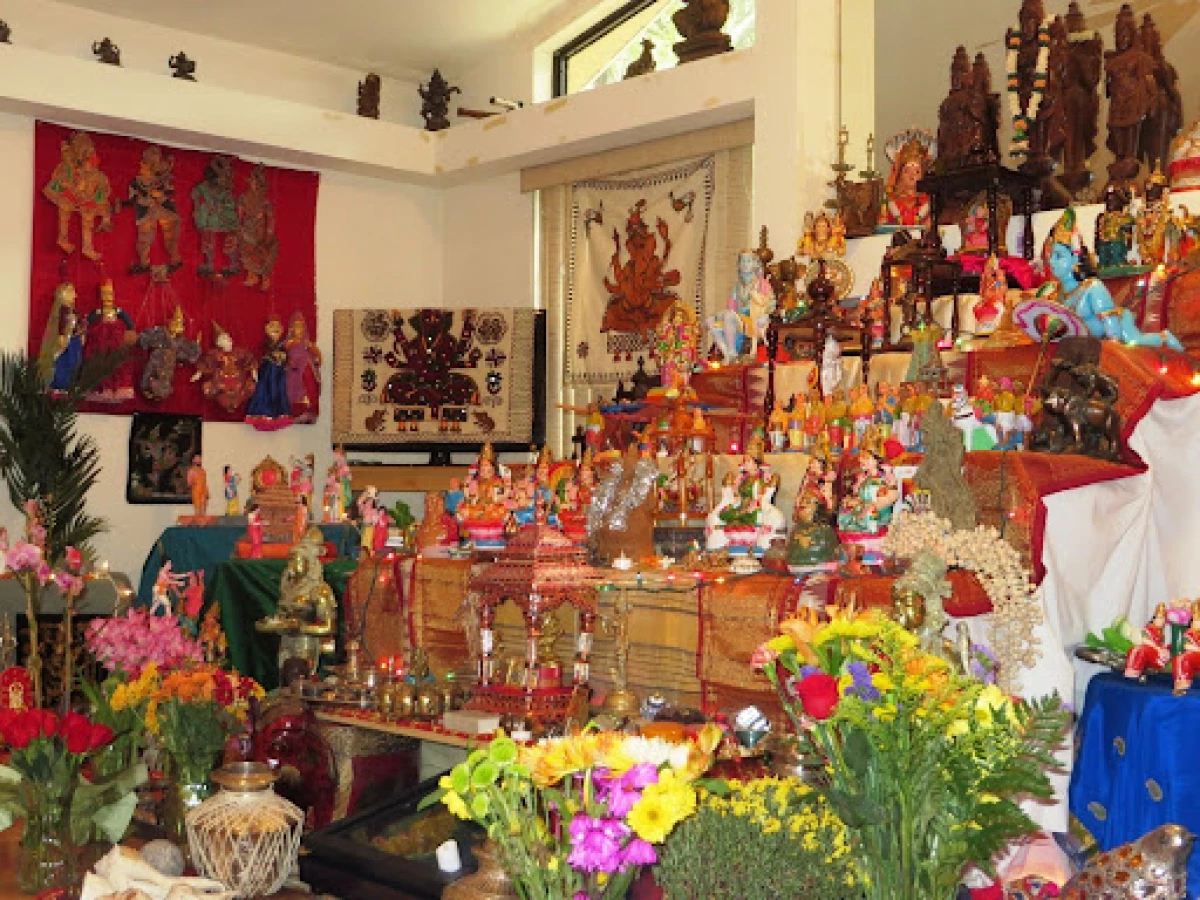
Garba is performed in a circle, and you have to shuffle your feet and pivot while keeping pace with the the group. This was something Ladva struggled with. She lost her footing a couple times, apologizing for bumping into the others.
Afterward, Naik gave her assessment. “I think we all stumbled a little… but I think we got it…for now.”
The family laughed at her optimism.
Ladva is not alone among American Hindus, in her wish to embrace community during this festival.
Vasudha Narayanan, Director of the University of Florida’s Center for the Study of Hindu Traditions, said that during the ten days of Navaratri, “The social life of Hindus in the diaspora is on steroids.”
Narayanan explained that in many regions of India, Navaratri highlights an underrepresented aspect of Hinduism. The religion is often seen as patriarchal, she said, but during this festival, “Women take the lead role…celebrating the creative energies of the goddess.”
In recent years, garba’s become more commercialized, with viral YouTube videos, stadium performances, and promoted festivals. Aditya Bhattacharjee, a professor who teaches courses on transnational Hinduism at the Rhode Island School of Design, said, “Garba events have become a way for younger South Asians to explore their identities. They make preserving cultural heritage cool.”
But Nimisha Ladva worried that her family’s upcoming dance performance might actually drive her daughters away from these traditions.
“What if this goes so badly that they’re like, ‘That’s it, you will never drag us back’?” Ladva wondered.
A sense of belonging
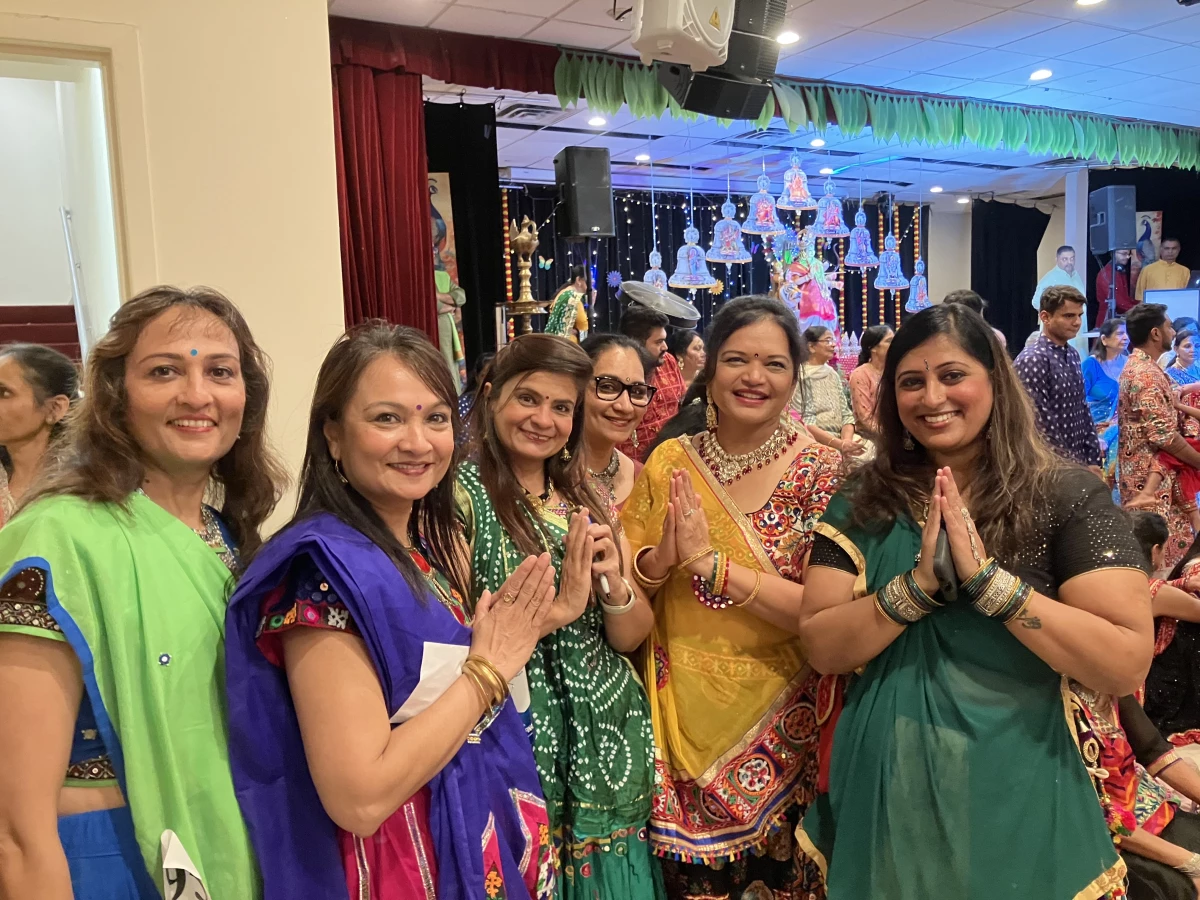
Dragged or not, they all arrived at the Bharatiya Temple in Chalfont, PA on the first Friday evening of Navaratri. A line of cars stretched up the county road toward the domed Temple, lit up in green and blue above the dark fields around it. Inside, the Temple’s auditorium was packed, as the announcer introduced participants in a garba contest that would take place before the general dancing.
Watching the skilled performers, Ladva noted the dancers’ coordination. “They were literally dancing backwards,” she said. “I am taking it personally.”
Medha was also feeling the pressure. “I’m gonna, like, step on someone,” she said. “I just get cooked all the time in there.”
Before they knew it, the announcer was gathering everyone for a communal garba. It was time to join. Ladva took a deep breath.
Entering a Garba circle is a bit like jumping onto a whirling carousel. Ladva and her daughters eased up to the circle, then made their move. And soon, they were doing it! They shuffled, pivoted, and revolved in sync with the people around them.
After several turns, Medha stepped to the side to reflect on the experience.
“Sometimes I’m a little critical of my mom’s cultural immersion schemes,” she said. “But, like, a few of the steps out there I felt like I [was] in the mix of it. So…not bad.”
Himani said that although she was mildly coerced into taking the dance lessons, the skills she acquired made her more comfortable than at previous Navaratri celebrations.
“I feel like I’d go…voluntarily to other events,” she said.
For Ladva, that meant this cultural immersion scheme had worked. And in the end, it wasn’t about her dancing skills at all.
“I shifted from trying to do a good job to trying to join in,” Ladva said. “There’s a difference between wondering how you look and just feeling like you belong.”
After a short rest, Ladva was ready to dance again. She moved toward the music, and rejoined the circle of dancers.
Transcript:
SCOTT SIMON, HOST:
As many parents know, that line between passing along important cultural traditions and mortifying your children in public can be frighteningly slender. Reporter Justin Kramon watched a mother and daughter try to tread that line ahead of the Hindu festival of Navaratri. That festival culminates today. A key component is the intricate folk dance called Garba.
JUSTIN KRAMON: Some of Nimisha Ladva’s fondest memories are of attending Navaratri celebrations as a kid in England.
NIMISHA LADVA: Let’s just start with the clothes. They have mirrors and tassels and bells.
KRAMON: But the heart of these festivals was Garba, and particularly, the women dancing.
LADVA: This is women taking up space literally in a way that was different from normal life.
KRAMON: Now teaching at Haverford College, outside Philadelphia, Ladva wants to share the thrill of Garba with her daughters. One problem, though…
LADVA: My skill level at Garba, on a scale of 1 to 10, I might make, like, a 2.
KRAMON: She wants to improve. So this year, she’s enlisted the help of a coordinated friend to give Ladva and her two daughters Garba lessons. In a couple of weeks, they plan to test their skills at their local temple’s Navaratri celebration. Ladva’s daughters, though, aren’t as enthusiastic, as 12-year-old Himani reveals while chatting with her mom.
HIMANI LADVA: How awkward is that going to be?
LADVA: Would you like to be able to do some more of the steps?
HIMANI: No.
LADVA: No?
HIMANI: No.
KRAMON: Fifteen-year-old Medha is skeptical of the whole project.
MEDHA LADVA: I love my culture, and I’m happy to be Indian, but I’d rather learn organically with my friends or at a holiday.
(CROSSTALK)
KRAMON: Still, on a Monday night, they push the furniture to the sides of the living room, and Ladva’s friend, Minu Naik, starts guiding Ladva and her daughters.
(SOUNDBITE OF MUSIC)
LADVA: OK.
MINU NAIK: The timing is…
KRAMON: Garba is performed in a circle, and you have to shuffle your feet and pivot while keeping pace with the group, something Ladva struggles with.
(LAUGHTER)
LADVA: I’m sorry. I looked at you. I’m sorry.
KRAMON: Afterward, Naik gives her assessment.
NAIK: I think we all stumbled a little, but I think we got it for now.
(LAUGHTER)
KRAMON: Ladva is not alone among American Hindus in her wish to embrace community during this festival, says Vasudha Narayanan, director of the University of Florida Center for the Study of Hindu Traditions. During the 10 days of Navaratri…
VASUDHA NARAYANAN: The social life of Hindus in the diaspora is on steroids.
KRAMON: Back at Nimisha Ladva’s home, Ladva worries the upcoming dance performance might actually drive her daughters away from these traditions.
HIMANI LADVA AND MEDHA LADVA: Three. Four.
LADVA: Like, what if this goes so badly that they’re like, that’s it…
HIMANI AND MEDHA: Three.
LADVA: …You will never drag us back.
KRAMON: But dragged or not, they all arrive at the Bharatiya Temple on a Friday evening. A line of cars stretches toward the domed building, lit up in green and blue above the dark fields around it. Inside, the temple’s auditorium is packed, as the announcer introduces participants in a Garba contest that will take place before the general dancing.
UNIDENTIFIED ANNOUNCER #1: Three, two, one.
(SOUNDBITE OF MUSIC)
KRAMON: Ladva notes the dancers’ coordination.
LADVA: No, they were literally dancing backwards. I am taking it personally.
KRAMON: Fifteen-year-old Medha is also feeling the pressure.
MEDHA: I’m going to, like, step on someone. And I just get, like, cooked all the time in there.
KRAMON: Before they know it, it’s time to join.
UNIDENTIFIED ANNOUNCER #2: Please have everybody stand on the side so we can get started with Garba.
KRAMON: Entering a Garba circle is a bit like jumping onto a whirling carousel, but they make their move. And soon, they’re doing it – shuffling, pivoting and revolving in sync with the dancers around them.
(SOUNDBITE OF MUSIC)
KRAMON: After several turns, Medha steps to the side to reflect on the experience.
MEDHA: Sometimes I’m a little critical of my mom’s, like, cultural immersion schemes. Like, a few of the steps out there, I felt like, oh, like, I’m in the mix of it, so not bad.
KRAMON: Twelve-year-old Himani says that although she was mildly coerced into taking the dance lessons, the skill she acquired made her more comfortable than at previous festivals.
HIMANI: I feel like I’d go voluntarily to other events.
LADVA: For Ladva, that means this cultural emergence scheme worked. And in the end, it wasn’t about her dancing skills at all.
LADVA: I shifted from, like, trying to do a good job to trying to join in. And I think there’s a difference between wondering how you look and just feeling like you belong.
KRAMON: After a short rest, Ladva is ready to dance again. She moves toward the music and rejoins the circle of dancers.
(SOUNDBITE OF MUSIC)
KRAMON: For NPR News, I’m Justin Kramon in Chalfont, Pennsylvania.
