


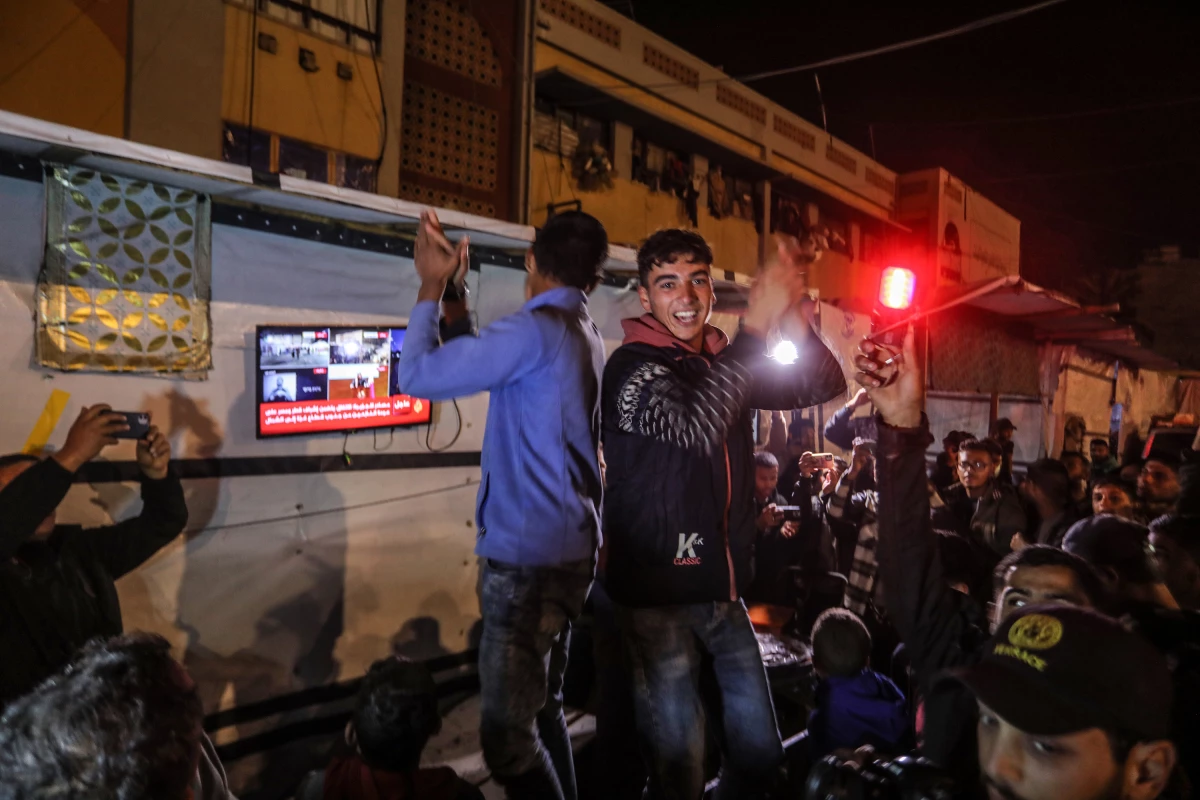
TEL AVIV, Israel — The Israel-Hamas war in Gaza, which may now be drawing to a close, has dramatically reshaped much of the Middle East and is still delivering aftershocks.
When Hamas launched its surprise attack into southern Israel on the morning of Oct. 7, 2023, it was operating under Middle East rules that had existed for years. On one side was Israel, backed by the U.S. On the other was Iran and its partners — Hamas in Gaza, Hezbollah in Lebanon, the Assad regime in Syria and the Houthis in Yemen.
Both sides believed they could inflict major damage on the other, a proposition that made everyone wary of a major confrontation.
Loading…
The past 15 months of fighting have rewritten those rules. Israel has delivered powerful military blows to its rivals, while Iran and its allies have all suffered severe setbacks with no clear path to recovery.
Hamas and Hezbollah have had their leaderships wiped out, and they signed separate ceasefires with Israel from a position of weakness. Syria’s longtime dictator, Bashar al-Assad, fled into Russian exile last month. Iran, meanwhile, is trying to make sense of this rapidly changing Middle East, with a supreme leader, Ayatollah Ali Khamenei, who is 85 and ailing.
The Israel-Hamas ceasefire announced Wednesday could mark an end to the region’s heavy fighting and may deter another large-scale war, at least in the near term. But the battles of the past 15 months have created a litany of woes or made existing problems more difficult to solve.

The damage to Israel’s reputation
Israel can claim major military successes, yet the devastation it has inflicted on Gaza has caused immense damage to Israel’s reputation. More than 46,000 Palestinians have been killed in the territory, more than half of them women and children, according to Gaza health officials.
The carnage has stoked widespread anger in Arab countries, and that anger extends far beyond the region to many Western countries. Israel relies heavily on the U.S. for military and political support, which will continue under President-elect Donald Trump. But Israel also needs European states for political backing and trade relations to limit its international isolation.
Before the Gaza war, Israel already faced widespread criticism over its heavy-handed occupation of Palestinians. Now Israel faces even greater scrutiny over how it addresses Palestinians in Gaza — and in the occupied West Bank, where Jewish settlements are rapidly expanding.
Will Israel work with the international community to help rebuild Gaza and offer the Palestinians a political path toward statehood?
Or will Israel keep squeezing the Palestinians with punitive steps that have marked Prime Minister Benjamin Netanyahu’s many years in office?
Throughout his tenure, Netanyahu has pledged to provide security. That promise was undercut by the Hamas attack. Now, with the Gaza war apparently over, Israel is likely to find itself in a stronger security position in the coming years. However, Israel can expect intense political pressure over its policies toward the Palestinians.

Iran’s strategy is in tatters
Iran’s strategy for decades has been to support a network of Arab partners with the intent of undermining Israel. This approach is now in tatters.
Iran’s proxies were overwhelmed in fighting with Israel. Iran itself suffered setbacks in missile exchanges with Israel last year. Military analysts say Iran’s air defenses were badly weakened, leaving the country vulnerable to future airstrikes by Israel.
In addition, Iran’s fragile economy is hemmed in by Western sanctions, leaving the country in no position to keep going with the kind of military assistance it has been providing to its partners.
Iran will also have to deal with Trump, who takes office on Monday. He imposed a “maximum pressure” campaign against Iran during his first administration and is again expected to pursue hardline policies.
Iran may be forced to make compromises — like scaling back or dropping support for proxies — in exchange for sanctions relief.
Of course, Iran could go in the opposite direction and make a push for a nuclear weapon, viewing that as the best form of defense — a move that would risk generating a showdown with the U.S. and Israel.
Broken lands in urgent need
Several Middle East lands were already in a state of misery before Oct. 7, 2023, and the recent fighting has only added to the desperation.
Much of Gaza has been reduced to rubble. Almost all its 2.2 million residents have been displaced multiple times and no longer have homes to return to. Israel says it will no longer allow the U.N. organization for Palestinian refugees, UNRWA, to operate in the territory.
Gaza’s crisis is most acute, but Lebanon and Syria also face staggering problems.
Lebanon has endured chronic political and economic woes for years, and Israel’s military offensive last fall inflicted major damage in the country’s south. In a small ray of hope, Lebanon’s parliament recently selected a president, the first time in more than two years the post has been filled.
Syria’s nearly 14 years of civil war ended when Assad fled to exile in Russia last month, but piecing together the shattered country will be a massive, long-term project. More than half of Syria’s people were driven from their homes during the war.
A ceasefire in Gaza, if it takes hold, would mark the end of 15 months of nonstop upheaval. The changes set in motion will play out for years to come.
Transcript:
MARY LOUISE KELLY, HOST:
The Israel-Hamas ceasefire deal announced today is intended to end the most intense fighting ever between these bitter rivals. The Gaza war has unleashed dramatic changes across the Middle East since it began on October 7, 2023. That is when Hamas launched a cross-border attack on Israel. Israel responded. So let’s consider a couple big questions – how widespread has the impact of the conflict been, and what might it mean for the future of the region? For answers, we are joined by NPR’s Greg Myre in Tel Aviv. He’s covered the region for many years. Hey, Greg.
GREG MYRE, BYLINE: Hi, Mary Louise.
KELLY: Before we explore what it means, recap what it is. What are the details of the ceasefire deal?
MYRE: It’s supposed to take effect Sunday. The fighting is supposed to end in this first phase, which lasts six weeks. And during this period, the Palestinians – or Hamas, rather – will release 33 hostages – some alive, some dead – from the nearly 100 they still hold. Israel is expected to release perhaps 1,000 Palestinian prisoners and detainees. Also, Israel will reduce its military presence in Gaza, but it won’t end it. A full withdrawal will come in a later phase, when all hostages are released. If all this works, the war ends, but lots can go wrong. More than 50 Palestinians were killed today. Still lots of requirements for both sides.
KELLY: OK, so many, many bridges to cross. But just step back and talk us through how much the Middle East has changed since this war broke out back in 2023.
MYRE: Yeah, on that day, there was this fundamental regional dynamic that had been in place for many years. On one side, you have Israel, backed by the U.S. On the other, you have Iran and its partners – Hamas in Gaza, Hezbollah in Lebanon, the Assad regime in Syria. Yet in just the past few months, Iran and all its allies have suffered severe blows – an Israeli offensive greatly weakened Hezbollah, which agreed to a ceasefire in late November. Just a couple weeks later, the Assad regime crumbled from rebels inside the country, and Hamas has been badly beaten. So Iran’s strategy for decades was to use these Arab partners to undermine Israel. This strategy is now in tatters. Israel, with the U.S. backing, has proven itself a much more formidable military force than Iran and its allies. This will reshape the region for years to come.
KELLY: Although, I mean, I suppose you could argue it the other way as well – that Israel has also suffered major damage to its reputation. I’m thinking of – what? – more than 46,000 Palestinian deaths in Gaza.
MYRE: So that is absolutely true, and the damage extends far beyond the region and just anger in the Arab world. It includes many Western countries, and Israel needs these countries for political support, trade relations and just to avoid international isolation. So Israel won’t go back to its prewar status easily or quickly, and a lot will depend on how the Israelis address Palestinians. Will Israel work with the international community to rebuild Gaza, offer the Palestinians a way forward that could lead to a Palestinian state? Or will Israel keep squeezing the Palestinian with a wide range of punitive steps? – which is what Prime Minister Benjamin Netanyahu has done throughout his years in office.
KELLY: Let me circle us back to the Israel-Iran rivalry, which, as you noted, has driven so much of turmoil – so much turmoil in the region for generations. What should we expect there?
MYRE: Yeah, this could go different ways. Iran’s strategy of working with proxies has failed badly. Iran doesn’t have the resources to support them as it did for many years. So Iran could drop that approach and pursue a more moderate course. Iran also has to think about the incoming Trump administration, which sought to impose what it called maximum pressure, with sanctions against Iran last time. Iran may be forced to make compromises in exchange for sanctions relief. Now, of course, this could go the other way, and we could see a new round of confrontation. Iran could try to build a nuclear weapon, seeing that as its best defense.
KELLY: In just a sentence or two, Greg, what are you watching for as President Trump takes office?
MYRE: Well, he continues to be a staunch supporter of Israel, wants to pursue economic deals with wealthy Gulf countries. He’s much less interested in the kind of messy conflicts we’ve been seeing, but he will have to deal with them in some form.
KELLY: NPR’s Greg Myre, reporting in Tel Aviv tonight. Thanks, Greg.
MYRE: Sure thing, Mary Louise.
