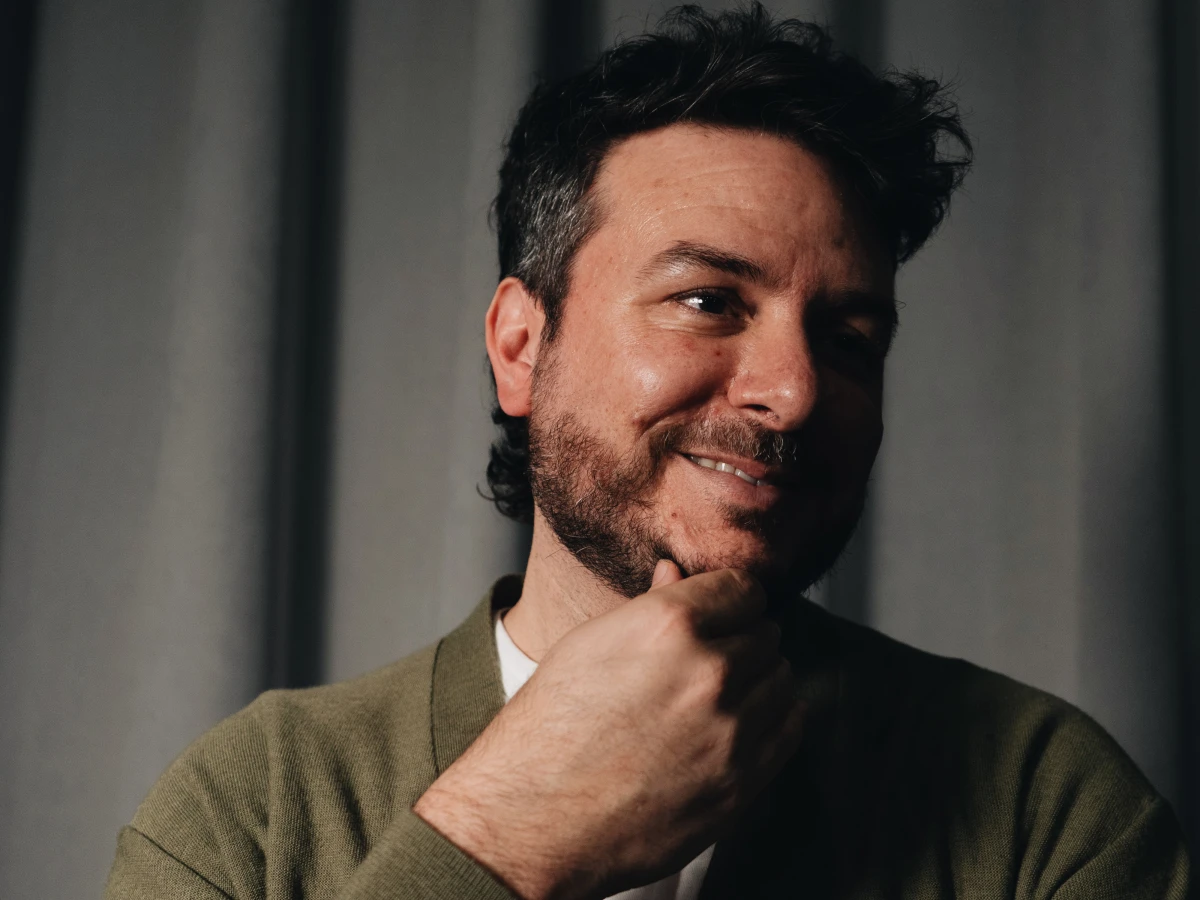
2024 has been a huge year for Chappell Roan, a 26-year-old pop singer from the Midwest whose catchy, larger-than-life songs like “Pink Pony Club” and “Good Luck, Babe!” have garnered billions of streams and dominated festival stages across the globe. But in the studio working alongside her is Daniel Nigro, her regular co-writer and producer who has helped the artist shape her campy, theatrical approach to music. A former emo band frontman, Nigro has become a trusted collaborator for pop music’s new class of rising stars, including Roan as well as Olivia Rodrigo, whose two albums and Grammy award-winning song “Driver’s License” were produced by Nigro. Working with both artists to distill their personalities and voices into distinctive and personal songs, Nigro has established himself as a producer adept at making pop hits for a new generation.
This year, Nigro is nominated for producer of the year, non-classical at the Grammys. He spoke with All Things Considered‘s Ailsa Chang about his path to becoming a pop producer, knowing whether a song will be a hit and why an artist’s second album is kind of like building a mountain.
This interview has been edited for length and clarity.
Ailsa Chang: You have had such a tremendous last few years. You’re this hugely celebrated producer working with two of the biggest pop stars right now. But I understand it was a really long road to get here. You were first in an emo band years ago called As Tall as Lions and then — I love this detail — when you were trying to get started as a songwriter, you were writing commercial jingles.
Dan Nigro: Yes.
Why jingles?
I came out to Los Angeles in the end of 2010, early 2011, coming out of being in a band and not having any money. And I had a very lucky opportunity to start making jingles. It was a way to make money and pay the rent, and I really enjoyed it actually. The whole purpose was like, I just wanted to be making enough money to live, making music. And it wasn’t working out being in a band.
How did you go from writing commercial jingles to writing pop music?
I was always interested in songwriting, but I think the production aspect of it came later. Because for me, I was in the songwriting world and the production world — I should say in the pop music world. A lot of artists don’t need help writing — they don’t want collaborators in the songwriting stuff. They just want to do it themselves or work with a producer. Just being strictly a songwriter, it’s really difficult because the artists always, for the most part, have their relationships with the producers. As a songwriter, you become friends with producers most of the time — you write songs with them and then they work on the songs with the artists, or maybe it’s just the songwriter and the producer and they’re working with the record label and they’re just getting it to an artist.
What I was struggling with at the time was that in the early days being a songwriter, I would go in with a producer and I would write a song with the producer … and then the producer would then make the production later. And what happens is sometimes, one, you can wait weeks or months for them to give you back a demo of the production. Sometimes you get it back and it’s nothing like what you wanted it to sound like.
You don’t have any control at that point.
You have no control with what the song ends up sounding like. And so I found myself constantly disappointed working with other producers because I had no creative control as to what was happening with my music. I basically started to just get into production. I mean, obviously I play piano, I play guitar, I play bass, I can program drums — I’m not a great drummer myself — but I could play all the main instruments. And I started to learn over the years how to use the programming and ProTools a little better. Then all of a sudden I was able to kind of do my own production, my rudimentary own productions.
What’s interesting is Chappell’s path kind of mirrors your slow burn ascent as a producer because people talk about her today like she’s some overnight success. But you were working with her all the way back in 2018. Talk about what it took to get her from the artist you knew in 2018 to what we’re hearing today.
When I met Chappell, I think she was 20, about to be 21. I mean, she was always Chappell Roan, you know. [She] had a very different aesthetic to it. It was definitely a little bit darker and moodier in the music tone. She was definitely shy in the studio, but we had such a great writing chemistry. It was like [that] even on day one.
What do you mean that she was shy?
She was quiet. Basically the first song we ever wrote was this song called “Love Me Anyway.” And I remember we sat and we talked about what she wanted to do musically and she wanted to work on music that had these really dreamy guitars. I picked up my guitar and I started playing and she wasn’t very expressive [or] like, “I like that!” She was sitting on the couch and the whole time I’m playing these chords, quietly, and I’m nervous. And then she just kind of looked at me and she was like, “Oh, I think I have an idea.” I thought that she was going to sing me her idea in the room, like kind of start to go over her ideas to collaborate. And I remember she said, “Well, I think I’m ready to just get on the microphone.” And she got on the microphone and she pretty much just sang the verse and the chorus. I was like, oh, she’s been working, wow.
Like in her brain.
Fast forward like five months later and she came in and she was like, I want to write a song called “Pink Pony Club.” I remember kind of looking at her like, what? Because when you just hear the name “Pink Pony Club” out of context of hearing the song and especially at the time when all of her music was really dark and moody. I was a little bit like…
Is that ironic? [Laughs]
I was a little bit confused as to what she meant. She started explaining, she wanted kind of a dance song. I was excited [and] at the same time, a little bit like, you want a dance song? I remember making a drumbeat, like the beat that is [in] “Pink Pony Club.” Then we worked out what the beginning of the song was going to be. I’ve got this feeling a couple of times in my career of when you write a song that’s so bold, your body starts to give you these weird mixed signals because you start to like it so much and then you actually feel like it’s special, but then you’re afraid. You feel like, oh, are people going to understand this?
So when you were writing “Pink Pony Club” and you were feeling that ambivalence, did you know at the time, like this is going to be a hit?
I feel like that was the moment where I think both of us together started to realize, oh, this project is going to be a lot bigger than just, moody, dark music. When she was singing it, my thought as a producer was like, oh, this is such her personality.
I love listening to the way you interpret the artist’s voice, like the way you’re like, oh, this song, “Pink Pony Club,” It actually even more encapsulated who Chappell is. And the thing I want to understand about you is how do you help artists hear their own voices as they’re working with you. Because you are a decade and a half older than either Chappell or Olivia. You’re a man. Does that age and gender gap ever get in the way when you’re helping them bring their visions to life?
I feel like that’s almost like a better question to ask them in a certain way, because I don’t feel it. I know this sounds cliché, but when you’re making music, it’s like music doesn’t have an age, you know? Especially, like when you’re coming at it from such a holistic place of just simply writing a song, it doesn’t really have to do with age. I guess in certain ways in terms of what we’ve experienced in life. But even if you’re talking about, like, Olivia going through certain things [as] simple as a breakup. I played in the emo band, you know. I was an emotional 20 year old at one point. Ask me if I can relate to those feelings, of course I can.
Does the fact that you used to be in a band, does that help you become a better collaborator today? Because I guess it’s never been just about you, even in your early days as a musician.
I tell everyone that being in a band was the greatest learning experience I’ve ever had for becoming a producer. Because when you’re in a band, you are dealing with multiple personalities. You’re dealing with lots of sensitive people who have a lot of feelings. I always say dealing with band dynamics helped me to navigate — nothing to do with Chappell or Olivia — just simply becoming a producer and how to navigate a situation and try to help somebody.
I always say that for myself personally, being a singer has always really helped because I struggled when I was younger with feeling confident on a microphone and singing. And I was feeling frustrated that when I was working with other producers on my own music, that they weren’t able to help me to sound the way that I wanted to or coach me in the right way. I found myself when I moved out to L.A., when I learned how to produce music and I learned how to record vocals, I would record myself. When I was a singer, I thought that really helped me to navigate working with an artist. Because once an artist gets on a microphone and starts singing, it’s very personal.
You were talking about how when you’re in the process of writing, sometimes when a song is going to be good, you have this simultaneous feeling of like, oh my God, are people going to get me? Or, wow, this is so amazing. Is that what you go for now? Do you know when a song is going to be a hit while you are writing it, or is it this constant imposter syndrome?
I never know if a song is going to be a hit. I feel like I always have to clarify that with anybody. If I’m talking to a record label or if I’m talking to the artist or whoever that like, I never know if a song is going to be a hit. I can only tell when a song is really good. Whether a song becomes a hit is like a whole ‘nother thing that depends on culture and so many other factors that have nothing to do with me. Can I tell when a song is really good and very special and important for the artist? Yes.
What about when you’re working on a second album after the first one is a huge hit, like, I know you’ve already done this with Olivia. Were there lessons from making Guts, which is Olivia’s second album, that you can now apply to Chappell’s second album, which I understand you’re working on right now?
When you make an album, my analogy is it’s a mountain, right? You’ve built a mountain. You’ve made this gigantic mountain that looks like a pile of dirt. And then it comes out and then you have whatever people have the data of — the streaming numbers or the sales or the vinyl sales or the awards and the accolades and the reviews. Those things build up the trees and the paths and the beautiful rivers that flow down the mountain. And then you have this thing that you see and it’s so beautiful, and then you go to make the second mountain. Even though you’re shoveling the rocks and the dirt, it still just looks like rocks and dirt.
And you swivel your head and you’re looking at this mountain with trees and rivers and resorts.
And it just never looks the same. It’s really hard to look back because you just see the things that have happened after you made the record that also cloud the brain thinking about what it actually looks like because it didn’t look like that when you put it out.
Was there ever a time that you and Chappell had some disagreement about what direction a song should go in? And how did you resolve that? Like, do you get to win disagreements?
I think we get to share wins. I’ll give you an example of both. I don’t think it’s a disagreement. I actually think about in “Pink Pony Club,” when I first made the demo of the song, where the guitar solo I had a synth solo. I sent it to her and I was really excited about it. She’s like, “no, it should be a guitar solo.” And I was like a guitar solo? I was like, okay, sure. I’ll try a guitar solo. And then she was like, “no, it’s not melodic enough.” So the version that you hear on the album now is the second pass.
And then she let me win on “Red Wine Supernova” … she made the original demo with a couple of songwriters and then she brought it to me and we wrote the bridge together, we rewrote the verse lyrics. But I was just pushing for it to be like so over the top, and she didn’t want it to be over the top. I remember having a moment of like, just go with me on it. And we went full camp. I remember when we finally laid down the vocals for the song, the “let’s pick it up now,” she was like okay, this is awesome.
I mean, this is the joy of collaboration. You stretch each other, you make each other grow, and you take risks because you trust the other person and make something cool.
I think that’s the important part. You have to listen to each other and know, like, I don’t really 100% fully see it, but I will do it — I’ll put the guitar solo and I’ll work my hardest to make a super melodic guitar solo. And then at the end of the day, it’s like, okay great, you were right. I can’t believe that I didn’t hear this before.
Transcript:
AILSA CHANG, HOST:
2024 has been Chappell Roan’s year. The 26-year-old pop singer has been everywhere from your Instagram feed to “SNL” to festival stages the world over, and she’s racked up billions of streams along the way.
(SOUNDBITE OF SONG, “HOT TO GO!”)
CHAPPELL ROAN: (Singing) H-O-T-T-O-G-O, just snap and clap and touch your toes. Raise your hands, now body-roll. Dance it out, you’re hot to go.
CHANG: But you might be less familiar with Chappell’s regular cowriter and producer Daniel Nigro. He’s nominated for producer of the year at the Grammy Awards, based on his work with Chappell and another singer he’s helped propel to superstar status, Olivia Rodrigo.
(SOUNDBITE OF SONG, “VAMPIRE”)
OLIVIA RODRIGO: (Singing) The way you sold me for parts as you sunk your teeth into me. Oh, bloodsucker, dream crusher, bleeding me dry, like a d*** vampire.
CHANG: Nigro produced both of Rodrigo’s albums, “Sour” and “Guts.” And when I spoke to her last year, she had this to say about him.
(SOUNDBITE OF ARCHIVED NPR BROADCAST)
RODRIGO: He was a really wonderful guiding light throughout this process. And, you know, obviously, he had been through this very unique situation of this crazy, unprecedented “Sour” success with me, so he could empathize and understand what I was going through whilst also being a little older and wiser than me and being able to guide me. So that definitely helped.
CHANG: The ascent of Olivia Rodrigo and Chappell Roan into the pop star stratosphere has helped establish Nigro as the man with the Midas touch when it comes to making pop songs for a new generation. When I caught up with him recently, I asked him what it took to guide Chappell to where she is today from when they first met way back in 2018.
DANIEL NIGRO: When I met Chappell, she was 20, about to be 21, and she was always Chappell Roan. It had a very different aesthetic to it. It was definitely, like, a little bit darker and moodier in the music tone. And, basically, the first song we ever wrote was this song called “Love Me Anyway.”
(SOUNDBITE OF SONG, “LOVE ME ANYWAY”)
ROAN: (Singing) It’s hard to admit I was the one to blame.
NIGRO: And then it wasn’t until February of the next year she came in and she was like, I want to write a song called “Pink Pony Club.” I remember, like, kind of looking at her like, what?
CHANG: (Laughter).
NIGRO: Like, you know, like – ’cause when – if you just hear the name, “Pink Pony Club,” out of context of hearing the song…
CHANG: Totally.
NIGRO: …And especially at the time, when all of her music was really dark and moody…
CHANG: Right.
NIGRO: …You know, I was like – I was a little bit, like, what?
CHANG: Is that ironic (laughter)?
NIGRO: Like, yeah, I was a little bit confused as to what she meant. So she started explaining. She wanted kind of, like, this dancy (ph) song. I was excited ’cause – but at the same time a little bit, like, you want a dance song? So we started writing the song over a beat.
(SOUNDBITE OF SONG, “PINK PONY CLUB”)
ROAN: (Singing) Black lights and a mirrored disco ball, every night’s another reason why I left it all.
CHANG: OK, so the rhythm was first.
NIGRO: The rhythm was first. So we knew what it was going to feel like when it was dancy. I remember feel – I – you – I get this feeling – I’ve got this feeling a couple of times in my career of, like, when you write a song that’s so bold your body, like, starts to give you these really – for me personally, like, it gives me these, like, weird mixed signals that – ’cause you’re like, you start to like it so much, and then you actually, like, feel like it’s special. But then you feel like, oh, are people going to understand this? This does feel really special, so I hope that people understand it.
(SOUNDBITE OF SONG, “PINK PONY CLUB”)
ROAN: (Singing) Pink Pony Club. I’m going to keep on dancing at the Pink Pony Club. I’m going to keep on dancing down in West Hollywood.
CHANG: So when you were writing “Pink Pony Club” and you were feeling that ambivalence, did you know at the time, like, this is going to be a hit?
NIGRO: No, no. So at the time, I was – ’cause – so I guess this is going to your question kind of about, like…
CHANG: How she’s evolved.
NIGRO: …How she’s evolved. And I feel like that was the moment, to me, was like this perfectly encapsulates her personality, which can be both sides of being super euphoric and then also being, like, on the sadder side of the musical spectrum, you know?
CHANG: I love listening to the way you interpret the artist’s voice. Like, the way you’re like, oh, this song, “Pink Pony Club,” it actually even more encapsulated who Chappell is. And the thing I want to understand about you is how you do help artists hear their own voices as they’re working with you because you are a decade-and-a-half older than either Chappell or Olivia. You’re a man. Does that age and gender gap ever get in the way when you’re helping them bring their visions to life? I love the face you just made. It was like, ugh (laughter).
NIGRO: No, no, I don’t think so. I think that that’s – I think – I feel like it’s almost, like, a better question to ask them in a certain way, like, ’cause I don’t feel it. I feel like…
CHANG: You don’t feel that gap?
NIGRO: I feel like the – I mean, like, even, like, if you’re talking about, like, Olivia going through certain things like…
CHANG: Love.
NIGRO: …Simple as a breakup.
CHANG: Yeah.
NIGRO: I played in an emo band, you know? Like, I was an emotional, like, 20-year-old at one point. So, like, asking me if I can relate to those feelings, of course I can, you know?
CHANG: Yeah, yeah, yeah. I am so curious, though, like, when you’re working with an artist like Chappell, were there any – ever any disagreement as to the direction a song should go? And who wins when there is a disagreement?
NIGRO: We – I think we get to share wins. I’ll give you an example of both. So in “Pink Pony Club,” when I first made the demo of the song, where the guitar solo is I had a synth solo. Like, I literally was just, like, me playing the Juno-60, like, doing a solo on the synth. And then I sent it to her, and I was really excited about it. She’s like, no, it should be a guitar solo. And I was like, a guitar solo? And I remember, like, at first being like, a guitar solo? Like, who does guitar solos, you know? Like…
CHANG: A lot of people do guitar solos.
NIGRO: And I was like, OK. And I was like, OK, sure, like, I’ll try a guitar solo.
(SOUNDBITE OF CHAPPELL ROAN SONG, “PINK PONY CLUB”)
NIGRO: That was a moment where, like, I remember, like, at first being like, huh? Like, why does she want a guitar solo here, you know?
CHANG: Yeah. Yeah, yeah, yeah. But you give room for her to be right, and then you experiment.
NIGRO: Yes. Experiment, yeah. And then she let me win on “Red Wine Supernova” because the rhythm is (imitating musical rhythm).
(SOUNDBITE OF SONG, “RED WINE SUPERNOVA”)
ROAN: (Singing) She was a playboy, Brigitte Bardot.
NIGRO: I was just pushing for it to be, like, so over the top. Like, she didn’t want it to be over the top. And she, like – and I remember having a moment of, we were just like – I was like, just go with me on it – you know? – and, like, she kind of was like, OK, and we, like, went full camp, you know?
CHANG: Yeah.
NIGRO: And I think that was a big…
CHANG: And you sold her.
NIGRO: And I sold her on, like, going over the top. And I remember she – when we finally, like, laid down the vocals for the song, with, like, the let’s pick it up now, and, like, just like the overt campiness of it…
CHANG: Right, right.
NIGRO: …That she was like, OK, this is awesome.
(SOUNDBITE OF SONG, “RED WINE SUPERNOVA”)
ROAN: (Singing) OK, y’all, let’s pick it up now. I don’t care that you’re a stoner. Red wine supernova, fall right into me.
CHANG: I mean, this is the joy of collaboration…
NIGRO: Yeah.
CHANG: …You stretch each other. You make each other grow…
NIGRO: Yeah.
CHANG: …And you take risks because you trust the other person…
NIGRO: Yes.
CHANG: …And make something cool.
NIGRO: I think that’s the important part, like, is like, no, you have to listen to each other. And then at the end of the day it’s like, OK, great. You know what? You were right.
CHANG: Yeah.
NIGRO: Like, you – I can’t believe that I didn’t hear this before, yeah.
CHANG: That’s so cool. You trust each other’s intuition.
NIGRO: Yeah.
CHANG: I think that’s great. Producer Dan Nigro. He’s up for producer of the year at this year’s Grammy Awards. Good luck, babe.
NIGRO: Good luck, babe (laughter).
CHANG: Sorry, I had to (laughter). Thank you so much for coming to visit me at NPR West. This was so terrific to be talking to you.
NIGRO: Thank you. Thank you, I appreciate it.
(SOUNDBITE OF SONG, “GOOD LUCK, BABE!”)
ROAN: (Singing) …I call baby. You can kiss a hundred boys in bars, shoot another shot, try to stop the feeling. You can say it’s just the way you are, make a new excuse, another stupid reason.