


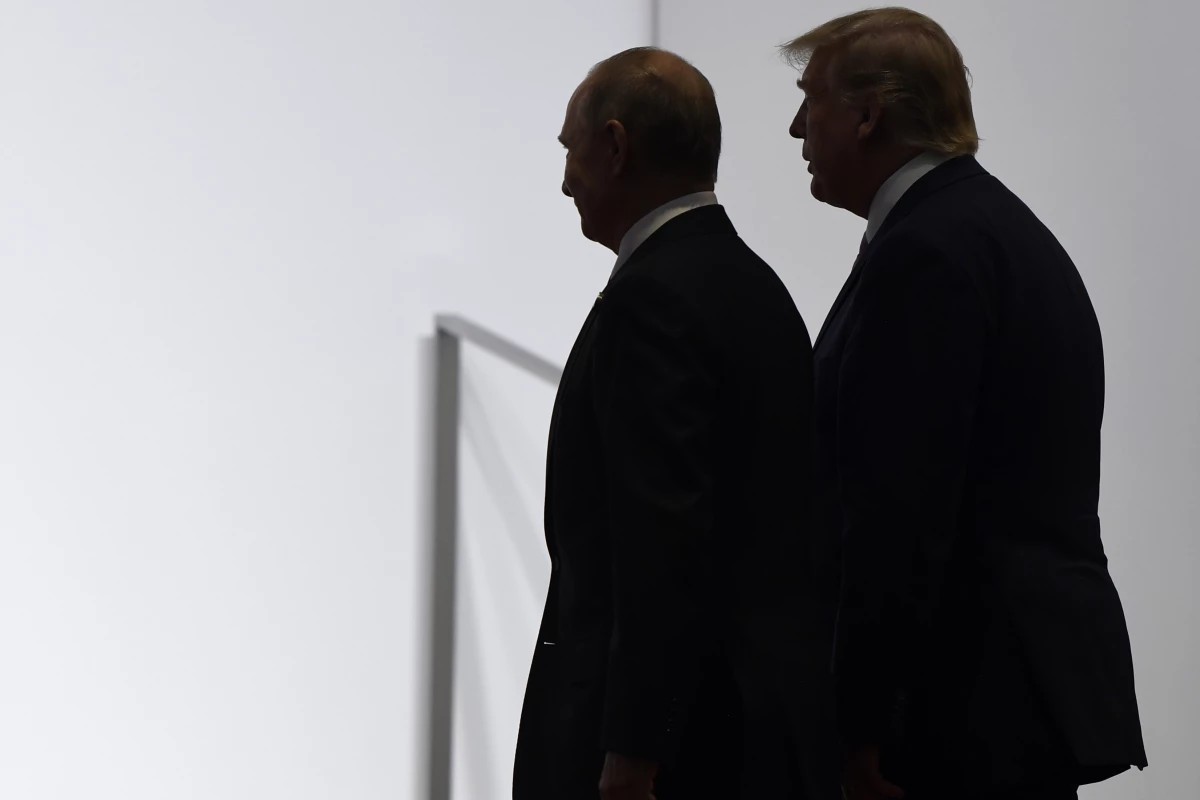
President Trump’s cozying up to Russian President Vladimir Putin marks a significant departure from decades of U.S. foreign policy.
For years, U.S. policies have been in place to isolate Russia over its full scale invasion of Ukraine, but the Trump administration is now poised to make a deal with the Kremlin to end the war without Ukraine having much of a say.
Secretary of State Marco Rubio and National Security Advisor Mike Waltz held talks with Russian officials last week to begin hammering out a Russia-Ukraine peace deal. Ukrainian officials say they were not invited.
Meanwhile, President Trump is falsely blaming Ukraine, a U.S. ally, for starting the war three years ago. Even before these events, Trump was already showing willingness to treat other allies adversarially, including those from NATO – a partnership formed after the defeat of Nazi Germany in World War II.
Morning Edition is exploring the repercussions of America’s foreign policy reversals and realignments under President Trump with different writers, analysts and leaders.
Historian and writer for The Atlantic Anne Applebaum says this departure from traditional U.S. foreign policy is “radical” given that Russia is a daily threat to the rest of Europe.
Applebaum, who last year published the Pulitzer Prize-winning Autocracy Inc. The Dictators Who Want to Rule the World, adds that Trump’s maneuvering is raising concerns not just in Europe but also in the capitals of allies around the world.
She shared these thoughts and more in an interview with NPR’s Leila Fadel about what Trump’s approach means for global stability:
What Trump’s willingness to work with a dictator signals to the rest of the world
U.S. foreign policy has for about 80 years been based on a network of alliances and institutions that allowed the country “to project power, to create zones of prosperity, to enjoy trade with like-minded partners,” Applebaum said, noting that it extended mainly to Europe but also worked in Asia.
Trump is effectively signaling that he’s no longer interested in hearing from European allies, Applebaum said, and that he’s aligning with a power that is a daily threat to Europe. She notes that there are frequent incidents of sabotage in the Baltic Sea and almost daily cyberattacks across the continent from Russian hacking groups.
“By doing that, Trump is saying, ‘I don’t care anymore about alliances. I’m not interested in your opinions. I’m going to do a deal with this dictator over your head,'” Applebaum said. “And that’s a message that is heard not just in every European capital, but in every allied capital around the planet as a sign that the U.S. is changing.”
Shifting away from allies raises economic concerns and questions about stability
Trump’s approach so far has so many implications that “they’re almost hard to think through,” Applebaum said.
“What happens to our trade relationships with Europe and with Asia? What about the US companies that have enjoyed special favor in those markets?” Applebaum said.
She notes that U.S. defense companies, nuclear power companies, and various other utility providers have been welcomed by those countries because “as a way of expressing their fealty to the United States.”
And then there are concerns about peace. What happens to treaties not just on commerce, but treaties on the laws of war, Applebaum wonders.
“All these things that have governed U.S. behavior and allied behavior all over the world for 80 years, now disappear,” Applebaum said.
Transcript:
LEILA FADEL, HOST:
There’s another consequential shakeup in play and it’s the U.S. about-face on Ukraine. Every day this week, we’ll be exploring the repercussions of America’s foreign policy reversals and realignments under President Trump with different writers, analysts and leaders. Today, we focus on that shakeup involving America’s global alliances. After years of U.S. policies to isolate Russia over its full-scale invasion, the Trump administration is ready to make a deal. Secretary of State Marco Rubio and National Security Advisor Mike Waltz held talks with Russian officials recently about a Russia-Ukraine peace deal. A meeting, Ukrainian officials say they were not invited to attend. Meanwhile, President Trump is blaming Ukraine, the U.S. ally, for starting the war three years ago, which is just not true. So what does this mean for the U.S. and its traditional allies? Anne Applebaum has been writing on this at The Atlantic. Her most recent book is “Autocracy Inc.: The Dictators Who Want To Rule The World.” Anne, welcome to the program.
ANNE APPLEBAUM: Thanks for having me.
FADEL: So this is about-face of U.S. policy and Trump seemingly aligning himself more closely with Russian President Vladimir Putin than European allies, what’s most significant about this apparent shift?
APPLEBAUM: For eight decades, U.S. foreign policy has been based on a network of alliances and institutions that allowed us to project power, to create zones of prosperity, to enjoy trade with like-minded partners, mostly in Europe and Asia, but also all over the world. What Trump is doing by signaling that he’s no longer interested in hearing from European allies, that he’s aligning with the power, which I should say, is daily threatening Europe. So there’s both the war in Ukraine. There are frequent incidents of sabotage in the Baltic Sea. All over the continent, there are, you know, almost daily, cyber attacks from Russians – you know, from Russian hacking groups. Russia is a present danger to Europeans. And by – for President Trump to say, I’m taking Putin’s side – in other words, by repeating Russian propaganda about Ukraine, by seeming to want to end the war in a way that will not really end it, that will perhaps stop the fighting, but will not end Russia’s – you know, will not stop Russia from enacting its goal of destroying Ukraine completely eventually. By doing that, Trump is saying, I don’t care anymore about alliances. I’m not interested in your opinions. I’m going to do a deal with this dictator over your head. And that’s a message that is heard not just in every European capital, but in every allied capital around the planet as a sign that the U.S. is changing.
FADEL: OK, so if the U.S. says, I don’t care about alliances anymore, what does that mean for U.S. and global stability?
APPLEBAUM: It has so many implications that they’re almost hard to think through. There are economic implications. You know, what happens to our trade relationships with Europe and with Asia? What about the U.S. companies that have enjoyed special favor in those markets? You know, U.S. defense companies, but also U.S. nuclear power companies, other kinds of big utility companies that have been welcomed by those countries, because – as a way of expressing their fealty to the United States. What happens to a series of trade agreements that have created easy and regular trade between all around the world? What happens to all kinds of treaties? Treaties on – not just treaties on commerce, but treaties on, you know, the laws of war. Now, you know, all these things that have governed U.S. behavior and allied behavior all over the world for 80 years now disappear.
FADEL: So a potentially radical change of global alliances.
APPLEBAUM: Very radical.
FADEL: Journalist Anne Applebaum, thank you for speaking with us.
