


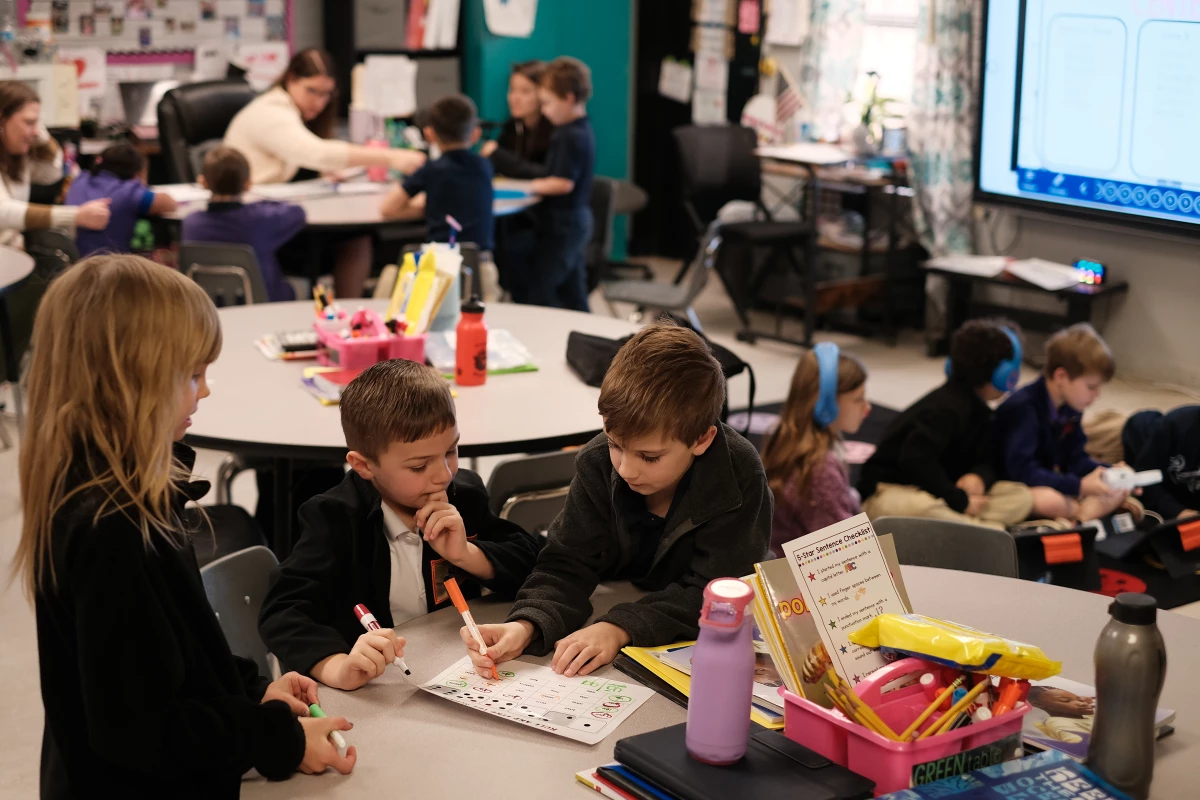
This country has a big problem: its children are not good readers.
Five years after the pandemic first closed the nation’s schools, national test scores show students backsliding in reading all over the United States.
There was one exception: Louisiana. In 2019, Louisiana’s fourth graders ranked 50th in the country for reading. Now, they’ve risen to 16th.
According to an even more granular analysis, Louisiana is the only state that has not only made a “full recovery” from the pandemic in both math and reading, but has improved upon its reading scores since 2019. Nearby Alabama has done the same in math. Those results come from the Education Recovery Scorecard, a joint venture by researchers at Harvard and Stanford.
So what’s in Louisiana’s secret sauce?
We went to Natchitoches Parish School District to find out: It’s one of Louisiana’s poorest school districts, up against some of the biggest hurdles to student achievement, yet it has managed to quickly grow its reading scores.

(Mhari Shaw | NPR)
A remarkable turnaround
The rural town of Natchitoches (pronounced NAK-UH-TUSH) boasts in pamphlets and placards about its rich history: it is the oldest permanent settlement in what became the Louisiana Purchase. Its main thoroughfare, laid with cobblestones along the Cane River, is full of old-timey charm.
But for decades, the parish struggled with a persistent problem with its schools: It was one of the worst-performing districts in a state that long ranked at the bottom of the country.
In the last five years, the Natchitoches Parish School District has made a remarkable turnaround.
About 91% of its students are considered economically disadvantaged, but Superintendent Grant Eloi says he refused to let that mean lowering expectations for students.
“If you don’t expose them to the highest level of rigor, then what chance do they have at making it out of the cycle of poverty?” To help understand how this district and the state improved literacy so rapidly, Eloi thinks back to when he first came here, almost exactly five years ago.
“I was named in the position the day the world shut down,” he says, referring to the start of the pandemic. And with it, schools closed their doors around the country.
Eloi was an experienced educator, but he says he didn’t realize just how “acute” the problems in his new district were: “We were worse off than every parish that touched us.”
In his early days as superintendent, Eloi noticed there was little cohesion. Each of the district’s 14 schools was doing its own thing. “It was like everyone survived the day. Buses came on time, it was like, ‘we’re good.’ And that wasn’t improving student achievement at all.”
He and his team had big plans, and the pandemic wasn’t going to slow them down: “Every school is going to have the same expectations, and we are adamant about that.”

“We needed to make differences in a hurry”
To train teachers and help set expectations, Eloi brought on Kathy Noel, who had helped raise student achievement in Jefferson Parish, the state’s biggest school district.
For Noel, who now serves as the school improvement specialist in Natchitoches, it was personal: She was born and raised in this town. She went to school in this district, as did her children and now, grandchildren.
A big part of the problem, says Noel, was that students simply did not know how to read. “We needed to make some differences in a hurry, not only in Louisiana, but also back here in my hometown.”
With COVID relief funds and a grant from the federal government, Noel helped create a clear system for tracking student achievement goals, training a cadre of experienced educators called “master teachers,” and adopting state-approved instructional materials.
Some of these reforms came as a result of steps the state has taken in recent years, and in other cases, Natchitoches was ahead of the curve.
“The state and us were simpatico. Sometimes they thought about it first, sometimes we thought about first,” Eloi says. “But I really felt like we were in parallel lines of each other.”

Teaching with new materials, based on the latest research
For more than a decade, Louisiana’s department of education has reviewed instructional materials for quality to ensure what’s being taught in classrooms lines up with the latest education research. Its focus has largely been on pushing literacy reforms to improve reading.
“What we’ve been able to do over the last five years is really train our educators and empower educators to utilize those high-quality instructional materials,” says Jenna Chiasson, deputy superintendent at the state’s Office of Teaching and Learning.
Louisiana has trained thousands of teachers to use state approved materials, including mentor teachers who specialize in literacy.

Louisiana is a local control state, and each district is, in some ways, free to choose how it teaches its students. But the state incentivizes schools to use those high quality materials: For lower-performing schools to get certain funds from the state, they must use state-approved curricula.
For reading, those materials include a strong focus on evidence-based research instruction, or the “science of reading.”
In 2021, Louisiana began requiring K-3 teachers and administrators to receive training in the science of reading. Other states have similar laws, but experts say Louisiana was ahead of the curve.
In Natchitoches, 100% of teachers had completed the required training by the state’s deadline in 2023, while 70% of teachers across Louisiana had done so, according to state data.
How teaching kids to read “has changed tremendously”
Before the state’s reading training, Kathy Noel remembers observing teachers who were using what’s known as “whole group instruction”—teaching the entire class one lesson, together.
“It was, ‘I’m going to read to you, you tell me what I read’,” she explains. “We were just pretty much hoping they would read and, as you know, hope is not a strategy.”
That approach can mask big differences among individual students: In a chorus of young voices, lower-performing children were simply echoes of better readers.

(Mhari Shaw | NPR)
Cady Caskey has taught at Provencal Elementary School in Natchitoches for 11 years, and says the science of reading training “changed tremendously” her instruction.
“I have really transformed into more small-group instruction so that I’m able to tailor it per each individual child’s needs.”
Now, when you visit Caskey’s vibrant second grade classroom, she begins her reading lesson with the children sitting on a carpet, engaging together for about 15 minutes.
Then, they break off and rotate through small groups, based on their reading level.
Some students work directly with Caskey at a kidney table, practicing phonics skills, like sounding out and decoding words. Others do group activities, or read independently.
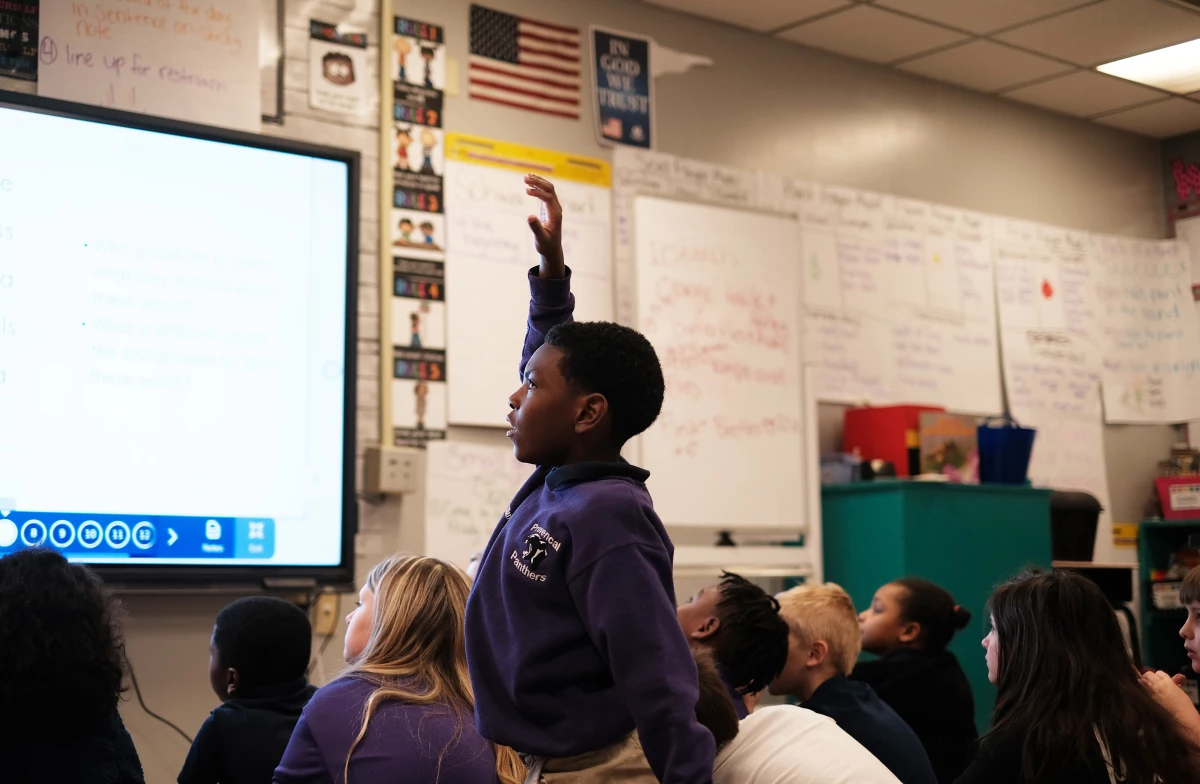
Compared with five years ago, Caskey says, her students are “more engaged now because they are doing things that they can do … now it’s on their level. So if they don’t get it, I’m right there and can support them.”
Across the district, students who are struggling with reading get additional interventions, in even smaller groups, every morning for 45 minutes. Higher-level readers take enrichment classes like coding, art or gardening.
Now, this kind of structure exists at every school in the district.

Ongoing support for teachers, and lots of data
All 14 schools in the Natchitoches district have at least one master teacher; most have two. These veteran educators observe classrooms, sometimes stepping into a lesson to co-teach, or even model instruction for a teacher. Master teachers also analyze student data to determine what’s working and what isn’t.
Each week, they lead “cluster meetings” for classroom teachers. In a recent one, master teacher Chrissie York led a session on “continuous blending” of words—a phonics strategy that teaches students to stretch out the sounds in a word to ultimately decode it.
Earlier this year, first and second grade teachers at Provencal noticed their students were successfully identifying the individual sounds in a word: “KUH-AH-T,” for example. But when it actually came to forming the entire word and recognizing it as “cat,” they struggled.

So, teachers field-tested the continuous blending strategy to see if it would help. “And we have found that it made, the numbers show, a huge difference,” says Caskey.
She thinks back to how much she struggled in her early years of teaching, and the difference a master teacher, and regular data, could have made back then.
“Now, if I have a question or I’m struggling with figuring something out, I have somebody who I can bounce ideas off of. I have somebody to come in and support me.”
A strong state focus on literacy
The layers of support for educators work up to the state: the district has reading specialists who work with each school, and the state has a dedicated literacy team that roves through different, higher-need districts across the state.
For more than two decades, Louisiana has had a strong system for holding its schools accountable and that system has evolved over the years. A new, more rigorous set of standards takes effect in the 2025-26 school year, and will now incorporate K-2 reading skills.

“The Louisiana accountability system is stronger than many other state systems,” says Susan Neuman, a literacy expert and former U.S. Assistant Secretary of Elementary and Secondary Education under George W. Bush. Struggling schools there, she says,”are going to be scrutinized, examined in much greater depth.”
And starting this year, Louisiana third graders who aren’t reading at grade level will be held back and receive extra support. While retention policies have been cause for debate, research has shown the approach helped improve and sustain reading gains in Mississippi, especially for Black and Hispanic students.
“It feels good to not be at the bottom”
Kathy Noel is relieved her state and district are finally becoming models for the rest of the country.
“Down here in the South, we don’t want to be last,” she says. “It feels good to not be at the bottom and to not be looked down on.”
While Natchitoches’ reading growth has been impressive, educators recognize their students’ scores are just slightly above the 2024 national average. So, they’re striving for more. But maintaining good student outcomes requires money.

COVID relief funds from the federal government ran out last year, meaning Louisiana, along with the rest of the country, will have less to invest in student achievement.
Jenna Chiassion at the state education department says Louisiana used some of those funds to create a free, science of reading training that will be available for years to come. Federal grants will help keep literacy reforms in place, for now.
Natchitoches’ school district also earned a $14.26 million federal grant in 2023, which helped pay for many of the programs that have led to its rapid growth. That money runs out after three years, and with federal spending cuts, including in the U.S. Department of Education, some at the district worry such programs could be affected.
“What we’ve done costs a lot of money,” says Eloi, the superintendent. But, he adds, the federal grant allows for a sustainability plan, which his team is working on:
“We see the value of our master teachers, and I don’t care what it takes, we’re going to keep those systems in place.”
Kathy Noel says making sure children know how to read remains a guiding light.
“There are consequences for graduating on time. There are consequences for having a higher paying job in the future,” she says. “There are consequences for being a citizen. So if you think about the broader aspect of reading, why wouldn’t we make it the foundation for student learning?”

Reporting contributed by: Aubri Juhasz
Producing contributed by: Lauren Migaki
Digital story edited by: Steve Drummond
Visual design and development by: Mhari Shaw
Transcript:
ARI SHAPIRO, HOST:
Five years ago this week, the pandemic began shutting down schools. Since then, students all over the country have been doing worse and worse on national reading tests. There’s one state, though, where students have actually gotten better at reading since 2019 – Louisiana. We wanted to know what’s their secret sauce, so NPR’s Jonaki Mehta went to a rural parish in central Louisiana that’s defying the odds.
JONAKI MEHTA, BYLINE: The historic downtown of Natchitoches sits along a river. Its streets are laid with cobblestones. It has an old-timey charm.
KATHY NOEL: This is a really special place. It’s the oldest settlement in the Louisiana Purchase.
MEHTA: That’s Kathy Noel. She was born and raised here.
NOEL: Yeah. And we call it our little New Orleans.
MEHTA: People in Natchitoches are proud of how much history is here. But that history is also riddled with what was a persistent problem with its schools.
NOEL: So even though I just shared how magnificent the city is, it is one of the poorest parishes in the state of Louisiana.
MEHTA: Ninety-one percent of kids in this district are considered economically disadvantaged. And in poorer parts of the country, students have hurdles that make it harder to do well in school. Five years ago schools here were failing. Noel says a big part of the problem was that kids just did not know how to read.
NOEL: That was a big urgency call, that we needed to make some differences in a hurry, not only in Louisiana, but also back here in my hometown.
MEHTA: In 2021, Natchitoches’ superintendent brought on Noel as a school improvement specialist. She works with every school in the district, including Provencal Elementary.
NOEL: You come upon this nice building in the middle of nowhere, and it’s like walking into this magical world.
UNIDENTIFIED PERSON: (Over loudspeaker) …Where we are preparing students for lifelong success.
NOEL: It’s what schools should be. You know, children are excited to be there.
MEHTA: In every classroom I walked into at Provencal Elementary, each teacher was using the same strategies – small group, evidence-based, explicit reading instruction that’s called the science of reading. Now, kids knowing how to read is in the foundation of every subject – science, social studies, even math. It’s part of a concerted effort that began five years ago.
CADY CASKEY: So today, we are learning to identify two-syllable schwa (ph) words spelled with A.
MEHTA: Students learn all together for only 10 to 15 minutes before they break up into small groups, like here in Cady Caskey’s second-grade class.
CASKEY: Let’s blend it. Tuh (ph).
UNIDENTIFIED STUDENT #1: Tuh.
UNIDENTIFIED STUDENT #2: Tuh.
CASKEY: Undra (ph).
UNIDENTIFIED STUDENTS: Tundra.
CASKEY: Tundra.
MEHTA: The district’s reading specialist, Andrea Penrod, walks us through what’s happening in the lesson.
ANDREA PENROD: The lesson that they teach small groups is still the same standard, but it’s scaffolded down to meet the students where they’re at. That is not something that we did five years ago.
CASKEY: Does A say ah (ph) in this word?
UNIDENTIFIED STUDENT: No.
CASKEY: No.
UNIDENTIFIED STUDENT #3: No, it says uh (ph).
CASKEY: It says uh. OK?
MEHTA: The students are split up by reading skill level. Here, Caskey is teaching four second-graders how to sound out words and decode them, again, based on the science of reading. Each group gets a turn at her table. In the meantime, other groups read independently or play games to identify words.
UNIDENTIFIED STUDENT #4: Alone.
UNIDENTIFIED STUDENT #5: Dylan’s kind of winning.
GRANT ELOI: When I first got here, it was just everyone survive the day. Buses came on time. We’re good. And that wasn’t improving student achievement at all.
MEHTA: That’s Natchitoches’ superintendent Grant Eloi, who started his job right at the start of the pandemic. His focus was using reforms to bring cohesion to the district. And all this change began just as the world was dealing with one of the hardest times to teach and to learn. But Eloi says pandemic or not, there wasn’t a moment to lose.
ELOI: When you say let’s wait a year, what you’re really saying is it’s OK to let these kids suffer another 365 days.
MEHTA: Using COVID relief money from the federal government, Noel and Eloi started by setting rigorous academic goals for every school and every single student.
ELOI: If you don’t expose them to the highest level of rigor, then what chance do they have of making it out of the cycle of poverty?
MEHTA: So the district went out with the old and in with a new version of high-quality reading materials approved by the state. Noel says before, teachers used to read to children and kids read back as a group, but the voices of the struggling readers got lost in the chorus.
NOEL: We were just hoping they would read. And as you know, hope is not a strategy.
MEHTA: And it’s not just Natchitoches that changed its strategy. In 2021, Louisiana passed a law requiring K-3 teachers and administrators to take mandatory training in the science of reading. Many states have similar laws now, but experts say Louisiana was ahead of the curve. It’s long had a strong system for holding its schools accountable and for years has required struggling schools to use state-approved materials if they want to receive certain funds. By the state’s deadline, 100% of teachers in Natchitoches had completed the science of reading training, while other districts lagged behind. Cady Caskey says the training revolutionized her instruction.
CASKEY: It has changed tremendously.
MEHTA: In the past, she used to teach her students all together.
CASKEY: And you either got it or you didn’t, whereas I have transformed that into more small group instruction so that I’m able to tailor it per each individual child’s needs.
MEHTA: And none of these lessons are just based on what’s next in the curriculum. Teachers collect data on each student every week and base their lessons on how they’re doing.
CASKEY: I’ve looked at your progress monitoring. Two-syllable words is something that you guys struggled with.
MEHTA: Teachers then take that data and meet every week with a master teacher, whose job is to coach and support classroom teachers.
CHRISSY YORK: By the end of the meeting, teachers will be able to effectively implement the continuous blending strategy.
MEHTA: Master teacher Chrissy York is leading this week’s meeting, and she’s teaching her teachers.
YORK: OK, let’s blend the first two sounds together.
UNIDENTIFIED TEACHERS: Tom. Tom.
YORK: Very good.
MEHTA: Master teachers and these weekly meetings came as two of the reforms here in Natchitoches. Cady Caskey says she sees the changes in her students every day. Like, that morning, she’d noticed one of them reading above grade level.
CASKEY: At the beginning of the year, this child came to me knowing very few letter sounds, could not read at all. And to hear him somewhat fluently read that page, oh, it almost brought tears to my eyes (laughter).
MEHTA: Now, data-driven instruction, teacher support and accountability are built into every school in the district. Kathy Noel says the proof is in the pudding. Natchitoches used to have what the state labeled struggling schools.
NOEL: Proud to say we’ve removed all but three of those labels. We no longer have any D or F schools.
MEHTA: For every educator I spoke to in Natchitoches, helping students become good readers is a guiding light in their work.
NOEL: There are consequences for graduating on time for having a higher-paying job. There are consequences to being a citizen. If you really think about the broader aspect of reading, why wouldn’t we make it the foundation for student learning?
MEHTA: Alijah Oaks, a kindergartener here at Provencal Elementary, put it more simply.
ALIJAH OAKS: It makes you more smarter to know all of your words and know how to read.
MEHTA: Jonaki Mehta, NPR News, Natchitoches, Louisiana.
(SOUNDBITE OF MUSIC)
