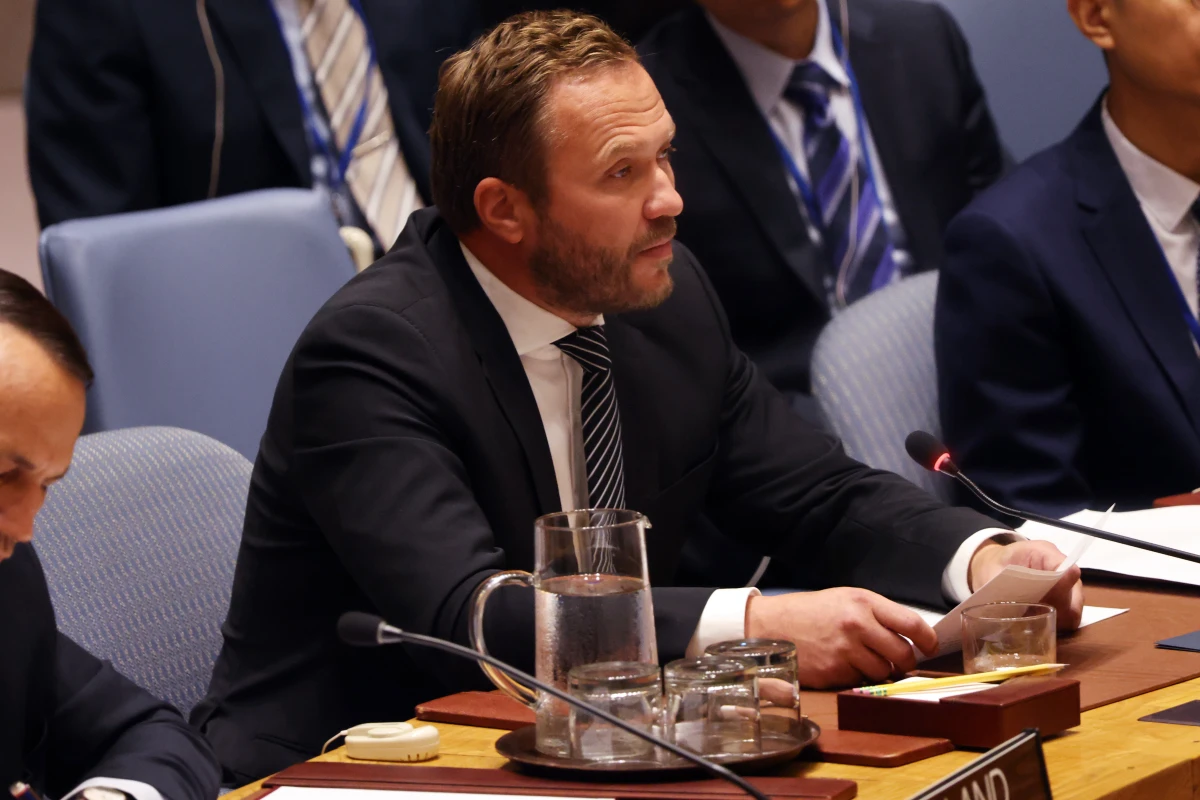
Estonia’s foreign minister says NATO is ready to respond to further Russian threats.
“This is a warning to Putin not to test us anymore,” said Margus Tsahkna in a recent interview with NPR’s Morning Edition.
The comments came after President Trump said NATO countries should shoot down Russian aircraft that enter their airspace, marking a shift in the president’s tone towards Russia.
Trump spoke following a meeting with Ukrainian President Volodymyr Zelenskyy as calls mount for NATO members to use force to stop Russian provocations on the alliance’s eastern flank.
Last week two Russian fighter jets entered Estonian airspace where they remained for 12 minutes before being escorted to international skies.
The incursion is the latest in what NATO has called “a wider pattern of increasingly irresponsible Russian behaviour.”
Moscow denies entering Estonian airspace.
In response to the violation, Estonia invoked Article 4 of the NATO treaty, calling for a formal consultation between member states to discuss the violation. The United Nations Security Council also met to discuss the incursion.
This was the second time a NATO ally had invoked the Article in a matter of weeks. Poland did so after shooting down several Russian drones that violated its airspace earlier this month.
NPR’s Steve Inskeep spoke with Tsahkna to talk about his country’s response.
This interview is lightly edited for length and clarity.
Steve Inskeep: Can you tell me, is Estonia, in fact, prepared to open fire if needed on Russian aircraft.
Margus Tsahkna: As President Trump said, and as well, Secretary General Rutte said that NATO is ready to act. You know, this is the reason why we are actually a member of NATO. So if Russia is coming again as a threat, then NATO will act as it was meant to. But it was very important that President Trump said very clearly as well on a political level that we will do that. So this is a red line and this is a warning to Putin not to test us anymore.
Inskeep: You just said “red line.” And you also mentioned President Trump’s remarks. I understood his remarks yesterday as resetting the U.S. position to what it was during the Biden administration. That Ukraine should fight it out and that the U.S. will keep sending weapons, although in a somewhat different form. What do you make of the president’s change there?
Tsahkna: If you put everything together, what has happened during the last couple of weeks in Europe, the violation of Poland’s airspace to Estonia — NATO has gathered twice already based on Article 4 and made very strong statements and also created the mission Eastern Sentry to increase the capabilities on the eastern flank. And then twice as well the United Nations Security Council came together and really said very clear positions about Russian aggressive behavior. And the U.S. has been in very clear positions on that. So we can say that in rhetoric, at least, there has been a change in the position of President Trump as well. And this is the good news, because we have been of the position all the time that we need to support Ukraine.
Inskeep: As President Trump took office for the second time, some people feared the end of NATO. Do you think NATO is actually stronger now?
Tsahkna: NATO is stronger now, NATO is politically stronger. As well, in the Hague, NATO decided to increase spending to 5% of GDP. And also we saw that NATO is able to act from the first second on the eastern flank. In Poland the drones were shot down. So we can say that we are stronger.
This article was adapted for the web by Lisa Thomson.
Transcript:
STEVE INSKEEP, HOST:
OK. We heard about the Russian jets flying over Estonia, among other places. We heard President Trump say he wants NATO countries to shoot down intruding aircraft. Now we have called Estonia’s foreign minister, Margus Tsahkna. He’s on the line from New York. I’ll mention there’s a bit of a delay on the line, but foreign minister, welcome. And can you tell me, is Estonia, in fact, prepared to open fire, if needed, on Russian aircraft?
MARGUS TSAHKNA: As President Trump said and as well Secretary General Rutte said, that NATO is ready to act as NATO is, you know – this is a reason why, actually, we are a member of NATO and NATO-based and to secured and defense (ph) NATO territory. So if Russia is coming again and is a threat to us, then NATO will act as it was meant to. But it was very important that President Trump said very clearly, as well, on political level that we’ll do that. So this is a red line, and this is a warning to Putin not to test us anymore.
INSKEEP: You just said red line, and you also mentioned President Trump’s remarks. He said many things, of course, yesterday, including reshaping his overall stance towards Ukraine and Russia. He has several times reached out to Russia. He has even met with President Vladimir Putin. But I understood his remarks yesterday as resetting the U.S. position to what it was during the Biden administration, that Ukraine should fight it out and that the U.S. will keep sending weapons, although in a somewhat different form. What do you make of the president’s change there?
TSAHKNA: If you put everything together, what has happened during the last couple of weeks in Europe – I mean, as well, the attacks against Poland, attack – not attack, but actually violation of airspace to Estonia, and then NATO gathered twice already, based on Article 4 consultations, and made a very strong statements and also created the mission Eastern Sentry to increase the capabilities on the eastern flank. And then twice as well, the United Nations Security Council came together and really said very clear positions about Russian aggressive behavior and also about Ukraine. Yesterday, the Security Council was clear, and U.S. has been, as well, in very clear positions on that. So we can say that – on rhetoric, at least – there has been a change on the position of President Trump as well. And these are the good news because we have been on the position all the time that we need to support Ukraine. We need to be very clear about Russia and put Russia under pressure about the sanctions and support Ukraine continuously. So I can say that these are the good news, but let’s see what is going to happen.
INSKEEP: Has there been, from your perspective, then, positive developments over the past six or eight months? There have been – there are a lot of skeptics of the U.S. approach to the war in Ukraine here in the United States. President Trump spoke for them, reached out and tried to reach an accommodation and found out that doesn’t seem to be possible right now, and so he’s back to the original position. Is that what you see happening here?
TSAHKNA: This is exactly what we were telling already months ago, that we need to focus on putting pressure on Putin. We need to support Ukraine because Putin is just playing with President Trump as well to win the time. But in real life, what has happened was that after Alaska meeting – OK – Putin was brought out from the isolation. He’s using that as a victory, but in real life, Putin has not changed any goals about Ukraine. As well – that’s the truth as well, that he has not gained any kind of strategic breakthrough on the battlefield. Controversially, his economical figures are very bad. His economy is not doing well. And yesterday, as well, after the President Trump and President Zelenskyy meeting, Trump said that he got an overview about the economical situation. So the truth is, if Europe is doing our part and also U.S., I think that we can push Putin on the position when he really starts to negotiate about the peace, which will be lasting and trustful. So let’s see. We have known this position already years.
INSKEEP: We’ve just got a few seconds left, but I will note that as President Trump took office for the second time, some people feared the end of NATO. Do you think NATO is actually stronger now?
TSAHKNA: NATO is stronger now. NATO is politically stronger, as well. In The Hague, NATO decided to increase the – invest spending to 5% of GDP. And also, we saw that NATO is able to act from the first second on the eastern flank. In Poland, the drones were shut down.
INSKEEP: Yeah.
TSAHKNA: And also, in Estonia, NATO reacted from the first second, and planes went up, and the situation was under control.
INSKEEP: OK.
TSAHKNA: So we can say that we are stronger.
INSKEEP: Estonia’s foreign minister, Margus Tsahkna. It’s a pleasure talking with you. Thank you so much.
TSAHKNA: Thank you.
(SOUNDBITE OF MUSIC)