


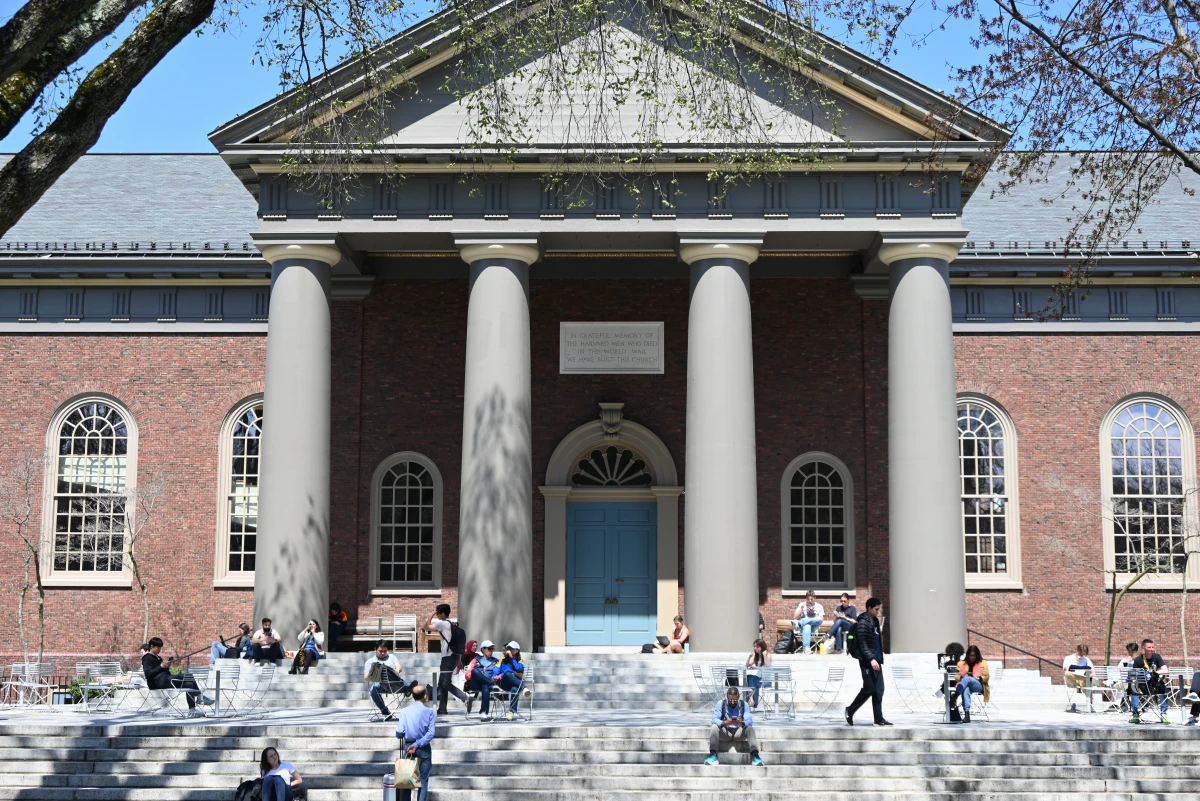
The Trump administration is pulling back from major areas of government spending: slashing budgets for public health, environmental protection, international aid and education. In April, the federal government said it’s freezing more than $2.2 billion in grants and $60 million in contracts to Harvard University after the school said it would defy the Trump administration’s demand to curb campus activism. The university has since sued the administration, calling the move unconstitutional.
Some philanthropists are stepping in to bridge the gap to fill the financial needs — but often with strings attached. Bloomberg Philanthropies pledged to uphold U.S. commitments to international climate agreements after federal withdrawal. The Marguerite Casey Foundation plans to distribute $130 million in 2025, an increase, to support community-led efforts and nonprofit independence. The Freedom Together Foundation is doubling its grant payout to at least 10% of its endowment, citing widening federal funding gaps. And the MacArthur Foundation has committed at least $150 million more to its endowments to bolster civil society groups under threat. (Note: NPR receives financial support from the MacArthur Foundation.)
In an interview with Morning Edition, NPR’s Elissa Nadworny asked what happens when government funding dries up. Sabrina Howell of NYU’s Stern School warned: “No private company would take on [research] on their own because it’s really expensive… only government can fund that kind of work.” In the same interview, Richard Vedder of the Independent Institute, a libertarian think tank, said: “It may be a disruptive way to change things. But on the whole, the attempt to reevaluate research grant money is a valid one,” Vedder said.
According to The New York Times, major donor and businessman Michael Bloomberg, a former New York City mayor and founder of Bloomberg Philanthropies, has stepped in to support Harvard through financial contributions. But some major donors are also pressuring university leaders to soften their opposition to the Trump administration and reopen negotiations with the White House. Hedge fund billionaire and major donor John Paulson has privately urged Harvard to soften its stance. Bill Ackman, another prominent donor, has publicly criticized the university. And Kenneth Griffin, who has given more than half a billion dollars to Harvard, warned of “stormy times ahead.”
Speaking to Morning Edition, Teddy Schleifer, a reporter for the New York Times who covers billionaires, said: “A shrinking public sector can reward and empower a private sector and a billionaire class that is richer than ever, and that comes with trade-offs.” He added, “If you’re a grantee, you are choosing your best tormentor… But everything’s a little bad.”
NPR’s A Martinez spoke with Schleifer about what happens when public money disappears, and it’s a billionaire’s checkbook that fills the gap.
Interview Highlights
A Martinez: So when private donors step in to replace public funding, what kind of influence does that buy?
Teddy Schleifer: As a private institution, you are not accountable to the public. Theoretically, the twist on that, though, is that lots of these private schools take plenty of public funding, and that gives Trump leverage to sort of twist them and make them beg and make them maybe bend the knee in a way that, if they were totally privately funded, these institutions could give trump the middle finger even more. But the reality is, every kind of institution of higher ed is somewhat publicly funded, except for in extreme cases, and that gives the President of the United States leverage to withhold money.
Martinez: Outside education, we’ve seen foundations ramp up grant making. I know former New York City Mayor and billionaire Michael Bloomberg has a pledge to cover U.S. funding for global climate work. Are these kinds of things stopgaps, or donors trying to set new agendas?
Schleifer: I think the Bloomberg example is interesting. I would argue that that is actually a bit of an exception. I think what we’re seeing right now is lots of philanthropists saying that they are unable to kind of be that bulwark against federal funding cuts. Especially in a global context, you’ve seen lots of foundations either say explicitly or sort of implicitly that they don’t have enough money to do this sort of thing if the US government is going to stop funding USAID, for instance, I think it takes like $40 billion a year. Like there’s no foundation in the world, or no rich person in the world who could, come with $40 billion a year to be that replacement funding. So I don’t even know if they’re even really stopgaps. I think there’s been in the charitable sector a lot of hands being thrown up, and the belief that there’s no real way to cover Trump’s subtractions.
Martinez: What worries these big time donors right now? I mean, are they genuinely concerned about public services collapsing, or they may be more focused on protecting their causes and reputations?
Schleifer: I think lots of philanthropists are torn because they want to speak up enough to protect the grantees from Trump, but they don’t want to speak up too much, so much that they attract Trump’s unwanted attention. I think if you look at institutions like the Gates Foundation right now, a lot of grantees or partners of the foundation are facing existential threats to their humanity. Take USAID. The Trump administration has gutted that agency, and Bill Gates and his philanthropic aides are concerned, but they don’t want to say too much, because they don’t want the retribution campaign that has targeted USAID to come for Bill Gates himself.
Martinez: You think we’re seeing maybe a permanent shift here where public services increasingly depend on private donors?
Schleifer: That seems [to be true] in some places for a while. A shrinking public sector can reward and empower a private sector and a billionaire class that is richer than ever, and that comes with trade offs. Sometimes you hear private philanthropists defend themselves where they say, Hey, what do you want me to do? Like, put the money under my mattress or spend it on yachts? Like to be involved. Yes, it makes me more powerful, and it gives me the ability to put my own business interests and commingle those with my grantees interests, but if the public sector is shrinking, wouldn’t you rather have the private sector involved than not? That’s sort of the counter argument that lots of wealthy people make, is that the alternative world where the public sector is shrinking and the private sector is shrinking is the worst outcome. So if you’re a nonprofit, or you’re a higher ed institution or a lab, a research lab out there, the worst case scenario might be for everyone to ignore you, but there is sort of this seesawing that happens between the private sector and the public sector with regards to philanthropy and taxes and federal spending, where it always feels like, if you’re a grantee, you are choosing your best tormentor, you know you’re choosing the institution and the funding source that is the least bad. But everything’s a little bad.
Transcript:
LEILA FADEL, HOST:
The Trump administration is pulling back from major areas of government spending, slashing budgets for public health, environmental protection and education. That includes a freeze on more than $2 billion in federal funding to Harvard University, a move meant to punish the school for rejecting new political oversight. Harvard is suing the administration, and some big donors are stepping up. But what happens when public money disappears, and it’s a billionaire’s checkbook that fills the gap? A Martínez spoke with Teddy Schleifer about that. He’s a reporter who covers philanthropy and political power for The New York Times.
A MARTÍNEZ, BYLINE: When private donors step in to replace public funding, I mean, what kind of influence does that buy?
TEDDY SCHLEIFER: You know, as a private institution – right? – you are not accountable to the public, theoretically. The twist on that, though, is that lots of these private schools take plenty of public funding. And that gives Trump leverage to sort of twist them and make them beg and make them maybe bend the knee in a way that if they were totally privately funded, these institutions could give Trump the middle finger even more, you know? But the reality is every kind of institution of higher ed is somewhat publicly funded, except for in extreme cases, and that gives the president of United States leverage to withhold money.
MARTÍNEZ: You know, outside education, we’ve seen foundations ramp up grant-making. I know former New York City mayor and billionaire Michael Bloomberg has pledged to cover U.S. funding for global climate work. Are these kind of things, Teddy, stopgaps, or are donors trying to set new agendas?
SCHLEIFER: You know, I think the Bloomberg example is interesting. I would argue that that is actually a bit of the exception. I think what we’re seeing right now is lots of philanthropists saying that they are unable to kind of be that bulwark against federal funding cuts. Especially in the global context, you’ve seen lots of foundations either say explicitly or sort of implicitly message that they don’t have enough money to do this sort of thing. If the U.S. government is going to stop funding USAID, for instance – which I think takes, like, $40 billion a year – like, there’s no foundation in the world or no rich person in the world who could, you know, come up with $40 billion a year to be that replacement funding. So I don’t even know if they’re even really stopgaps. I think there’s been, in the charitable sector, a lot of hands being thrown up and a belief that there’s no real way to cover Trump’s subtractions.
MARTÍNEZ: What worries these big-time donors right now? I mean, are they genuinely concerned about public services collapsing, or are they maybe more focused on protecting their causes and reputations?
SCHLEIFER: You know, I think lots of philanthropists are torn because they want to speak up enough to protect kind of the grantees from Trump. But they don’t want to speak up too much – so much that they attract Trump’s unwanted attention. You know, I think you look at an institution like the Gates Foundation right now. A lot of grantees or partners of the foundation are facing existential threats to their humanity. Take USAID. The Trump administration has gutted that agency. And Bill Gates and his philanthropic aides are concerned, but they don’t want to say too much because they don’t want the retribution campaign that has targeted USAID to come for Bill Gates himself.
MARTÍNEZ: You think we’re seeing maybe a permanent shift here, where public services increasingly depend on private donors?
SCHLEIFER: That’s been true in some places for a while. You know, a shrinking public sector can reward and empower a private sector and a billionaire class that is richer than ever, and that comes with trade-offs. You know, like, sometimes, you know, you hear private philanthropists defend themselves where they say, hey, what do you want me to do? Like, put the money under my mattress or spend it on yachts? Like…
MARTÍNEZ: (Laughter).
SCHLEIFER: ..To be involved, yes, it makes me more powerful, and it gives me, you know, the ability to put my own business interests and commingle those with my grantees’ interests. But if the public sector is shrinking, wouldn’t you rather have the private sector involved than not? That’s sort of the counterargument that lots of wealthy people make, is that the alternative world where the public sector is shrinking and the private sector is shrinking is the worst outcome. So if you’re a nonprofit or you’re a – you know, a higher ed institution or a lab, a research lab out there, the worst-case scenario might be for everyone to ignore you. But there is sort of this seesawing that happens between the private sector and the public sector with regards to philanthropy and taxes and federal spending, where it always feels like if you’re a grantee, you are choosing, you know, your best tormentor. You know, you’re choosing the institution and the funding source that is the least bad, but everything’s a little bad.
MARTÍNEZ: That’s Teddy Schleifer, a reporter at The New York Times covering politics and billionaires. Teddy, thanks a lot.
SCHLEIFER: Sure thing.
