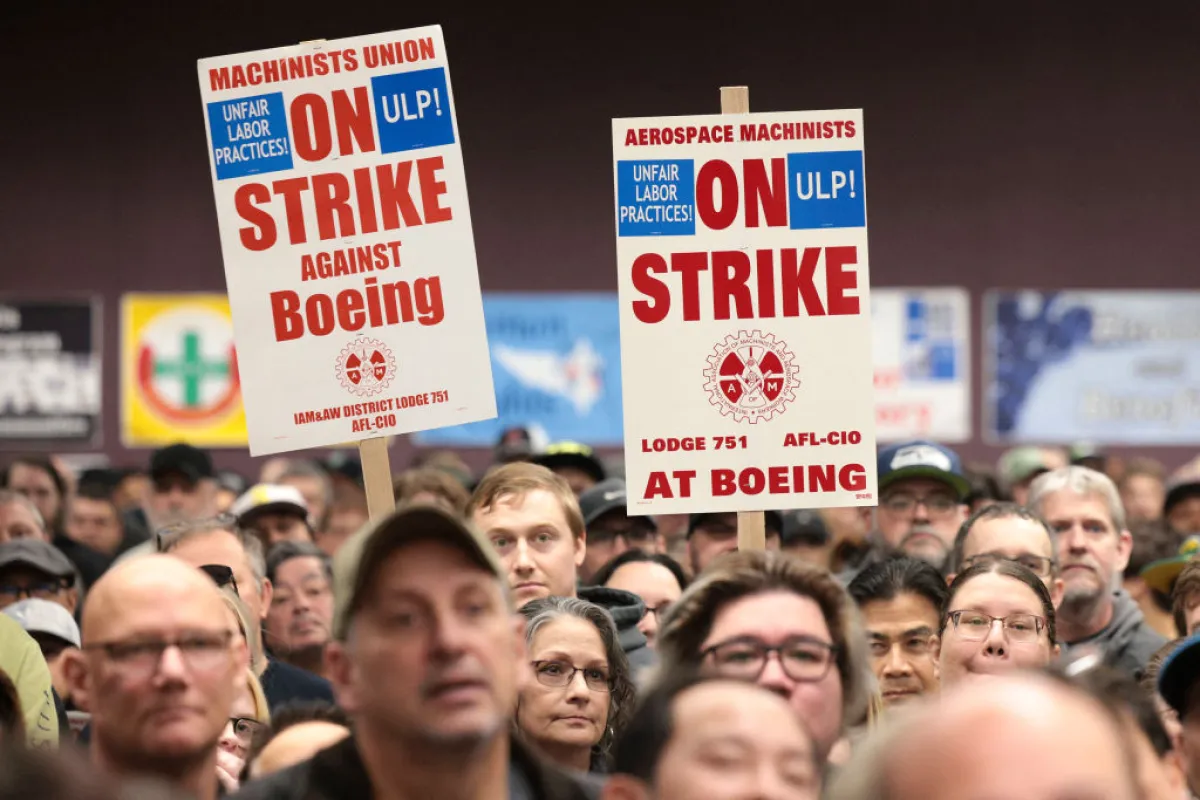
SEATTLE — The Boeing machinists union overwhelmingly rejected the company’s first contract offer more than five weeks ago.
Now there’s a better offer on the table. And this time, the vote could be much closer.
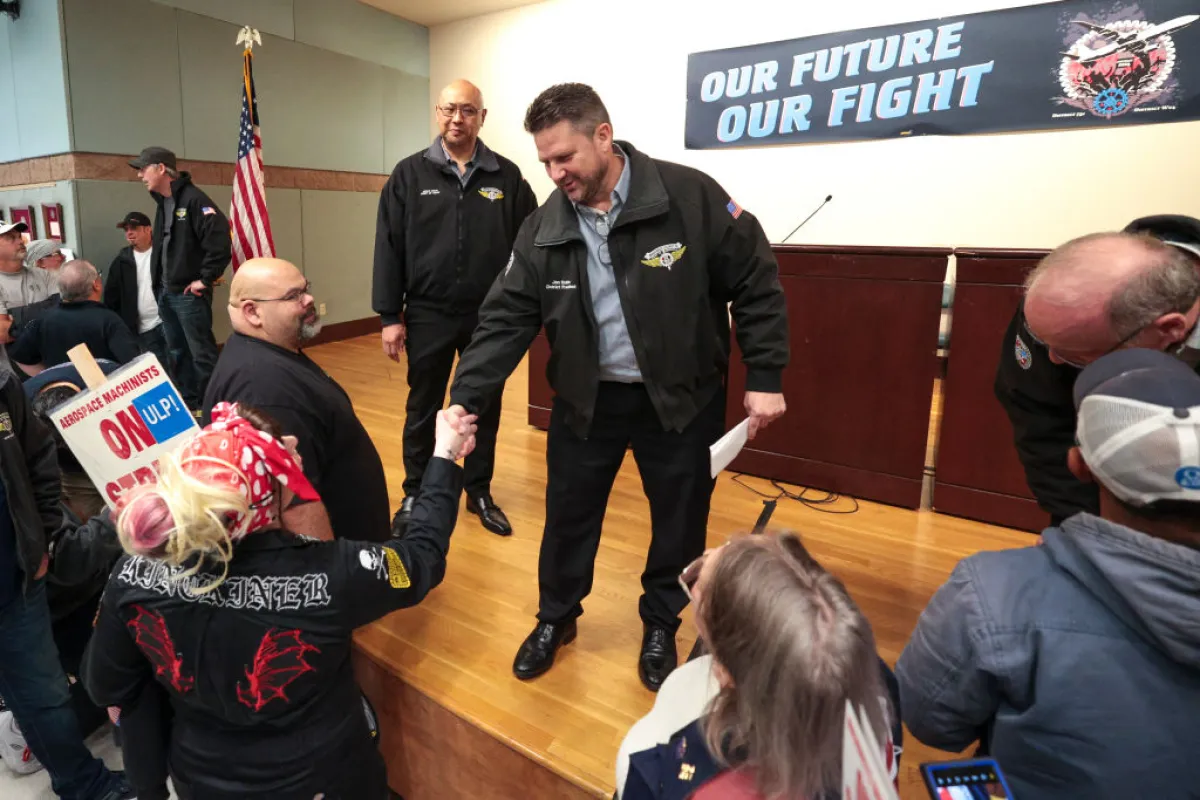
“Our members have been able to get Boeing to move a lot,” said Jon Holden, the president of the International Association of Machinists and Aerospace Workers District 751.
But even Holden isn’t sure how his 33,000 members will vote Wednesday.
“I don’t know,” Holden said in an interview. “I know there’s a lot of emotion out there. There’s still a lot of anger.”
What seems certain is that Boeing’s problems will outlast the strike, whenever it ends. The company has been losing more than a billion dollars a month as the strike halted production at its factories in the Pacific Northwest.
Even before the strike, Boeing was grappling with production and quality control problems that limited production of its best-selling 737 line. The new CEO, Kelly Ortberg, has announced plans to lay off roughly 10% of its workforce.
“Restoring our company requires tough decisions and we will have to make structural changes to ensure we can stay competitive,” Ortberg said in a memo to employees earlier this month.
Boeing declined to make Ortberg available for an interview. Since taking over as Boeing’s CEO in August, he’s kept a low profile. Ortberg is expected to speak publicly for the first time during an earnings call Wednesday morning. The company has already said it will report losses of at least $5 billion in the third quarter alone.
Ortberg is taking over at a crucial moment for Boeing. The head of Emirates, a major Boeing customer, said this month that the plane maker could be headed for a credit downgrade, with bankruptcy “looming on the horizon.”
Boeing quickly announced that it intends to raise billions of dollars to replenish its cash flow — including up to $25 billion by selling stock and other securities, and another $10 billion through a new line of credit.
Other observers say Boeing’s problems aren’t that bad. At least, not yet.
“I don’t think that bankruptcy’s inevitable,” said Kevin Michaels, managing director at AeroDynamic Advisory, an industry consulting firm. “It is a possibility. It’s a higher possibility today than it was six months ago or a year ago. But I don’t think it’s inevitable.”
Michaels worked closely with Boeing’s CEO in the 1990s, when they were both at the firm Rockwell Collins. And Michaels believes Ortberg’s strategy of shrinking the company is fundamentally sound.
“Boeing is a bloated mess,” Michaels said. “They’re very top heavy. And that slows down their decision-making.”
In the long run, Michaels thinks Boeing can still turn things around, especially if it’s able to sell off assets that are underperforming.
For now, the focus is on Boeing’s latest proposal to its striking machinists. The machinists union credits Acting U.S. Secretary of Labor Julie Su with helping to restart stalled negotiations.
The company is offering a 35% wage hike — a significant increase from the initial offer of 25%, though still short of the 40% raise the union wanted. The company would also increase its contributions to employees 401k retirement funds.
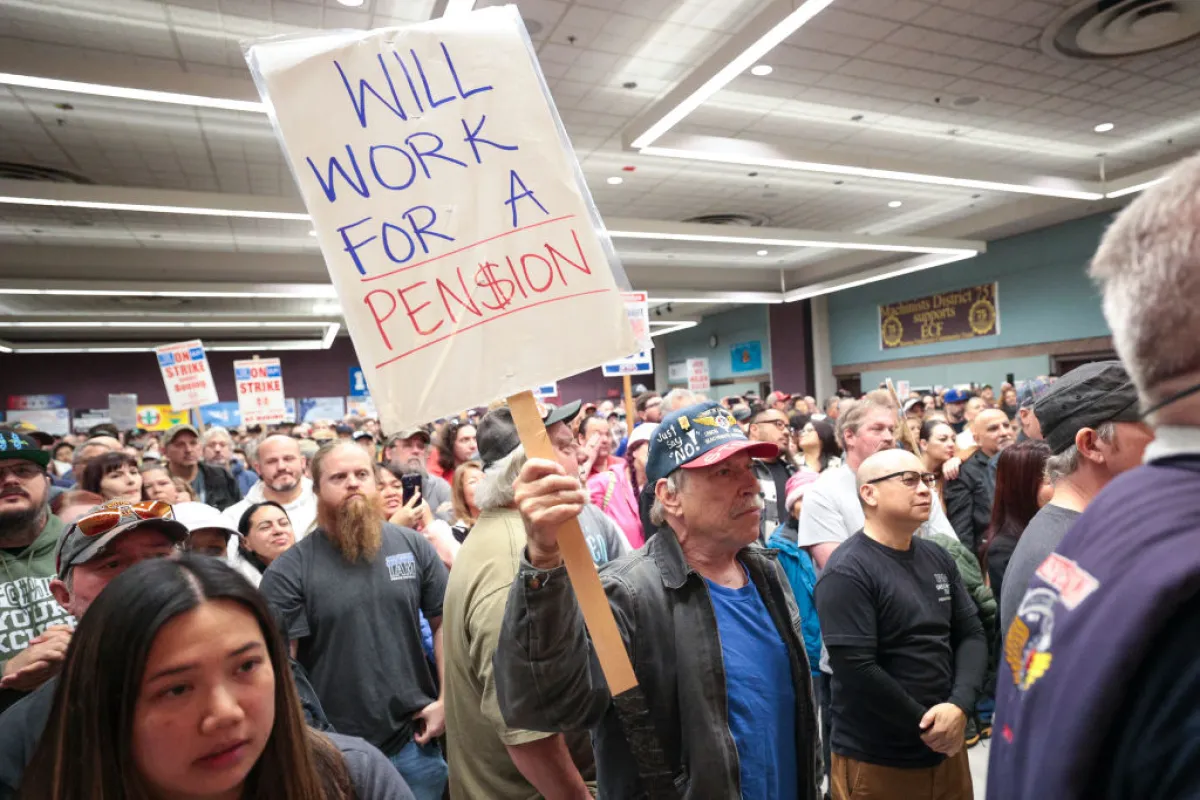
But there’s one key union demand where Boeing has not budged: the pension plan.
“When we lost our pensions, I cried,” said Kat Kinckiner, a union steward at the plant in Renton, Wash. where Boeing assembles the 737. “This was my future. And to see something just taken like that was just devastating.”
At the rally in Seattle last week, Kinckiner and other union members made it very clear they want to reinstate the pension plan they lost a decade ago.
“I remember then, all of us said, this next contract, we’re not taking this,” she said. “It’s not gonna happen anymore. Not to us. Not like that.”
IAM 751 president Jon Holden says he understands why some of his members are still angry, and why some are still fighting to get the pension plan back.
“Those wounds don’t heal easy,” he said. “But now it’s ten years later, and it’s not easy to get something like that back.”
The union’s leadership is not making a recommendation as to how members should vote on this offer. That’s a notable difference from the previous vote in September, when the union did recommend acceptance — only to be sharply criticized by some members.
“We do believe it’s our responsibility to get this in front of the members so that they can make that decision,” Holden said. “I hope they’ll consider this, but it’s up to them.”
KUOW’s Casey Martin contributed reporting from Seattle, and Joel Rose reported from Washington, D.C.
Transcript:
JUANA SUMMERS, HOST:
Striking machinists at Boeing will vote tomorrow on a new contract offer. The strike is now in its second month, and it’s just the latest setback in a brutal year for the plane maker. Boeing has lost billions in the past quarter alone, and the company’s new CEO is looking to make big changes, as NPR’s Joel Rose reports.
JOEL ROSE, BYLINE: The strike has halted production of Boeing’s top-selling planes for more than five weeks.
APRIL SIMS: Hello, machinists.
UNIDENTIFIED GROUP: (Cheering).
ROSE: But you wouldn’t find much sympathy for management at this union rally in Seattle last week.
SIMS: I’ve heard that Boeing is claiming poverty.
UNIDENTIFIED GROUP: (Booing).
ROSE: April Sims is the president of the Washington State Labor Council. She says Boeing’s problems are self-inflicted, as its leaders spent billions of dollars on stock buybacks and shareholder dividends while wages for workers stalled.
SIMS: Sixty-eight billion dollars for shareholders, and they can’t give you your due.
UNIDENTIFIED GROUP: (Booing).
SIMS: That sounds like some [expletive] to me.
UNIDENTIFIED GROUP: (Cheering).
ROSE: The machinists’ union overwhelmingly rejected Boeing’s first contract offer in September. Now there’s a better one on the table, but even if it ends the strike – which is no sure thing – the crisis at Boeing may go on. The company is losing over a billion dollars a month as it grapples with production and quality-control problems. And it’s about to lay off as much as 10% of its workforce.
KEVIN MICHAELS: Boeing is a bloated mess. They’re very top-heavy, and that slows down their decision-making.
ROSE: Kevin Michaels is managing director at Aerodynamic Advisory, an industry consulting firm. He’s also worked closely with Boeing’s new CEO Kelly Ortberg, when they were both at the firm Rockwell Collins in the ’90s. Ortberg declined an interview request. He’s taking over at a crucial moment for Boeing. The head of Emirates, a major airline, said this month that Boeing could be headed for bankruptcy, though Kevin Michaels doesn’t believe things are that bad yet.
MICHAELS: I don’t think that bankruptcy’s inevitable. It is a possibility. It’s a higher possibility today than it was six months ago or a year ago, but I don’t think it’s inevitable.
ROSE: In the long run, Michaels still thinks Boeing can turn things around, especially if it’s able to sell off parts of the company that are underperforming, including some of its space portfolio. For now, the focus is on Boeing’s latest proposal to its striking machinists. It’s offering a 35% wage hike, closer to the 40% raise the union wanted. The company would also increase its contributions to employees’ 401(k)s. But there’s one key union demand where Boeing has not budged.
UNIDENTIFIED GROUP: (Chanting) Pension. Pension. Pension.
ROSE: At the rally in Seattle last week, the union’s rank and file made it very clear that they want to reinstate the pension plan they lost a decade ago. It’s a top issue for Kat Kinckiner. She’s a union steward at the plant in Renton, Washington, where Boeing assembles the 737.
KAT KINCKENER: When we lost our pensions, I cried. This was my future. And to see something just taken like that was just devastating. And I remember then, all of us said, this next contract, we’re not taking that [expletive]. It’s not going to happen anymore – not to us, not like that.
ROSE: When the machinists voted on the first contract offer, the local union president Jon Holden knew they were going to reject it. This time, Holden says he’s not sure.
JON HOLDEN: Our members have been able to get Boeing to move a lot, but there’s still a lot of anger over what happened 10 years ago. And, I mean, those wounds don’t heal easy, and I know that many are still thinking about those things. I hope they’ll consider this, but it’s up to them.
ROSE: We’ll find out tomorrow if Boeing’s offer is enough to get the company’s 33,000 machinists back to work. Joel Rose, NPR News.