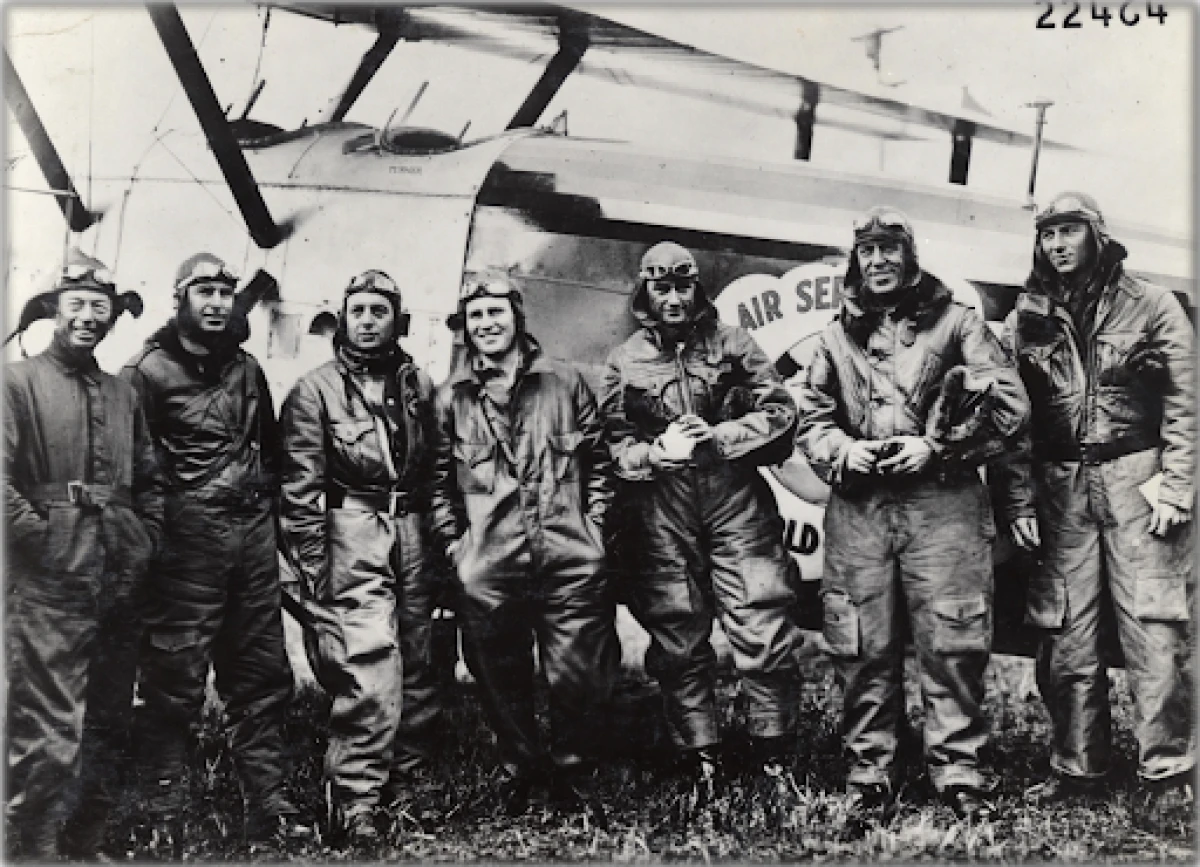
You’ve heard of the Wright Brothers and Charles Lindbergh. But what about the first aviators to successfully complete a flight around the globe? That honor goes to six U.S. Army Air Corps fliers who touched down in Seattle on Sept. 28, 1924. Their achievement predates Lindbergh’s crossing of the Atlantic by three years. Yet, few people know about it.
“It really is Seattle’s best-kept secret in aviation that we played host to the first-ever flight around the world,” said Elisa Law, one of the organizers of a centennial celebration in Seattle aimed at rekindling excitement for the record-breaking flight. The nonprofit that Law directs, Friends of Magnuson Park, and Seattle’s Museum of Flight put on the First World Flight Centennial this (past, 9/27-29) weekend.
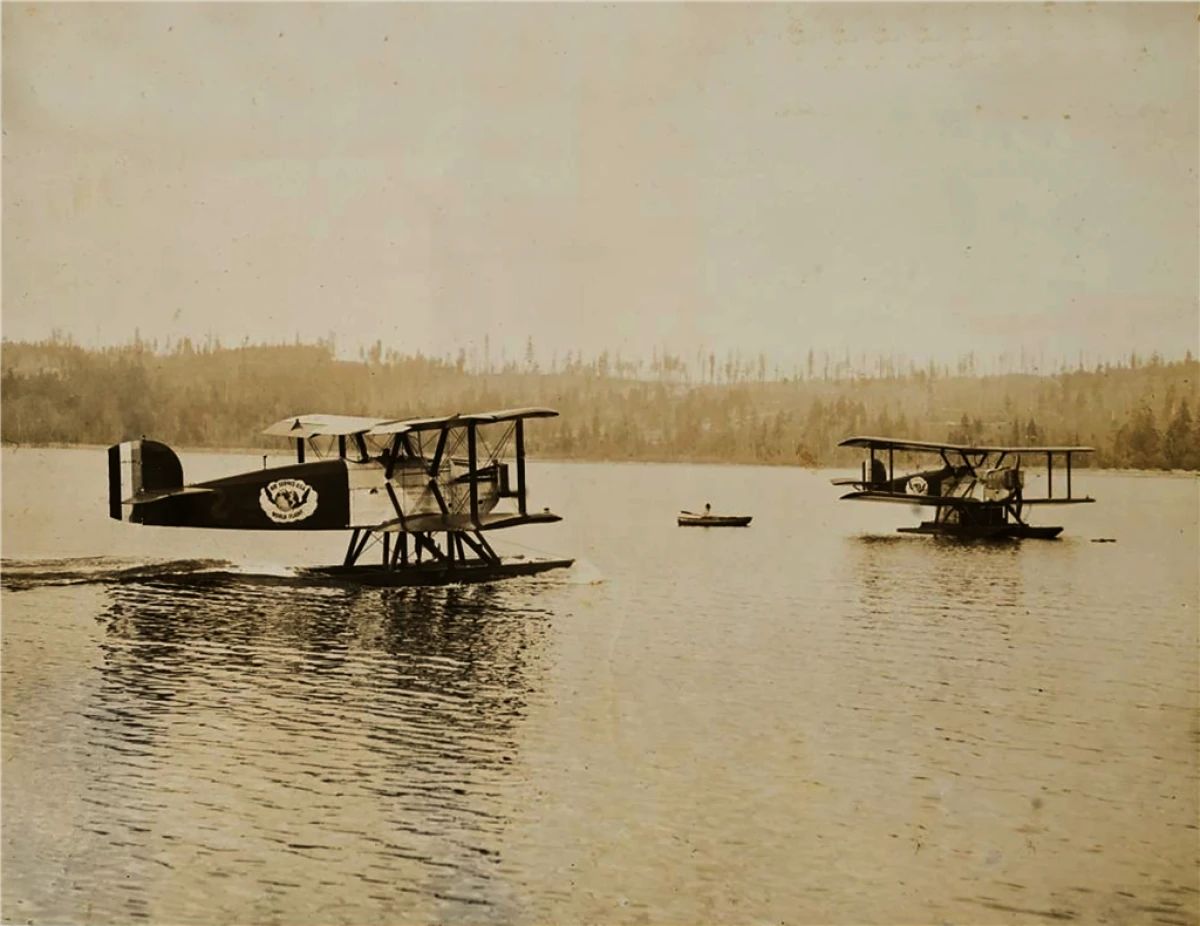
In 1924, a team of U.S. Army aviators made a daring six-month hopscotch journey around the earth. Traveling in open-cockpit biplanes made of fabric and wood, they battled arctic storms, survived crashes, fixed wing struts, and splashed down in lagoons full of crocodiles.
They covered nearly 27,000 miles, landed in 22 countries and beat competitors from Britain, France, Portugal and Italy.
Huge crowds flocked to airfields en route, especially on the homestretch from Paris to London, New York, Washington, Santa Monica and finally, Seattle. In that period, they were hailed as conquering heroes — the Magellans of the air.
“The enthusiasm all along the Coast was really remarkable,” wrote Lowell Smith, one of the pilots on the 1924 expedition. “Couples arranged their marriages to coincide with the termination of the world Flight and there was a fashion for a time of wearing beauty patches cut in the silhouette of a Douglas Cruiser [airplane]. They were even naming babies for us.”
So, why did such a momentous milestone fade into the mists of time? Centennial organizer Law has a hunch.
“The people that we remember who do amazing things always seem to be singular individuals – Amelia Earhart, Charles Lindbergh,” Law said. “Because it was a group, four planes and eight fliers, it’s too much to remember all of them. So, even their effort is lost.”
When the biplanes landed in Seattle, they broke their typical V-formation and fanned out so that the wheels of each aircraft touched down at exactly the same time. That way, no individual pilot could claim being the first person to circumnavigate the globe.
Putting the story back on the map
Decades after the fanfare faded from public memory, a few enthusiasts kept the mission’s spirit alive. Perhaps no one has invested more time and heart into reviving the story than Bob and Diane Dempster of Centralia, Washington. The former Boeing workers got interested in the history during their own recreational flight around the world in the mid-1990s.
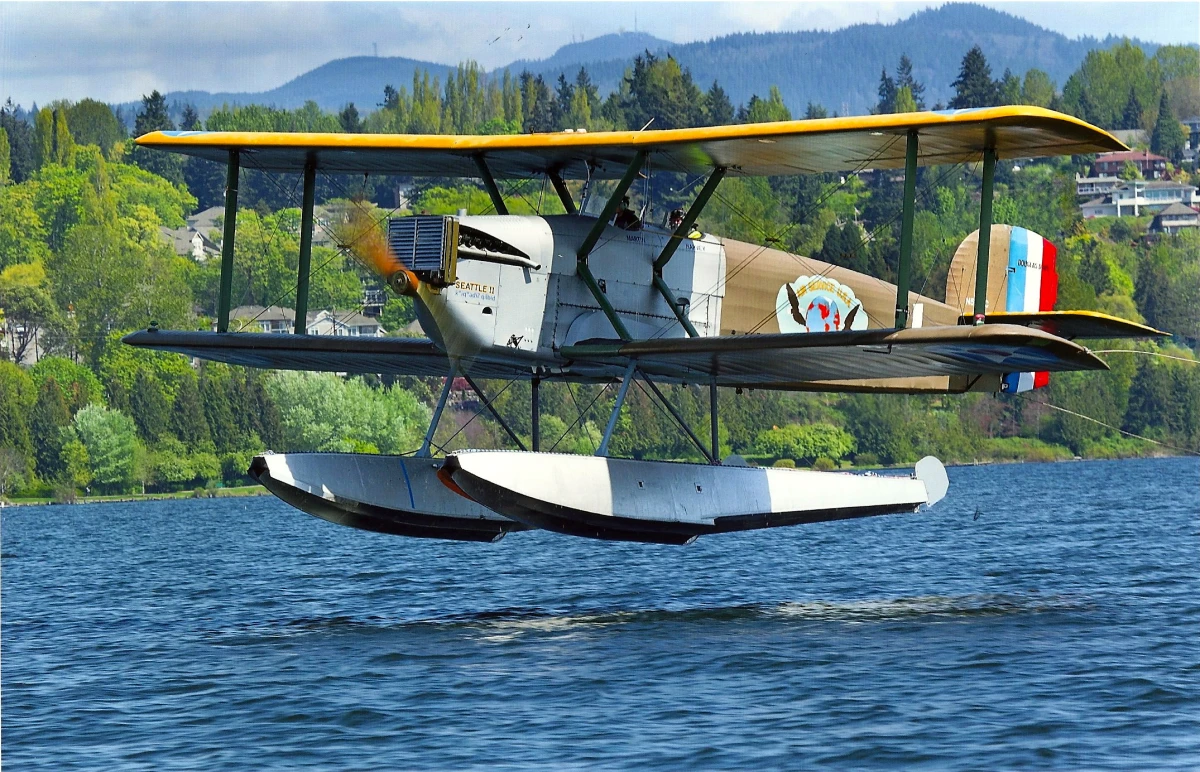
Back home, they created a nonprofit to build a flyable replica of a Douglas World Cruiser, the modified torpedo bomber used on the 1924 round-the-world journey. A team of volunteers worked for years from Smithsonian blueprints. They restored and installed an authentic Liberty engine and even scavenged a few parts from the Alaska crash site of one of the original aircraft.
The Dempsters, both pilots, planned to replicate the first world flight in their reproduction biplane to build excitement for this year’s centennial. But Russia closed its airspace and the shoot-down risk over the Middle East foiled their trip plans.
“Unfortunately, we were ready, but the world wasn’t,” Bob Dempster said.
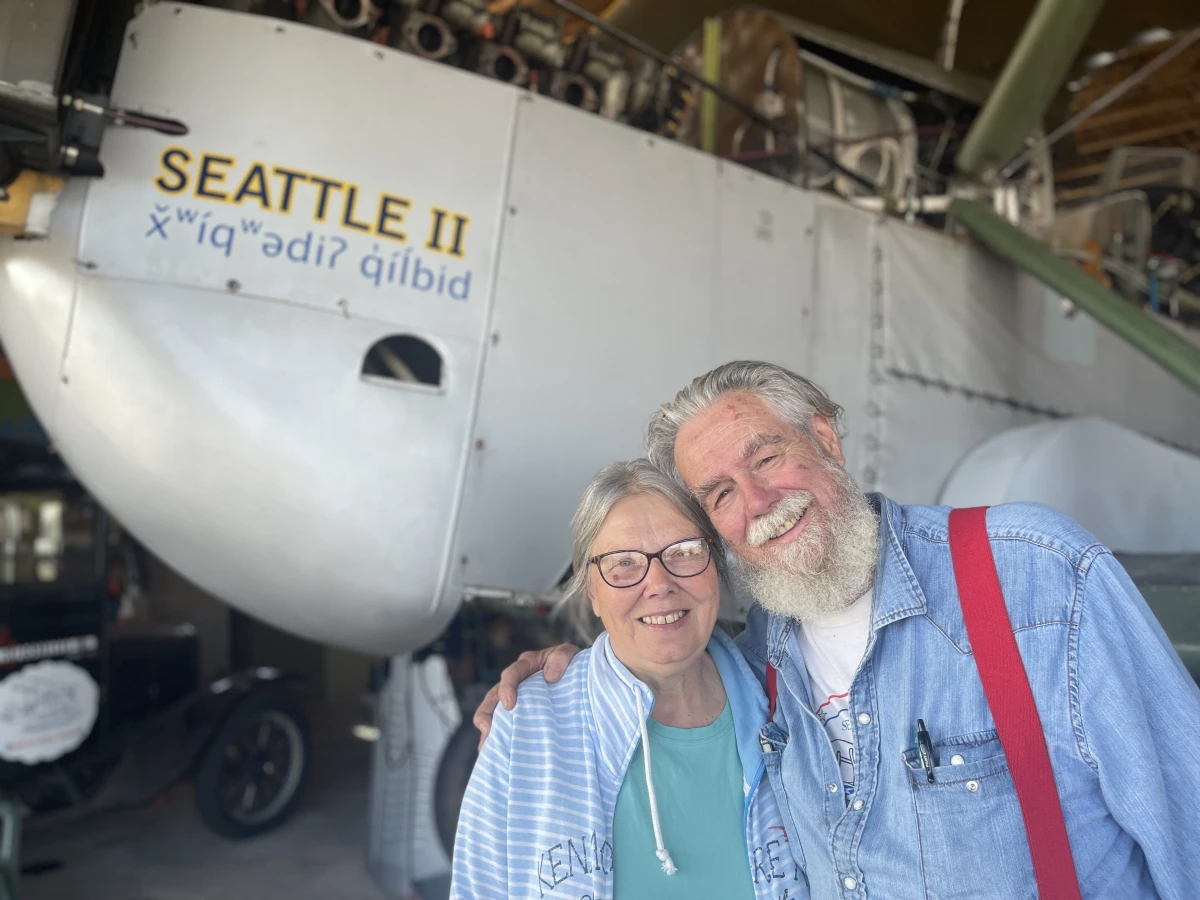
The Dempsters participated in the centennial celebration by speaking at the Seattle Museum of Flight about their decades’ long project to revive interest in the 1924 flight.
Descendants of the Army Air Corps fliers also flocked to the Seattle celebrations, including Anneliese Kruger of Twentynine Palms, California. Her dad, Henry Ogden, was a mechanic and co-pilot on the history-making trip.
Growing up, Kruger says few people, including her friends, knew about her father’s role in aviation history. But, that didn’t stop her dad from occasionally dipping into his memories of the first world flight when Kruger needed a nudge to overcome life’s challenges. Now, Kruger hopes the legacy of the around-the-world fliers will inspire a new generation.
“I think we all wish we could do something exciting in our lives that nobody else has done,” she said. “The pioneers of yesteryear give ideas to the kids nowadays, and we need more of that.”
Kruger was in the crowd of hundreds who gathered at the site of the original take-off and landing for the centennial commemorations. The location is now part of a city park and partly redeveloped into government offices. A Navy band played Sousa marches, local politicians and historians gave speeches and vintage aircraft treated the crowds to a flyby.
A once-in-a-century celebration
The Washington State Legislature allocated $527,000 to fund the celebration in hopes of putting the first round-the-world flight back in the pantheon of aviation’s greatest milestones.
The 100th anniversary was also observed on September 22 in Santa Monica, where the original World Cruisers were built by the Douglas Aircraft Company.
Across the country in Virginia Beach, the Military Aviation Museum organized a full day commemoration of the centennial too, including presentations, biplane rides and a DC-3 flyover on Saturday.
Of the two surviving original World Cruisers that circled the globe, one is in storage awaiting restoration by the Natural History Museum of Los Angeles County. The other is temporarily off display at the National Air and Space Museum in Washington, D.C., while the Pioneers of Flight gallery is renovated.
The ensuing 100 years witnessed Chuck Yeager breaking the sound barrier and Neil Armstrong stepping onto the moon. So, is it time that the first aviators to circumnavigate Earth again get their due?
“It’s about time they did,” Kruger said.
Transcript:
SCOTT DETROW, HOST:
Here’s a bit of aviation trivia. A hundred years ago today, the first round-the-world journey by flight reached the finish line in Seattle. The State of Washington is paying for a once-in-a-century party to put the nearly forgotten achievement back on the map. Reporter Tom Banse has our story from Seattle.
TOM BANSE: You’ve heard of the Wright Brothers and Charles Lindbergh, but what about the first flight around the globe? It predates Lindbergh’s crossing of the Atlantic by three years, yet few people know about it. Elisa Law is one of the main organizers for the First World Flight Centennial.
ELISA LAW: It really is Seattle’s best-kept secret in aviation, that we played host to this important – the first-ever flight around the world.
BANSE: On this day a century ago, a trio of U.S. Army Air Corps biplanes landed in Seattle, completing a perilous six-month hopscotch journey. The planes were made of wood and fabric, held together by wires and rods. The pilots were hailed as conquering heroes, the Magellans of the air.
(SOUNDBITE OF ALVINO REY AND HIS ORCHESTRA SONG, “THE ARMY AIR CORPS”)
ALVINO REY AND HIS ORCHESTRA: (Singing) Off we go into the wild blue yonder, climbing high into the sun.
BANSE: The flyers drew excited crowds all along the route, especially on the homestretch from Paris to London, New York, Washington, LA and finally Seattle. But then, Law says, the achievement faded into the mists of time.
LAW: The people that we remember who do amazing things always seem to be singular individuals – Amelia Earhart, Charles Lindbergh. When we think about early flight – because there was a group of them and four planes and eight flyers, that we just – they – it’s too much to remember all of them, and so even their effort is lost.
BANSE: Bob and Diane Dempster of Centralia, Wash., got interested in the story during their own recreational flight around the world in the mid-1990s. Back home, they started to build a flyable replica of an original Douglas World Cruiser, based on Smithsonian blueprints. They restored and installed an authentic Liberty engine and even scavenged a few parts from a crash site in Alaska.
(SOUNDBITE OF ENGINE STARTING)
DIANE DEMPSTER: We have something that people can say, wow, those people flew around the world in something like this? This is the high-tech machine of 1924?
BOB DEMPSTER: And then start to remember the story and all of the adventures they had. Every day was a story, a book.
BANSE: The Dempsters had planned to replicate the first world flight in their reproduction open-cockpit biplane last year to build excitement for this year’s centennial, but Russia closed its airspace, and the shoot-down risk over the Middle East foiled their trip plans.
B DEMPSTER: Unfortunately, we’re ready, but the world wasn’t ready (laughter). And, you know, that’s the way it goes.
BANSE: Also flocking to the centennial are descendants of the Army flyers, including Anneliese Kruger of California. Her dad, Henry Ogden, was a flight mechanic and co-pilot on the history-making trip.
ANNELIESE KRUGER: The pioneers of yesteryear give ideas to the kids nowadays, and we need more of that.
BANSE: The centennial celebration peaks today with an air show, lectures, festival and tours of the former landing strip that’s now in a city park. The Dempsters plan to donate their replica World Cruiser biplane to the Museum of Flight in Seattle. One of the two surviving originals from 1924 is at the National Air and Space Museum in Washington.
For NPR News, I’m Tom Banse with producer Sarah Waller in Seattle.
(SOUNDBITE OF MUSIC)