


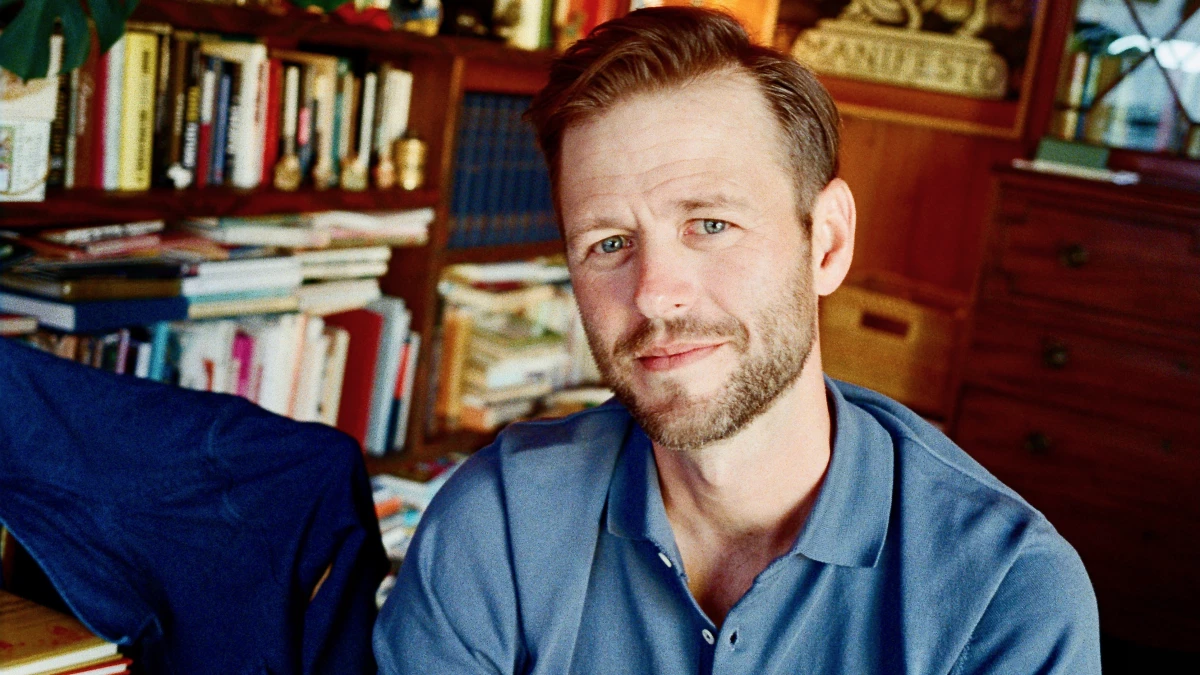
In a lot of ways, it’s never been harder to convince kids to pick up a book over a phone or iPad. But worrying about declining literacy rates and reading test scores – that’s adults’ business. And Mac Barnett doesn’t like to think of kids as future adults.
“We’re never going to win the argument that you should read a book because it’s good for you,” he said. “This isn’t why kids read.”
Barnett is the Library of Congress’ newest National Ambassador for Young People’s Literature. The position was established in 2008 to promote books and reading to kids across the country. Other authors who’ve held the post include Jacqueline Woodson, Jason Reynolds and Meg Medina. It’s a 2-year term and everyone who does it gets to pick a different focus. Barnett’s plan is to focus on picture books.
“The picture book is my favorite art form,” he said. “It’s such an incredible, vibrant, exciting, forward-looking, experimental art form. And I think it’s really undervalued, too.”
Barnett has written more than 60 books for kids – chapter books, graphic novels and picture books. He, and illustrator Jon Klassen, created the popular shapes trilogy, which was adapted into a series on Apple TV+. But Barnett says the picture book form doesn’t get the same respect as other types of books – which he finds offensive.
“Because we’re dismissing kids,” he said. “And if we think that children’s books are anything less than real literature, it’s because we think kids are something less than real people. If we believe they’re real people, then they deserve good art.”
The type of literature Barnett champions for kids isn’t didactic. It isn’t an adult trying to teach a kid yet another lesson. It isn’t a book as a “vector for an educational tool,” he said. “It’s our job to make books that kids want to read.”
And that same philosophy extends to how kids choose what they want to read. “Growing up, my mom would take me to the library every week. And she would let me pick out whatever books I wanted to read. It doesn’t mean that she agreed with every book. My mom is a very opinionated woman. And if she didn’t like what I was reading, she would talk to me about it.”
In Barnett’s view, if we are to really respect the taste and intelligence of kids, we should also be venerating their art as highly as any other literature. He’d put books such as Frog and Toad, In the Night Kitchen, Where the Wild Things Are and Freight Train up there in the annals of literature right next to The Great Gatsby.
“I think Goodnight Moon is one of the great pieces of American literature of the 20th century,” he said.
Transcript:
JUANA SUMMERS, HOST:
The United States has a new ambassador, not to a country but for children’s books. Mac Barnett has been named the Library of Congress’ national ambassador for young people’s literature. Now, what exactly does the job entail, and what does Barnett plan to do from his post? NPR’s Andrew Limbong spoke with him to find out.
ANDREW LIMBONG, BYLINE: Here’s how Mac Barnett describes the gig.
MAC BARNETT: It’s a lofty title, yeah. You know, the shorthand that I’ve been saying is it is like the poet laureate of children’s books.
LIMBONG: I don’t know if that’s necessarily shorthand, but essentially the job is to promote books and reading to kids across the country. Everyone who gets the job does it a little differently, and Barnett’s focus will be on picture books.
BARNETT: The picture book is my favorite art form. I started out – I was a camp counselor in college, and reading picture books out loud to kids – that is what made me want to start writing books for them. It’s just such an incredible, vibrant, exciting, forward-looking, experimental art form, and I think it’s really undervalued too.
LIMBONG: Barnett is the author of dozens of books for young people – some novels, some graphic novels and, yes, some picture books, including his popular Shapes Trilogy, which has its own series on Apple TV+. But the picture book, he says, doesn’t get the same respect as those other forms, which he finds, frankly, offensive.
BARNETT: I’m not offended because it’s dismissing my work. It’s because we’re dismissing kids. And if we think that children’s books are anything less than real literature, it’s because we think kids are something less than real people. And if we believe they are real people, then they deserve good art.
LIMBONG: And Barnett argues that good art for kids should be held as highly in our culture as any other literature.
You’re saying, like, you’d put, like, “Llama Llama Red Pajama” up against “Great Gatsby”?
BARNETT: I would put “Frog And…
LIMBONG: I don’t mean that kind of – I don’t mean that, like…
BARNETT: I know.
LIMBONG: …Condescendingly.
BARNETT: I know you don’t.
LIMBONG: Yeah.
BARNETT: I would put “Frog And Toad” up against “Great Gatsby” – “In The Night Kitchen”…
LIMBONG: Yeah.
BARNETT: …Absolutely, “Where The Wild Things Are,” “Freight Train.” I think “Goodnight Moon” is one of great pieces of American literature of the 20th century.
LIMBONG: Of course, this is an argument for the adults. In a lot of ways, convincing kids to pick up a book over a phone or an iPad is harder now than ever. But while us grown-ups worry about declining literacy rates and reading test scores, Barnett says he doesn’t think about kids as future adults. He thinks about them as readers now.
BARNETT: We’re never going to win the argument that you should read a book because it’s good for you. This isn’t why kids read. It’s our job to make books that kids want to read. And what we’re talking about there is not a book as an educational tool or some vector for a lesson that an adult wants to impose upon a kid. Like, the subject of children’s literature is life itself. This is art for children.
LIMBONG: And a part of showing kids that art is to let them lead the way.
BARNETT: Growing up, my mom would take me to the library every week, and she would let me pick out whatever books I wanted to read. Whatever I pulled off the shelf, that was going to go in our checkout bag. It doesn’t mean that she agreed with every book. My mom is a very opinionated woman, in addition to being a very funny woman. And if she didn’t like what I was reading, she would talk to me about it.
LIMBONG: At his acceptance speech this morning, Barnett said, it’s not an accident that picture books are so experimental because childhood is experimental. Andrew Limbong, NPR News.
(SOUNDBITE OF MUSIC)
