


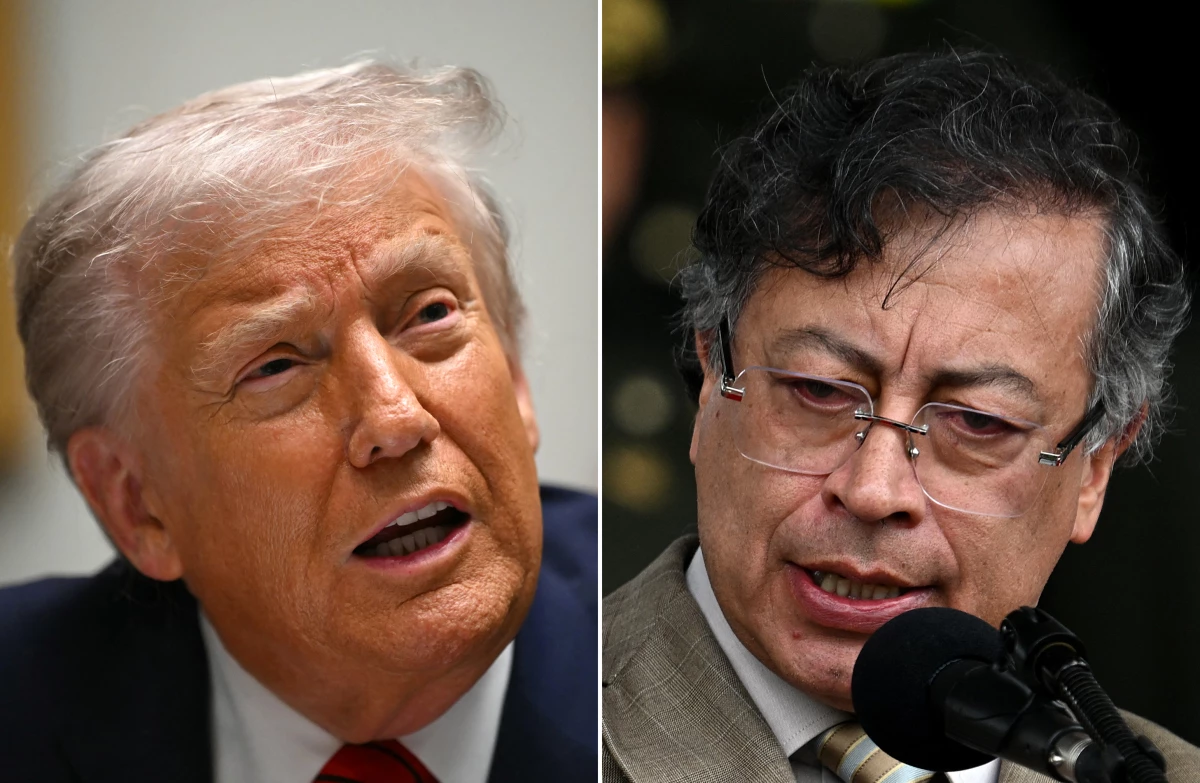
BOGOTÁ, Colombia — President Trump on Tuesday will welcome to the White House one of his most strident critics: Colombian President Gustavo Petro.
While many other world leaders have flattered or bowed down to Trump, Petro has gone out of his way to defy the American president. The Colombian leader has lambasted Trump on everything from his lethal strikes on alleged drug boats in the Caribbean Sea and Pacific, to his support for Israel’s invasion of Gaza.
For his part, Trump has accused his Colombian counterpart of flooding the U.S. with cocaine and at one point hinted that he could be targeted by the U.S. military.
As a result, some analysts expect fireworks between the two strong-willed leaders. Writing in El Tiempo, Colombia’s most influential newspaper, columnist Juan Lozano declared: “I am very worried for our country.”
Trump and Petro make for an odd couple. Trump started out as a real estate tycoon while Petro got his start preaching revolution as part of a left-wing guerrilla group before he disarmed and jumped into Colombian politics.
Their first clash came shortly after Trump was sworn in for his second term in January 2025 when Petro refused to accept U.S. military flights bringing undocumented immigrants back to Colombia. Trump responded by threatening a devastating trade war with Colombia, and Petro was forced to retreat.
Trump then mercilessly mocked Petro, telling an audience: “Remember, Colombia said: ‘We will not take them back!’ And within about 13 minutes, I think, (Colombia said) ‘We would love to take them back.'”
In his most provocative move Petro, who was attending the U.N. General Assembly last September, took to the streets of New York with a bullhorn to publicly urge American soldiers to disobey Trump. That prompted Washington to revoke Petro’s U.S. visa and to place financial sanctions on him, his wife, and his interior minister.
“Petro is trying to rally the world to oppose Donald Trump, or at least to resist him. I think a lot of people find that inspiring,” said Sergio Guzmán, director of the Bogotá consulting firm Colombia Risk Analysis. “But his actions are also hurting the people in this country.”
Indeed, Trump has suspended immigrant visas for Colombians, slapped higher tariffs on Colombian exports to the U.S. and threatened to send in U.S. troops to destroy the country’s drug trafficking organizations.
Cocaine production in Colombia hit a record high at about 3,000 tons in 2024, according to the U.N. Office on Drugs and Crime. That’s more than double the figure for 2021, the year before Petro was sworn in as president. Trump has even gone so far as to label Petro, without evidence, as a “drug leader.”
Following the U.S. raid last month that captured Venezuelan President Nicolás Maduro and brought him to New York to face drug charges, Trump suggested to reporters aboard Air Force One that Petro could meet a similar fate.
But unlike Venezuela, Colombia has been for decades Washington’s closest ally in Latin America and a key trade partner. It is often portrayed as a U.S. foreign policy success story given that huge sums of American aid helped bring Colombia back from the brink in the 1990s and early 2000s when the country was under siege from guerrilla groups and cocaine kingpins.
“Both on the Republican and on the Democratic side, there is an understanding that Colombia worked out well and that this is not a partner that you want to alienate,” Guzmán said.
Finally, after much backdoor diplomacy, Petro announced in a speech last month that for the first time ever, he had spoken with President Trump. Their phone conversation lasted nearly an hour, with Trump later commenting that it was “a great honor” to speak with Petro.
“It’s hard to say how hunky dory the relationship is going to remain but there is this détente right now because the two men had a chance to talk to each other,” said Adam Isacson of the Washington Office on Latin America, a research and advocacy group. They are “two populist leaders who are outspoken, who tweet 50 times a day. They are kind of similar personalities,”
Trump is expected to press Petro for more cooperation on the drug war and on stopping illegal immigration. Petro may press for trade benefits as well as for the removal of personal sanctions against him.
But if Trump and Petro get off on the wrong foot, their meeting could resemble last year’s infamous Oval Office dust-up between Trump and Ukraine’s president, Volodymyr Zelenskyy.
Either way, they won’t have to deal with each other much longer. Petro will leave office in August when his four-year term comes to an end.
Transcript:
SCOTT DETROW, HOST:
President Trump will host Colombian President Gustavo Petro tomorrow at the White House. It’s an unusual invitation because Petro is one of Trump’s most strident critics. What’s more, their meeting comes on the heels of Trump’s threats to take military action against Colombia. Here’s reporter John Otis.
JOHN OTIS, BYLINE: Trump and Petro are an odd couple. Trump started out as a real estate tycoon. Petro started out preaching revolution as part of a left-wing guerrilla group before he disarmed and jumped into Colombian politics. While many other world leaders have flattered or bowed down to Trump, Petro has stood up to him, or at least he’s tried to.
(SOUNDBITE OF ARCHIVED RECORDING)
PRESIDENT GUSTAVO PETRO: (Speaking Spanish).
OTIS: Shortly after Trump was sworn in for his second term, Petro refused to accept U.S. military flights bringing undocumented migrants back to Colombia. Trump responded by threatening a devastating trade war with Colombia, and Petro was forced to retreat. Trump then mercilessly mocked Petro.
(SOUNDBITE OF ARCHIVED RECORDING)
PRESIDENT DONALD TRUMP: Remember Colombia said, we will not – we will not take them back, he said. And within about 13 minutes, I think, oh, we would love to take them back. In fact, we will send our planes to pick them up. Remember?
(LAUGHTER)
OTIS: Even so, Petro has continued to hammer Trump on everything from his lethal strikes on suspected drug boats in the Caribbean Sea to U.S. military support for Israel’s invasion of Gaza.
(SOUNDBITE OF ARCHIVED RECORDING)
PETRO: (Speaking Spanish).
OTIS: In his most provocative move in September, when he was at the U.N., Petro took to the streets of New York to publicly urge American soldiers to disobey Trump. That prompted Washington to revoke Petro’s U.S. visa and place financial sanctions on him.
SERGIO GUZMAN: Petro, he is trying to rally the world to oppose Donald Trump or to at least resist him.
OTIS: Sergio Guzman is the director of the Bogota consulting firm Colombia Risk Analysis.
GUZMAN: But everybody else put their head down, right? That resistance has been futile so far.
OTIS: For his part, Trump has claimed, without evidence, that Petro is a, quote, “drug leader” who’s flooding the U.S. with cocaine. Following the U.S. raid last month that captured Venezuelan President Nicolás Maduro and brought him to New York to face drug charges, Trump, speaking aboard Air Force One, suggested Petro could meet a similar fate.
(SOUNDBITE OF ARCHIVED RECORDING)
TRUMP: Colombia is very sick, too, run by a sick man who likes making cocaine and selling it to the United States. And he’s not going to be doing it very long, let me tell you.
UNIDENTIFIED REPORTER: So there will be an operation by the U.S. in…
TRUMP: I…
UNIDENTIFIED REPORTER: …Colombia?
TRUMP: It sounds good to me.
OTIS: But unlike Venezuela, Colombia has been for decades Washington’s closest ally in Latin America and a key trade partner. Guzman points out that the country is often portrayed as a U.S. foreign policy success story. That’s because huge sums of American aid helped bring Colombia back from the brink in the 1990s and early 2000s, when it was under siege from guerrilla groups and cocaine kingpins.
GUZMAN: Both on the Republican and the Democratic side, there’s an understanding that Colombia worked out well. Like, this is not a partner you want to necessarily alienate.
OTIS: Finally, after much backdoor diplomacy, Petro surprised his audience in this speech last month.
(SOUNDBITE OF ARCHIVED RECORDING)
PETRO: (Speaking Spanish).
(BOOING)
OTIS: He announced that for the first time ever, he had actually spoken with President Trump. Their phone conversation lasted nearly an hour, with Trump later saying that it was, quote, “a great honor” to speak with Petro. Afterwards, Petro received his White House invitation, as well as a special five-day U.S. visa.
ADAM ISACSON: But here you have two populist leaders who are outspoken, who tweet 50 times a day, very kind of similar personalities, really.
OTIS: That’s Adam Isacson of the Washington Office on Latin America, a research and advocacy group.
ISACSON: It’s hard to say how hunky-dory the relationship is going to remain, but there is this detente right now, in my view because the two men had an opportunity to talk to each other.
OTIS: However, if the two men clash, their encounter could resemble the infamous Oval Office dustup between Trump and Ukraine’s president, Volodymyr Zelenskyy. Either way, they won’t have to deal with each other much longer. Petro will leave office in August when his four-year term comes to an end.
For NPR News, I’m John Otis in Bogota, Colombia.
