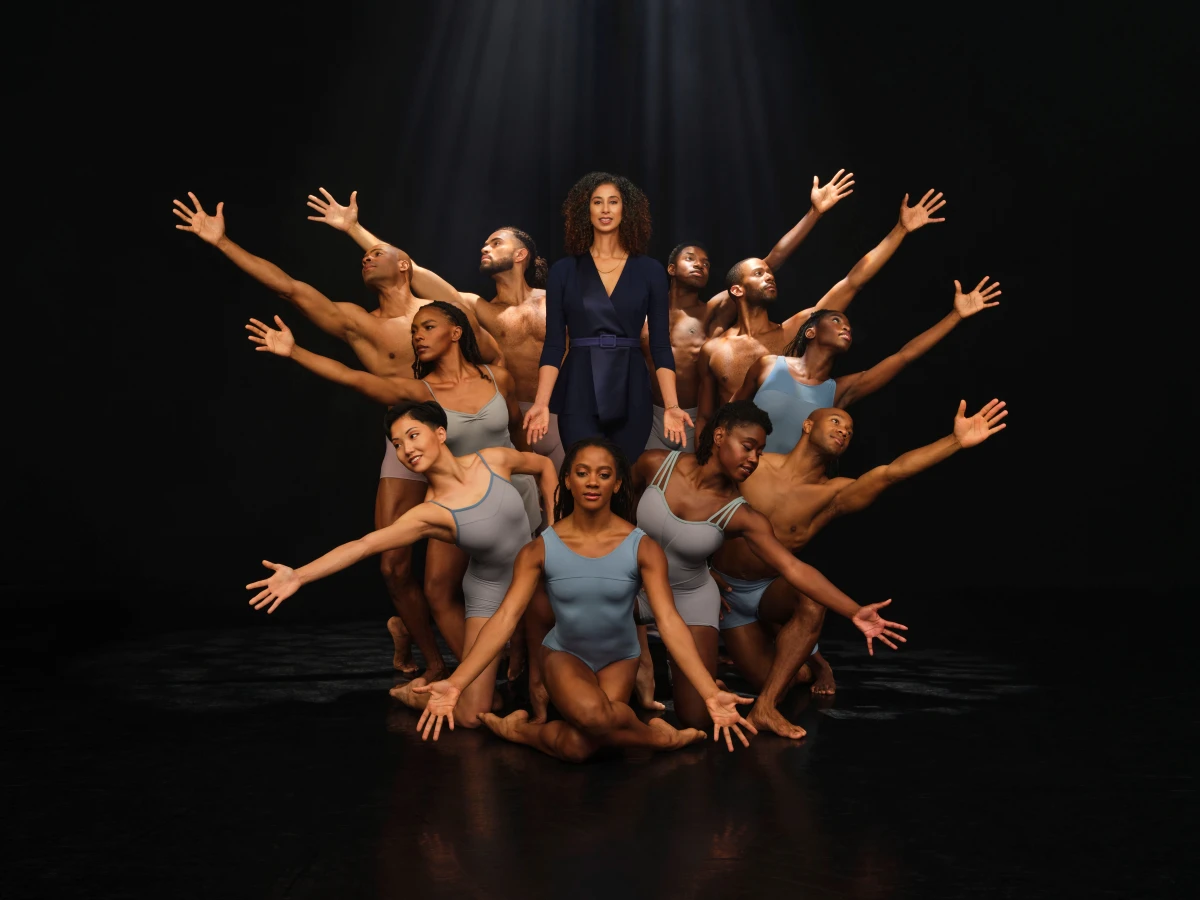
Alicia Graf Mack’s office is filled with ghosts, the benevolent kind. She sits at an industrial metal desk once occupied by Alvin Ailey, the late dancer and choreographer who founded the dance company that bears his name in 1958. In a corner stands a chaise lounge that belonged to the late Judith Jamison, the group’s longtime principal dancer who succeeded Ailey as artistic director.
Graf Mack, who took over that prized role in July, calls them Alvin Ailey American Dance Theater’s “founding angels.” Her most immediate predecessor was Robert Battle, who stepped down in 2023 after 12 years.
It is their vision, one “grounded in bravery, grounded in strength, courage and grounded in our stories” that Graf Mack says she seeks to carry forward as the company kicks off its first season under her leadership.
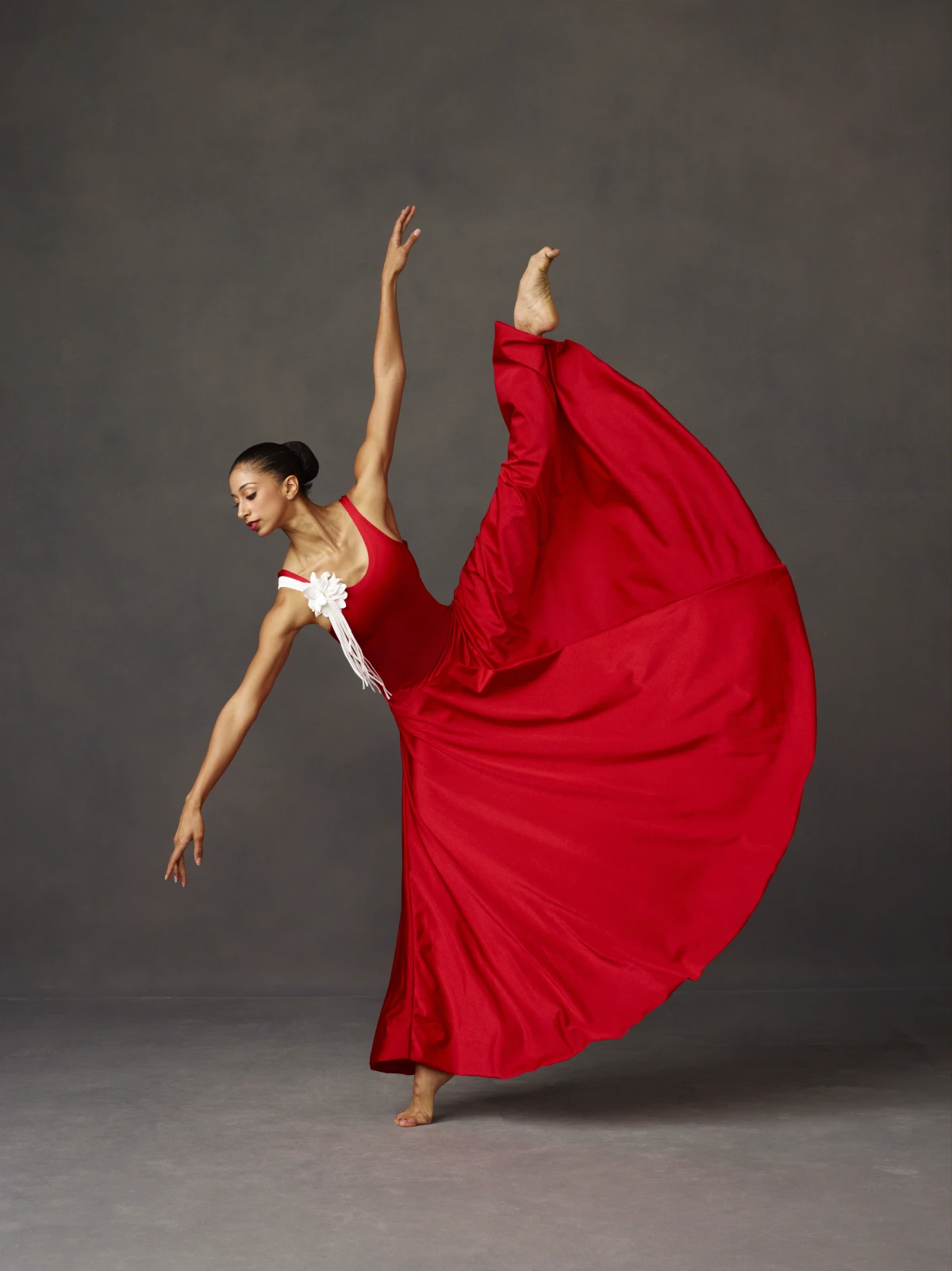
The season, which begins Dec. 3, features five world premieres, including Maija García’s Jazz Island. The narrative piece showcases the full company in a throwback to earlier signature Ailey works like Revelations (1960), which hails Black history and culture.
Graf Mack, who twice served as principal dancer with the company, describes her vision for the season as one that straddles the line between the “powerful, visceral” dance Ailey is known for and a “new era of fresh energy.”
Other new works are by Fredrick Earl Mosley, Matthew Neenan and Jamar Roberts. Urban Bush Women founder Jawole Willa Jo Zollar also collaborated with Ailey dancer Samantha Figgins and former company member Chalvar Monteiro on a new work.
Ailey will also perform Medhi Walerski’s Blink of an Eye (2011) in a company first and a new production of Jamison’s A Case of You (2004).
‘A surprise and a blessing’
After her first stint with the company in 2005 to 2008, gracing the stage with her elongated silhouette, Graf Mack left to earn a master’s degree in nonprofit management, before returning from 2011 to 2014. She then shifted her career to education. She led Juilliard’s dance division from 2018 until rejoining Ailey this past summer.
Today, Ailey is one of the most acclaimed American dance companies. The group has an annual monthlong engagement at New York City Center and tours internationally. A junior company — Ailey II — and a school also fall under its umbrella.
“This stage of my life is such a surprise and a blessing,” said Graf Mack. “I grew up with the dream of being a dancer. And to have fulfilled that dream under the direction of Judith Jamison and Robert Battle… was exactly what I hoped to do with my life.”
In her childhood bedroom, she hung a poster of Jamison, aspiring to emulate her idol as principal dancer for the company. And ultimately, she did.
“What she did for the company to really create a brand name out of the organization, to have a permanent home in New York City, for the organization to uplift Black and brown people all over the world, to create a company that is a cultural ambassador of American and Black culture is incredible,” Graf Mack said.
“So I really looked to her when I started going through the phases of re-educating myself in nonprofit management and then finding a life in higher education.”

Graf Mack takes up the helm at a time when the Trump administration has aggressively sought to cut federal funding for the arts and reshape the American cultural landscape.
Ailey has been a perennial highlight of the Kennedy Center. But it is breaking with tradition by performing at the smaller Warner Theater instead early next year.
“We felt that it was necessary to find a venue where everyone felt welcome to come and experience the magic of Ailey,” Graf Mack said.

“We have been performing in Washington, D.C. yearly for so many years, and it was so important for us to be able to reach our audiences and to be able to honor them, to say thank you for coming to see us year by year and not having to make any choices or decisions when they buy that ticket.”
President Trump took over the Kennedy Center in February, replacing leaders and board members with his handpicked successors, while seeking to shift away from what he has criticized as “woke” programming. Some artists have since shunned Washington’s premier arts center, or seen their performances canceled, and audiences have dwindled.
As a leader of an artistic institution in polarizing times, Graf Mack says she reminds herself of Alvin Ailey’s guiding principle to lift people through the arts — in the studio, in community classes and in theaters. “The arts should be lifted and supported and that really is the one of the only ways that we can see our young people establish their self-worth and their self-esteem,” she said.
The broadcast version of this story was produced by Ana Perez. The digital version was edited by Obed Manuel.
Transcript:
MICHEL MARTIN, HOST:
Amid the ferment of the Civil Rights Movement, Alvin Ailey founded the dance company that bears his name to uplift and showcase African American culture. Nearly seven decades later, it’s produced signature works that have been acclaimed around the world from generations of new dancers through its school, and developed an expansive and inclusive repertoire, building bridges with music, visual arts, and the written word. Tomorrow, the company launches its first season under Alicia Graf Mack, a former principal dancer with the company.
ALICIA GRAF MACK: So there are over 1,000 dancers in our school.
MARTIN: Oh.
MACK: From the little ones to the professionals.
UNIDENTIFIED TEACHER: And one, two, three, four, five, six. Bend down. Up.
MARTIN: She gave me a sneak peek of the new season at Ailey’s New York studios.
MACK: Good morning.
UNIDENTIFIED PERSON: Morning.
MACK: How are you all?
MARTIN: Good. How are you?
Big change, but actually not such a big change because you were a principal dancer here at Alvin Ailey. When you were dancing, did you did you ever think, I might be artistic director one day?
MACK: No. This stage of my life is such a surprise and a blessing. I was so lucky to have Judith Jamison as the blueprint or the North Star for all the possibilities in the arts.
MARTIN: Who had also been a principal dancer.
MACK: Who had also been a principal dancer and someone that I looked up to literally since I was a child, having a poster of her in my childhood bedroom. What she did to create a company that is a cultural ambassador of American and Black culture is incredible.
MARTIN: The last time we met, you were dean and director of the dance division at Juilliard, a premier artistic educational organization. You’re only, what, the fourth artistic director of this company?
MACK: Yes.
MARTIN: That’s kind of (laughter) daunting.
MACK: It’s amazing and daunting. As we sit here, we’re sitting at Mr. Ailey’s desk. So every time I come into this office, I’m, you know, lifted by the founding angels of this institution. Behind you is Ms. Jamison’s chaise lounge. I feel her with me all the time. She became a mentor after I was a dancer, another mother figure to me. And of course, Robert Battle was an incredible director to work under. I learned so much under him, and he remains a great friend.
MARTIN: So let’s dive into the new season. It kicks off in New York in early December before you go on tour across the U.S. There will be five world premieres.
MACK: That’s right.
MARTIN: Could you describe, like, what was your vision for this season?
MACK: I hope that when audience members come to see the season that they feel a fresh energy, that it is the same Ailey. Powerful, visceral, connected to spirit and humanity.
MARTIN: It’s interesting because people are very loyal to this company. Audiences are very loyal to this company.
MACK: Yes.
MARTIN: Right? And many performances end with revelations, which is a signature piece. But the art form itself requires change.
MACK: Yes.
MARTIN: How do you think about that?
MACK: There’s always something, an honored tradition, and then something new. And that’s how we move forward. When people come to see revelations, they are expecting to be transformed. And that’s why they come. It’s like going to church.
MARTIN: But one thing that is going to be different on the Washington, D.C., stop is that you won’t be performing at the Kennedy Center.
MACK: That’s right.
MARTIN: Like a number of arts organizations, including a planned stop of “Hamilton.” They’ve pulled out of planned performances at the Kennedy Center. You will be performing at the Warner Theatre. What went into that decision?
MACK: We felt that it was necessary to find a venue where everyone felt welcome to come and experience the magic of Ailey.
MARTIN: It’s a smaller venue, though.
MACK: Yes.
MARTIN: So I’m assuming that you had to make some adaptations.
MACK: Well, we will be there over two weeks. So although the capacity of the theater is smaller than at the Kennedy Center, we’ll have several performances to welcome people to.
MARTIN: I was just wondering, is there something different about preparing artists in this moment?
MACK: As artists, it is our responsibility to tell stories. It is our responsibility to be the keepers of the culture. I’m always aiming to uplift, to encourage and inspire the dancers to be able to be truth-tellers on the stage.
MARTIN: There were artists who were performing at a theatrical production that the president and members of his administration are known to enjoy. And some members of the performing company didn’t want to perform. And I don’t know whether that is a challenge that might present itself, but if it did, what would you do?
MACK: There will not be any changes or censorship or anything of that nature. We will present ourselves as authentically as possible. And we never want to present ourselves in a way that excludes anyone.
MARTIN: Alvin Ailey once said the most unique thing in the world is you. And I’m wondering how you translate that in this moment to your leadership of this organization.
MACK: I feel that deeply, even for myself. It gives me confidence to move forward. It’s very easy, kind of, just to stand on a hill at the top of everything and look down. But the work is to be in the studios, be in the theaters.
UNIDENTIFIED TEACHER: And up. And cross, cross, cross. Down, up. Down, up.
MACK: To teach the community outreach classes, to teach the kids in the school. And the idea that the arts should be lifted and supported. And that really is one of the only ways that we can see our young people establish their self-worth and their self-esteem. So I try to always reach back to, again, Mr. Ailey’s values and guiding principles of lifting people through the arts.
MARTIN: That is Alicia Graf Mack. She is the new artistic director of the Alvin Ailey American Dance Theater. Congratulations as the season begins. Thank you so much for talking with us.
MACK: Thank you. My pleasure.
(SOUNDBITE OF MUSIC)