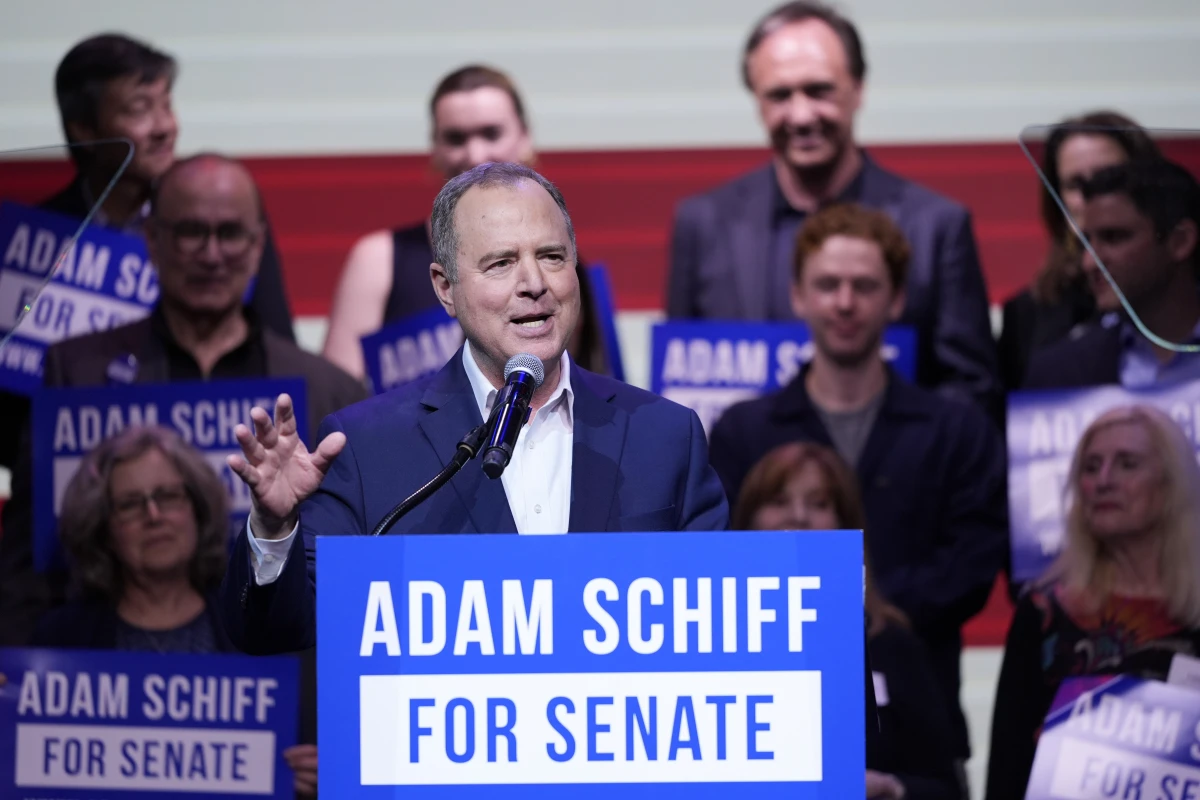
Adam Schiff is no stranger to threats from President-elect Donald Trump.
The California Democratic senator-elect was a member of the House of Representatives for four years, where he chaired the House Intelligence Committee and led the first impeachment inquiry into Trump.
He was also a member of the House Select Committee that investigated Trump’s role in the Jan. 6 attack on the Capitol. The president-elect has repeatedly called for indictments against the committee’s members. A recent NPR investigation found that Trump made more than 100 threats to investigate, prosecute, imprison or otherwise punish his political rivals during his most recent presidential campaign.
With Democrats heading into the next Congress without control of either chamber, Trump’s path to make those promises true may be easier.
Facing those prospects, Schiff spoke to NPR’s Michel Martin about how he plans to stop Trump from eroding democratic norms – and where he sees opportunity to work with him.
This interview has been edited for length and clarity.
Michel Martin: Let’s start out with those threats that we heard from the now president-elect during his latest campaign. There were quite a few. How seriously do you take that? Is that campaign bluster or do you think it’s something else?
Adam Schiff: You can’t dismiss what they’re saying. But, my focus initially is going to be to try to bring down the cost of goods, bring down the cost of housing and child care and food and energy. These are things that he also campaigned on. And if he is serious about that, he’ll find a willing partner.
But if he’s serious about his threats, then obviously I’m going to stand up to him. The threats that concern me the most, frankly, are less the ones directed at me and more the ones directed at mass deportations and splitting up families and destroying our economy as that would accomplish.
Martin: Paul Rosenzweig, a conservative lawyer, wrote in The Atlantic that President Biden should issue preemptive pardons. Given those threats to anybody that Trump has threatened, do you think he should?
Schiff: I have more confidence in our system able to withstand potential abuses of power by the president. Admittedly, some of the guardrails have come down and the Supreme Court took down the most important or one of the most important, that is the ability to hold a president criminally liable for crimes committed in office. But nevertheless, I think the courts are strong enough to withstand the worst of his threats. And I don’t think a preemptive pardon makes sense.
I think this is frankly so implausible as not to be worthy of much consideration. I would urge the president not to do that. I think it would seem defensive and unnecessary.
Martin: President Trump is calling on Senate Republicans to go along with his plans for recess appointments. Do you think that they will?
Schiff: If the Senate gives up its power to advise and consent to high level appointments, then it’s essentially given up one of the few remaining checks on the president’s power and one of their key responsibilities. We’ve already seen great damage done to the balance of power. It is tilted very strongly in favor of the executive.
I hope the senators decide they don’t want to sacrifice the institutional stake, safeguard that that presents and their key job responsibility. We’ll see, though. We have seen so many disappointments. When you thought that people would protect their own institutional interests, they have sacrificed that on the altar of this very, very flawed former and soon to be president.
Martin: Do Democrats have any recourse if the Senate if the Republican senators move in that direction?
Schiff: I think what Democrats ought to do is provide hearings in a timely way for all these nominees, even those that are patently unqualified or should be disqualified, like Matt Gaetz. They should provide a reasonable and prompt hearing and have an up or down vote on them. And if they do so, then I think there’s no justification, cause or rationale for recess appointments. But I think recess appointments have to be vigorously opposed. Otherwise, we are going to be really doing more damage to our democracy. And another important safeguard will come down.
Transcript:
MICHEL MARTIN, HOST:
First, we’ll talk about how Democrats plan to deal with the incoming Trump administration after losing control of both houses of Congress. Complicating that picture are the many threats to investigate, prosecute, imprison or otherwise punish people that Trump perceives as opponents. An NPR investigation found that during his most recent presidential campaign, Trump made more than 100 of those threats, and one of the targets is California Congressman Adam Schiff, a Democrat who was elected to the Senate earlier this month. He chaired the House Intelligence Committee where he led the first impeachment inquiry into President Trump, and he was also a member of the House select committee that investigated Trump’s role in the January 6 mob attack on the Capitol. When he becomes Senator, Schiff says he will continue to fight Trump if he tries to erode democratic norms. Here he is on “Inside California Politics.”
(SOUNDBITE OF TV SHOW, “INSIDE CALIFORNIA POLITICS”)
ADAM SCHIFF: If he goes after people’s rights and freedoms, if he tries to tear down our democracy, then he will find a vigorous opponent.
MARTIN: And he is with us now, Senator-elect Schiff, welcome. Thank you for joining us.
SCHIFF: Thank you. Great to be with you.
MARTIN: So let’s start out with those threats that we heard from the now President elect during his latest campaign. There were quite a few. How seriously do you take that? Is that campaign bluster or you think it’s something else?
SCHIFF: Well, look, this is someone who is nominating Matt Gaetz to be attorney general, and if – who would take an extreme step like that, you can’t dismiss what they’re saying. But, you know, my focus, initially, and from the get-go, is going to be to try to bring down the cost of goods, bring down the cost of housing, and childcare, and food and energy. These are things that he also campaigned on, and if he is serious about that, he’ll find a willing partner.
MARTIN: OK.
SCHIFF: If he’s serious about his threats, then obviously, I’m going to stand up to him. The threats that concern me the most, frankly, are less the ones directed at me and more the ones directed at mass deportations and splitting up families and destroying our economy, as that would accomplish.
MARTIN: So there’s an argument made most recently by a conservative lawyer writing in The Atlantic who says that President Biden should issue preemptive pardons, given those threats, to anybody that Trump has threatened. Do you think he should?
SCHIFF: I don’t think so. I’m not really sure how that would work, and I have more confidence in our system able to withstand potential abuses of power by the president. Admittedly, some of the guard rails have come down and the Supreme Court took down the most important – or one of the most important – that is the ability to hold a president criminally liable for crimes committed in office. But nevertheless, I think the courts are strong enough to withstand, you know, the worst of his threats, and I don’t think a preemptive pardon makes sense.
MARTIN: So if the president were to – President Biden were to issue one to you, what would you do? Would you reject it or is that a thing? Can you do that?
SCHIFF: You know, I think this is, frankly, so implausible as not to be worthy of much consideration. But I would urge the President not to do that. I think it would seem defensive and unnecessary.
MARTIN: OK. So let’s go to some of the moves that President-elect Trump is making. I mean, he’s moving very quickly on some key nominations. You already mentioned one – former Congressman Matt Gaetz – as attorney general. He resigned, abruptly, it would seem. So President Trump is calling on Senate Republicans to go along with his plans for recess appointments. Do you think that they will?
SCHIFF: I hope not. If the Senate gives up its power to advise and consent to high-level appointments, then it’s essentially given up one of the few remaining checks on the President’s power and one of their key responsibilities. We’ve already seen, you know, great damage done to the balance of power. It has tilted very strongly in favor of the executive. And so I hope the senators decide they don’t want to sacrifice the institutional safeguard that that presents and that key job responsibility. We’ll see though, we have seen repeatedly so many disappointments when you thought that people would protect their own institutional interests. They have sacrificed that on the altar of this very flawed former and soon-to-be president.
MARTIN: Do – is there – do Democrats have any recourse if the Republican senators move in that direction?
SCHIFF: Well, I think what Democrats ought to do is they ought to provide hearings in a timely way for all these nominees, even those that are patently unqualified or should be disqualified, like Matt Gaetz. They should provide a – you know, a reasonable and prompt hearing and have an up or down vote on them. And if they do so, then I think there’s no justification cause or rationale for recess appointments. But I think recess appointments have to be vigorously opposed. Otherwise, we are going to be really doing more damage to our democracy and another important safeguard will come down.
MARTIN: That is California Senator-elect Adam Schiff. Senator-elect, congratulations. Thank you so much for joining us.
SCHIFF: Thank you.