Charlie Kirk’s killing continues to spark debate over how he should be remembered.
The right-wing activist and founder of Turning Point USA – a group that worked to mobilize voters for conservatives — was known for debating college students on campuses and making inflammatory remarks, like saying he questioned the “brain processing power” of former first lady Michelle Obama and Supreme Court Justice Ketanji Brown Jackson and that pop star Taylor Swift should marry, reject feminism and submit to her husband.
Since his killing at a Utah university last week, dozens of people have lost their jobs or been put on leave over social media posts critical of Kirk. President Trump blamed the killing on “radical left political violence” despite the motive of Kirk’s alleged killer being unknown. And members of the Trump administration have openly called for targeting and investigating unspecified leftist and progressive groups for inciting violence.
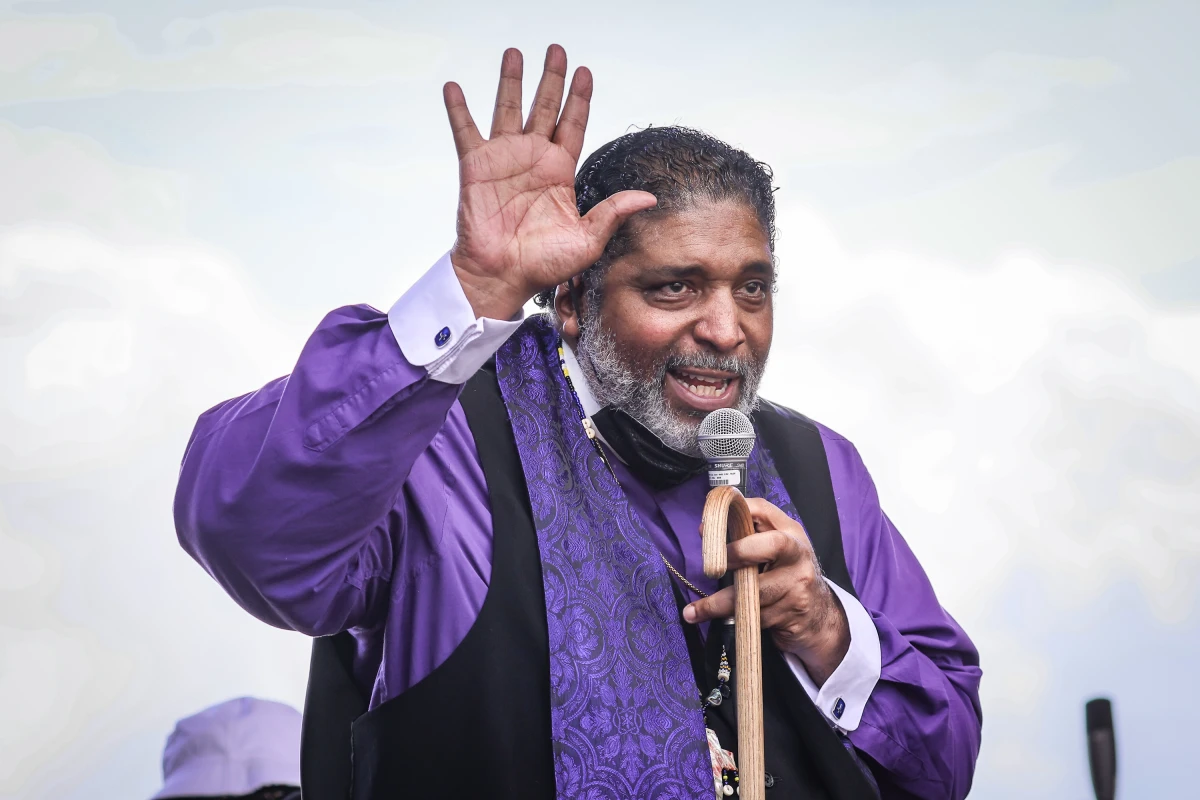
The Reverend William Barber II, is a pastor and social justice activist who was once invited to discuss with Kirk the role of religion in public life, though that discussion didn’t materialize. He says that while the nation should mourn the fact that Kirk’s wife and children are now without a husband and father, it should also be able to debate where a person “may have stood in the public square and the issues.”
Barber said in an interview with Morning Edition that the job of ministers like himself is to “call out” divisive, dishonest language from those in power.
“We have to have a strong moral voice rooted in our values, rooted in truth, rooted in law that refuses to stand down and will continue to speak in this moment,” Barber said.
Speaking to NPR’s Michel Martin, Barber discussed Kirk’s killing and what it means for the public discourse and how those on the political left should respond to the conservative critique that they are to blame.
This interview has been edited for length and clarity.
Interview highlights
Michel Martin: You actually had been invited to kind of have a public conversation with him. And for whatever reason, it just never worked out.
Rev. William Barber II: Michel, let me put it in this context. The fact of the matter is, you can be deeply moved, deeply hurt, which I am, and deeply mournful about this violent murder in public. A father is no more. A husband is no more. Children don’t have their father. A wife doesn’t have her husband. But at the same time, we can also, you know, have debates with where persons may have stood in the public square and the issues. And one of the things that this killer did is not only take this life, but in some ways undermined a debate we need to have. And that is, if we’re going to talk about faith and religion in the public square, we need to have a real moral debate. We’ve got to come to a place where America is going to have to say that death is no longer an option. That political violence and policy violence are contrary to establishing justice, contrary to providing for the common defense contract, promoting the general welfare, contrary to ensuring domestic tranquility and contrast to equal protection under the law.
Martin: Do you remember how you heard about what happened to Charlie Kirk? And I just wonder what went through your mind as a person who often appears at large public events that sometimes get chaotic.
Barber: They get chaotic. I don’t talk about it and I won’t talk in-depth about it here, but I know what it’s like to live with threats and persons who have said they want to do away with you. And it’s just so wrong. And now they see people trying to stoke more division, trying to blame a left or right, actually saying things that are not even factually true. And in this moment we should be mourning. We should have done the same mourning when we had two Democratic persons assassinated in their home. It should not matter when it comes to human life. Policies that take life and actions that take life have no place in this democracy. And all of us should be standing against that.
Martin: Why do you think it is that the president, Vice President Vance and others are so convinced that the left is more responsible for the culture of political violence that we have been seeing than the right is?
Barber: First of all, I don’t even use the term left and right. I think that language is automatically divisive and too puny for the moment that we’re in. Secondly, they’ve decided they want a narrative in the wake of a tragic assassination. Instead of working to pull forward together, they want to push things out here that the data doesn’t even line up with. Even the FBI, even the police can’t tell you what the motive is, what was behind it. They don’t know. So how is it that you then go out and lay it on what they call the far extremist left or whoever? Why not, in this country, we just say — whether it is Democratic politicians that were assassinated at home, whether it’s this young man who was assassinated — why can’t we just stand and say all of it is wrong?
Martin: I understand that that’s what you would hope for. That’s what you wish for. But what if that is not what is actually happening and what is going to happen? The president has been very clear that he thinks this is the radical left, you know, as it were. You have a number of people with powerful platforms who are not interested in the vision, as you’ve described it. What are you going to do in a moment like that?
Barber: So we have to call some things when someone tells a lie, whether they’re in a public office or not, that’s what it is. We have to call it out. And I think this is the time when preachers and those of us in pulpits that have a responsibility to challenge a nation and its morality is to say to those in power, “Stop it. Stop lying.” Call it out. Even if they don’t change, we have to call it out. Then I think the American people have to recognize if you do not like what is going on, we have an election coming up next year. We have to have a strong moral voice rooted in our values, rooted in truth, rooted in law that refuses to stand down and will continue to speak in this moment. I don’t know if the persons that have committed themselves to these distortions that have committed themselves to division will change. But we all must remember that they are in office by virtue of the vote of the people, and the people must stand up in every way with their voice and with their votes, say what kind of a society they want and what they want America to be.
The radio version of this story was edited by Taylor Haney.
Transcript:
MICHEL MARTIN, BYLINE: He was a dear friend and an inspiring leader to many, a breath of fresh air and authenticity. To others, he was a symbol and a practitioner of a mean-spirited politics of punching down. And his murder last week at a university event is sparking verbal brawls over which version of Charlie Kirk should be remembered and how. For members of the Trump administration and others who admired Kirk, there is no dilemma. They blame what they call the radical left for stoking an environment of hatred. Here’s Vice President JD Vance.
(SOUNDBITE OF ARCHIVED RECORDING)
JD VANCE: This is not a both sides problem. If both sides have a problem, one side has a much bigger and malignant problem, and that is the truth we must be told.
MARTIN: So how do many public-facing progressives respond to that, or should they? How do they critique what they think should be called out without feeding the vitriol even further? For some answers, we called the Reverend William Barber II because he talked about this in an online forum earlier this week. He’s a prominent progressive pastor and MacArthur Genius Grant winner. For years, he led Moral Mondays, demonstrations in states and the U.S. Capitol against economic policies he says hurt the poor, and he’s with us now.
Reverend Barber, welcome. Thank you so much for joining us.
WILLIAM BARBER II: Thank you so much, Michel. Glad to be with you.
MARTIN: So, can I just ask you, were you aware of Charlie Kirk or his organization Turning Point before these terrible recent events? Had you heard of him?
BARBER: Sure. And in fact, my dear friend and brother Jonathan Hartgrove and I had been invited some years ago to engage in what we think is very natural moral debate about, you know, Christianity and public life. And we actually engaged and said we would do it, and some things came up on their side. It was going to be held at Liberty University.
MARTIN: With Charlie Kirk?
BARBER: Oh, yes.
MARTIN: You’d actually had been invited to kind of have sort of a public conversation with him, and for whatever reason, it just never worked out.
BARBER: Michel, let me put it in this context. The fact of the matter is, you can be deeply moved, deeply hurt, which I am, and deeply mournful about this violent murder in public. A father is no more. A husband is no more. Children don’t have their father. Wife doesn’t have her husband. But at the same time, we can also, you know, have debates with where persons may have stood in the public square and their issues. And one of the things that this killer did is not only take this life they should have never touched, you have no right, but in some ways, undermines a debate we need to have. And that is, if we’re going to talk about faith and religion in the public square, we need to have a real moral debate. We’ve got to come to a place where we – America’s going to have to say that death is no longer an option, that political violence and policy violence are contrary to establishing justice, contrary to providing for the common defense, contrary to promoting the general welfare, contrary to ensuring domestic tranquility and contrary to equal protection under the law.
MARTIN: Can I jump in and just ask here, do you remember how you heard about what happened to Charlie Kirk? And I just wonder what went through your mind as a…
BARBER: Yeah.
MARTIN: …Person who often appears at large, public events that sometimes get chaotic.
BARBER: They get chaotic. You know, I don’t talk about it, and I won’t talk in depth about it here, but I know what it’s like to live with threats and persons who have said they want to, you know, do away with you. And it’s just so wrong. This death dealing that we see now is so wrong. And now to see people trying to stoke more division, trying to blame a left or a right. Actually, they’re saying things that are not even factually true. In this moment, we should be mourning. We should have done the same mourning when we had the two Democratic persons assassinated in their home. It should not matter when it comes to life – human life. Policies that take life and actions that take life have no place in this democracy, and all of us should be standing against that.
MARTIN: Why do you think it is that the president – Vice President Vance and others are so convinced that the left is more responsible for the…
BARBER: Yeah.
MARTIN: …Culture of political violence that we have been seeing than the right is?
BARBER: First of all, I don’t even use the term left and right. I think that language is automatically divisive and too punitive for the moments that we’re in. Secondly, they’ve decided they want a narrative. In the wake of a tragic assassination and death, instead of working to pull folk together, they want to push things out here that the data doesn’t even line up with. I mean, even the FBI, even the police can’t tell you what the motive is, what was behind it. They don’t know. So how is it that you didn’t go out and lay it on what they call the far extremist left or whoever? Why not, in this country, we just say, whether it is Democratic politicians that were murdered and assassination at home, whether it’s this young man who was murdered and assassinated, why can’t we just stand and say, no, all of it’s wrong?
MARTIN: I understand that that’s what you would hope for, that’s what you wish for, but what if that is not what is actually happening and what is going to happen? I think the president has been very clear that he thinks this is the radical left, you know, as it were. You have a number of people with powerful platforms who are not interested in the vision as you’ve described it. What are you going to do in a moment like that?
BARBER: So we have to call some things. When someone tells a lie, whether they’re in a public office or not, that’s what it is. We have to call it out. And I think this is a time when preachers and those of us in pulpits that have a responsibility to challenge a nation in its morality is to say to those in power, stop it. Stop lying. Call it out. Even if they don’t change, we have to call it out. Then I think the American people have to recognize if you do not like what is going on, we have an election coming up next year. We have to have a strong moral voice rooted in non-violence, rooted in truth, rooted in love that refuses to stand down and will continue to speak in this moment. I don’t know if the persons that have committed themselves to these distortions, that have committed themselves to division will change, but we all must remember that they are in office by virtue of the vote of the people, and the people must stand up in every way with their voice and with their votes, say what kind of a society they want and what they want America to be.
MARTIN: That is the Reverend William Barber II. He is the founding director of Yale’s Divinity School Center for Public Theology, among many other responsibilities. Reverend Barber, thank you so much for speaking with us once again.
BARBER: Thank you so much, Michel. Blessings.