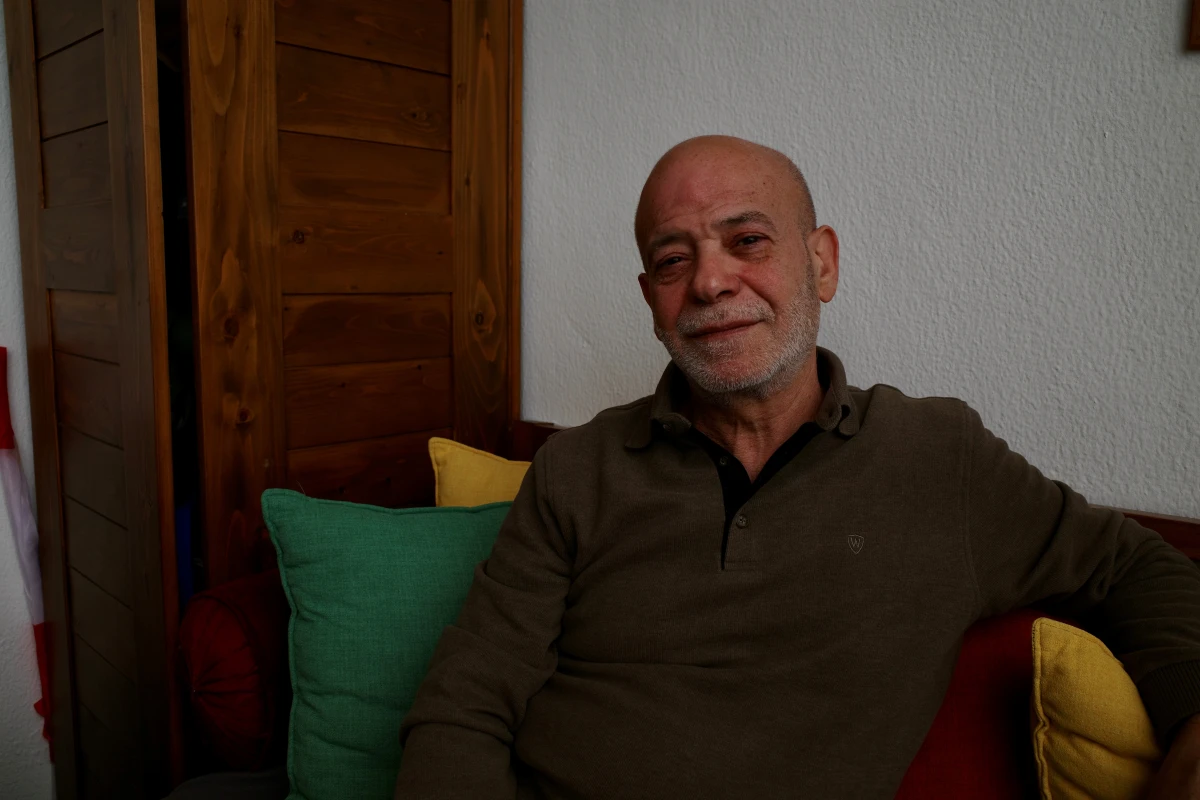
CHEKKA, Lebanon — Up until Dec. 8, Suleil Hamawi thought the decades of torture and solitary confinement he already endured in Syria might last the rest of the life.
But in a head-spinning turn of events, the brutal regime that imprisoned him has been violently deposed.
Just days after escaping from Syria, he savors a moment of stillness, smoking and sipping espresso on his balcony in northern Lebanon that overlooks the Mediterranean Sea.
“I feel as if I came back from death. My time in Syria was like being buried in a grave, where I breathed only in order to die,” Hamawi, 61, said in an interview just two days after returning home. “After returning to Lebanon, I feel there is hope and some positivity waiting for me.”
He is among the thousands of prisoners suddenly freed from dozens of Syrian prisons after rebel forces swept through the country, toppling the authoritarian regime of Bashar al-Assad last week. Some prisoners literally walked out onto streets they had not seen in decades. Many were presumed dead by their families.
Those freed are now struggling to find long-lost family and to get back home, whether in Syria or in neighboring countries, such as Turkey, Jordan or Lebanon.
Hamawi’s story is one of the rare ones with a happy ending.
32 years and five days
George Hamawi grew up hearing stories of his father, who disappeared when he was 10 months old.
“At the beginning, they were telling me that he’s traveling. He’s abroad, he’s working abroad,” he remembers. He ignored the whispers he heard from other children — that his father was actually in prison and was never coming back.
In truth, his father was part of a Christian militia in Lebanon and had been kidnapped in 1992 by Syrian troops from his home in the Lebanese town of Chekka, then spirited across the border by Syrian troops. Syrian troops were long into an occupation of Lebanon that had outlasted the country’s civil war, which had ended two years prior, and tensions were high with Lebanon’s Christian communities.
Nothing short of a revolution would free his father, George feared.
But just such a revolution took place over the last few weeks, as opposition fighters made a surprise lightning offensive, finally taking the Syrian capital Damascus and leading Assad to flee to Russia. Rebels also smashed into Assad’s prisons, breaking open cells and freeing the people inside.
One of the prisoners who escaped was Hamawi’s father.
The Hamawis sat down with NPR just two days after Suleil had returned home, to Lebanon, to the same house where he was kidnapped in 1992.
The elder Hamawi recounted his years of being ferried between prisons, including a long confinement in Syria’s notorious Sednaya prison.
But on Dec. 8, everything changed. Hamawi said he heard a commotion inside the prison — rebels were fighting their way in. He shouted to the prison guards, but the guards just abandoned their posts. He stumbled out of the prison, into the morning light, and he found himself amid gun battles. He walked for kilometers, finally borrowed a phone, and dialed a family number he had committed to memory.
His son, George Hamawi, picked up.
Now together with his father for the first time in his adult life, the junior Hamawi recites, without missing a beat, exactly how long he has been waiting for this moment: 32 years and five days.
Still searching
Hamawi is considered one of the lucky ones. Hundreds of other families in Lebanon with missing family members suspected to be in Syria are still hoping for a reunion of their own.
Last weekend, some of these families gathered in a Beirut park, holding portraits of their missing loved ones as the Lebanese anthem played. They demanded information about them after the fall of the Syrian regime.
Part of the challenge of doing so is that Syrian prisons have extremely incomplete prison records, said Wadad Halawani, an activist who has been working to reunite families since her own husband was kidnapped. The organization she founded, the Committee of the Families of the Kidnapped and Missing in Lebanon, has been searching for the thousands of Lebanese who are suspected to have been imprisoned during the country’s civil war and ensuing tumult.
“Hopefully with this new change in the political dynamics in Syria, we’ll be able to liberate these detainees and have a final know-how in their situation,” says Ibrahim Mneimneh, a member of Lebanon’s parliament who has been trying to get in touch with Syria’s new opposition-led government. “The latest Lebanese governments over the past years have been doing nothing about this.”
Others, like Nabil Haddad, have stopped hoping. Over a dining room table piled high with fruit and chips, he tells the story of his uncle Miled, who was kidnapped by Palestinian insurgents in the 1980s. The family suspected he was eventually brought to Syria. Haddad’s father searched for him for decades.
“If somebody told him that his brother is somewhere on the moon, he would have gone there,” says Haddad.
Two years ago, Haddad consulted his church. “The reverend told us, it’s 40 years now he is disappeared. He is dead,” recounts Haddad.
His family decided to officially declare his still-missing uncle deceased, giving closure to him and his family, who want a break from the past. “Honestly, they don’t want to talk anymore about the past. They have suffered enough,” says Haddad.
The weight of memory
For the Hamawi family, now reunited with their father after decades in a Syrian prison, joy finally permeates their home. The offer of sweets and nuts from their home in northern Lebanon is endless.
Despite the return to his old life, the elder Hamawi said he struggles with the weight of memory and the crushing fear that speaking ill of the deposed Assad regime will land him back in prison. He still does not quite believe Assad is gone.
Hamawi’s miraculous return to Lebanon has gotten a lot of attention. His family is fielding hundreds of calls from other families wondering if he saw their loved ones, imprisoned alongside him in Syria.
His son says they have been bombarding his father with the names of their missing family members.
“He’s telling them, don’t give me names, because I don’t know the name. Maybe someone, he’s stayed with him for 10 years, but he does not know his name. He knows his number,” says the younger Hamawi, referring to the number his father and all the prisoners were assigned by the wardens in Syria. Hamawi’s number was 55.
When he’s asked how he survived all those years in prison, Hamawi points to his son, whose eyes well with tears.
George Hamawi says hearing that makes him feel “responsibility, because he’s counting on us now to recover all these years.”
Recovering 32 lost years is impossible — but he is going to do his best for his father.
Moustapha Itani, Jawad Rizkallah and Ali Abdallah provided assistance.
Transcript:
SCOTT SIMON, HOST:
Thousands of people have been freed from Syria’s prisons with the toppling of the Assad regime there. But those thousands are just a fraction of the people who have disappeared into those prisons. NPR’s Emily Feng has the story of one man who has been found and of the heartbreak for families who still search.
EMILY FENG, BYLINE: George Hawami grew up hearing stories of his father, who disappeared when he was just 10 months old.
GEORGE HAWAMI: At the beginning, they were telling me that he’s traveling. He’s abroad – he’s working abroad.
FENG: Working abroad. But in truth, his father was part of a Christian militia in Lebanon and had been kidnapped there and taken across the border by Syrian troops.
G HAWAMI: We thought that we will never see him again.
FENG: A now-33-year-old son was glued to the news as rebel forces made a lightning offensive, taking the Syrian capital of Damascus. They smashed into Assad’s prisons, breaking open cells.
No. Have your coffee first.
SUHEIL HAMAWI: (Speaking Arabic.)
FENG: And one of the prisoners let out was Hawami’s father.
S HAMAWI: (Speaking Arabic).
FENG: This is Suheil Hamawi, George’s father, now 61 years old. We all sat down together just two days after he’d returned home to Lebanon.
S HAMAWI: (Speaking Arabic).
FENG: The elder Hawami recounts to us the years of torture and solitary confinement he endured, being ferried between prisons, including a long confinement in Syria’s notorious Sednaya prison.
S HAMAWI: (Speaking Arabic).
FENG: But this December 8, everything changed. Hawami tells us he heard a commotion outside the prison. Rebels were fighting their way in.
S HAMAWI: (Speaking Arabic).
FENG: He says the guards just abandoned their posts.
S HAMAWI: (Speaking Arabic).
FENG: And as he stumbled out of the prison into the morning light, he says he found himself amid gun battles. So he ran, found a phone and dialed a family number he’d committed to memory. His son picked up.
How long was your father away for?
G HAWAMI: Thirty-two years and five days.
FENG: The first place Hawami senior told his son he wanted to go after being freed was here, where we are sitting together – the home in northern Lebanon where he was kidnapped in 1991. It overlooks the Mediterranean Sea, whose waves he now gazes towards constantly.
S HAMAWI: (Speaking Arabic).
FENG: A sound he says he has not heard in more than three decades. And he’s considered one of the lucky ones. Other families in Lebanon are still hoping for a reunion of their own.
UNIDENTIFIED PEOPLE: (Singing in Arabic).
FENG: On a recent weekend, some of these families gathered in a Beirut park, holding portraits of their missing loved ones as the Lebanese anthem played. They’re demanding information about them after the fall of the Syrian regime.
FATMA KABBARA: (Speaking Arabic).
FENG: Fatma Kabbara has been scouring video footage of Syria for her brother Mohammad, last seen in a Syrian prison, and she hopes that her brother might still be alive. Others, like Nabil Haddad, have stopped hoping. At his home in Beirut, Haddad rearranges his chairs, pulling me to his kitchen table, as he tells me the story of his uncle Miled, who was kidnapped in the 1980s. They searched for him for decades, but two years ago, Haddad consulted his church.
NABIL HADDAD: The reverend told us that it’s 40 years now, and he’s disappeared. He’s dead.
FENG: So Haddad’s family decided to officially declare his missing uncle deceased. He and his family want a break from the past.
HADDAD: Honestly, they don’t want anymore to talk about the past. They have suffered enough.
FENG: For the Hawami family, now reunited with their father after decades in a Syrian prison, joy finally permeates. The offer of sweets and nuts from their home in northern Lebanon is endless.
Oh, actually. Thank you.
FENG: The elder Hawami says he feels like he’s come back from the dead, but he struggles with the weight of memory.
S HAMAWI: (Speaking Arabic).
FENG: And he still does not quite believe Assad is gone. Hawami’s miraculous return to Lebanon has gotten a lot of attention. And so his family is now fielding hundreds of calls from other families, wondering if he saw their loved ones imprisoned in Syria. His son says they’ve been bombarding his father with names.
G HAWAMI: He’s telling them, don’t give me names because I don’t know the name. Maybe it’s someone he stayed with him for 10 years, but he don’t know his name. He knows his number.
FENG: The number he and all the prisoners were assigned by the wardens. Hawami’s was 55.
How did you survive?
At this, Hawami points to his son.
Your son.
S HAMAWI: (Speaking Arabic).
FENG: His son’s eyes well with tears.
To hear that he feels like he survived because he was thinking of you the entire time, how does that feel?
G HAWAMI: Responsibility, because he’s counting on us now to recover all these years.
FENG: Recovering nearly 33 lost years, that’s impossible. But he is going to do his best for his father.
Emily Feng, NPR News, Chekka, Lebanon.