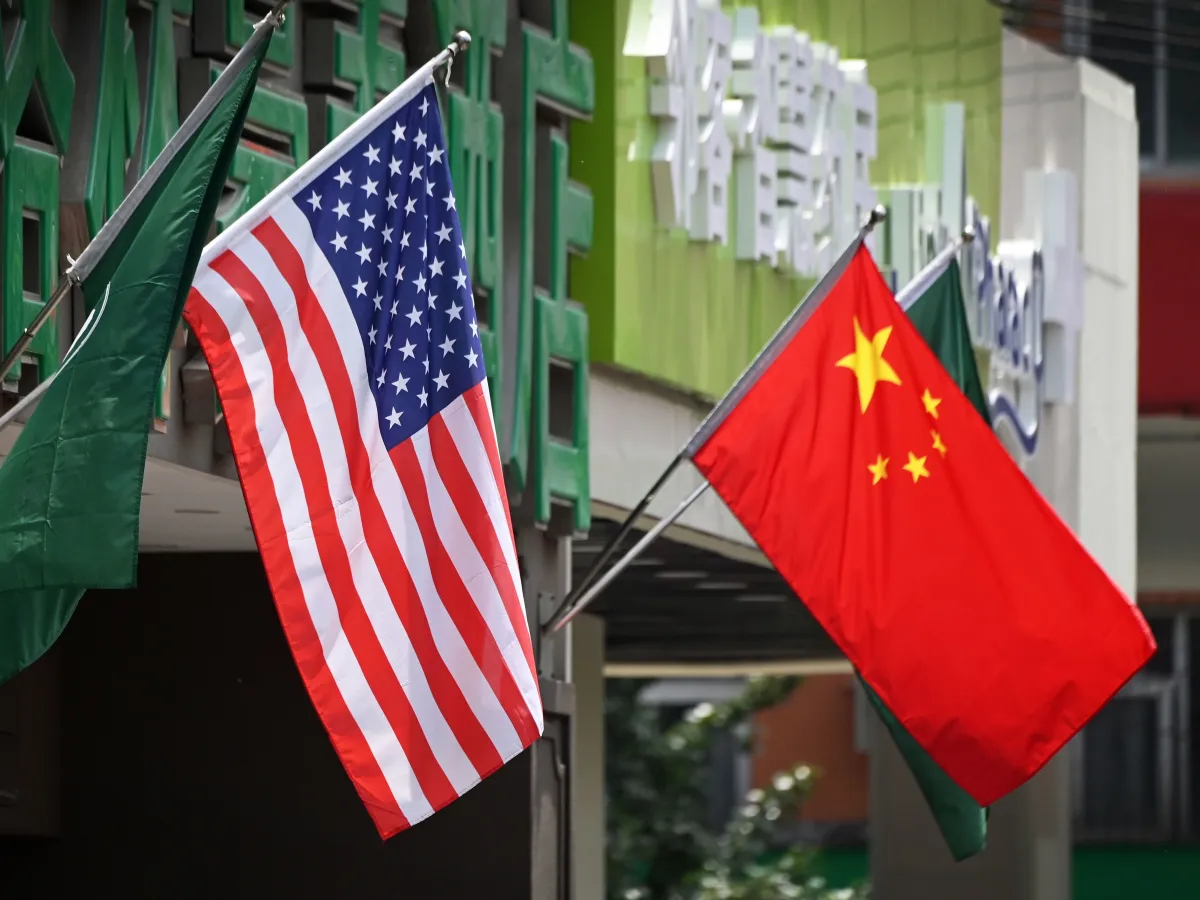
Top officials from Washington and Beijing met in Stockholm, Sweden, for the latest in a series of ongoing trade talks, which will have big implications for the economies of both nations.
It follows President Trump’s decision to extend a 90-day pause raising tariffs to at least 145% on Chinese goods back in April. The extended pause is currently set to expire on Friday.
U.S. tariffs on Chinese imports currently stand at 30% — and at least 10% for every other country in the world. The Trump administration is trying to negotiate individual trade deals with each country. And on Sunday, Trump met with the president of the European Commission Ursula von der Leyen and reached a new trade deal with the European Union.
Elizabeth Economy, former senior adviser for China in the Department of Commerce under former President Joe Biden, told Morning Edition she doesn’t expect a “breakthrough” between the U.S. and China this week, just “small progress.”
Economy, the Hargrove Senior Fellow at Stanford University’s Hoover Institution, explained what the U.S. and China want from one another and why it might take awhile for the two to strike a new trade deal.
The following exchange has been edited for length and clarity.
Interview Highlights
A Martínez: So, Elizabeth, third round of talks between Washington and Beijing in the last few months. Are you expecting a breakthrough this week?
Elizabeth Economy: I don’t think we’re going to see a breakthrough. I think actually [U.S. Trade Representative Jamieson Greer] has signaled that there’s not going to be a breakthrough, and [U.S. Secretary of the Treasury Scott Bessent] has said, ‘We’re looking to extend this trade truce for another three months to continue negotiations.’ So what I’m expecting is really just small progress, trying to establish the parameters of a deal that could be announced at a President Trump, President Xi summit in late October or early November, likely on the sidelines of the [Asia-Pacific Economic Cooperation] leaders summit in Korea. President Trump has said he very much wants to meet with President Xi. So I would look for a trip to Beijing.
Martínez: What do they want from each other? Let’s start with the U.S. What does the U.S. want from China?
Economy: I think the United States has two different types of asks that it’s making of China. I think on the one hand, they want what we saw in the first Trump administration, the phase one trade deal, which is Chinese purchases of U.S. goods, agriculture like soybeans, corn, energy, planes [and] medical devices. I think they also, of course, want China, the Chinese government, to allow the sale of TikTok to a U.S. entity.And I think the second type of thing that they want is for China to change the way that it does business. I think they want the Chinese to stop exporting their overcapacity in areas like solar panels, and [Electric Vehicles] and batteries. And we’ll see it coming in legacy semiconductors and new materials. So, this is a pattern. It has to do with the Chinese economic model. And the administration wants China to change its model. They want China to stop supporting Russia’s war against Ukraine. They want China to stop buying Iranian oil. And they want China to open its market and to stop its protectionist measures. The second set of asks, I think, is much tougher.
Martínez: So what does China want?
Economy: China wants relaxation of export controls on U.S. technology, and it wants to be treated like other countries, like the U.S. treats other countries. So reduce the level of tariffs to the level that we just saw in the E.U., U.S. trade deal, change the sort of in-and-outbound investment restrictions that the U.S. has put specifically on China. And it wants the U.S. not to bother it about the nature of its economic model, which it considers to be quite successful overall.
Adapted and produced for web by Destinee Adams and edited by Treye Greene.
Transcript:
A MARTÍNEZ, HOST:
President Trump met with European officials to clinch a trade deal in Scotland in recent days. Today, in Sweden, some of his top representatives are meeting with their Chinese counterparts. Now, much of the trade between the two countries ground to a halt after President Trump increased tariffs on Chinese goods to at least a hundred and forty-five percent. Under the current temporary deal, U.S. tariffs on Chinese imports stand at 30% while China imposes 10% tariffs on American products.
Elizabeth Economy joins us now. She’s the Hargrove senior fellow at Stanford University’s Hoover Institution. She was also a senior adviser for China at the U.S. Department of Commerce under former President Joe Biden. So Elizabeth, third round of talks between Washington and Beijing in the last few months. Are you expecting a breakthrough this week?
ELIZABETH ECONOMY: I don’t think we’re going to see a breakthrough. I think, actually, USTR Greer has signaled that there’s not going to be a breakthrough, and Secretary of the Treasury Bessent has said we’re looking to extend this trade truce for another three months to continue negotiations. So what I’m expecting is really just small progress on trying to establish the parameters of a deal that could be announced at a President Trump-President Xi summit in late October or early November, likely on the sidelines of the APEC Leaders’ Summit in Korea. President Trump has said he very much wants to meet with President Xi. So I would look for…
MARTÍNEZ: Yeah.
ECONOMY: …A trip to Beijing.
MARTÍNEZ: And APEC is the Asia-Pacific Economic Cooperation, a group of 21 countries in the region. Elizabeth, what do they want from each other? What – let’s start with the U.S. What does the U.S. want from China?
ECONOMY: I think the United States has two different types of asks that it’s making of China. I think on the one hand, they want what we saw in the first Trump administration, the Phase One trade deal, which is Chinese purchases of U.S. goods, agriculture like soybeans, corn, energy, planes, you know, medical devices they’ve talked about. I think they also, of course, want China – the Chinese government to allow the sale of TikTok to a U.S. entity.
And I think the second type of thing that they want is for China to change the way that it does business. I think they want the Chinese to stop exporting their overcapacity, you know, in areas like solar panels and EVs and batteries. And we’ll see it coming in legacy semiconductors and new materials. So, you know, this is a pattern. It’s – it has to do with the Chinese economic model, and, you know, the administration wants China to change its model. They want China to stop supporting, you know, Russia’s war against Ukraine. They want China to stop buying Iranian oil, and they want China to open its market and to stop its protectionist measures. So those are the – that’s the – the sort of second set of asks…
MARTÍNEZ: OK.
ECONOMY: …I think, is much tougher.
MARTÍNEZ: So what does China want?
ECONOMY: China wants relaxation of export controls on U.S. technology, and it wants to be treated like other countries, like the U.S. treats other countries. So reduce the level of tariffs to the level that we just saw in the EU-U.S. trade deal. You know, change the sort of in and outbound investment restrictions that the U.S. has put – you know, has targeted really specifically on China. And it wants the U.S. not to bother it about the nature of its economic model, which it considers to be, you know, quite successful overall.
MARTÍNEZ: One last thing really quick. We’re seeing reports that Taiwan’s president will not be making a planned trip to the United States. Do we know why, and might it have something to do with what’s going on between the United States and China?
ECONOMY: Absolutely. I think President Trump has signaled that he doesn’t want anything to interfere with the negotiations, and a transit for a Taiwanese president has typically led to Chinese protests. And we’ve also seen that President Trump has said he doesn’t want any more export controls to be levied on China right now. He’s really targeting, you know, this idea of a trip to Beijing and a summit with President Xi and the announcement of a new trade deal.
MARTÍNEZ: That’s Elizabeth Economy, senior fellow at the Hoover Institution at Stanford University. Elizabeth, thanks.
ECONOMY: Thank you.
(SOUNDBITE OF WANDERER’S TROVE’S “WHEN IT HITS YOU”)